

Getting out of bed often starts with a shift of weight, then a foot to the floor, and a caregiver may have only a short window to hear an alert and come over calmly. The best bed alarms for elderly households are not all built around the same moment: some sense pressure leaving a bed pad, some alert from a floor mat, and some send the notice to a pager instead of sounding in the room. After comparing published specifications, the Lunderg Wireless Early stands out for broad 10×33-inch bed coverage and 3 alert modes, while the SmartCaregiver Smart is a practical wireless pager option for families already thinking about multiple sensors.

Pros
- 10×33-inch pressure pad gives broad bed coverage
- Soft foam interior adds comfort under the sheet
- 15-month sensor pad lasts longer than many pads
- 3 alert modes: high, low, and vibration-only
Cons
- No Wi-Fi or app means alerts stay on the pager
- Pad at hip level may need careful placement nightly
- Batteries and 15-month pad will need replacement

Pros
- 10 x 30 inch pad covers hips or shoulder area
- Vinyl pad wipes clean after incontinence accidents
- 2 volume levels help match room and caregiver needs
- Low battery and sensor lights support daily checks
Cons
- In-room alarm may startle some people when it sounds
- Wireless caregiver alerts require a separate add-on kit

Pros
- 10 x 30 inch pad gives broad shoulder-area coverage
- Pager supports up to 6 Smart Caregiver sensors
- Sound and vibration provide 2 caregiver alert modes
- U.S. company with 30 years in caregiver alerts
Cons
- Pad must be positioned under the shoulders for best contact
- Wireless pager still depends on caregiver being within range
- Alerts only after bed pressure is removed, not before rising
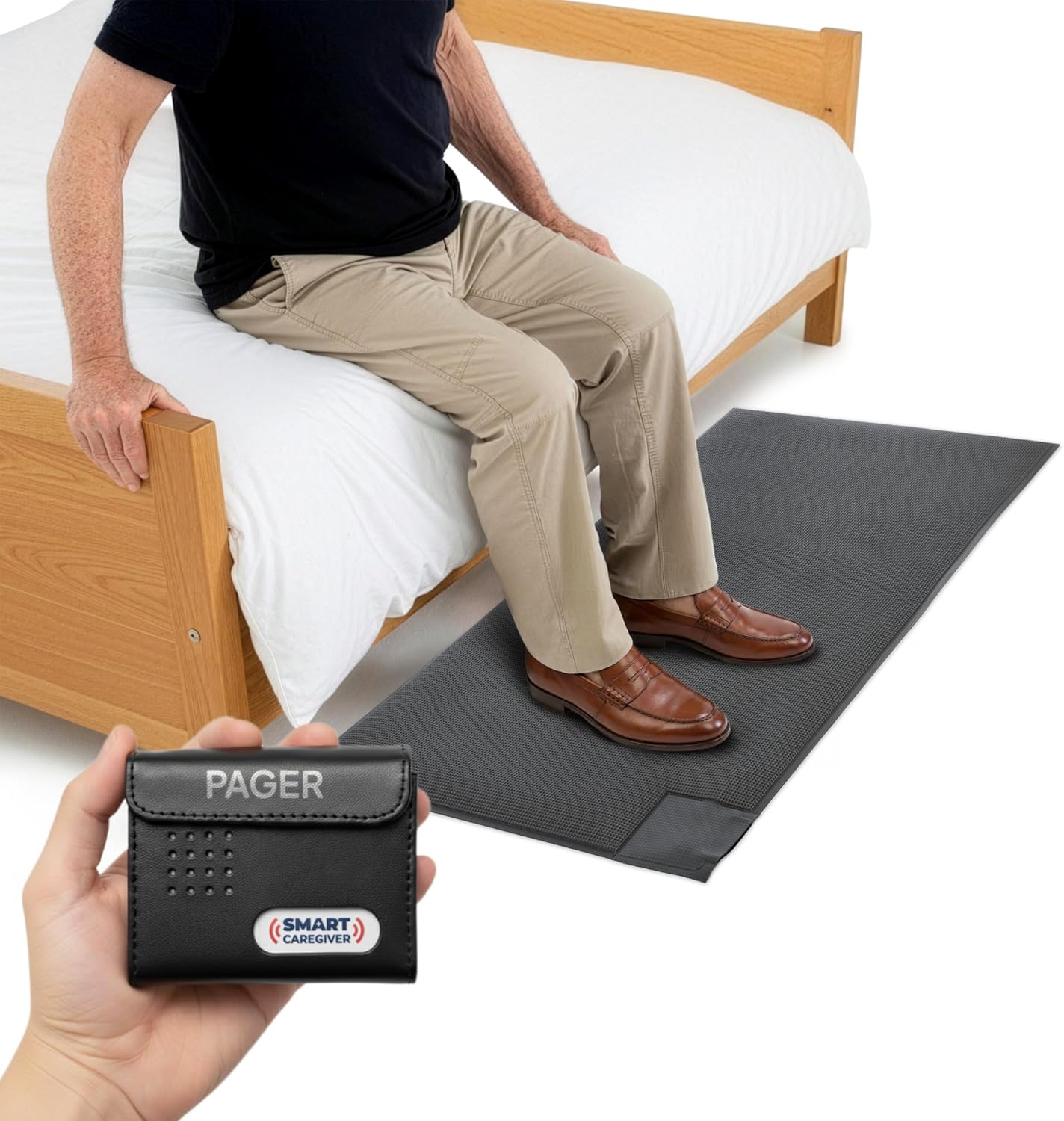
Pros
- 24-by-48-inch mat covers a broad bedside area
- Pager range reaches up to 300 feet from the mat
- TL-2020P pager offers sound or vibration alerts
- 1-year manufacturer warranty from Smart Caregiver
Cons
- Pager needs 2 AA batteries that are not included
- Mat placement may miss movement away from its path

Pros
- Includes 10 x 30 in bed pad and 10 x 15 in chair pad
- Soft vinyl pads have foam interiors for comfort
- 2 volume settings inside the battery compartment
- USA-based support weekdays 7 AM to 3 PM PT
Cons
- Volume control sits inside the battery compartment
- One monitor must be moved between bed and chair
- Pad cords may need routing along mattress or chair

Pros
- 10 x 30 inch pad covers buttocks or shoulders
- 80 dB and 90 dB volume settings for alerts
- Advanced vinyl pad is latex-free and wipeable
- 9V battery included for initial setup
Cons
- Cannot be used with a pacemaker or defibrillator
- Wired design may limit placement around the bed
A Closer Look at Our Top Pick
The Lunderg Wireless Early is the one I would look at first for many homes because it combines a wide 10×33-inch pressure pad with a pocket pager, so the alert can go to the caregiver instead of relying only on an in-room alarm. The pad has a soft foam interior, which matters when it sits under a sheet night after night. Its 15-month sensor pad life is also a meaningful number to note, because replacement planning is part of living with any pressure-pad system. The pager has 3 alert modes: high volume, low volume, and vibration-only.
This is still a practical tool, not a set-it-and-ignore-it device. The pad belongs around hip level, and that can take careful placement if your parent moves around in bed or if sheets are changed often. Because there is no Wi-Fi or app, alerts stay with the pager, which can be a strength for simple homes and a limitation for caregivers who want phone notifications. If you want a bed-based alert with broad coverage and a caregiver-carried receiver, a 10×33-inch wireless bed pad with pager is the cleanest starting point on paper.
Find Your Situation
- the Lunderg Wireless Early: suits a caregiver who wants a wireless pager and a 10×33-inch pad under the sheet. Watch out: no Wi-Fi or app means the alert stays on the pager.
- the SmartCaregiver Smart: suits a nearby caregiver who wants a 10 x 30 inch vinyl pad, front reset, and 2 volume levels. Watch out: the in-room alarm may startle some people when it sounds.
- the SmartCaregiver Smart: suits a caregiver who wants a wireless pager, vibration or sound, and pairing with up to 6 Smart Caregiver sensors. Watch out: it alerts after bed pressure is removed, not before rising.
- the SmartCaregiver Smart: suits a bedside or doorway setup where a 24-by-48-inch floor mat can catch a step. Watch out: mat placement may miss movement away from its path.
- the SmartCaregiver Smart: suits a home that needs 1 bed pad and 1 chair pad, with sizes of 10 x 30 in and 10 x 15 in. Watch out: the monitor must be moved between bed and chair.
- the PatientAid Patient: suits a wired bedside setup with an 80 dB or 90 dB chime and a 10 x 30 inch pad. Watch out: it cannot be used with a pacemaker or defibrillator.
How We Narrowed It Down
We compared published specifications rather than handling the products, focusing on alert type, pad size, caregiver notification, volume options, cleaning needs, and setup trade-offs. We favored systems that gave concrete numbers, such as a 10 x 30 inch pad, a 24-by-48-inch mat, 2 volume levels, or pager range up to 300 feet. We excluded options that did not clearly fit bed-exit or bedside monitoring, and we did not give weight to prices, star ratings, or review counts. Because a bed alarm is only one part of a safer routine, ask a doctor or physical therapist whether the setup fits the person’s mobility, medications, and bedroom layout. The National Institute on Aging notes practical fall-related steps, including reviewing medicines and checking home hazards, on its falls and falls prevention page.
What to Look For
Start with when you need the alert
Some products alert when pressure leaves a bed pad, while a floor mat alerts when the person steps onto it. That difference matters because a 10 x 30 inch bed pad and a 24-by-48-inch mat watch different parts of the same routine. If your parent sits up slowly before standing, a bed pad may give a caregiver more notice. If the main concern is movement toward a doorway, a floor mat may match the path better.
Choose the alert style your home can live with
An in-room alarm can be simple, but it may be loud near the person in bed. A pager can be easier for a nearby caregiver because it can sound or vibrate, depending on the model. The Lunderg pager has 3 alert modes, while some Smart Caregiver pager setups offer sound or vibration. Think about who needs to hear the alert at 2 AM, and where that person usually sleeps.
Check pad size and placement before bedtime
A wider pad can cover more of the bed, but placement still matters, including with beds for elderly people. A 10×33-inch pad gives broad coverage, while several 10 x 30 inch pads are meant for shoulder, hip, or buttocks placement depending on the product. Sheets, mattress height, and how the person turns can affect contact. Plan on checking placement as part of the nightly routine, not just during the first setup.
Think about cleaning, cords, and batteries
Vinyl and wipeable pads are useful when accidents happen, especially if incontinence is part of the care routine. Wired alarms can mount out of reach, but the cord still needs a safe path around the bed. Battery needs also matter: one floor mat pager uses 2 AA batteries that are not included, and another wired option includes a 9V battery for initial setup. The goal is a setup that does not add clutter or daily confusion.
Before you buy, decide who responds
A bed alarm is only helpful if someone can respond when it sounds or vibrates. A pager with range up to 300 feet may fit a one-level home, while an in-room alarm may suit a caregiver sleeping nearby. If care is shared, decide who carries the pager and where it goes during meals, showers, and rest. For local caregiver help, the Eldercare Locator can connect families with support services by phone at 1-800-677-1116.
When this is not enough, look beyond the alarm
If your parent often gets up without waiting, a sound may not change the behavior by itself. The bedroom may need 1 clearer path, steadier lighting, or a routine that makes toileting easier before sleep. A doctor or physical therapist can help decide whether a mobility aid, medication review, room change, or bed for mobility issues belongs in the plan. Treat the alarm as a signal for a caregiver, not as a stand-alone answer.
Match the system to bed, chair, or floor
Not every household needs only a bed pad. One system includes a 10 x 30 in bed pad and a 10 x 15 in chair pad, which may fit a person who spends long stretches in both places. A floor mat can cover a 24-by-48-inch area beside the bed or near an exit. If you want one bed setup first, a wireless pager bed-exit system with a 10 x 30 inch pad keeps the focus narrow.
Quick Tips for Choosing
- Pick a bed pad if you want an alert when pressure leaves the mattress.
- Pick a floor mat if the key moment is a step beside the bed.
- Use vibration if sound at night upsets the person or the household.
- Check whether the pager range fits the rooms you actually use.
- Route cords away from feet, bedding, and wheels.
- Set a routine to check batteries, pad position, and volume.
Frequently Asked Questions
Do bed alarms stop a person from getting up?
No. A bed alarm sends an alert when the system senses pressure leaving the pad or another trigger, depending on the design. A caregiver still needs to respond and help with the next step.
Is a wireless pager better than an in-room alarm?
It depends on the home. A pager can notify a caregiver nearby, while an in-room alarm may be simpler if the caregiver sleeps in the same room or close enough to hear it.
Where should a bed sensor pad go?
Placement depends on the product, but common positions include the hip, shoulder, or buttocks area. A 10 x 30 inch pad or larger pad still needs steady body contact to work as intended.
Can a bed alarm be used under a sheet?
Many bed pads are designed to sit under a sheet, including on adjustable beds for seniors, but the pad should stay flat and in the intended position. Check it after changing bedding or after a night when the person moved around a lot.
Will the alarm sound before someone stands?
Some systems alert when pressure is removed from the bed pad, which may be before or during the process of getting up. A floor mat alerts when a foot reaches the mat, so timing is different.
What volume should I choose?
Use the lowest setting that reliably reaches the caregiver. Some systems offer 2 volume levels, while others include vibration so the alert does not have to be loud in the room.
Are floor mats better for doorway monitoring?
A floor mat can work well when the person follows a predictable path, such as stepping beside the bed or toward an exit. A 24-by-48-inch mat covers a broad area, but it still only watches the space where it is placed.
How often do sensor pads need replacement?
Some pads list a service life, such as 15 months, while others focus on pad material and care. Plan to inspect the pad regularly for wear, curling, or unreliable alerts.
Can one caregiver monitor more than one sensor?
Some pager systems can pair with multiple sensors, including setups that support up to 6 compatible sensors. That can help when the person uses both a bed area and another monitored space.
Should I ask a clinician before using one?
Yes, especially if the person has complex mobility needs, medical devices, or a recent change in walking, sleep, or medicines. A clinician can help fit the alert into a broader care routine.
Which One to Start With
If you want a straightforward first choice for night care, start with the Lunderg Wireless Early. Its 10×33-inch pressure pad gives broader bed coverage than the 10 x 30 inch pads in several other options, and the pager’s 3 modes let a caregiver choose high, low, or vibration-only alerts. That makes sense for a home where one nearby person is responsible for responding and does not want an app or Wi-Fi involved.
If your parent spends time in both bed and a favorite chair, choose the SmartCaregiver Smart bed and chair system instead. The 10 x 30 in bed pad and 10 x 15 in chair pad make it more flexible across the day, though the same monitor has to move between locations. If the bedroom layout makes a footstep the clearest signal, start with a 24-by-48-inch floor mat with pager alerts. Its pager reaches up to 300 feet, and sound or vibration can work for a caregiver elsewhere in the home. For most families choosing one first device, I would begin with a bed pad and pager, then add a mat or chair pad only if the daily routine shows a clear need.