

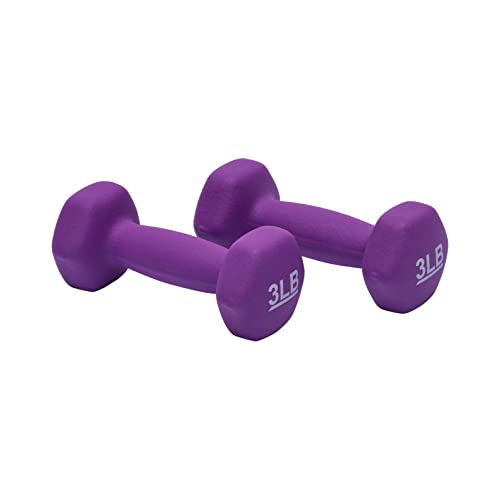
Grip comfort, starting weight, and where the weights sit between sets matter more than a bold exercise plan, because a pair that feels awkward often gets ignored. The best hand weights for seniors should be easy to identify, steady on the floor, and light enough for repeatable movement without turning every set into a struggle. For a simple fixed pair, the Amazon Basics Neoprene gives your parent 3 lb in each hand with hex ends that help limit rolling. If grip support matters more than a classic dumbbell shape, the LoGest Soft Hand adds an adjustable Velcro strap and comes in 1 lb to 4 lb options.
Pros
- 3-pound pair is light for seated or standing routines
- Neoprene coating gives a softer, nonslip hand grip
- Hexagon ends keep 2 weights from rolling on the floor
- Purple color coding helps identify the 3-pound size
Cons
- 3 pounds may be too light for progressive strength goals
- Neoprene surface can hold sweat and need regular wiping

Pros
- Neoprene coating gives a softer grip during 4 lb sets
- Hexagon ends keep the 2 weights from rolling away
- Blue color coding and printed 4 lb numbers aid sorting
- Nonslip neoprene texture supports a secure hand hold
Cons
- 4 lb size may be too light for stronger users
- Neoprene coating can show wear with rough floor use
- Pair takes floor or shelf space when not in use
Pros
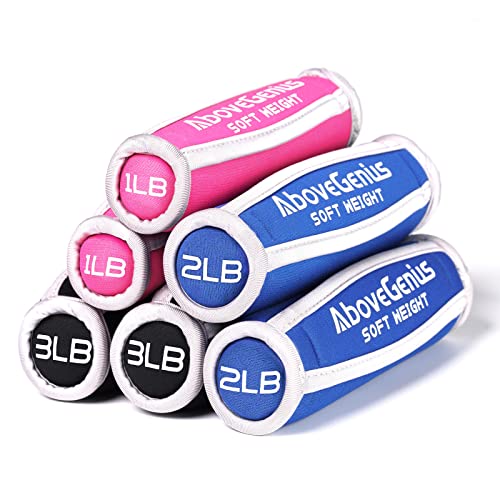
- Includes 6 weights across 1 lb, 2 lb, and 3 lb pairs
- Sand-filled design feels softer than metal dumbbells
- Hand straps add grip support for 1 lb to 3 lb weights
Cons
- Light 1 lb to 3 lb range may not challenge stronger users
- Soft sand-filled shape may feel bulky in smaller hands

Pros
- 2-pound weight is manageable for light routines
- Neoprene coating gives a more comfortable grip
- Hexagon ends help the set of 2 stay put
- Printed weight number supports quick 2-pound ID
Cons
- Only 2 pounds, so it may be too light to progress
- Neoprene coating can hold sweat and need wiping

Pros
- Neoprene shell feels softer than hard metal dumbbells
- 1, 2, 3, and 4 lb options allow gradual progression
- Velcro hand strap adjusts for different hand sizes
- Sand-filled design is less bulky for carrying
Cons
- 4 lb maximum may be too light for strength gains
- Sand filling can shift during faster arm movements
- Velcro straps may bother sensitive or thin skin

Pros
- Adjusts from 2 to 5 lb for light strength routines
- Soft TPU rubber handle supports a secure grip
- Compact 5.51 to 8.66 inch length stores easily
Cons
- Top weight of 5 lb may be too light for some users
- 4.5 inch handle may feel small for larger hands
A Closer Look at Our Top Pick
For many households, the 3 lb Amazon Basics Neoprene pair is the easiest place to begin because it stays simple. Each hand weight is 3 lb, which is enough to make arm raises, curls, and seated upper-body movements feel intentional without forcing a jump straight to a heavier size. The neoprene coating gives a softer, nonslip grip than a bare metal dumbbell, and the purple color coding helps the person spot the 3 lb pair quickly when other items are nearby. The hexagon ends are also useful in real homes, since 2 weights that stay put are easier to manage near a chair, shelf, or exercise mat.
The trade-off is that a fixed 3 lb pair has a ceiling. If the person already handles 4 lb or 5 lb comfortably, this may become too light for steady progression. It also needs regular wiping because neoprene can hold sweat after use. Still, as a first fixed pair, a 3 lb neoprene pair with hex ends keeps the decision small: one color, one weight, and 2 matching dumbbells that are easy to put away after a short routine.
Find Your Situation
- the Amazon Basics Neoprene: suits the person who wants a simple 3 lb pair for seated or standing routines. Watch out: 3 lb may be too light if strength goals move quickly.
- the Amazon Basics Neoprene: suits someone ready for 4 lb in each hand and who likes blue color coding with printed 4 lb numbers. Watch out: 4 lb can still be too light for stronger users.
- the AboveGenius Hand Weights: suits a household that wants 1 lb, 2 lb, and 3 lb pairs in one set. Watch out: the soft sand-filled shape may feel bulky in smaller hands.
- the Amazon Basics Neoprene: suits a very light start with 2 lb in each hand and a printed number for quick ID. Watch out: 2 lb may be too light to progress for long.
- the LoGest Soft Hand: suits the person who wants strap support and a choice of 1 lb, 2 lb, 3 lb, or 4 lb. Watch out: Velcro straps may bother sensitive or thin skin.
- the EQUIPRO Adjustable Dumbbell: suits someone who wants one compact adjustable set from 2 lb to 5 lb. Watch out: the 4.5 inch handle may feel small for larger hands.
How We Narrowed It Down
We compared published specifications rather than handling the products, then focused on weights that make sense for light home routines. We gave priority to pairs or sets with clear pound markings, softer grip surfaces, strap support, compact storage, or shape details that help the weights stay where they are placed. We excluded options that did not fit the light 1 lb to 5 lb range represented here, because a big jump in load can make choosing harder for a beginner. We also looked for useful progression, such as 1 lb, 2 lb, and 3 lb pairs in one set, or an adjustable design that moves from 2 lb to 5 lb. Before starting a new exercise routine, ask a doctor or physical therapist what weight range and movements fit the person. For general home safety context, the National Institute on Aging offers practical guidance on falls and falls prevention without replacing personal medical advice.
What to Look For
Start lighter than pride suggests
A 2 lb or 3 lb pair can be a sensible first step when the person is returning to exercise or prefers seated movement, along with a seated leg exerciser. The goal is controlled motion for several repetitions, not proving strength on the first day. If the weight changes the person’s posture after 1 set, it is probably too much for that routine. A lighter pair can still be useful for warmups, range work, and days when energy is lower.
Think about grip before color
Neoprene and soft shells matter because a hand weight should feel manageable from the first lift to the last set. A nonslip texture can help the person hold steady when doing curls or raises, while a strap can add support during walking or seated moves. The trade-off is maintenance: neoprene can hold sweat and needs wiping. For a classic shape, blue 4 lb neoprene dumbbells with printed numbers are easier to sort than unmarked weights.
For smaller hands, bulk matters
Soft sand-filled weights can feel gentle, but they may feel bulky in smaller hands. That matters during longer routines, because hand fatigue can show up before arm fatigue. If the person has smaller hands, compare a 2 lb fixed dumbbell with a soft strapped option before assuming softer is always easier. A 4.5 inch handle may also feel compact, which can be good for some hands and tight for others.
Before you buy, choose the storage spot
Weights are easier to use when they have a regular place near a chair, shelf, or exercise area. Hexagon ends help 2 dumbbells stay put, which is helpful if they rest on the floor between sets. A set of 6 gives more weight choices, but it also needs more storage space. A compact adjustable set can reduce clutter if the person only wants one pair out at a time.
For walking routines, straps can help
If the person wants to carry weights during walking, a hand strap may be more comfortable than constantly squeezing a hard handle. Adjustable Velcro can fit different hand sizes, and 1 lb to 4 lb choices leave room for a gradual start. Still, straps should not rub or pinch thin or sensitive skin. If local help is needed for exercise programs, transportation, or caregiver support, Eldercare Locator can connect families with nearby services.
When this is not enough, progress with care
A 5 lb top weight may be plenty for light strength work, but it may not challenge someone who already trains regularly. If the person completes a routine easily for several sessions, moving from 2 lb to 3 lb can be more reasonable than jumping several pounds at once. Adjustable designs make that simpler because the same pair can move through 2 lb, 3 lb, 4 lb, and 5 lb. Comfort, form, and consistency should guide the increase.
Make the label easy to read
Color coding and printed numbers reduce small daily friction. Pink 2 lb, purple 3 lb, and blue 4 lb options can help a caregiver or family member hand over the right pair quickly. This matters in a shared home where several weights may sit on one shelf. If the person hesitates because the size is unclear, the routine becomes harder to keep simple.
Quick Tips for Choosing
- Choose 2 lb if the person wants a very light starting point.
- Choose 3 lb if the person wants a simple fixed pair for regular practice.
- Choose 4 lb only if lighter weights already feel manageable.
- Consider straps if gripping for a full set is tiring.
- Pick hex ends if the weights will rest on the floor.
- Choose adjustable weights if storage space is limited.
Frequently Asked Questions
What weight should an older adult start with?
Many people do best starting with 1 lb, 2 lb, or 3 lb, depending on current strength and comfort. The right weight allows smooth movement without leaning, rushing, or tightening the shoulders.
Are soft hand weights better than hard dumbbells?
Soft hand weights can feel gentler and may include straps, which helps some people maintain a steady hold. Harder dumbbell shapes can feel more compact and may be easier to set down neatly.
Do straps make hand weights safer?
Straps can support the grip, especially during walking or longer sets. They still need to fit comfortably, because Velcro or tight contact may bother sensitive skin.
Is a 5 lb hand weight too heavy?
A 5 lb weight may be reasonable for some people and too much for others. If form changes after a few repetitions, a lower setting such as 2 lb or 3 lb is a better place to work.
Should hand weights be used while walking?
Some people like 1 lb or 2 lb hand weights for walking, especially with a strap, or using a home treadmill. Keep the arm swing controlled and stop if the movement affects balance, breathing, or posture.
How many weights does one person need?
A single pair is enough to begin if the weight is right. A set with 3 pairs gives more flexibility, while an adjustable pair can cover several light levels in less space, like other senior exercise equipment.
Are hexagon ends worth it?
Hexagon ends are useful because they help 2 dumbbells stay where they are placed. That is helpful near a chair, under a table, or beside an exercise mat.
How should hand weights be cleaned?
Neoprene and soft shells should be wiped after sweaty sessions. Let them dry before storage so the grip surface stays more comfortable for the next routine.
Can hand weights be used while seated?
Yes, light hand weights can work well for seated curls, raises, and controlled upper-body movements. A 2 lb or 3 lb pair is often easier to manage from a chair than a heavier option.
When should a caregiver help choose?
A caregiver can help when the person has trouble reading labels, gripping steadily, or storing the weights safely. The caregiver can also help compare 2 lb, 3 lb, and 4 lb choices before buying.
Which One to Start With
If you are buying for your parent and want the least complicated first choice, start with the Amazon Basics Neoprene in the 3 lb pair. It gives 2 matching dumbbells, a softer neoprene grip, color coding, and hex ends that help keep the weights from rolling away between sets. That combination fits a short seated or standing routine without asking the person to manage dials, straps, or a full set of 6 pieces.
If 3 lb feels like too much, choose the 2 lb pink neoprene pair instead. It is the gentler fixed option here, and the printed number makes it easy to identify. If your parent wants to build slowly across several levels, the set with 1 lb, 2 lb, and 3 lb pairs is more flexible, but it also puts more pieces in the home. If grip support is the deciding factor, a strapped soft weight can be the better fit than a classic dumbbell shape.
For a person who dislikes clutter or wants room to move from 2 lb to 5 lb, the EQUIPRO Adjustable Dumbbell is the most efficient choice on paper. The quick dial change lets a caregiver set the level before the routine starts, and the compact length helps with storage. The only caution is fit: a 4.5 inch handle may feel small in larger hands, so prioritize comfort over adjustability.