

Stiffness often builds when legs spend long stretches still, so a small seated machine can make gentle movement easier to fit between meals, calls, or television. The best leg exercisers for elderly shoppers are not all the same: some guide passive motion, some add manual resistance, and some work for arms as well as legs. After comparing the 6 options here, the LEWANJA Pedal stands out for adjustability, while the VIVURN Under suits people who want remote-controlled speeds without bending. The right choice depends on chair height, foot size, floor surface, and whether your parent wants light daily movement or a more active pedal routine.
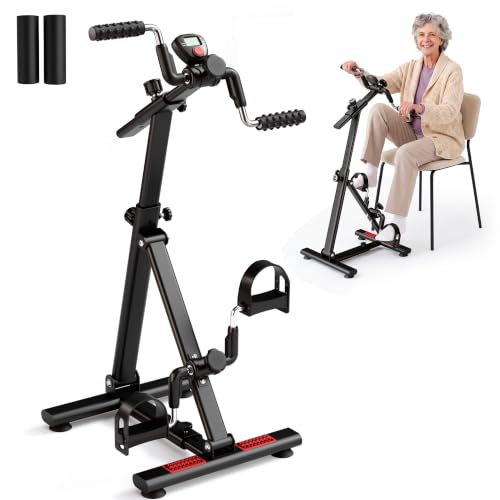
Pros
- 5 height positions adjust from 27.5 to 41.5 inches
- Thickened steel tubing frame supports up to 300 lb
- Base length adjusts from 16 to 21.5 inches
- 4 suction cups help anchor the triangular base
Cons
- Seated design still requires a stable chair nearby
- Suction cups may grip poorly on textured floors
- LCD metrics are basic for detailed fitness tracking

Pros
- 12 speed levels plus forward and backward rotation
- Magnetic resistance runs under 15dB for quiet use
- 8.27 pound weight helps caregivers move it between rooms
- LCD display tracks time, speed, distance, laps, calories
Cons
- Mini 12.2 inch footprint may feel cramped for larger feet
- Passive motion may not satisfy users wanting harder workouts
- Remote control could be misplaced between seated sessions

Pros
- 5-pound steel flywheel adds steadier pedaling
- LCD display tracks 5 workout measures
- 13.7 by 15.7 inch footprint fits under desks
- Non-slip rubber pads help protect flooring
Cons
- 11.6-inch height may crowd low desks or knees
- Manual tension knob requires bending to adjust

Pros
- 3 height levels help match different chairs
- 37.4 to 39.4 inch range supports seated use
- Thickened metal pipes add a durable frame
- Four corner feet and large non-slip pads aid stability
Cons
- Requires enough floor space for the four-foot base
- Manual resistance may feel limiting for stronger users

Pros
- Foldable mini stepper for 1 seated user at home
- Massage foot surface adds 1 tactile comfort feature
- Under desk design supports 1 office exercise spot
Cons
- Standing on it is prohibited, limiting exercise variety
- Small pedal format may not suit very weak feet
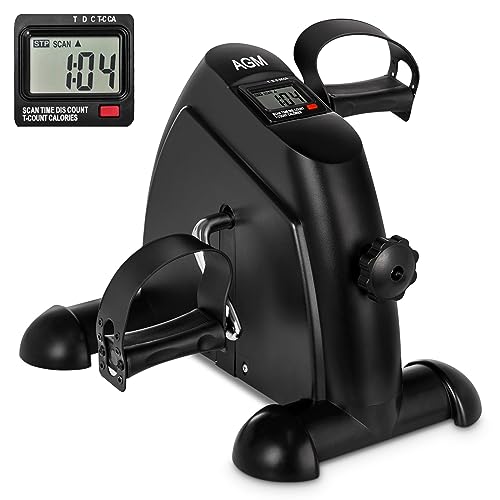
Pros
- 12.6 inch height fits under many desks or tables
- LCD shows time, speed, distance and calories
- Tension knob adjusts resistance for beginners
- Non-slip pedals include adjustable foot straps
Cons
- May feel rough when resistance is set too high
- Needs a supportive chair for better stability
A Closer Look at Our Top Pick
The LEWANJA Pedal is the most flexible starting point on paper because it gives families more ways to match the setup to the person and the chair. Its height adjusts through 5 positions, from 27.5 to 41.5 inches, which matters when a low chair, tall recliner, or dining chair changes the angle of the knees. The base also adjusts from 16 to 21.5 inches, so a caregiver has more room to find a stance that feels steady before a session begins. The thickened steel tubing frame supports up to 300 lb, and the triangular base uses 4 suction cups to help anchor it.
That adjustability is why this full-body seated trainer is a sensible first look for many households, especially when 1 person may want leg movement and another may prefer arm movement. The LCD is simple, showing time, count, total count, and calories, which is enough for a quick check without turning the session into a complicated workout. The trade-off is that it still needs a stable chair nearby, and suction cups may not hold well on textured floors. If your parent needs very quiet passive motion or remote speed changes, a compact seated elliptical with 12 speeds may be easier to manage.
Find Your Situation
- the LEWANJA Pedal: suits a seated person who needs 5 height positions and a frame rated up to 300 lb. Watch out: it still depends on a stable chair and suction cups that may grip poorly on textured floors.
- the VIVURN Under: suits someone who wants 12 speed levels, a remote, and forward or backward rotation while seated. Watch out: the 12.2 inch footprint may feel cramped for larger feet.
- the GOREDI Under Desk: suits a person who wants a compact mini bike with a 5-pound steel flywheel for steadier pedaling. Watch out: the 11.6-inch height may crowd low desks or knees.
- the RYGEO Pedal Exerciser: suits someone who wants 3 height levels for seated arm, knee, and leg routines. Watch out: the 4-foot base needs enough floor space.
- the GoToSeeU Simple: suits 1 seated older adult who wants a foldable mini stepper with a massage foot surface. Watch out: standing on it is prohibited, so exercise variety is limited.
- the AGM Mini: suits a beginner who wants a 12.6 inch under desk bike with a tension knob and adjustable foot straps. Watch out: it may feel rough when resistance is set too high.
How We Narrowed It Down
We compared published specifications rather than handling the products, with special attention to seated use, adjustability, stability features, display simplicity, and caregiver-friendly controls. We excluded options that did not clearly fit a seated home routine, because every product here is meant to be used from a chair or under a desk. We also favored products with at least 1 clear stability or fit feature, such as suction cups, non-slip pads, adjustable straps, or height settings. Before starting any new routine, ask a doctor or physical therapist whether seated pedaling fits the person’s strength, balance, and comfort level. For broader home-safety context, the National Institute on Aging explains practical fall-related considerations in its falls and falls prevention guidance without replacing personal medical advice.
What to Look For
Start with the chair, not the machine
A leg exerciser is only as steady as the seating around it. Look for a supportive chair with 4 stable legs or a firm base before you place a pedal unit in front of your parent. A product such as an adjustable seated trainer with 5 height positions gives more room to line up the knees and feet. If the chair slides or swivels too freely, choose a different spot before adding motion.
Match the motion to the person’s effort level
Some machines require active pedaling, while 1 portable elliptical machine here offers passive-style movement through powered speed settings. A person who tires quickly may prefer 12 speed levels that can be adjusted from a seated position. Someone who wants more involvement may prefer a tension knob or flywheel feel. Keep the first sessions short enough that the person finishes comfortably.
Check height and knee clearance carefully
Under desk exercisers can be convenient, but height matters. A unit that is 11.6 inches high may still crowd the knees under a low table, while a 12.6 inch unit may fit better under many desks only if the chair height works with it. Ask your parent to sit where the exerciser will be used before deciding. The feet should reach the pedals without the hips sliding forward.
Look for controls that do not require awkward bending
Remote controls and clear displays help when bending is difficult. One compact elliptical uses a remote and LCD so the person can adjust 12 speeds without reaching down. Manual tension knobs can still be fine, but a caregiver may need to set the resistance before each session. If the remote is used, choose 1 storage spot so it does not get misplaced between sessions.
Before you buy, look at the floor surface
Suction cups and rubber pads work differently depending on the floor. A machine with 4 suction cups may anchor well on smooth surfaces but grip poorly on textured floors. Non-slip rubber pads can help protect flooring and reduce shifting, but they are not a substitute for careful placement. Try to use the exerciser where the chair, feet, and machine can stay aligned.
When this is not enough, add local help
A seated exerciser can support simple movement, but it is not a full plan for every household. If your parent needs help choosing safe home routines, transportation, or local programs, the Eldercare Locator can connect families with nearby support and can also be reached at 1-800-677-1116. A physical therapist can help match motion, resistance, and chair setup to the person. If discomfort appears during use, stop the session and ask a professional for guidance.
Think about who will move it
Weight matters when a caregiver moves equipment between rooms. The VIVURN Under weighs 8.27 pounds, which may be easier to carry than a larger framed trainer or stationary bike. Smaller units also need less storage space, but the pedals may feel cramped for larger feet. If the product will move daily, choose the simplest path from storage to chair.
Quick Tips for Choosing
- Choose seated use first if balance is a concern.
- Check chair height before checking features.
- Use the lightest resistance for the first session.
- Pick remote controls if bending is difficult.
- Measure knee clearance under the desk.
- Keep the machine on a steady floor surface.
Frequently Asked Questions
Are seated leg exercisers safe for older adults?
They can be a reasonable option when the person uses a stable chair and starts gently. A doctor or physical therapist should advise if there are medical limits, pain, or recent changes in strength.
How long should a first session be?
Start with a short trial, such as a few minutes, and focus on comfort rather than distance or calories. If the treadmill or machine has a display, time is often the easiest number to track.
Is passive movement the same as active exercise?
No. Passive powered motion moves the legs with less effort, while active pedaling asks the person to do more of the work. The better choice depends on comfort, energy, and professional guidance.
Can these be used while watching television?
Yes, many seated models are made for use during quiet home activities. The person should still sit upright, keep both feet placed securely, and stop if the setup feels unstable.
Can a leg exerciser be used under a desk?
Many compact models are designed for under desk use, but desk height and knee clearance matter. A machine around 12 inches high may still feel too tall with a low chair or shallow desk.
Do displays matter?
A simple LCD can help caregivers check time, distance, counts, or calories without guessing. It is not necessary for everyone, but 4 or 5 displayed measures can make routines easier to follow.
What if the pedals slide during use?
Stop and reset the chair and machine before continuing. Look for non-slip pads, suction cups, or foot straps, and avoid surfaces where the base shifts with every pedal stroke.
Should resistance be high or low?
Low resistance is usually the better starting point. If the person wants more challenge later, increase resistance slowly and avoid settings that make the motion rough.
Can the same machine work for arms and legs?
Some pedal exercisers are designed for both arm and leg movement. Check whether the frame height, pedal position, and chair setup make both uses practical for the person.
Is a foldable mini stepper a good choice?
It can be useful for 1 seated person who wants a small foot movement option. If standing use is prohibited, keep it strictly on the floor for seated sessions only.
Which One to Start With
If you want the safest first shortlist for most families, start with fit and control rather than the longest feature list. For a parent who uses different chairs or needs a more customized setup, the LEWANJA Pedal is the first one to consider because its 5 height positions and adjustable base give you more ways to make seated use feel orderly. It is also the strongest on paper for shared arm and leg use because the frame is not limited to a tiny under desk footprint.
If bending down is the main obstacle, choose the VIVURN Under instead. Its remote, LCD, 12 speed levels, and forward or backward rotation make it more caregiver-friendly for a person who wants guided movement while staying seated. The trade-off is foot space, since the 12.2 inch footprint may feel tight for larger feet.
If the person wants a simple mini bike feel, a compact pedal exerciser with a 5-pound flywheel is a practical middle path. It tracks 5 workout measures and fits in a 13.7 by 15.7 inch footprint, but the manual tension knob may require help. For a very small seated-only option, the foldable stepper is more limited, and for a beginner under a table, the 12.6 inch mini bike with straps is worth comparing after chair clearance is checked.