

Tight hallways, tired hands, trunk lifting, and the need to sit down can all change which walker feels manageable for daily life. The best 4 wheel walkers for seniors are not just about having 4 wheels. They are about matching frame weight, wheel size, seat height, and folding style to the person and the home. For a narrow house or apartment, the Vive Mobility Lightweight keeps the frame to 9.5 lb and uses 6 inch wheels. For errands where seated breaks matter, the Medline Premium Empower adds a memory foam seat, 8 inch wheels, and a 300 lb capacity.
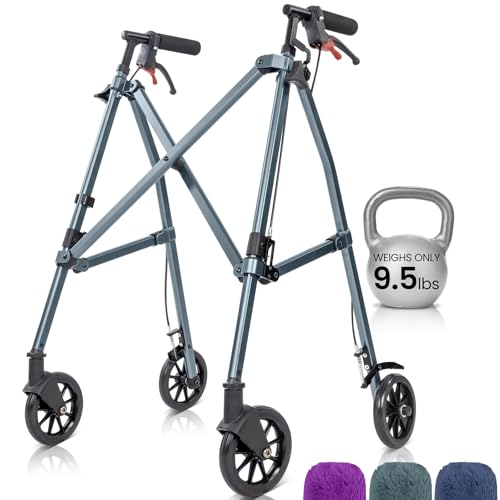
Pros
- 9.5 lb aluminum frame supports up to 300 lb
- Narrow open frame helps in small hallways
- Handles adjust from 33 to 39 inches high
- 6 inch wheels roll over carpet, tile, and pavement
Cons
- No seat for resting during longer walks or errands
- 6 inch wheels may feel small on rough outdoor paths

Pros
- 9.5 lb aluminum frame supports up to 300 lb
- 33 to 39 inch handle range helps fit different heights
- 6 inch wheels handle carpet, tile, pavement, and errands
- Patented lock secures the 9.5 lb frame when folded
Cons
- No seat or storage bag for longer outings
- 6 inch wheels may feel limited on rough outdoor paths

Pros
- 19.18 lb frame balances portability and support
- Aluminum front frame with carbon steel rear supports
- 5-position handle adjusts for 5' to 6' users
- 30 mm tubing with 1.4 mm wall thickness
- Cat-eye reflectors add 200% nighttime visibility
Cons
- 19.18 lb weight may still feel heavy for some users
- Seat comfort may be limited on longer outings

Pros
- Aluminum frame keeps total weight to 10.2 lb
- 5 handle heights fit users from 4'8" to 6'1"
- 8-inch anti-slip wheels suit level indoor floors
- 260 lb weight rating for many adult users
Cons
- Best limited to level ground and flat surfaces
- Requires physical, visual, and cognitive ability
- 260 lb capacity may not suit heavier users

Pros
- 300 lb capacity supports user and belongings
- Memory foam seat adjusts from 20.5 to 24.5 inches
- 8 inch wheels suit indoor and outdoor rolling
- Aluminum frame folds flat for transport and storage
Cons
- 23 lb frame may feel heavy to lift into a car
- 16 by 14 inch seat may feel narrow for some users

Pros
- 18 inch enlarged padded seat supports longer rest stops
- 300 lb capacity suits many larger older adults
- 8 inch wheels handle grass, gravel, and sidewalk cracks
- 8 inch wheels include reflective strips for visibility
Cons
- At 18.3 lbs, lifting it into a trunk may feel tiring
- 8.75 inch backrest may feel low for taller users
- Purple color may not suit more neutral decor tastes
A Closer Look at Our Top Pick
For many households, the strongest starting point is the Medline Premium Empower because it covers the needs that most often come up when a walker is used outside one room. It has a 300 lb capacity, 8 inch wheels, and a seat that adjusts from 20.5 to 24.5 inches. That combination matters if your parent wants a rolling aid for indoor floors, sidewalks, appointments, and short errands where a seated pause may be helpful. The memory foam seat and flip backrest also make it more rest oriented than a narrow open frame walker.
The trade-off is weight. At 23 lb, this folding rollator with a memory foam seat may be tiring for a caregiver to lift into a car, especially compared with 9.5 lb or 10.2 lb options in this group. Its 16 by 14 inch seat may also feel narrow for some people. Still, on paper, it gives the most balanced mix of support, seated rest, indoor and outdoor rolling, and transport storage for a person who needs more than a simple hallway walker.
Find Your Situation
- the Vive Mobility Lightweight: suits tight hallways, crowded rooms, and car trips because the frame is 9.5 lb and the handles adjust from 33 to 39 inches. Watch out: there is no seat for longer errands.
- the Vive Mobility Lightweight: suits caregivers who want a narrow 9.5 lb folding walker with a patented lock for storage. Watch out: the 6 inch wheels may feel limited on rough outdoor paths.
- the BlessReach Lightweight Foldable: suits a person from 5′ to 6′ who wants a foldable rollator with a seat and 5 handle positions. Watch out: the 19.18 lb frame may still feel heavy for some caregivers.
- the soundfuse Lightweight 3: suits someone who wants a 10.2 lb aluminum frame and 5 handle heights for 4’8″ to 6’1″. Watch out: it is a 3 wheel walker and is best limited to level ground.
- the Medline Premium Empower: suits a person who wants seated rest, a 300 lb capacity, and 8 inch wheels for indoor and outdoor rolling. Watch out: the 23 lb frame may feel heavy to lift into a car.
- the Retaoldth Rollator Walker: suits larger rest needs with an 18 inch padded seat, 300 lb capacity, and 8 inch wheels. Watch out: the 8.75 inch backrest may feel low for taller people.
How We Narrowed It Down
We compared published specifications rather than handling the products, so the focus stayed on measurable details that matter during shopping. We looked for weight, capacity, wheel size, handle range, seat size, fold style, and caregiver transport details. We excluded options that did not fit the practical shopping question here, including walkers without enough product detail to compare side by side. We also treated the 3 wheel model separately, because a 10.2 lb frame and 8 inch wheels may help some shoppers, but it is not the same category as a 4 wheel rollator. For fit, posture, balance, and the right aid for a specific person, ask a doctor or physical therapist. The National Institute on Aging also shares practical fall and home safety guidance at falls and falls prevention without naming a specific product.
What to Look For
Start with the weight someone must lift
Frame weight matters most when a caregiver loads the walker into a trunk or carries it up steps. In this group, the lightest listed frames are 9.5 lb, while the heaviest is 23 lb. A 19.18 lb rollator may feel manageable for short lifts but still tiring during repeated errands. If lifting is the daily sticking point, consider comparing rated walkers for seniors to find a narrow folding frame that may be easier than a seat-focused rollator.
For a 4 wheel walker, check the seat before the color
A seat can be useful when the person wants planned rest breaks during appointments or errands. The Medline seat adjusts from 20.5 to 24.5 inches, while the Retaoldth seat is 18 inches wide. The BlessReach includes a flip-up seat, but its listed weight is 19.18 lb. Choose the seat and lift weight before choosing a finish or color.
Wheel size changes where it feels natural
Small wheels can be easier in a tight home, while larger wheels can feel more practical outside. The Vive models use 6 inch wheels for carpet, tile, and pavement. The Medline and Retaoldth models use 8 inch wheels, which are better matched to sidewalks and outdoor rolling in these product specs. The Retaoldth also lists 8 inch wheels for grass, gravel, and sidewalk cracks.
Measure tight halls before choosing a wider rollator
A narrow open frame can be helpful when the person turns through tight doorways or crowded rooms. The Vive frame is described as narrow and weighs 9.5 lb, which makes it a strong fit for small homes. A seated rollator can add comfort, but it may also add weight and bulk. If the home is the main place of use, a 9.5 lb narrow folding walker may be the simpler first choice.
Before you buy, match handle height to the person
Handle height affects posture, reach, and how natural the walker feels in daily use. The Vive handle range is 33 to 39 inches. The BlessReach has 5 handle positions for people from 5′ to 6′. The soundfuse has 5 handle heights for 4’8″ to 6’1″, which may help if the person is outside the middle height range.
Look at folding style if a caregiver helps
Folding style matters when the walker goes in and out of a car several times in 1 day. The Vive has a one-step fold and locks shut. The BlessReach uses a quick-release lever, and the Retaoldth has one-hand folding with a locking latch. These details can matter as much as wheel size when the caregiver is the one lifting and storing it.
When this is not enough, add local guidance
A walker choice can overlap with home layout, transportation, and caregiver support. If the person needs more than a product comparison, the Eldercare Locator can connect families with local services by phone at 1-800-677-1116. This is especially helpful when 1 product choice is part of a larger plan for appointments, home setup, or daily assistance. For product fit, a rollator with an 18 inch padded seat may solve one need, but local support may solve several practical ones.
Quick Tips for Choosing
- Pick 9.5 lb if trunk lifting matters more than seated rest.
- Pick 8 inch wheels if sidewalks and errands are common.
- Check a 300 lb capacity if the person needs more support margin.
- Use a seat height range like 20.5 to 24.5 inches for fit.
- Choose a narrow frame for tight halls and sharp turns.
- Ask a physical therapist before changing from 2 wheels to 4 wheels.
Frequently Asked Questions
Is a 4 wheel walker better than a standard walker?
It depends on the person, the home, and how the walker will be used. A 4 wheel rollator often adds a seat and 8 inch wheels, while a narrow folding walker may stay closer to 9.5 lb.
Who should consider a walker with a seat?
A seat may help when the person wants planned rest breaks during errands or appointments. Look at seat details such as 18 inches wide or 20.5 to 24.5 inches high rather than assuming all seats feel alike.
Are 6 inch wheels enough for daily use?
Six inch wheels can suit indoor floors, carpet, tile, and pavement. For rougher outdoor surfaces, 8 inch wheels are the more relevant number in this comparison.
How heavy is too heavy for a caregiver to lift?
There is no single answer, but the difference between 9.5 lb and 23 lb is meaningful during car trips. If lifting happens often, start with the lightest frame that still fits the person’s needs.
What weight capacity should I look for?
Many products in this group list 260 lb or 300 lb capacities. Choose a capacity that fits the person and any small belongings carried on the walker.
Does handle height really matter?
Yes, because handle height affects how naturally the person stands and reaches. In this group, ranges include 33 to 39 inches and fit guidance from 4’8″ to 6’1″.
Is a 3 wheel walker the same as a 4 wheel rollator?
No. A 3 wheel walker can be lighter at 10.2 lb, but it is a different design from a 4 wheel rollator with a seat. It may suit level ground when the person can manage that style safely.
What should I measure at home?
Measure tight doorways, hallway turns, and the space beside the bed or favorite chair. A narrow 9.5 lb frame may be easier indoors than a wider seated rollator.
Do reflective details matter?
Reflective details may help with visibility in low light around cars, driveways, or sidewalks. In this group, one model lists cat-eye reflectors with 200% nighttime visibility, and another lists reflective strips on 8 inch wheels.
Should a doctor or physical therapist be involved?
Yes, especially if the person is changing mobility aids or has had a recent change in walking ability. A professional can help match the aid to posture, strength, and the surfaces used most often.
Which One to Start With
If you are choosing for a parent and want the safest first shortlist on paper, start with the situation rather than the product name. For seated rest and general errands, the Medline Premium Empower is the first model to compare because it brings together a 300 lb capacity, 8 inch wheels, and an adjustable memory foam seat from 20.5 to 24.5 inches. It is not the lightest choice, and the 23 lb frame is the main reason to pause before buying it for frequent car loading.
If the person mainly needs help moving through a small home, start with the Vive Mobility Lightweight instead. Its 9.5 lb frame, narrow open design, and 33 to 39 inch handle range fit the problem of tight halls better than a heavier seated rollator. The trade-off is straightforward: there is no seat for longer outings, and the 6 inch wheels are not the strongest match for rough paths.
If outdoor rolling and a larger seat are higher priorities, compare the 18 inch padded seat rollator next. It has a 300 lb capacity and 8 inch wheels for grass, gravel, and sidewalk cracks, but the 18.3 lb frame still asks something of the caregiver. For many families, that means choosing between easier lifting and better rest support, not chasing a single best answer.