

Finding the right wearable magnifying glasses for senior hobbies and daily reading can make everyday tasks much more comfortable. These hands-free tools sit comfortably on your face or head to enlarge text, crafts, and fine details. Choosing a style that matches your needs helps you maintain your independence and enjoy your favorite activities at home.

How Wearable Magnifiers Support Daily Living
Many older adults notice changes in their vision when reading pill bottles, sewing, or looking at small screens. Holding a standard glass lens for a long time can make your hands, wrists, or neck feel tired. Wearable options solve this problem by resting comfortably on your nose bridge or forehead, leaving both hands open to work.
Keeping your hands free also supports stability throughout your living space. The National Institute on Aging: Aging in Place resources suggest simple home adaptations to make daily living safer and easier. Wearable lenses allow you to steady yourself against a counter while inspecting fine print or handling small items.
Popular Types of Wearable Magnifying Glasses
There is no single design that works for everyone. Different activities require different viewing distances, lens weights, and head attachments.
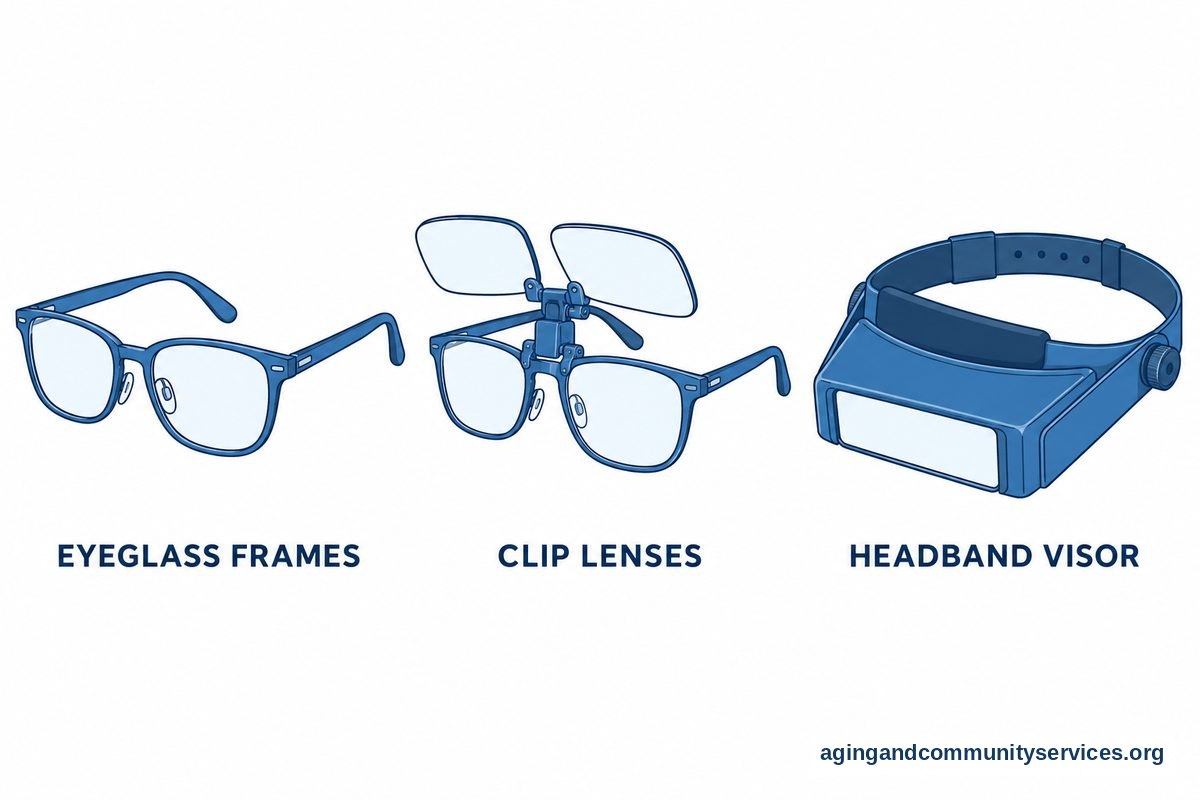
- Eyeglass Style Frames: These look and feel just like standard reading glasses. They slip on easily, fold into a pocket, and are ideal for quick tasks like checking grocery labels or mail.
- Flip-Up Clip-On Lenses: If you already wear prescription glasses, clip-on magnifiers attach directly to your existing frames. You can flip them down when you need a closer look and flip them up when you look across the room.
- Headband Visors: Visor styles feature an adjustable strap that wraps gently around the crown of your head. They often come with multiple interchangeable lenses and work well for longer craft sessions, model building, or needlework.
- Bi-focal Safety Readers: These feature magnification lenses on the lower half of an impact-resistant frame. They protect your eyes during light yard work or woodworking while keeping close-up work sharp.
Key Features to Consider Before You Choose
Selecting the right wearable magnifier depends on what you plan to do most often. Thinking through a few key details will help you pick a pair that feels comfortable all day.
Magnification Strength
Magnification power is usually measured in diopters or simple numbers like 1.5x, 2.5x, or 3.5x. A lower strength gives you a wider field of view and allows you to sit further back from your work. Higher strength brings tiny details into sharp focus, but you must hold the object closer to your face. For basic reading, a moderate boost is usually the most natural choice.
Built-In Lighting
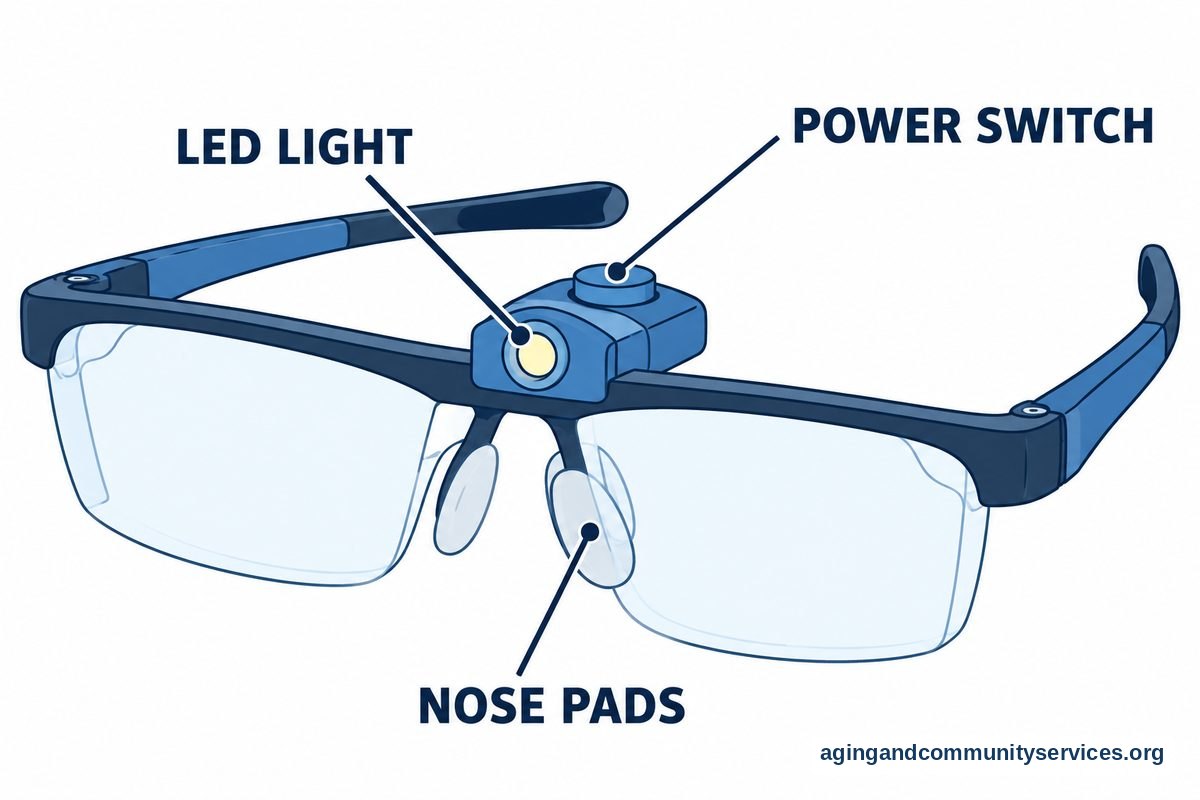
Many wearable models include small rechargeable or battery-powered LED lights near the temples. Direct light reduces eye strain because it illuminates your project without creating annoying shadows. Make sure the power switch is simple to press and that battery compartments are easy to open.
Overall Weight and Comfort
A heavy pair of glasses can slide down your nose or press behind your ears. Lightweight acrylic lenses are often better than heavy glass lenses for wearable frames. Look for soft silicone nose pads and padded headbands if you plan to wear your magnifier for more than a few minutes at a time.
When to Use Wearable Magnifiers Versus Other Tools
Wearable lenses are fantastic for two-handed tasks, but they are just one part of an accessible home setup. It helps to understand how reacher and grabber tools differ so you match the right tool to the right task to stay relaxed throughout the day.
For quick checks, such as reading an oven temperature dial or a recipe card on the fridge, simple handheld magnifiers for seniors might be faster to pick up and set down. For staying in touch with family without straining your eyes, dedicated large-button phones for seniors provide clear numbers that do not require any magnification at all.
People who need advanced visual assistance or spoken descriptions of text might explore modern high-tech tools. In those situations, specialized AI smart glasses for low-vision seniors offer automated audio reading and object identification that go far beyond standard optical lenses.
Tips for Safe Use Around the Home
Magnifying lenses change how your eyes perceive depth and distance. Because things look closer and larger than they really are, wearing them while walking can make steps and floor transitions appear distorted.
The National Institute on Aging: Falls and Falls Prevention guidelines highlight how vision changes can impact balance. Always sit down in a stable chair before putting on your wearable magnifiers. Take them off completely before standing up, walking to another room, or stepping onto stairs.
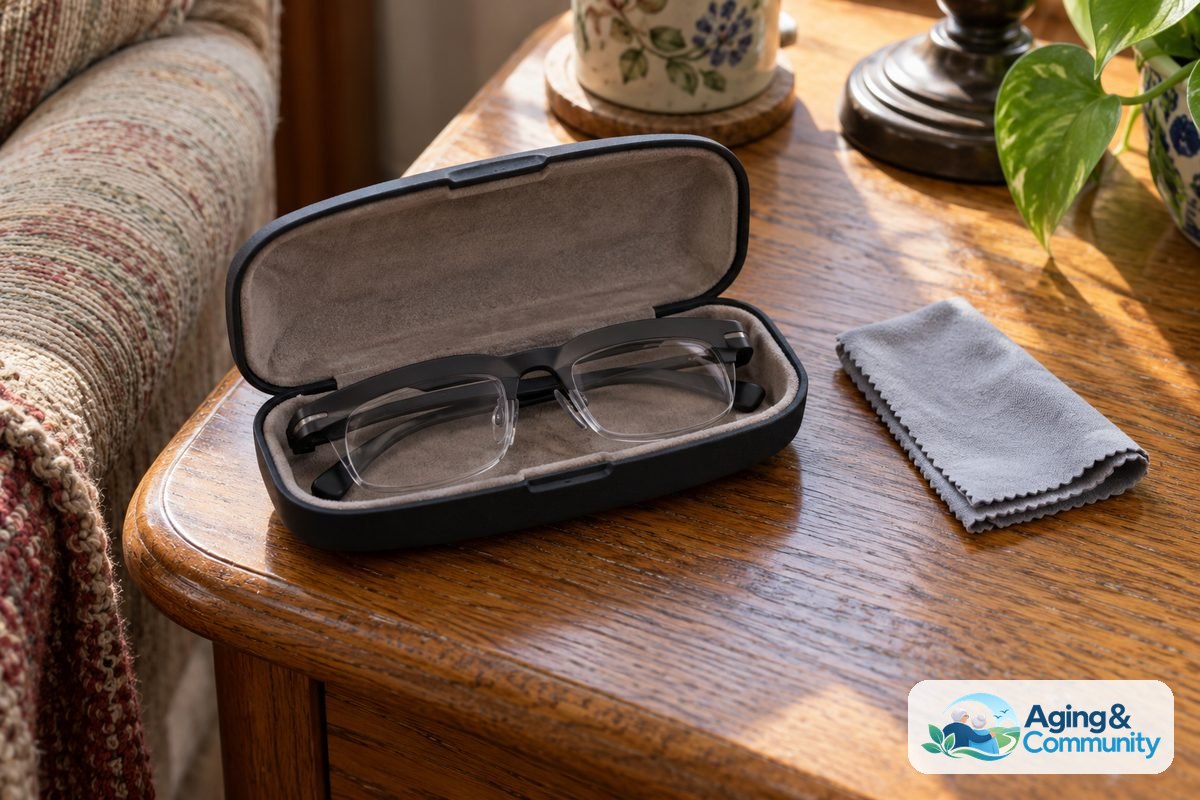
Keep a protective soft cloth or case nearby to store your glasses. Clean the lenses with warm water and a microfiber cloth rather than paper towels, which can scratch plastic lenses over time.
What to Do Next
You can start improving your near vision today with a few practical steps:
- Identify Your Main Task: Decide whether you need hands-free magnification for reading, needlecraft, cooking, or repairs. This tells you whether you need a simple reading frame or an adjustable visor.
- Schedule an Eye Exam: Speak with an optometrist or ophthalmologist to check your overall eye health. An eye doctor can recommend the exact magnification level that fits your focal distance.
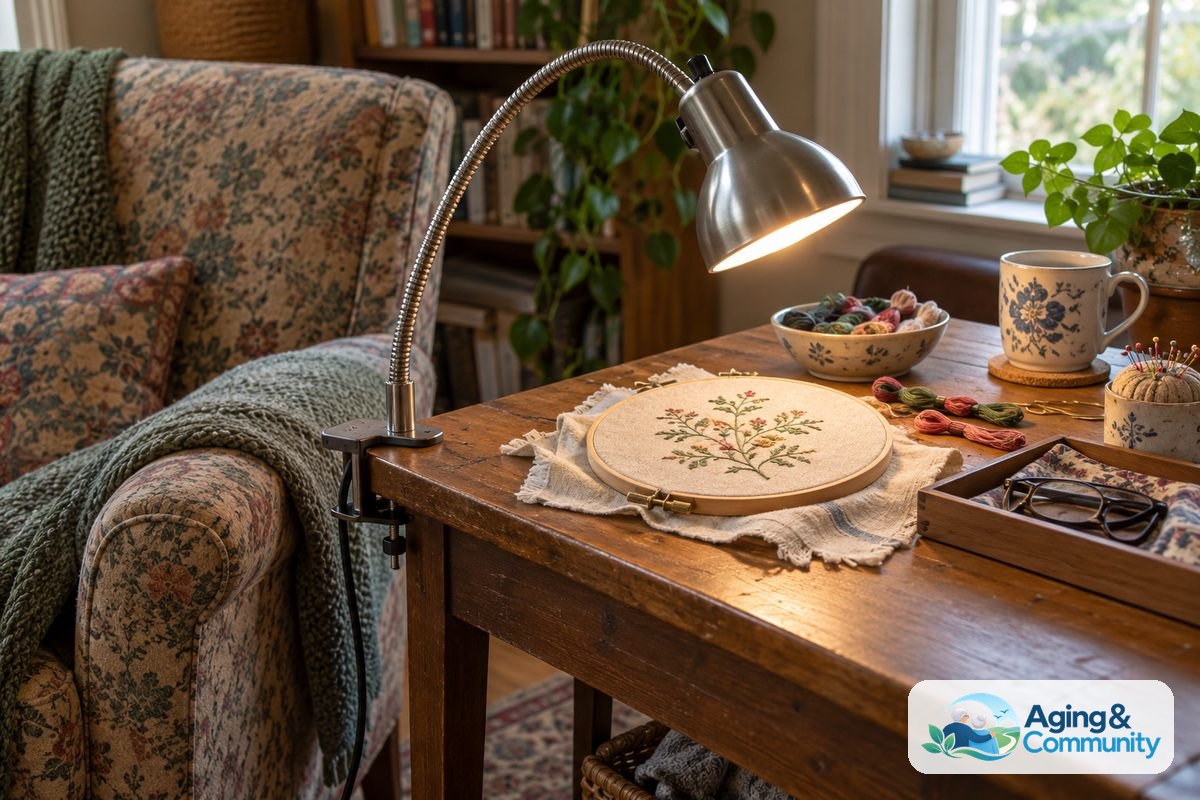
- Improve Room Lighting: Add a flexible gooseneck lamp next to your favorite reading chair. Good ambient light makes any magnifying tool work significantly better.
- Explore Local Assistance: If you are unsure which vision aids are right for your living space, an occupational therapist can review your home. You can also contact the Eldercare Locator to find aging resources and vision support programs in your local community.
Frequently Asked Questions
Can I wear magnifying glasses over my prescription eyeglasses?
Yes, many styles are designed specifically to fit over existing eyewear. Visor headbands rest high on the forehead and leave plenty of room for your normal frames underneath. You can also choose flip-up lenses that clamp directly onto your existing glasses.
Are wearable magnifiers the same as regular reading glasses?
They serve a similar purpose, but wearable magnifiers often offer higher power than standard drugstore readers. Many models also include built-in work lights, interchangeable lenses, or wraparound headbands that you do not find on standard reading frames.
Can wearing magnifiers hurt my eyes if the power is too strong?
Using high-power magnifiers will not cause permanent damage to your eyes, but an incorrect strength can cause mild headaches, dizziness, or eye fatigue. If you feel strain, switch to a lower power or increase the light in your room, and consult an eye care professional.
How do I know what magnification strength I need?
Most beginners do well starting with a low power between 1.5x and 2.0x for books and general crafts. If you are working on tiny electronics, threading needles, or reading tiny print, you may prefer 2.5x to 3.5x. Testing printed text at your normal working distance is the best way to find a clear match.