

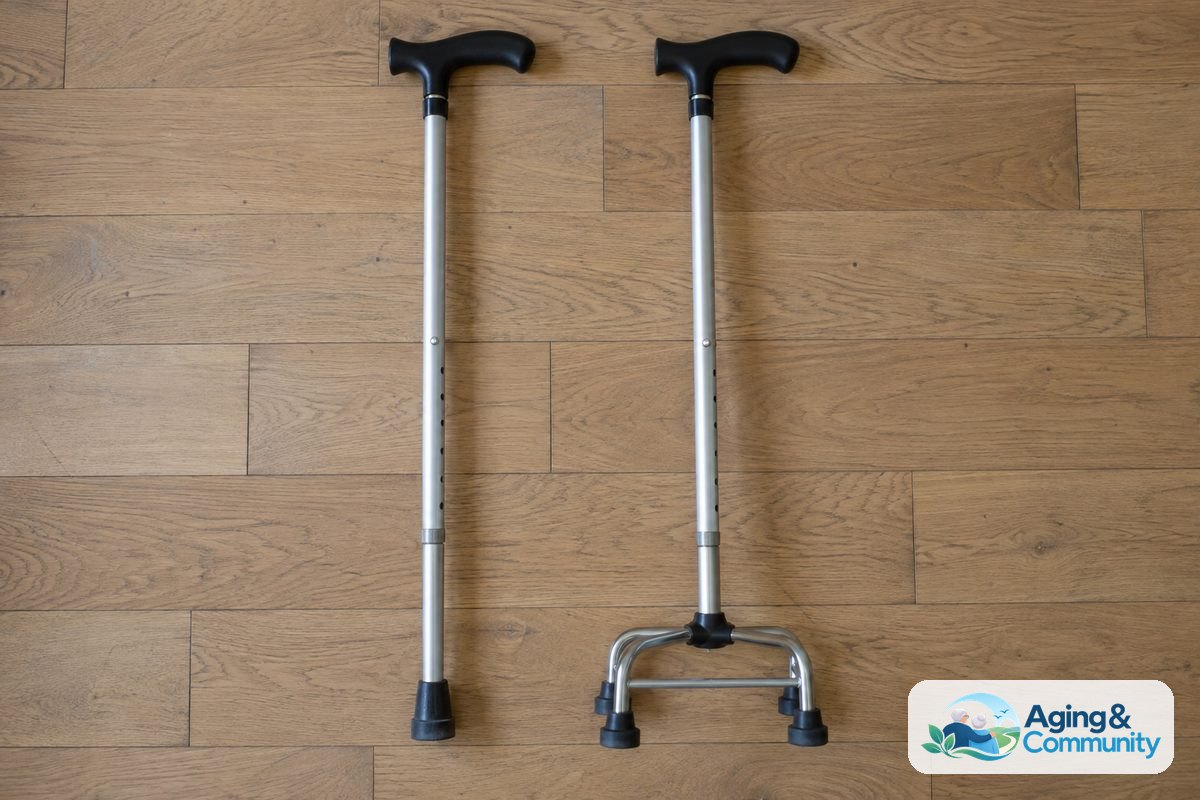
When comparing a quad cane vs straight cane, the right choice comes down to how much balance support you need each day. A straight cane suits someone who wants mild balance assistance and prefers a lightweight stick for smooth walking. A quad cane suits someone who needs extra stability, greater weight support, or a cane that can stand upright on flat floors when you let go.
Walking aids are simple tools that help older adults stay active in their homes and neighborhoods. Picking the right model gives you steady confidence with every step. Taking time to learn how to choose a cane ensures you find a device that fits your daily routine, your physical strength, and your home layout.
Quad Cane vs Straight Cane: Quick Comparison
Both styles offer reliable help, but their designs serve different everyday situations. The table below outlines the primary practical differences between these two common mobility aids.
| Feature | Straight Cane | Quad Cane |
|---|---|---|
| Base Design | Single rubber tip | Four rubber-tipped feet on a rectangular base |
| Stability Level | Mild balance and touch support | Moderate to high balance support |
| Weight Bearing | Light weight support | Moderate weight-bearing capability |
| Device Weight | Very light and easy to swing | Heavier due to the metal base |
| Stair Use | Fits easily on standard stair steps | Wide base may not fit safely on narrow steps |
| Free-Standing | Falls over when released | Stands upright on flat, level floors |
| Walking Pace | Allows a faster, natural walking rhythm | Requires a deliberate, slower pace |
Understanding the Straight Cane
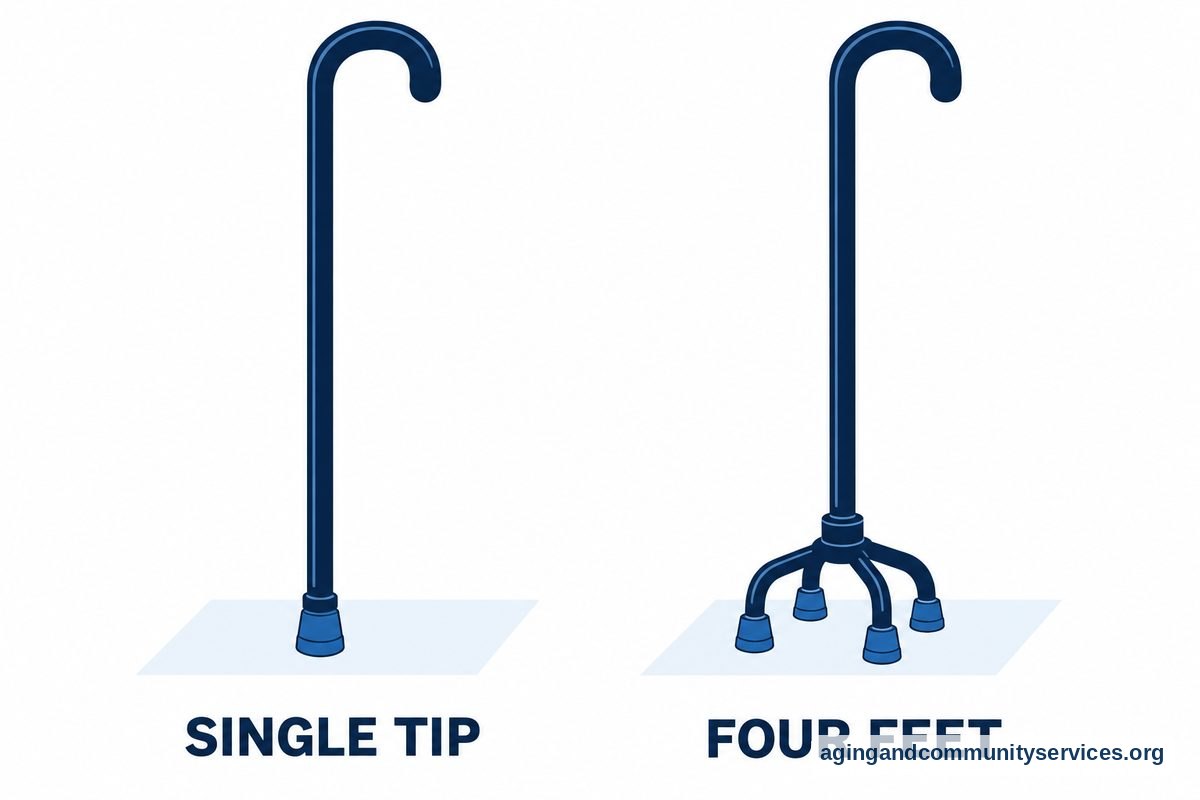
A straight cane, often called a single-point or standard cane, is the most common walking stick available. It features one sturdy shaft with a single rubber tip at the bottom. The handle may be curved like a traditional crook, flat like a derby grip, or shaped to fit the palm of your hand.
This style is designed to widen your base of support just a small amount. When you walk, the single tip touches the ground at the same time as your weaker leg. Reviewing instructions on how to use cane devices properly can help you keep your body upright and maintain an even posture.
Who It Suits
The straight cane works well for individuals who have minor stiffness or mild joint aches in one knee or hip. It is also helpful for people who feel slightly unsteady when walking on uneven outdoor paths or through grocery stores. Because it is light and slender, it swings forward effortlessly, matching a normal walking speed.
Many people browse general canes for seniors to find straight models that match their height and weight. Straight canes also fit easily into cars, rest nicely beside chairs, and navigate narrow staircases without awkward placement.
Limitations
A straight cane cannot support a large portion of your body weight. If you lean heavily onto it, the single tip can slip if placed at an angle. It also requires you to hold it or lean it against a table when you stop moving, meaning it frequently drops to the floor if propped carelessly.

Understanding the Quad Cane
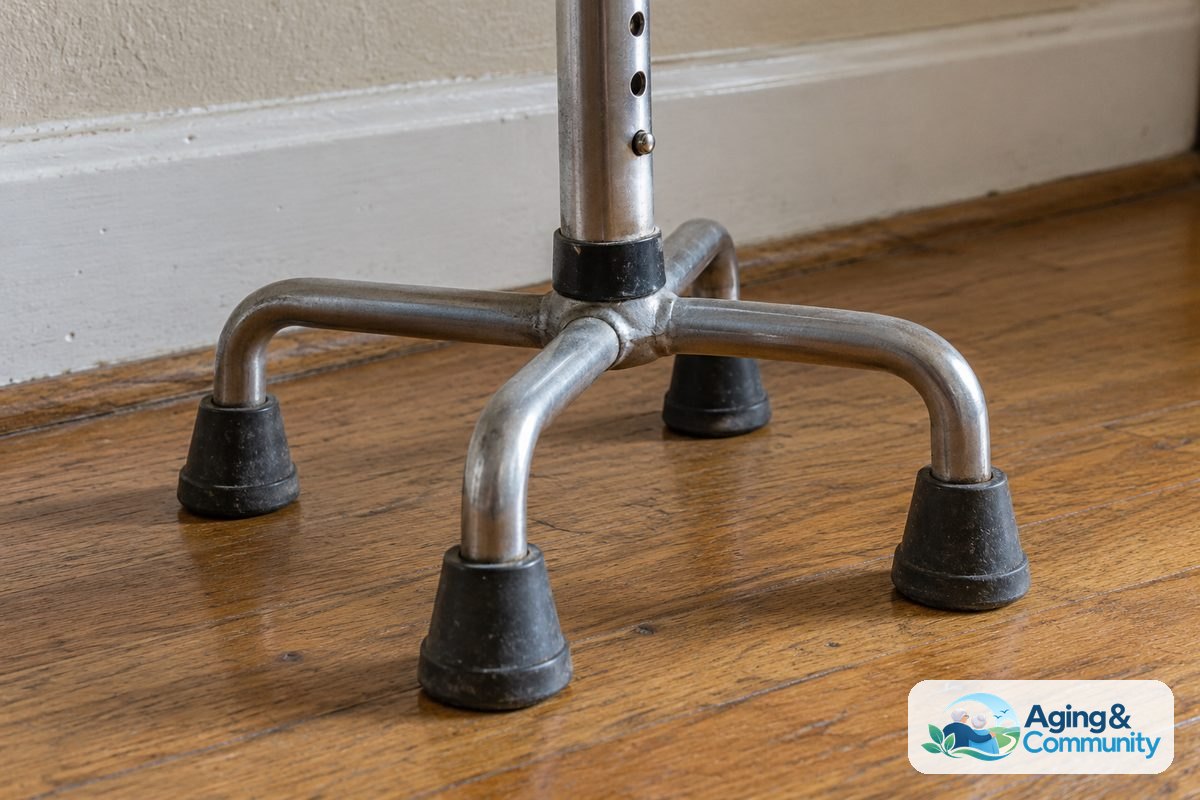
A quad cane features a standard handle attached to a four-point metal base. Each of the four points has its own slip-resistant rubber tip. The base can come in a small size or a large size, depending on how much floor contact you need for balance.
Because the base rests on four corners, all four tips must touch the floor at the exact same moment to give you solid support. Taking time to learn how to use quad cane equipment with correct timing helps you walk smoothly without rocking the base from side to side.
Who It Suits
A quad cane is ideal for someone recovering from an injury, hip surgery, or a stroke that leaves one side of the body weaker than the other. The broad base allows you to place more downward pressure through your hand and arm. This relieves pressure on your legs and provides a firm, grounded feeling.
Those looking for sturdy support often review dedicated quad canes for elderly users to see both small-base and large-base options. Another helpful benefit is that a quad cane stands upright on its own. When you reach into your pocket for keys or wash your hands, the cane remains standing beside you instead of tumbling to the floor.
Limitations
The main drawback of a quad cane is its weight and footprint. Lifting the wider base forward requires more arm effort over long distances. The four feet can also catch on throw rugs, doorway thresholds, or outdoor curbs if you do not lift the cane completely clear of the ground.
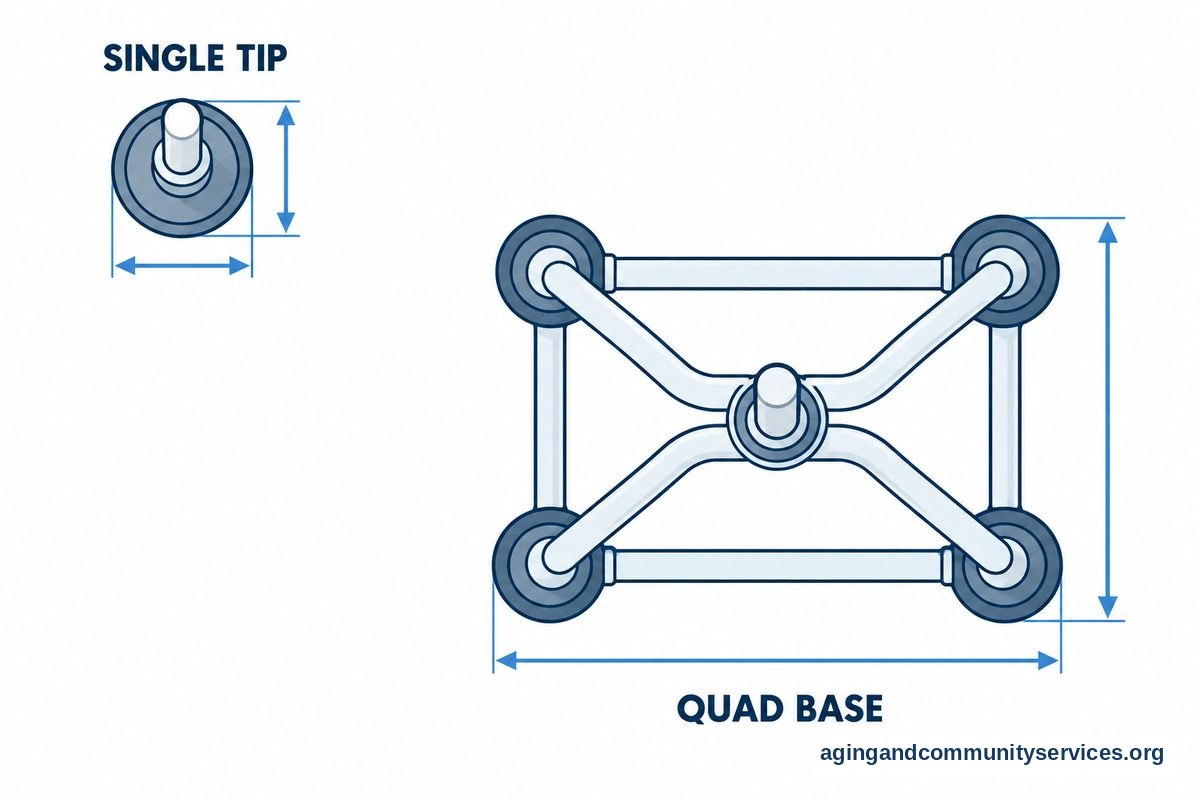
Additionally, large-base quad canes are often too wide to sit flat on standard home steps. If you must use stairs regularly, a wide base can create an unstable footing. You should always discuss home hazards and staircase navigation with a physical therapist or occupational therapist.
How to Decide
Choosing between these two tools depends on your balance, the places you walk, and the amount of weight you need to offload. Reviewing resources on falls and falls prevention from the National Institute on Aging is a great way to understand how balance changes as we age. Use the list below to help guide your decision:
- Choose a straight cane if you only need minor balance support while walking through the neighborhood or around the house.
- Choose a quad cane if one side of your body is significantly weaker due to an illness or joint replacement.
- Choose a straight cane if you climb flights of stairs every day, since the single tip fits securely on narrow stair treads.
- Choose a quad cane if you frequently drop lightweight items, because the four-point base stays upright when you let go of the handle.
- Choose a straight cane if you want a tool that is easy to swing, stow in a vehicle, and walk with at a brisk pace.
- Choose a quad cane if you need to lean down with moderate body weight to stand up from a seated position safely.
- Choose a straight cane if your home has tight hallways, narrow passages between furniture, or uneven floor transitions.
For additional support finding local mobility services or home safety consultations, you can contact the Eldercare Locator to speak with specialists in your community.
Frequently Asked Questions
Quad cane vs regular cane: what is the main difference?
The main difference is the base on the bottom of the shaft. A regular cane has a single rubber tip, which offers light balance support and moves quickly. A quad cane has a four-footed metal base that rests flat on the floor, providing significantly more balance and support for your body weight.
Quad cane vs standard cane: which one works better on stairs?
A standard cane works much better on stairs. The single tip fits easily on the flat surface of any stair tread. A quad cane, especially one with a large base, is often wider than a standard step. If the four feet cannot all rest flat at once, the quad cane can tip over and become unsafe on steps.
Quad cane vs regular: which is easier to carry and pack?
A regular cane is much easier to carry, pack, and transport. It weighs less and has a slim profile that fits behind car seats, into shopping carts, or on coat racks. A quad cane is bulkier and heavier, which can make it awkward to fit into tight storage spaces when traveling.
Quad cane vs 4 prong cane: are these the same thing?
Yes, a quad cane and a 4 prong cane are the exact same mobility device. Different medical supply stores and manufacturers simply use different names. Whether a store calls it quad, four-prong, or multi-point, it refers to a cane with four rubber tips at the base.
Quad cane vs 4 point cane: how do I know which base size to pick?
A 4 point cane is another name for a quad cane, and it usually comes with either a small base or a large base. A small base is easier to maneuver in small rooms and fits better on some wider steps. A large base covers more floor area, offering the highest level of stability for people who need maximum support while walking slowly.
Can I adjust the handle height on both types of canes?
Yes, almost all modern canes have push-button height adjustments along the metal shaft. To check the fit, stand upright with your everyday walking shoes on and let your arms relax at your sides. The top of the cane handle should line up with the crease on the inside of your wrist.
Should I talk to a professional before purchasing a cane?
Yes, it is always wise to consult a doctor, physical therapist, or occupational therapist before picking a mobility device. A therapist can evaluate your walking pattern, measure your grip strength, and ensure you are using the correct cane style and height for your personal safety.