

Learning how to use knee scooter with cast equipment starts with setting the right pad height so your body stays balanced. You rest your injured shin on the padded cushion, grip the handlebars with both hands, and gently push forward using your good foot. Taking small, steady steps helps you stay steady while keeping all your weight off your healing leg.

Steps for Using a Knee Scooter With a Cast
- Lock the parking brake before getting on: Squeeze the hand brakes and click the locking pins into place so the wheels cannot roll while you set up.
- Check the knee pad and handlebar height: Adjust the cushion so your bent knee rests at a ninety degree angle while your standing foot rests flat on the floor, and set the handlebars at hip height so your shoulders stay relaxed.
- Place your injured leg on the center of the pad: Rest your shin flat along the cushion so the rigid shell of your cast extends off the back without digging into the foam or pressing your toes.
- Grip the handlebars firmly with both hands: Keep your chest lifted and your posture upright rather than leaning heavily over the front steering column.
- Release the parking brake: Squeeze the brake levers to pop the locks loose so the four wheels can turn smoothly.
- Push forward with your strong leg: Take comfortable, short steps beside the frame with your uninjured foot, keeping it close to the scooter to maintain balance.
- Brake gently to slow down or stop: Squeeze both hand brakes evenly and bring your good foot flat to the floor before you attempt to turn or dismount.
If you are new to this mobility tool, reviewing a general review on how to use knee scooter devices can help build your daily confidence.

Common Mistakes to Avoid
- Pushing off too far to the side: Kicking your good foot wide away from the frame causes the scooter to tilt and can make you lose balance.
- Resting only your knee joint on the pad: Bearing weight directly on your kneecap creates painful pressure, so always center your shin along the middle of the cushion.
- Taking sharp turns at normal walking speed: Turning the front wheels too hard while moving fast can tip the scooter onto two wheels.
- Letting the cast drag or hit the rear axle: Placing your leg too far back can lead to the heel of your cast bumping into the rear wheels with every push.
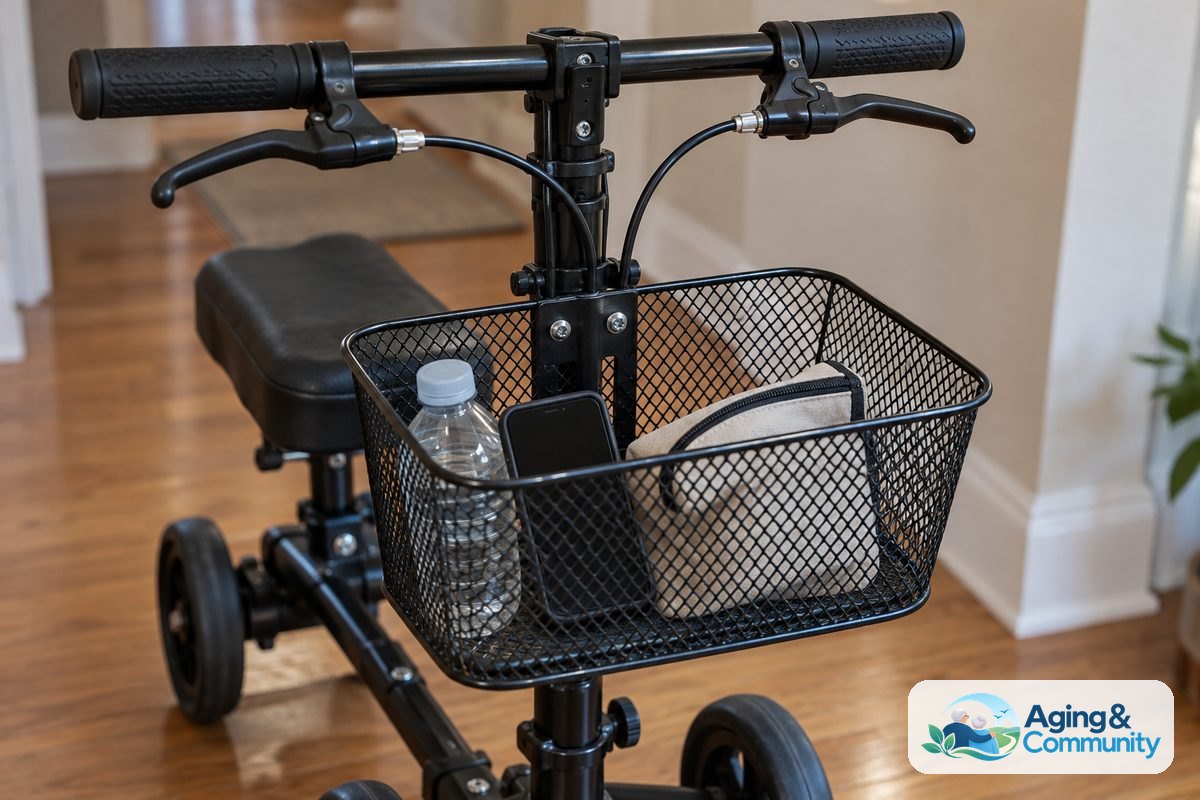
- Relying on one hand to steer: Carrying drinks, phones, or grocery bags in one hand makes stopping quickly impossible, so use a basket for your personal items.
When to Call for Help or Professional Guidance
Adjusting to non-weight-bearing mobility can feel challenging during the first few days. Reach out to your orthopedic doctor, physical therapist, or occupational therapist if you feel persistent pain, numbness, or pressure sores along your shin or knee. You should also call your care team if the cast feels tight, cracked, or loose after resting on the pad.
When you contact your therapist or clinic, tell them how long you have been using the device each day. Explain exactly where the cast contacts the pad, whether you feel unstable while turning, and if you experience muscle fatigue in your hips or back. A therapist can check your alignment and ensure the scooter fits your body properly.
For family members helping an injured loved one stay safe at home, the Eldercare Locator can connect you with local support services, home equipment programs, and community mobility resources.
How to Use a Knee Scooter With a Boot
Many people transition from a rigid plaster model into an orthopedic walking boot or pneumatic air cast. Wondering how to use knee scooter with boot footwear comes down to pad clearance and strap placement. Walking boots feature thick, rockered soles and bulky plastic uprights that take up more space than standard bandages.
To accommodate the bulk of an orthopedic boot, lower the knee platform by one notch if your leg feels propped up too high. Position your leg so the heavy sole hangs freely off the back edge of the pad. This prevents the rubber tread from catching on the frame or rear wheels while you move.
Smooth out any thick velcro straps under your shin before you rest your weight down. Wrinkled straps can press hard into your skin under your body weight. Taking time to adjust each strap ensures your shin rests flat and comfortable on the foam.
How to Use a Knee Scooter With a Broken Ankle
A fractured ankle requires total protection from sudden impacts and downward force. Knowing how to use a knee scooter with a broken ankle means learning how to navigate everyday home spaces at a calm, controlled pace. Clear wide pathways between rooms and pick up loose throw rugs that could slide under the wheels.
The National Institute on Aging: Falls and Falls Prevention resource notes that simple home modifications and clear walking paths can lower the risk of balance accidents indoors. Keep your speed slow, especially when rolling from smooth hardwood onto thick carpet. Carpet creates extra friction, which can cause the scooter to slow down suddenly while your upper body keeps moving.
Always come to a full stop before making a turn. When you enter narrow doorways or bathrooms, take tiny quarter-turns with your steering wheel rather than swinging around sharply. Keeping your center of gravity squarely over the middle of the pad protects your healing ankle from unexpected jolts.
Comparing Mobility Options for Your Recovery
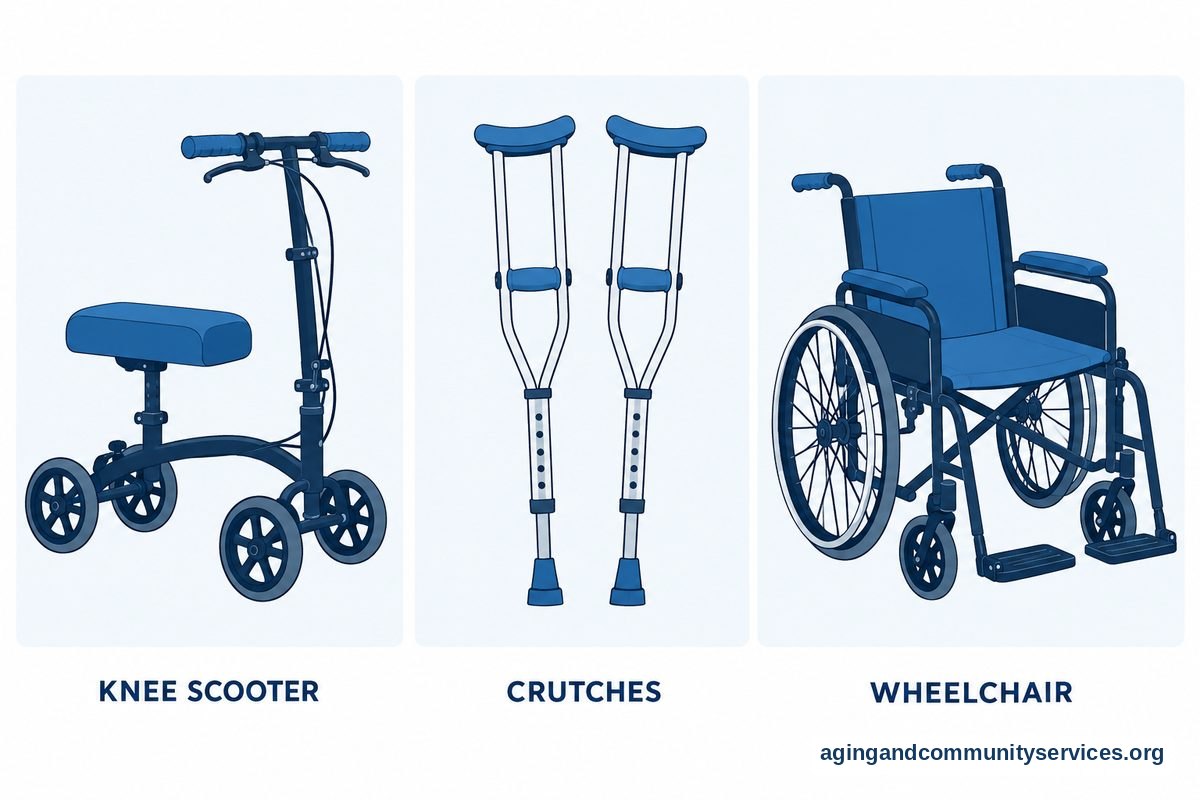
A knee walker is one of several tools you might consider while your lower leg heals, just as learning how to choose between mobility aids helps when selecting seated equipment. The table below outlines how this device compares with other common walking aids for people managing foot and ankle injuries.
| Mobility Tool | Weight-Bearing Status | Best Surface Environment | Primary Advantage |
|---|---|---|---|
| Knee Scooter | Non-weight-bearing | Smooth indoor floors and flat sidewalks | Keeps all weight off the injured foot while rolling smoothly |
| Walking Boot | Full or partial weight-bearing | Indoor and outdoor surfaces | Protects bone alignment while allowing natural upright steps |
| Standard Crutches | Non-weight-bearing or partial | Versatile across steps and flat ground | Easy to carry up stairs where wheeled frames cannot go |
| Wheelchair | Completely non-weight-bearing | Ramps, paved paths, and open rooms | Allows seated rest when upper body fatigue sets in |
If you find that pushing a rolling walker tire your hips or back, exploring a wheelchair vs knee scooter guide can help you decide if seated transit fits your routine better.
Outdoor Use and Household Adaptations
Taking your scooter outside requires extra attention to the ground ahead of you. Small pebbles, sidewalk cracks, and wet leaves can stop small scooter wheels unexpectedly. Keep your eyes focused three to four feet in front of the front axle so you have time to steer around bumps or apply the hand brakes smoothly.
Never ride your scooter down steep driveway slopes or curb cuts without holding both brake levers lightly to control your momentum. If a ramp feels too steep to roll down safely, consider asking a family member or caregiver to guide the front handlebar while you control the brakes. On flat concrete, maintain an easy rhythm and avoid racing.
For older adults recovering at home, creating accessible spaces makes a major difference in daily comfort. The National Institute on Aging: Aging in Place materials offer helpful guidance on organizing living areas so you can carry out daily tasks safely without putting unnecessary strain on your body.
You can also review features on a dedicated knee scooter for elderly users if you need a model with a tighter turning radius or extra pad cushioning for sensitive joints.

Frequently Asked Questions
How to use a knee scooter with a cast without hurting my hip?
Hip strain usually happens when the knee pad is set too high or too low, forcing your pelvis to tilt sideways. Adjust the pad so your hips sit completely level when your good foot is flat on the ground. Keep your pushing strides short and close to the scooter frame rather than reaching far behind you.
How to use knee scooter with boot without the sole hitting the wheels?
Slide your leg forward on the pad until the thick rubber heel hangs completely off the rear edge of the cushion. Check that the frame width gives your boot enough clearance, and confirm that your toes are pointed straight back rather than twisted toward the metal frame.
How to use a knee scooter with a boot on carpeted floors?
Push with gentle, deliberate steps on carpet and avoid sudden speed bursts. Because carpet fibers resist the small wheels, keep both hands firmly on the handlebars and avoid sharp turns until all four wheels are rolling smoothly in your intended direction.
Can I go down stairs on a knee walker?
No, you should never attempt to ride or roll a knee walker on stairs, steps, or escalators. Keep a pair of crutches near your staircase, or use the handrail to move up and down on your bottom while a helper carries the scooter separately.
How do I carry items while riding my scooter?
Install a front wire basket or canvas bag on the steering column to hold your water bottle, phone, and reading materials. Both hands must stay firmly on the handlebars at all times so you can steer and brake without wobbling.
How do I sit down safely from a knee scooter?
Roll completely up to your chair, squeeze both hand brakes, and push down the parking lock pins. Carefully step your uninjured foot onto the floor, lift your cast off the cushion, and use the armrests of your chair to lower yourself down slowly.