

Learning how to choose a cpap pillow comes down to matching your sleeping position with the right mask cutouts and head support. A standard cushion can push against your headgear, leading to air leaks and tender facial pressure points. With the correct design, you can keep your seal intact and rest comfortably through the night.
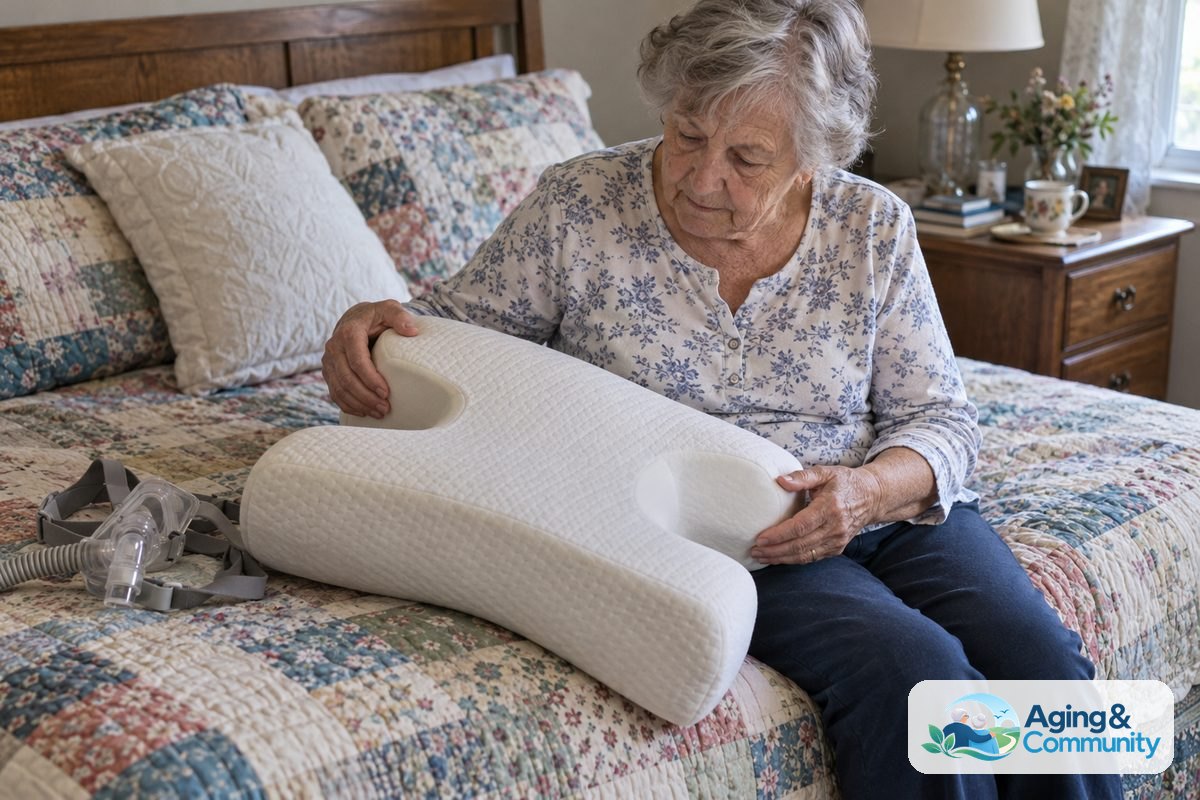
Understanding Why Standard Pillows Cause Mask Leaks
Standard bed pillows often work against positive airway pressure equipment. When you settle your face into a plush down or synthetic cushion, the pillow material pushes back against the plastic frame and silicone cushion of your mask. This pressure can shift the mask slightly away from your cheeks or nose, creating sudden leaks that blow air into your eyes or break the quiet of your room.
Specialty designs solve this issue by removing material right where your headgear rests. These cutouts allow your mask to hover freely in open space while your neck, jaw, and forehead remain properly supported. When your mask stays stable, your machine can deliver steady air pressure without constant adjustments.
For many older adults, maintaining a steady sleep routine is essential for daily energy, steady balance, and overall wellbeing. Unbroken sleep supports daytime alertness, which helps you move safely throughout your home. Staying steady on your feet during the day is closely tied to physical stability, and resources like the National Institute on Aging guide on falls, as well as knowing how to choose reachers or grabbers, offer helpful ways to maintain safe movement in your living space.
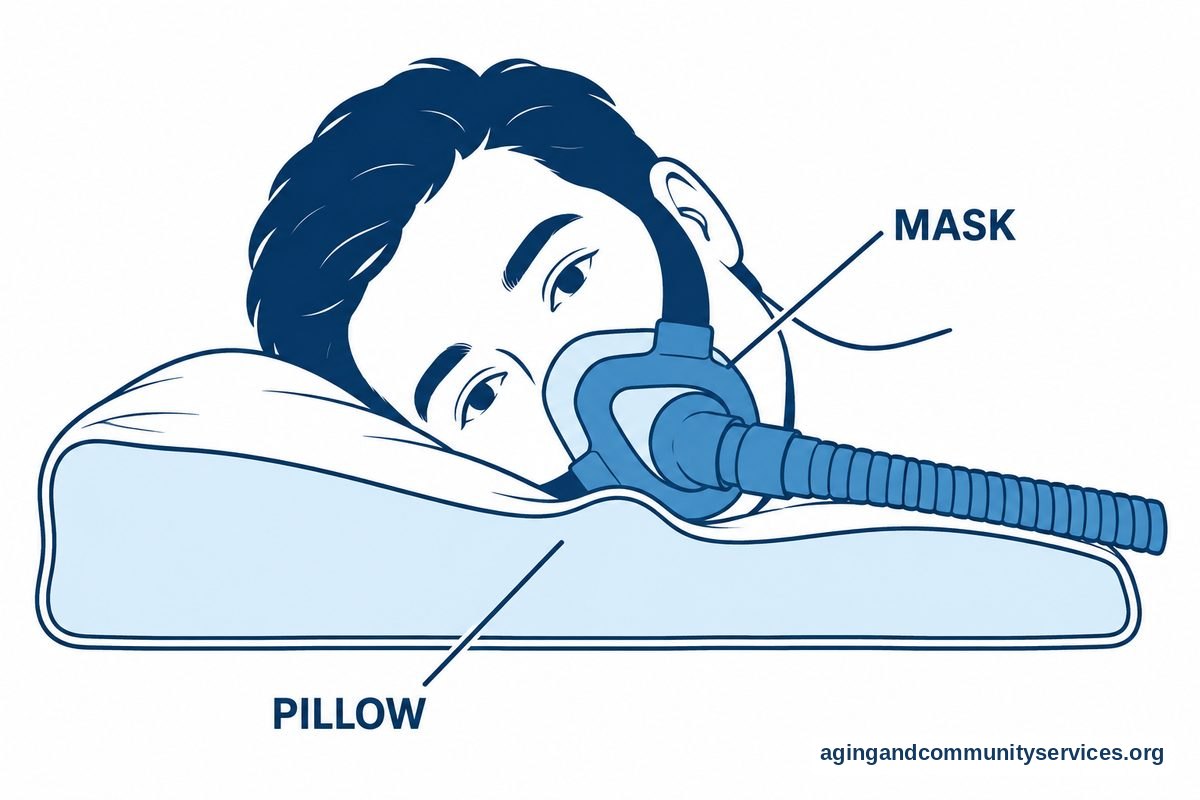
Matching Your Sleep Position to the Right Design
Your favorite sleep position is the most important factor when you select a new cushion. Different postures require specific shapes, heights, and cutout placements to keep your spine aligned and your tubing tangle-free.
- Side Sleepers: Side sleeping is popular among CPAP users, but it creates the most friction between masks and bedding. Look for a cushion with deep side recesses. These empty pockets give your mask room to rest without pushing against your cheekbones.
- Back Sleepers: Back sleepers need shallow contours that cradle the back of the head while keeping the chin slightly lifted. A shallow cradle prevents your chin from dropping toward your chest, which keeps your natural airway open.
- Stomach Sleepers: Sleeping on your stomach presents the greatest challenge for mask wearers. You need a very thin cushion with large side cutouts so your tubing can run off the edge of the mattress without kinking under your body.
- Combination Sleepers: If you shift positions during the night, look for a model that combines a supportive central zone for back rest with deep hollows on the left and right sides.
If you are exploring other supportive bedding options for neck comfort, you might also look at orthopedic pillows for seniors to see how different ergonomic contours support neck alignment.
Evaluating Pillow Fill and Materials
The material inside your cushion determines how firmly it holds its shape and how warm it feels against your skin. You will find several common materials on the market today, each with distinct benefits.
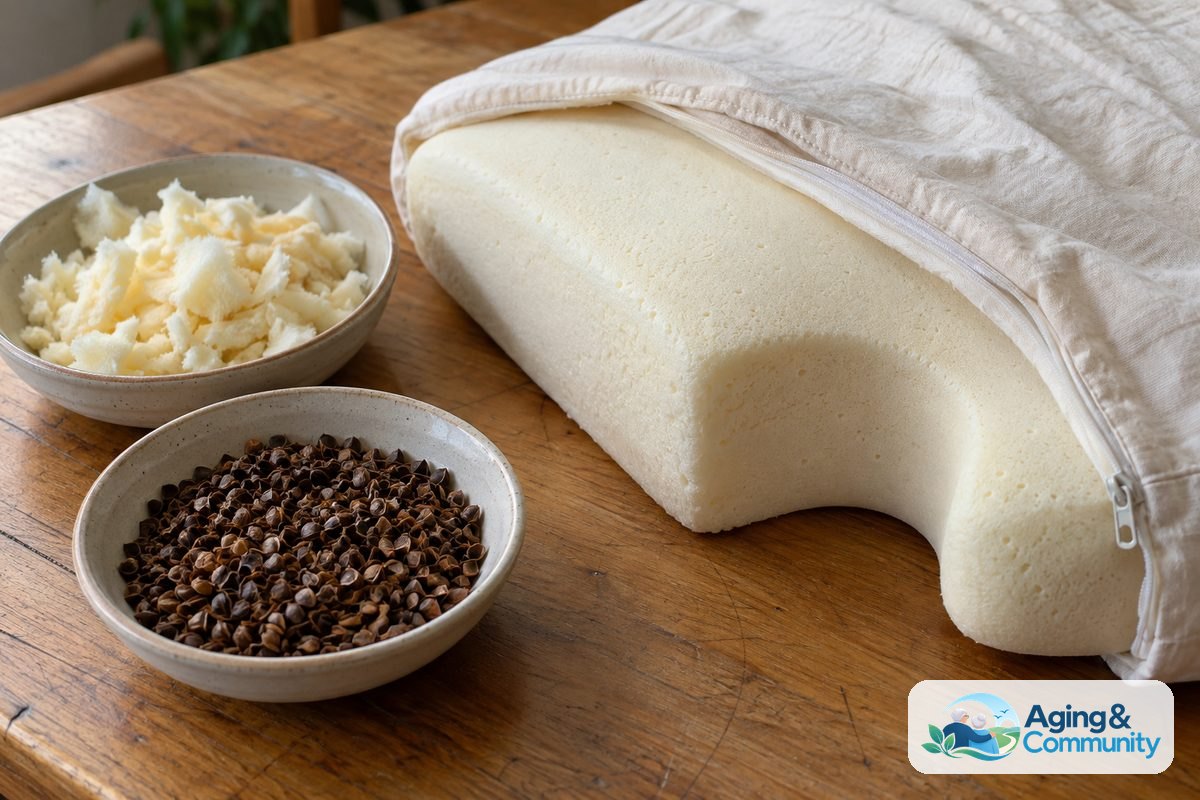
Molded memory foam is the most common material used in these products. Solid memory foam provides consistent support and holds its shape through the night without flattening. High-density foam keeps its form well, but it can trap body heat. If you tend to sleep warm, look for open-cell memory foam, ventilated cores, or gel-infused layers that encourage air circulation.
Fiberfill and shredded foam offer a feel closer to a traditional feather cushion. These styles often feature an internal zipper so you can take out or add handfuls of stuffing. This adjustability makes it easy to change the cushion height to match your shoulder width. However, loose fills may shift during the night and require regular fluffing to maintain their cutouts.
Buckwheat and natural latex provide firm, resilient alternatives. Natural latex offers bounce, breathes well, and pushes back gently without sinking too deeply. Buckwheat hulls allow you to mold the cushion to your exact head shape, though they make a soft rustling sound when you shift position.
Key Features to Check Before You Buy
Beyond the basic shape and fill, several functional features can make a big difference in how easily you adapt to your new setup. Taking time to inspect these details will ensure your gear works well together.
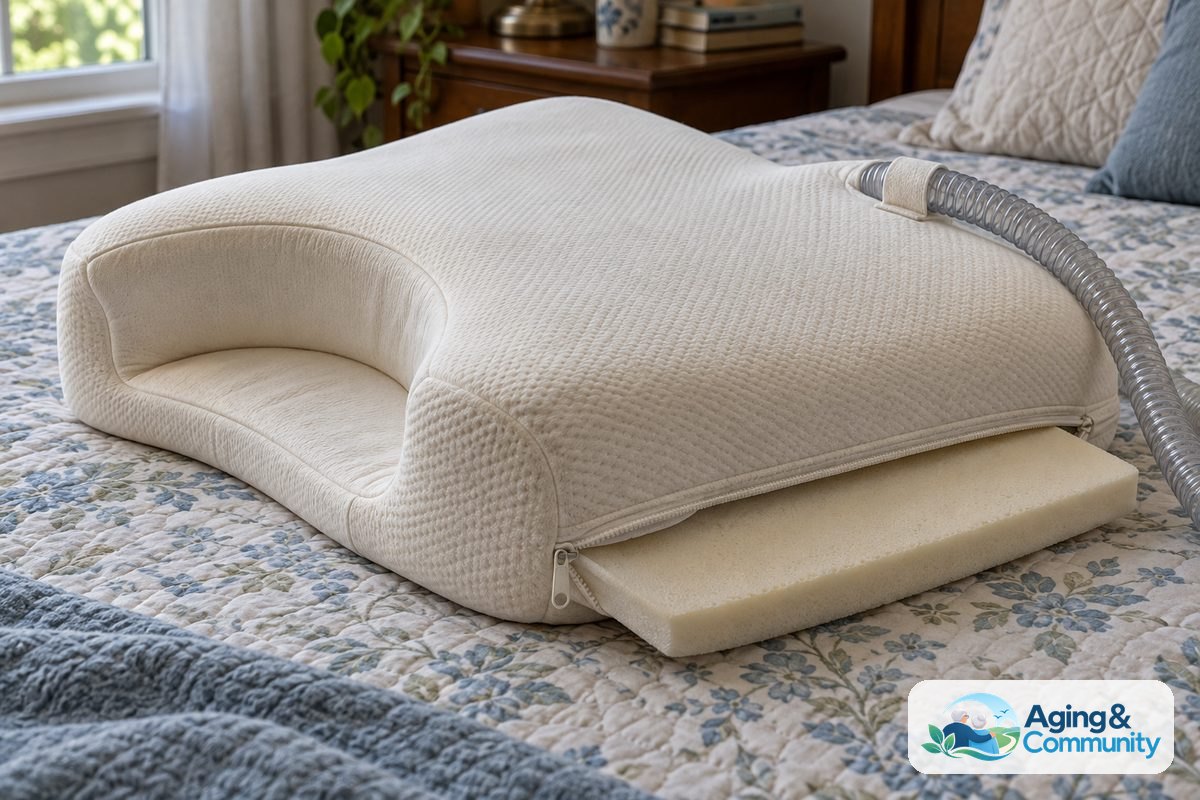
- Adjustable Loft: Loft refers to the height of the cushion. A cushion that is too tall bends your neck upward, while one that is too thin lets your head drop backward. Many models now include removable foam layers so you can raise or lower the surface.
- Tubing Management: Some models feature fabric loops, clips, or dedicated channels designed to secure your CPAP hose. Keeping the hose directed up and over your head stops it from pulling against your face when you roll over.
- Cover Fabric: Removable, washable covers made from breathable cotton or moisture-wicking fabrics help keep you cool. Ensure the replacement cover preserves the shape of the cutaways.
- Mask Compatibility: Different masks take up different amounts of room. A minimalist nasal pillow mask needs smaller cutouts than a full-face mask. As you learn how to choose a cpap machine and mask, remember that bulkier headgear requires wider recesses on your cushion.
How CPAP Pillows Compare to Other Sleep Supports
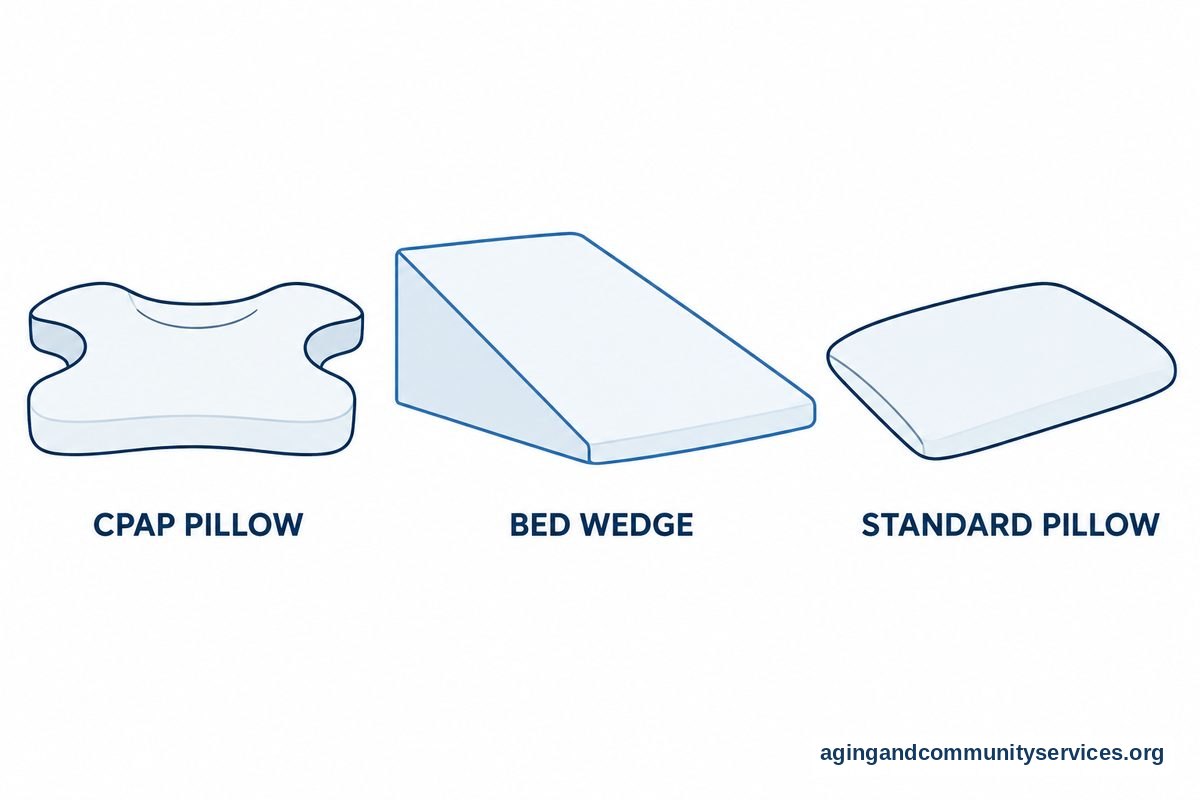
You may wonder if a dedicated mask cushion is the only option, or if other sleep supports might fit your nightly routine better. Here is how specialized mask cushions compare to traditional pillows and elevated wedge cushions.
| Feature | Specialty CPAP Cushion | Adjustable Bed Wedge | Standard Bed Cushion |
|---|---|---|---|
| Mask Relief Cutouts | Yes, deep side recesses | No, flat angled surface | No cutouts |
| Neck Alignment | Contoured for head and neck | Supports entire upper torso | Varies widely by material |
| Primary Benefit | Stops mask leaks and face marks | Elevates head, chest, and shoulders | Familiar, soft feel |
| Best For | Side and back mask wearers | Back sleepers needing elevation | General sleep without equipment |
Some people find that elevating their upper body helps with digestion and breathing comfort. If you need upper-body elevation along with mask management, exploring adjustable bed wedge pillows can help you decide whether a full wedge or a head-only cushion suits your bedroom best.
As you plan your bedroom setup, remember that comfort supports long-term independence. Finding the right tools for your home environment helps with aging in place safely and comfortably. Creating an organized sleep area is an important piece of staying settled in your own space.
What to Do Next
You can take several clear, practical steps to choose the right model without feeling rushed or overwhelmed by choices.
- Measure your shoulder width: Stand sideways against a wall and measure the distance from the side of your neck to the edge of your shoulder bone. This gives you the ideal cushion height for side sleeping.
- Examine your mask style: Note where your mask frame is widest and where your hose connects. If you wear a full-face mask, prioritize cushions with deep, open cutouts rather than small indents.
- Check return policies: It often takes a week or two for your neck muscles and sleep habits to adapt to a new shape. Purchase from retailers that offer at least a 30-night home trial so you can test the fit in your own bed.
- Review your equipment coverage: While specialized bedding is rarely covered, you may have questions about your main equipment. Researching topics like does medicare cover cpap machines can help you understand how insurance handles your supplies.
- Consult your care team: If you experience persistent morning neck stiffness or lingering shoulder aches, speak with your doctor, physical therapist, or occupational therapist for personalized posture guidance.
Frequently Asked Questions
Can I use a regular pillowcase on a CPAP pillow?
Using a regular pillowcase is generally not recommended. A standard case will bridge across the hollowed-out sections, turning the open cutouts into a tight fabric hammock. This undoes the benefit of the cutaways by pushing fabric back against your mask. It is best to use the form-fitting cover that came with your cushion or purchase specialized covers shaped to match the cutouts.
How long does a CPAP pillow usually last?
Most high-quality foam cushions provide dependable support for about two to three years. Over time, foam softens and loses its ability to hold your head at the correct height, which can lead to neck strain and mask movement. If you notice your head sinking deeper than it used to, or if you wake up with new leaks, it may be time for a replacement.
Will a CPAP pillow eliminate all mask leaks?
A specialized cushion helps eliminate leaks caused by your bedding pressing into your headgear. However, it cannot correct leaks caused by worn-out silicone cushions, stretched headgear straps, or an incorrect mask size. If your cushion allows your mask to sit in open air and you still hear leaks, check your mask straps and consider speaking with your equipment supplier.
What is the best way to clean and care for this type of cushion?
Always wash the fabric cover weekly in warm water using a mild, fragrance-free detergent. Do not place solid memory foam cores into a washing machine or dryer, as water breaks down the foam structure. Instead, spot clean the foam with a damp washcloth and mild soap, then allow it to air dry fully out of direct sunlight before zipping the cover back on.
Are CPAP pillows suitable for people who sleep on their back?
Yes, many models are designed specifically to support back sleepers. Back models feature a shallow central hollow that cradles the base of your skull while supporting the curve of your neck. This gentle alignment helps prevent your head from tilting forward or rolling sideways, keeping your mask centered and your tubing comfortable throughout the night.