

Learning how to use CPAP with oxygen at home is a simple process once you understand how the two systems connect together. Many older adults use both therapies at night to keep their airways open while receiving extra oxygen. With a special connector piece or a built-in mask port, you can blend oxygen smoothly into your nightly airflow.
Using both machines together requires careful attention to the order in which you turn them on and off. Following the right order protects your CPAP unit from accidental oxygen buildup inside the motor. Setting up your bedroom thoughtfully also makes it easier to sleep comfortably through the night.

Steps for Using CPAP With Oxygen
- Inspect all parts and tubing: Check your CPAP hose, mask, oxygen supply tubing, and small connector piece for cracks or moisture before you begin.
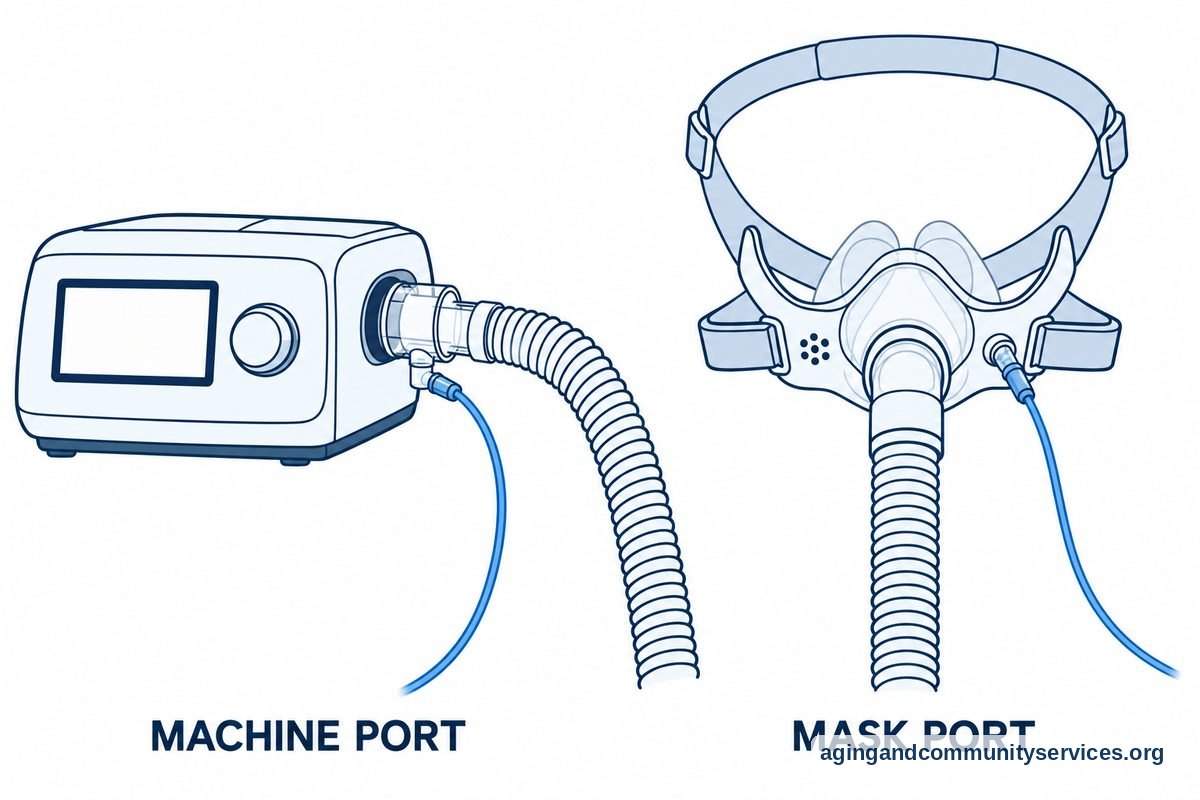
- Attach the oxygen bleed-in adapter: Place the small T-shaped adapter between your CPAP machine outlet and your main hose, or attach your oxygen tubing directly to your mask port if it has one.
- Connect the oxygen supply line: Push the thin green or clear oxygen tube firmly onto the small stem of your adapter or mask port so it stays secure during movement.
- Put on and adjust your mask: Place the mask over your nose or mouth, adjust the headgear straps evenly, and make sure you have a comfortable seal without overtightening.
- Turn on the CPAP machine first: Start your CPAP device so that air is flowing steadily through the hose before you introduce any oxygen into the system.
- Turn on the oxygen source second: Switch on your oxygen concentrator or tank and set the flow meter to the exact liter flow prescribed by your doctor.
- Reverse the order in the morning: When you wake up, always turn off the oxygen source first, wait a few moments, and then turn off your CPAP machine.

Common Mistakes to Avoid
- Turning on oxygen before the CPAP unit: Never start your oxygen flow while the CPAP machine is turned off. Oxygen can drift backward into the machine casing and create a serious fire hazard.
- Turning off the CPAP before the oxygen in the morning: Always shut off the oxygen concentrator or cylinder first. Letting the CPAP run for a few seconds clears any leftover oxygen from the hose.
- Using petroleum-based creams or ointments: Avoid using petroleum jelly or oil-based lotions on your face or inside your nostrils. These products react with concentrated oxygen and can cause skin irritation or burns; use water-soluble products instead.
- Placing oxygen tubing near heat or open flames: Keep your bed, tubing, and concentrator at least five to ten feet away from space heaters, radiators, candles, and electric blankets.
- Guessing your flow rate: Never change your prescribed oxygen liters per minute on your own. Always use the exact setting your medical provider gave you.
- Leaving long tubing coiled in walkways: Loose cords and hoses can become tripping hazards across bedroom rugs. Keeping pathways tidy helps with falls and falls prevention around your bed.
When to Call for Professional Help
Getting your equipment working smoothly sometimes takes outside support. If you notice persistent air leaks, hissing sounds around the adapter, or machine warning beeps, reach out to your medical equipment supplier. Tell the technician the brand of your CPAP unit, the type of oxygen source you use, and whether the leak is near the machine or the mask, similar to asking what Medicare covers for lifts.
You should also contact your doctor or sleep specialist if you wake up with morning headaches, extreme dry mouth, chest discomfort, or daytime sleepiness. These signs may mean your pressure settings or oxygen flow need an evaluation. Your doctor can check your progress and help you decide whether your current setup meets your personal nighttime breathing needs.
If you need help coordinating home care services or finding local equipment assistance, the Eldercare Locator can connect you with trusted community resources right in your area.
Choosing the Right Connection Point
There are two primary ways to introduce oxygen into a CPAP system. The first method uses a bleed-in adapter placed directly at the CPAP machine outlet. This puts the thin oxygen tubing near the machine base, keeping extra weight away from your face while you sleep.
The second method connects the oxygen line directly to a port on your CPAP mask. Some people prefer this method because it introduces oxygen right where you breathe. However, the extra tube near your head can pull on the mask if you turn during sleep. Learning how to choose a cpap machine and mask with comfortable tubing clips can make a big difference in how well the gear stays in place.
Setting Up Your Bedroom for Comfort and Safety
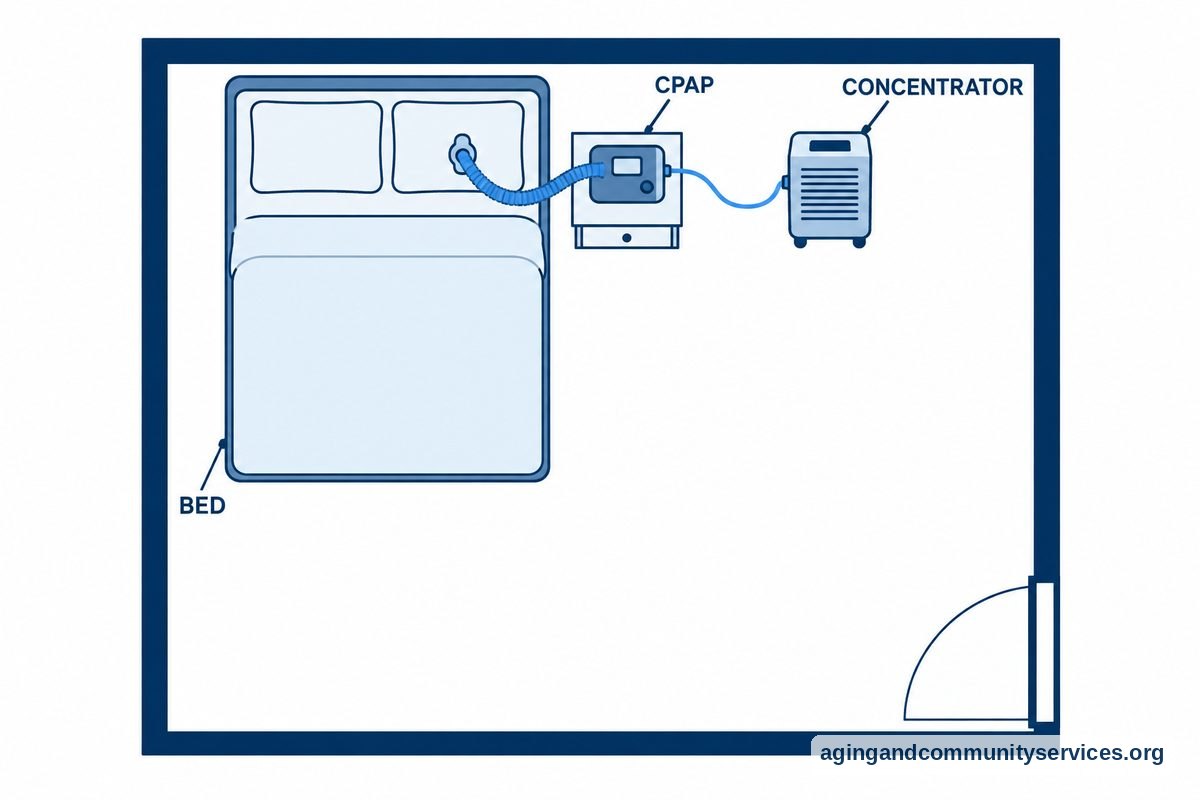
Arranging your nightstand properly makes nightly therapy much easier to manage. Place your CPAP machine on a sturdy, flat surface slightly lower than your head. This position prevents condensation water from running down the tube into your face. It also supports your goal of comfortable and independent aging in place.
Keep your oxygen concentrator in an open area with good airflow around its vents. Avoid pushing the machine tight against curtains or bedroom walls, which can cause it to overheat. Using specialized bedding accessories like learning how to choose a cpap pillow can give your mask cutouts that prevent leaks when you rest on your side.
Some individuals find standard continuous pressure challenging when combined with oxygen. In those cases, a specialist might explain how to choose cpap or bipap equipment to provide different pressures for breathing in and breathing out.
Monitoring Your Nighttime Oxygen Levels
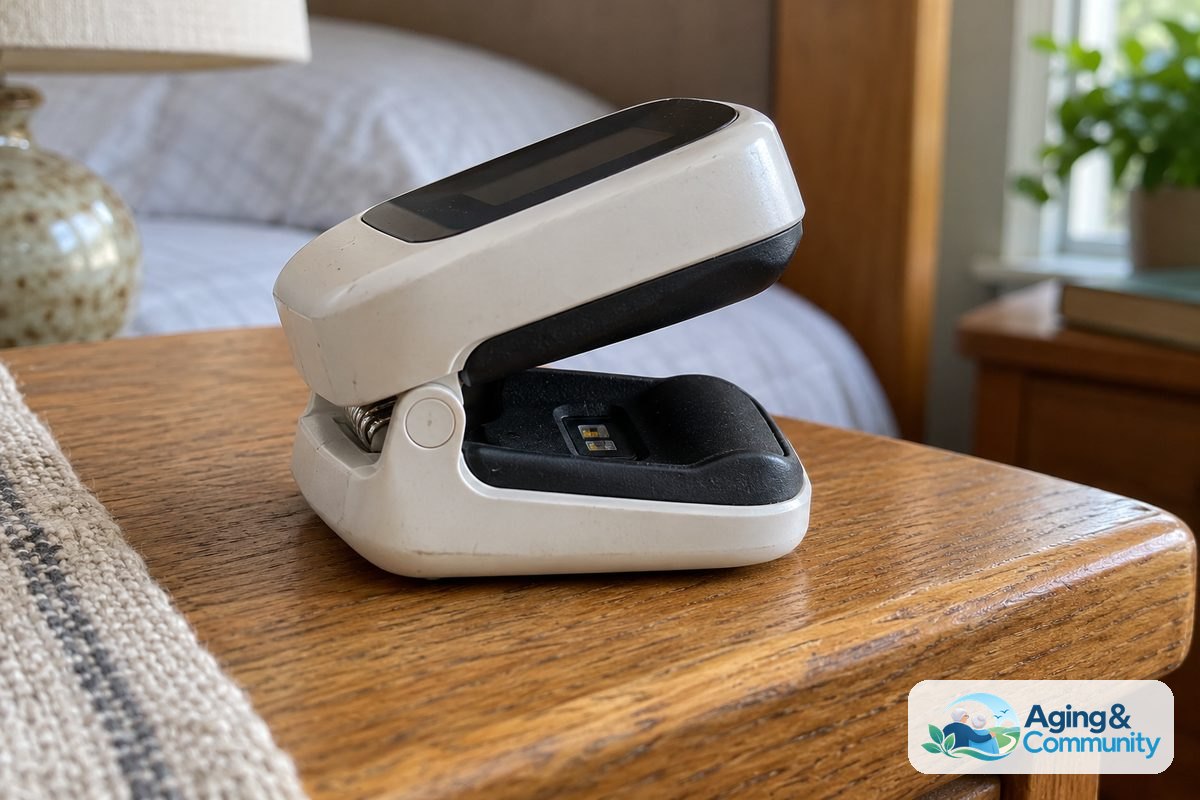
Your physician may want you to check how well your body absorbs oxygen while sleeping. Using a small fingertip sensor can give you helpful readings to share during office visits. Learning how to use pulse oximeter devices correctly allows you to track daytime and wake-up numbers without guesswork.
| Checklist Step | Morning Routine | Evening Routine |
|---|---|---|
| CPAP Unit Power | Turn off last | Turn on first |
| Oxygen Supply | Turn off first | Turn on second |
| Tubing Inspection | Check for condensation | Check for tight connections |
| Mask Fit | Wipe cushion clean | Fasten straps comfortably |
Frequently Asked Questions
Can oxygen flow backward into my CPAP machine?
Yes, oxygen can drift into the CPAP casing if you turn the oxygen on while the CPAP blower is turned off. That is why medical suppliers stress starting the CPAP machine first so forward air pressure pushes the oxygen straight toward your mask.
Where should the oxygen bleed-in adapter be installed?
Most home care companies recommend placing the adapter right at the air outlet of the CPAP unit before the long hose. This keeps the thin oxygen line on the bedside table instead of hanging from your headgear.
Can I use heated tubing with an oxygen bleed-in valve?
Heated hoses require a special setup because the electrical connection sits right at the machine port. In most cases, the oxygen bleed-in adapter must be placed between the end of the heated hose and your mask swivel rather than at the machine base. Check your hose manual for exact placement instructions.
Do I need to add water to my humidifier more often when using oxygen?
Oxygen gas from tanks or concentrators is very dry, which can cause water in your CPAP chamber to evaporate more quickly. Check your water chamber daily and refill it with distilled water each evening up to the fill line.
What should I do if my nose feels very dry or irritated?
You can ask your doctor or equipment technician about raising your CPAP heated humidity setting. You can also use a plain saline nasal spray or a water-based nasal gel before bed, but never use petroleum jelly inside your nostrils when using supplemental oxygen.