

Learning how to use trapeze bar equipment in bed can make shifting positions and sitting upright much simpler. You use your arms to lift your upper body, which eases the strain on your back, legs, and caregivers. With the right technique, this sturdy overhead triangle gives you extra control during daily movements.

Steps for How to Use a Trapeze Bar
- Check your reach: Make sure the bar hangs directly above your chest area so you can grasp it with both hands without straining your shoulders or twisting sideways.
- Bend your knees: Place both feet flat on the mattress about hip-width apart to help support your lower body while you lift.
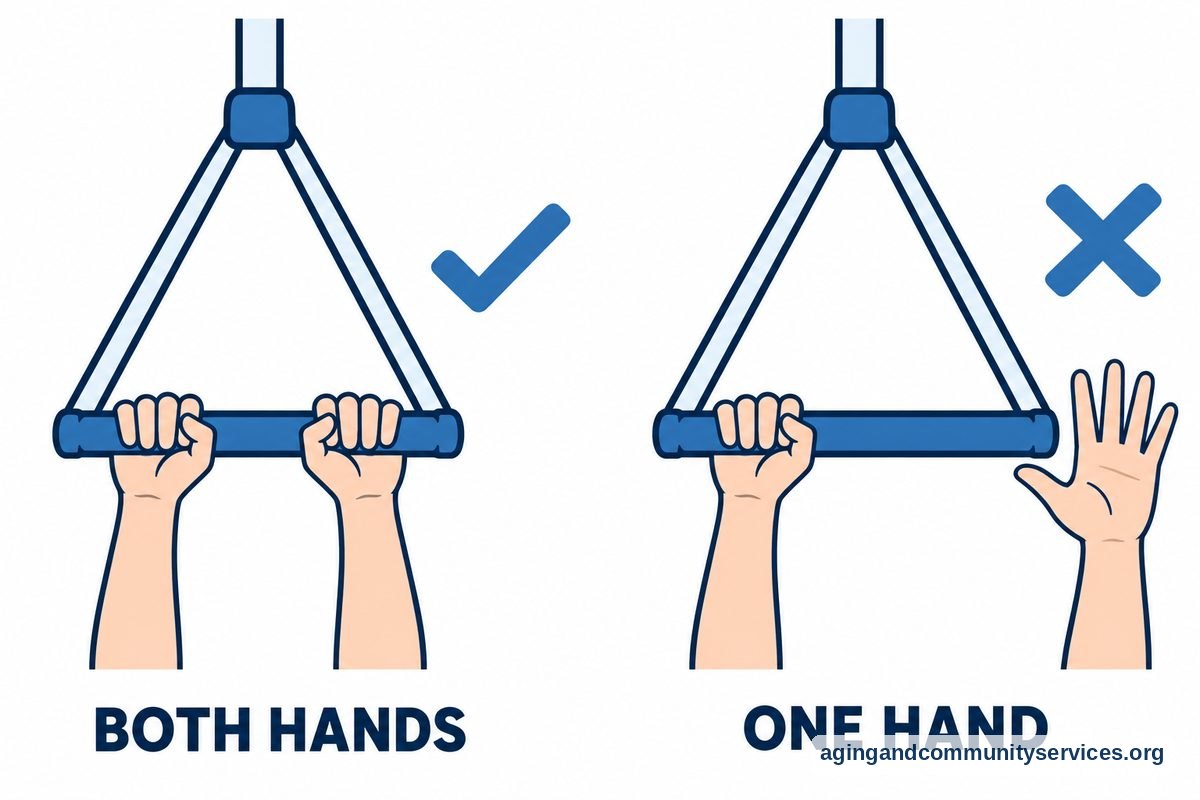
- Grasp with both hands: Place your hands firmly around the triangle handle using an overhand grip, keeping your wrists straight and your elbows slightly bent.
- Engage your core: Tighten your abdominal muscles and breathe out as you prepare to lift, avoiding holding your breath during the movement.
- Pull upward steadily: Pull down on the bar using your arm and back muscles to lift your shoulders and hips off the bed smoothly without jerking.
- Reposition your body: Use your planted feet to push gently toward the head of the bed or to the side while holding your weight with your arms.
- Lower down with control: Slowly lower your body back onto the mattress, keeping your grip steady until your back rests completely flat or supported.
Common Mistakes to Avoid
- Pulling while the bar is out of reach: Reaching too far toward your head or feet can strain your shoulders, neck, or lower back.
- Jerking or swinging: Using quick, bouncing motions instead of smooth effort can cause you to lose your grip or swing off balance.
- Relying on one hand only: Using just one arm twists your spine and increases the chance of slipping, especially when your muscles are tired.
- Ignoring foot placement: Forgetting to bend your knees and plant your feet puts all the workload on your arms, which makes moving much harder.
- Leaving the bar swinging: Letting go suddenly can make the triangle swing into your face, head, or nearby equipment.
When to Call for Help or Professional Advice
Always speak with a physical therapist or occupational therapist before using overhead equipment on your own. These specialists can evaluate your upper-body strength and ensure the setup matches your physical needs. If you experience sudden pain in your shoulders, wrists, neck, or back while lifting, stop right away and notify your doctor.
You should also seek assistance if the equipment feels wobbly, shifts along the floor, or makes grinding noises. If you need help finding qualified home safety specialists in your area, contact the Eldercare Locator to connect with support services. When you call, describe the type of bed you have, the make of your overhead bar, and the specific physical difficulties you face during movement.
Setting Up Your Bed and Overhead Equipment
Proper placement is essential when figuring out how to use a trapeze bar safely. The triangular handle should hang roughly two to four inches above your chest when you lie flat with bent elbows. If the bar hangs too high, you must reach uncomfortably, which can tire your muscles before you even start to lift. If it sits too low, you will not have enough room to pull your torso upright.
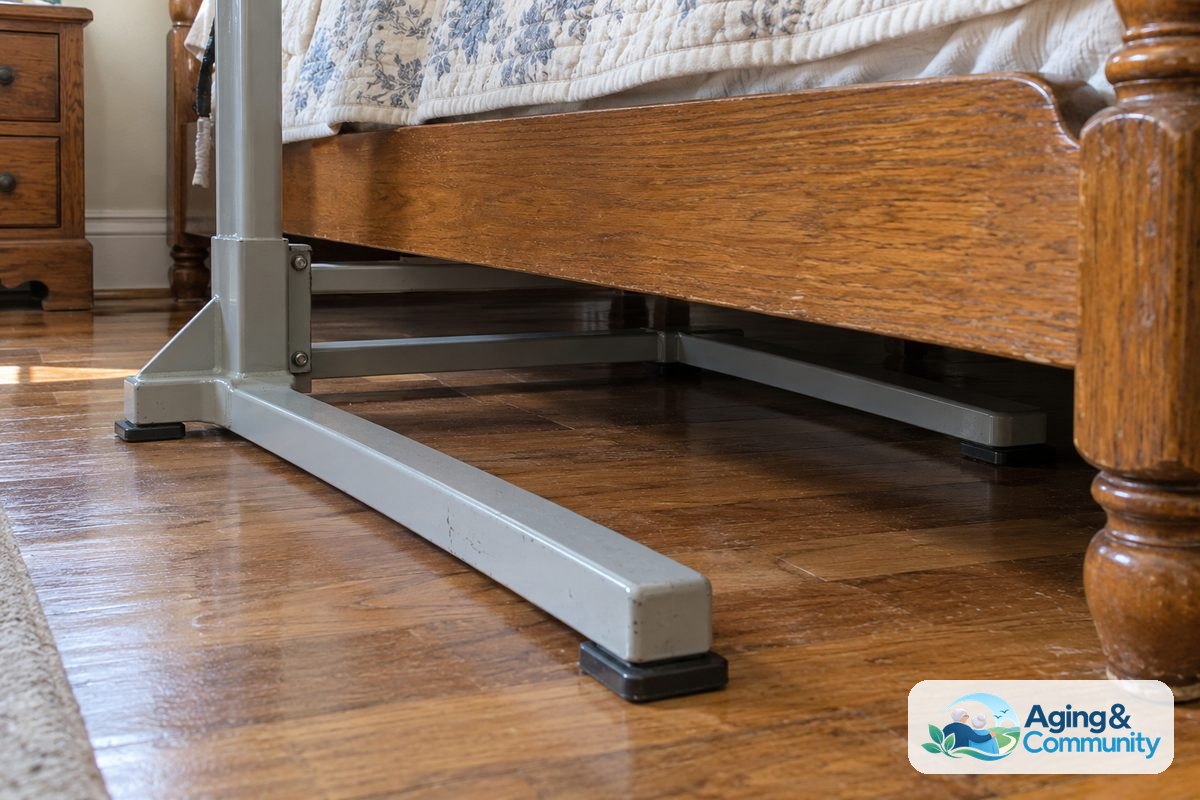
Trapeze bars can mount directly onto medical frames or stand on their own heavy floor bases. If your setup attaches directly to a frame, learning how to use hospital bed controls properly helps you keep the head and foot of the bed at the right angle. Free-standing units need plenty of clearance under the bed so the wide legs do not create tripping hazards around your room.
For many older adults, creating a safe bedroom layout supports long-term comfort. Resources from the National Institute on Aging on Aging in place highlight the value of personalizing living spaces to fit changing physical needs. Taking time to position your furniture and mobility aids properly makes every transfer smoother.
Comparing Bedroom Mobility Aids
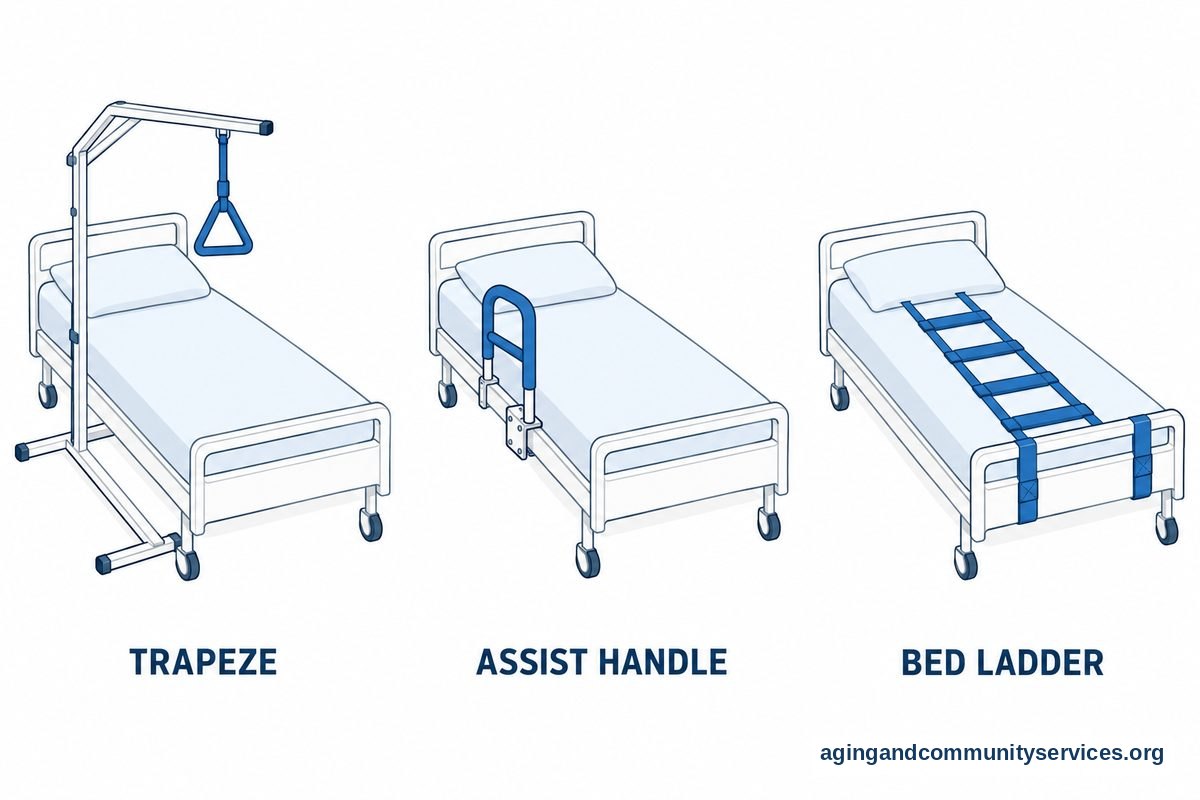
Overhead bars are great tools, but they are not the only items available to assist with bed mobility. Depending on your upper-body strength and the layout of your bedroom, another transfer bed aid might better suit your needs. The table below compares common bedroom supports to help you understand your choices.
| Mobility Aid | Main Benefit | Best For |
|---|---|---|
| Trapeze Bar | Overhead pulling point for lifting hips and torso | Shifting up in bed and building arm strength |
| Bed Assist Handle | Low, sturdy rail for leverage while turning | Sitting up at the edge and standing |
| Bed Ladder | Webbing rungs pulled hand-over-hand | Rising from lying down without overhead bars |
| Adjustable Bed Frame | Motorized elevation of the head and knees | Changing resting posture with minimal effort |
Many people find that pairing different tools creates the safest routine. For example, using an overhead bar to sit upright and then grasping bed assist handles provides steady balance when placing your feet onto the floor. If an overhead bar does not fit your room ceiling, flexible bed ladders for seniors offer another way to pull yourself up hand-over-hand.
Safe Transfers and Daily Routine
Using an overhead bar can become a smooth part of your morning and evening routines. When you wake up, take a moment to stretch your arms and flex your fingers before grabbing the handle. Cold or stiff muscles need a minute to wake up so your grip remains steady. Breathe steadily throughout the entire movement, as holding your breath can cause dizziness when you sit up.
Caregivers can stand near the bedside to guide movements without doing all the heavy lifting themselves. When you bear part of your own weight, your helper avoids strain on their back. If you also use side barriers, reviewing how to use bed rail for elderly safety ensures that rails and bars never bump into each other during transfers. Checking the National Institute on Aging guide on falls and falls prevention can give you more practical ideas to keep bedroom floors clear and stable.
Frequently Asked Questions
How high should the trapeze bar hang above the bed?
The handle should hang at a height where you can reach it comfortably with your elbows bent about 45 degrees while lying flat. It should sit directly over your mid-chest area rather than over your face or stomach. An occupational therapist can adjust the chain links or straps to match your exact arm length.
Can a trapeze bar be used with a standard home bed?
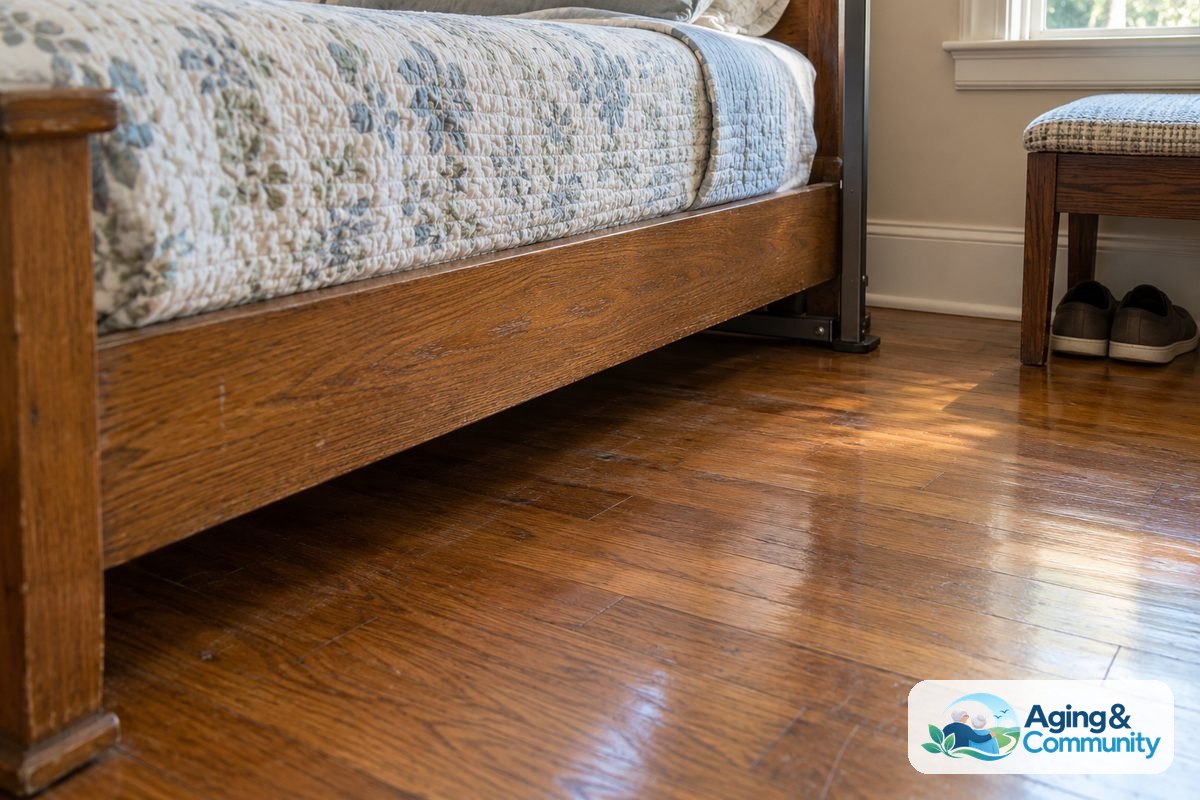
Yes, you can use a free-standing model that rests on the floor with wide base legs sliding under your regular bed frame. However, you must ensure your bed frame has enough ground clearance for the base to fit completely under the mattress without tipping. Direct-mount bars generally only attach to specific metal medical frames.
What should I do if my hands slip while holding the bar?
If your hands feel weak or sweaty, talk with an occupational therapist about adding textured grip tape or padded covers to the handle. Padded gloves with non-slip palms can also help you hold on without squeezing too hard. Never use lotion right before pulling on the bar.
Can I use the trapeze bar to swing myself out of bed?
No, you should never swing your body or use rapid momentum with an overhead bar. Swinging increases the risk of slipping off the edge of the mattress or losing your grip mid-movement. Always move in slow, controlled stages by pulling up, pivoting your hips, and lowering your feet to the floor.
How do I know if my trapeze bar is sturdy enough?
Check the manufacturer weight rating before installation and verify that every pin, bolt, and chain link is locked tight. Inspect the frame once a week to confirm the base has not shifted and the ceiling chain shows no wear. If the apparatus wobbles or creaks, pause use until a professional inspects it.