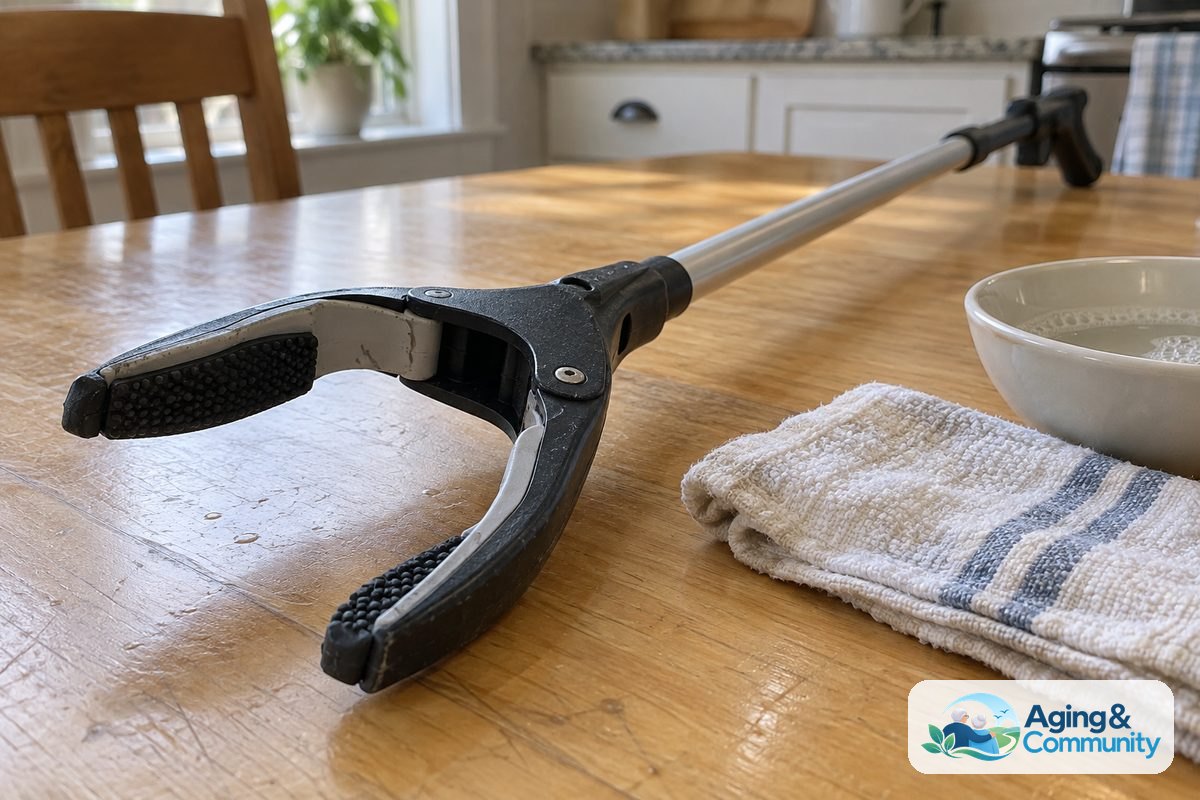
Learning how to use a reacher grabber can make daily tasks around your house much easier and safer. To use the tool, you hold the ergonomic handle, point the jaw toward the item you want, squeeze the trigger firmly, and gently bring the item close to your body. Practicing this smooth motion keeps you steady on your feet and saves your back from unnecessary strain.
A grabber is a lightweight tool with a handle on one end and a mechanical gripping claw on the other. It acts as an extension of your arm, giving you two to three extra feet of reach. Many older adults keep one in the living room, kitchen, and bedroom to handle daily chores with greater independence.

How to Use a Reacher Grabber in Six Simple Steps
- Check your balance and footing: Stand with your feet shoulder-width apart on a flat, dry surface, or sit down comfortably in a sturdy chair before reaching.
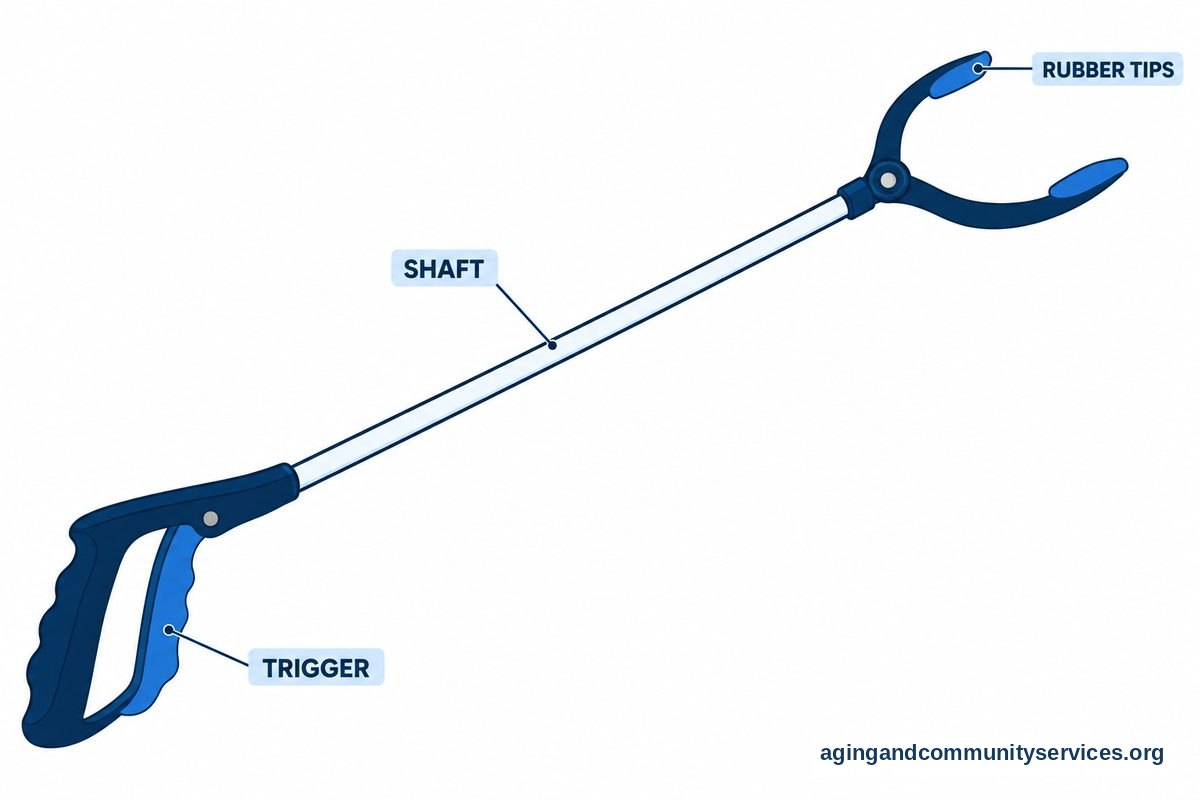
- Grip the handle securely: Wrap your fingers around the contoured trigger handle, making sure your wrist stays straight and relaxed.
- Position the gripping jaws: Extend your arm naturally toward the object, opening the jaws by releasing the trigger until the rubber tips surround the middle of the item.
- Squeeze the trigger smoothly: Pull the trigger lever steadily toward the handle so the jaws close firmly around the object without crushing it.
- Lift with your arm close to your body: Keep the trigger squeezed tight, bend your elbow, and slowly draw the item toward your chest rather than holding it far out at arm’s length.
- Release the item carefully: Set the item down onto a stable table, counter, or your lap, and then relax your fingers to open the jaws.
Taking a few moments to practice these steps on soft, lightweight items will help you build confidence. You can start with an empty plastic cup, a dry washcloth, or a folded newspaper. Once your hands feel comfortable with the squeezing motion, picking up household objects will feel natural.
Common Mistakes to Avoid
- Lifting objects that are too heavy: Trying to pick up full cans of soup, cast iron pans, or heavy books can snap the internal wire or cause you to lose your balance.
- Grabbing fragile glass items: Slick glass cups and ceramic mugs can easily slip out of the claws, break on the floor, and create dangerous sharp pieces.
- Stretching past your natural balance point: Leaning on your tiptoes or bending sideways while using the tool defeats its purpose and can lead to a sudden stumble.
- Holding heavy loads far away from your chest: Carrying an item with an outstretched arm puts extra stress on your shoulder joints and pulls your center of gravity forward.
- Twisting your body while lifting: Pivoting your spine while squeezing the trigger can strain your lower back, so always turn your whole feet toward the item instead.
- Using a broken or loose tool: Continuing to use a reacher with loose cables, cracked plastic jaws, or worn rubber suction cups increases the risk of dropping things.
When to Ask for Help or Professional Guidance
While a reacher grabber is a wonderful tool for daily life, it is not a replacement for good physical support. If an object rolls under a low bed, falls behind a heavy washing machine, or sits on the highest kitchen shelf, it is always wiser to ask a family member, neighbor, or home aide for a hand. Never risk a fall to pick up an item that you can leave for later.
If you feel unsteady when standing, or if your hands struggle to squeeze the trigger, consider speaking with an occupational therapist or a physical therapist. These professionals can evaluate your home environment and show you adaptive techniques tailored to your body. You can explain how your hands feel, share any balance concerns you experience, and demonstrate how you currently pick up items off the floor.
For additional resources on staying safe at home, the Eldercare Locator connects individuals and families with local support services and home safety programs. The National Institute on Aging: Falls and Falls Prevention page also offers practical guidance on maintaining your balance and keeping your living space free of common hazards.
Choosing the Right Tool for Different Needs
Not every reacher is built the same way, and matching the tool to your personal hand strength makes a big difference. Some models feature full-hand squeeze triggers, which allow you to use all four fingers to grip. Others use a smaller two-finger trigger that requires more isolated finger power. If you have joint stiffness, exploring specialized grabber tools for arthritis can help you find options with padded handles and locking mechanisms that hold items without continuous squeezing.
Length is another critical feature to consider. A standard reacher is usually between 26 and 32 inches long. Shorter models offer greater control when you are sitting in a chair or getting dressed. For broader reach around high cupboards or behind furniture, looking into various grabber tools for elderly users can help you compare longer reachers and folding designs that store neatly in small spaces.
Daily Tasks Made Easier with a Reacher
A reacher grabber is surprisingly versatile around the house. In the bedroom, you can use it to pull blankets up without straining your back or retrieve slippers that slid under the nightstand. When getting dressed, many people combine their reacher with other adaptive tools; for instance, understanding how to use sock aid devices alongside a grabber makes putting on clothing much smoother without bending over.
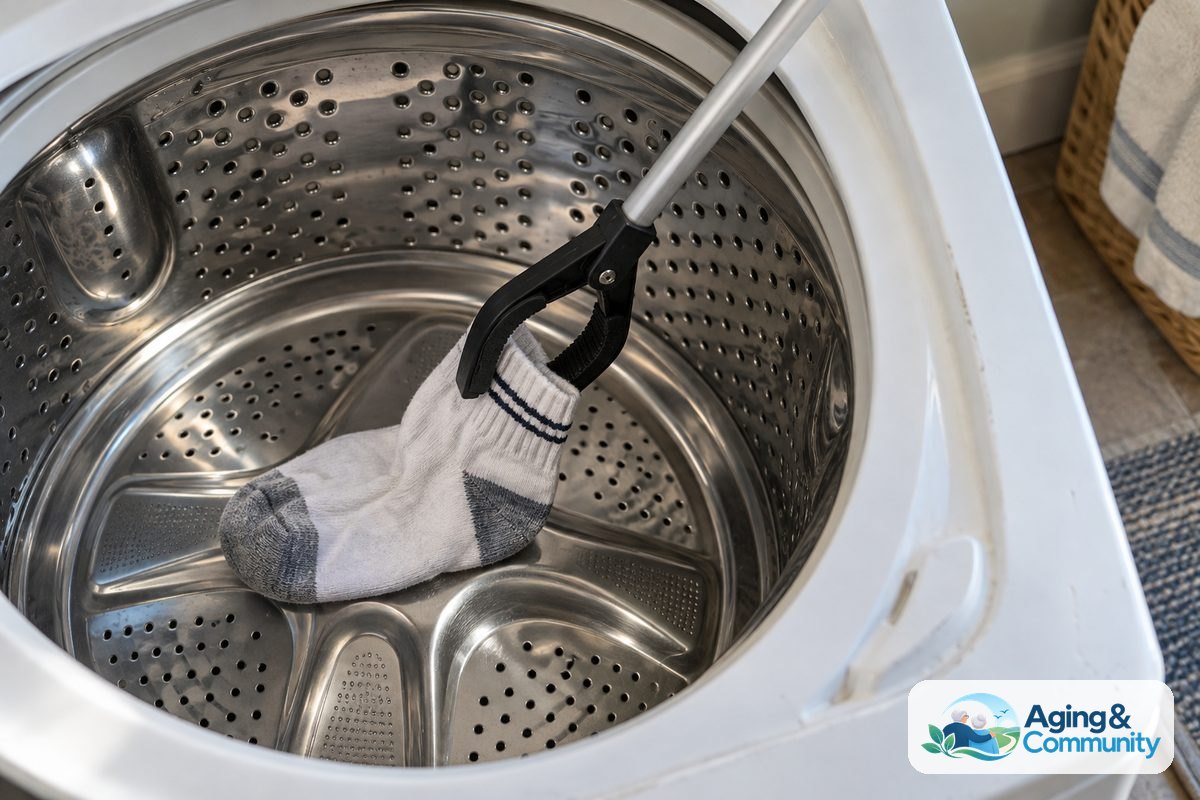
In the laundry room, a reacher is ideal for pulling stray socks and washcloths out of deep washing machine tubs. In the garden or yard, it allows you to pick up dry twigs, fallen leaves, or empty plant pots without crouching down onto your knees. Keeping dedicated reacher grabber tools for seniors stationed in different rooms ensures that help is always within arm’s reach.
Making Your Home Safe for Independent Living
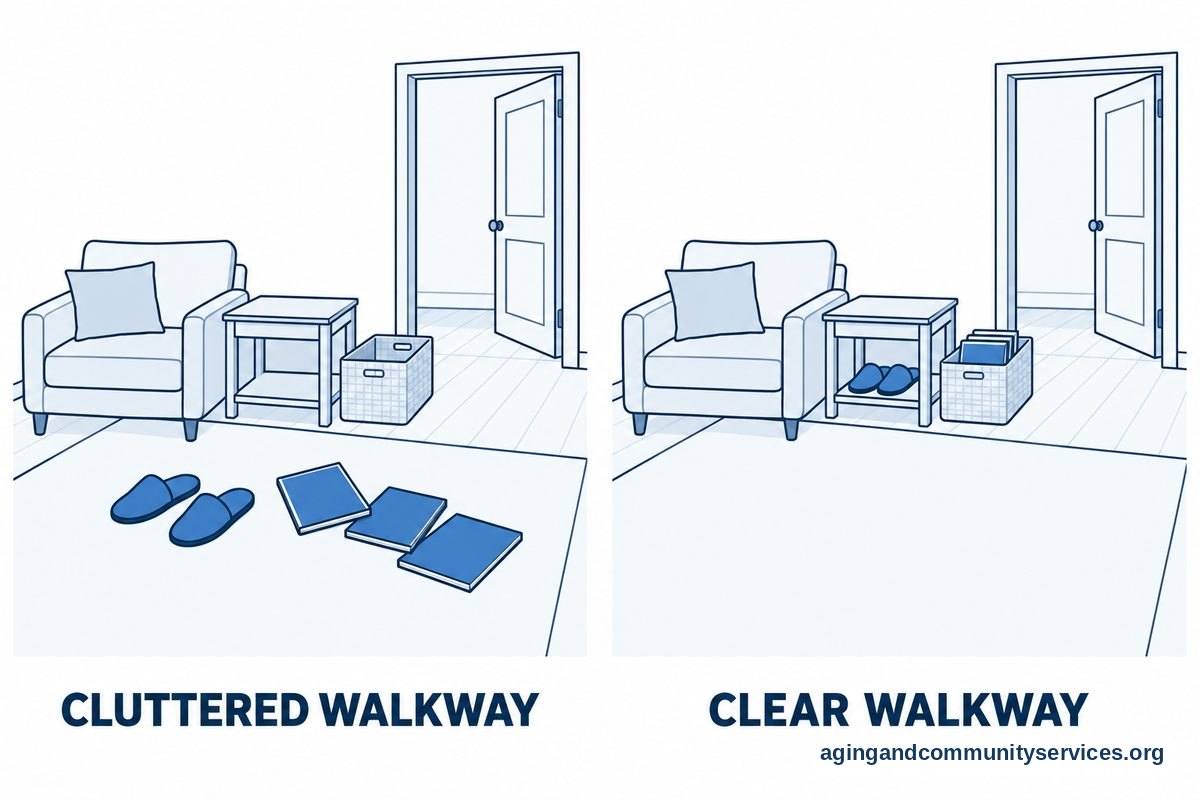
Using reachers is part of a broader approach to staying comfortable and secure in your own home. Helpful resources from the National Institute on Aging: Aging in Place suggest looking at your overall living space to remove trip hazards, improve lighting, and store common items where you can reach them without climbing or deep bending.
Simple adjustments, like moving everyday dishes to lower shelves and clearing clutter from hallways, work hand-in-hand with reacher tools. When you combine a well-organized home with practical assistive tools, you protect your joints, save your energy, and enjoy greater peace of mind throughout the day.
Frequently Asked Questions
How much weight can a reacher grabber pick up safely?
Most standard reacher grabbers are designed to lift lightweight household items weighing between one and two pounds. This includes things like remote controls, envelopes, magazines, eyeglasses, and clothing items. Trying to lift items heavier than two or three pounds can strain the internal cable mechanism, bend the shaft, or cause the item to slip from the jaws and drop onto your feet.
Can I use a reacher grabber to get dressed?
Yes, many people use reacher grabbers to assist with daily dressing tasks. The jaws can help pull pants legs over your feet, hold the waistband of trousers, retrieve shoes from a closet, or pull up socks. Opting for a reacher with small rubber tips or an integrated dressing hook at the tip makes catching fabric loops and managing clothing far simpler.
How do I clean and maintain my grabber tool?
You can keep your reacher grabber clean by wiping down the plastic handle, aluminum shaft, and rubber jaws with a damp cloth and mild dish soap. Avoid submerging the tool completely in water, as this can rust the internal springs and metal wires. Periodically check that the jaw tips are clean of dust and lint so they maintain their tacky grip on smooth surfaces.
What should I do if the jaws feel loose or will not pinch?
If the jaws fail to close firmly when you pull the trigger, the internal cord or wire may have stretched or slipped off its track. Some models have a small adjustment screw near the handle that allows you to tighten the tension. However, if the cable is frayed, stretched out, or snapped inside the tube, it is usually safest to replace the reacher with a new one to prevent dropped items.
Are rotating head reachers better than fixed ones?
Rotating heads add extra convenience because they allow you to switch the jaws between a vertical and horizontal orientation without twisting your wrist. A horizontal grip works well for books and wide objects, while a vertical grip is ideal for picking up coins, pens, and thin items off the floor. If twisting your forearm is uncomfortable, a rotating head can provide welcome relief.