

Learning how to choose a mobility scooter comes down to matching your daily routines with the right size, range, and comfort features. The ideal model fits your living space, supports your body well, and travels easily wherever you want to go. Taking a little time to compare basic designs will help you find a dependable match for your lifestyle.
Decide Where You Will Use the Scooter Most
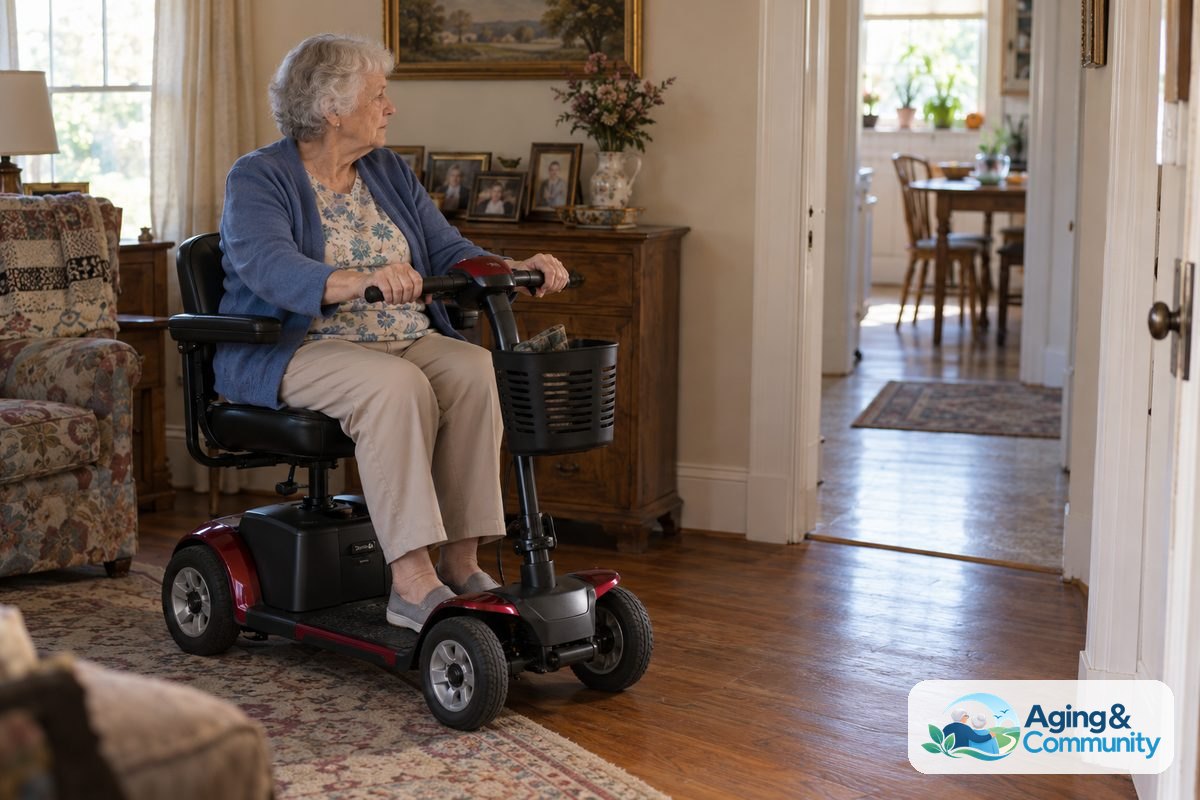
The place you plan to drive most often is the biggest factor in your decision. Indoor spaces demand tight turns, while outdoor paths call for stronger motors and bigger wheels.
If you plan to stay inside your home, small hallways and doorway widths matter. You need a device that turns smoothly without bumping into baseboards or furniture. Helpful resources on aging in place can give you good ideas for checking your room layouts and floor surfaces.
For outdoor use, think about the terrain in your neighborhood. Paved sidewalks, packed gravel, and grass each require different levels of power and tire tread. Outdoor models often feature higher ground clearance so the bottom of the frame will not scrape on uneven surfaces.
Compare Three-Wheel and Four-Wheel Designs
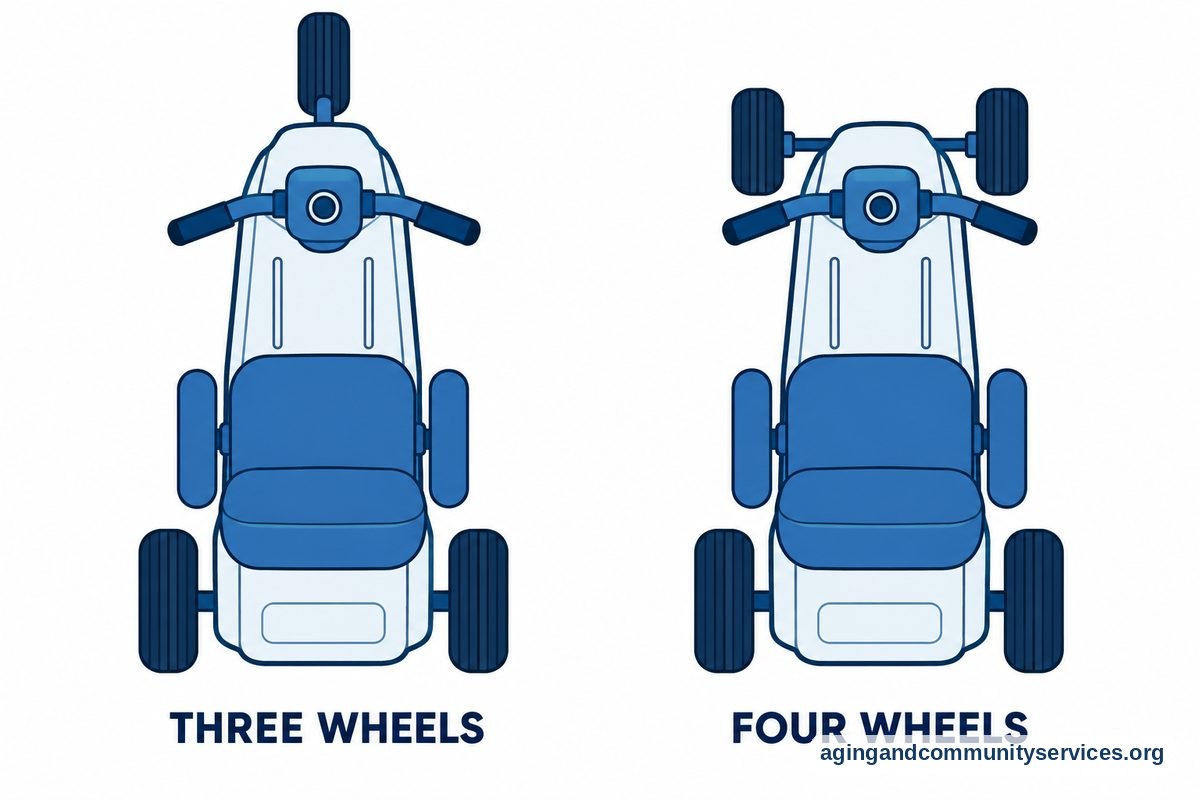
Most models fall into one of two main wheel layouts. Each layout offers distinct advantages depending on your balance, your home, and your driving habits.
- Three-wheel scooters: These models feature a single front wheel and two rear wheels. They offer a much smaller turning radius, making them wonderful for indoor use, grocery aisles, and tight spaces. They provide slightly less stability on steep hills or rough ground.
- Four-wheel scooters: These models have two front wheels and two rear wheels. They provide broader balance and distribute weight evenly across the frame. They work well for outdoor paths, gentle hills, and slightly bumpy roads, though they need more room to complete a full turn.
If you are still weighing whether you want handlebars or hand rims, reviewing the differences between a wheelchair vs mobility scooter can help clarify which setup matches your upper body strength.
Consider Weight Capacity, Size, and Seating Comfort
Your physical comfort is essential if you plan to ride for more than a few minutes at a time. A proper seat keeps your posture supported and helps you avoid back stiffness.
Check the total weight capacity of any model you view. Standard units typically hold up to three hundred pounds, while heavy-duty models can support four hundred to five hundred pounds or more. Choosing a frame that comfortably supports your weight ensures the motor and brakes work as intended.
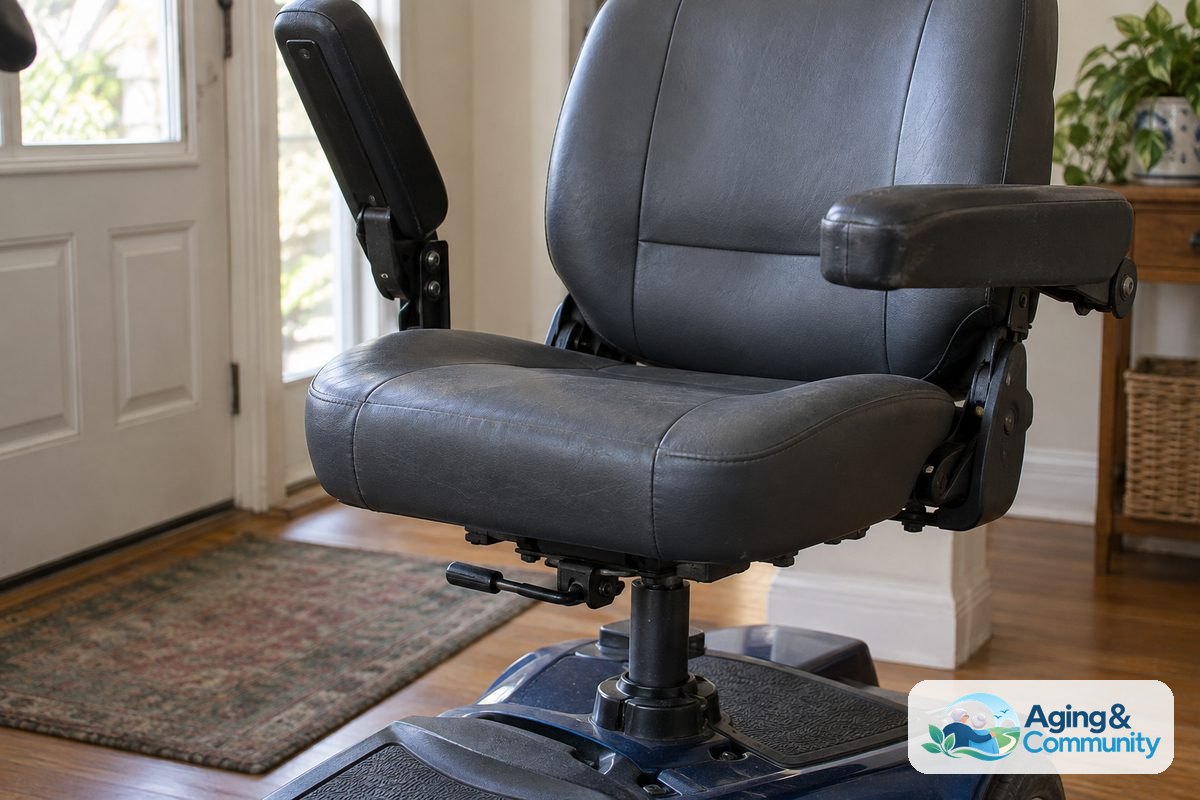
Seat width and padding also vary widely. Look for contoured seats that swivel so you can get on and off easily. If you need extra support for sitting longer periods, adding specialized pressure relief seat cushions can make everyday trips much more comfortable on your hips and lower back.
Think About Transport and Storage
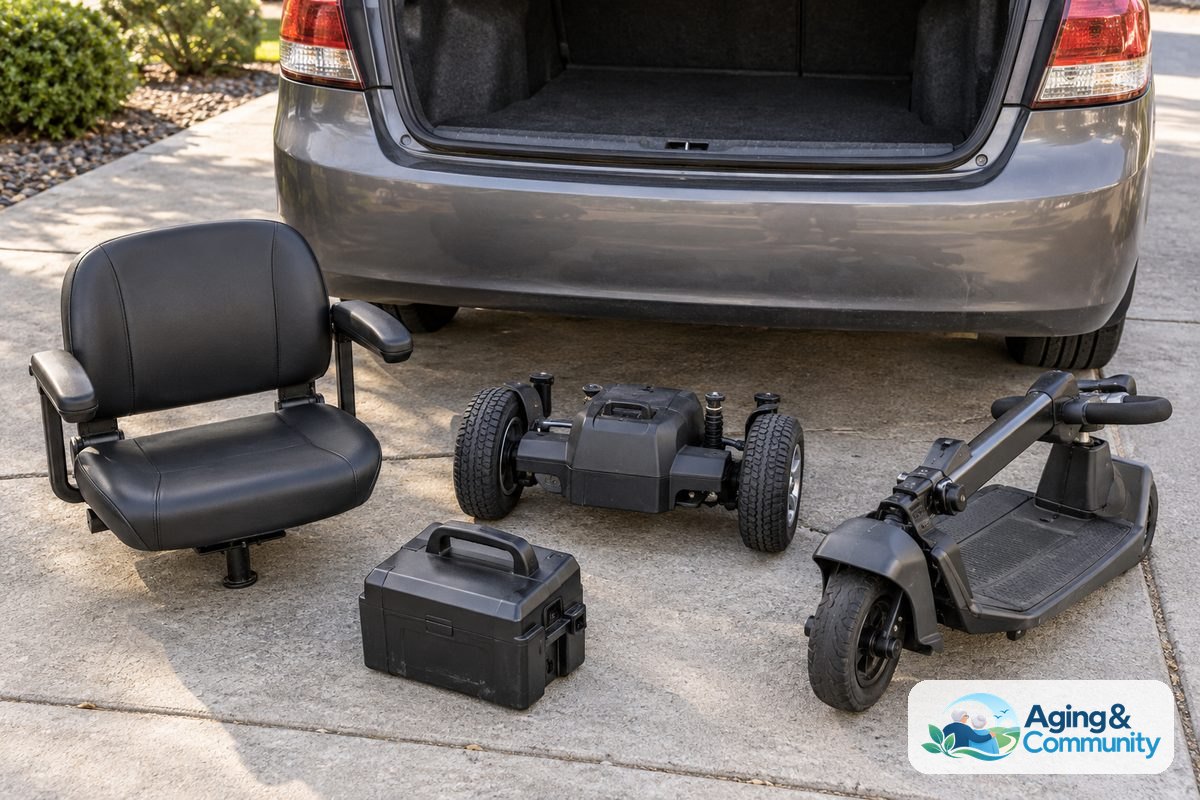
Think about how you will move the unit when you are not riding it. Some people keep their device parked in a garage, while others want to take it along in the trunk of a car.
Travel models, sometimes called boot scooters, come apart into four or five light pieces. Other models fold flat with the touch of a button. These lightweight designs are easy to put in a car, but they tend to have smaller batteries and less seat cushioning.
Full-sized and heavy-duty models do not fold easily. If you pick a larger frame, you might need a hitch-mounted lift on your car, a van with a lift, or a home entryway ramp. If you plan to navigate steps at your front door, reviewing how to choose a wheelchair ramp will help you select the right slope and width.
Review Battery Life and Speed
Battery range determines how far you can travel before needing a wall outlet. Think about your average outing to pick the right battery size.
| Scooter Type | Average Range per Charge | Top Speed | Primary Best Use |
|---|---|---|---|
| Travel / Folding | 8 to 12 miles | 4 mph | Errands, flat indoor floors, car trips |
| Full-Size 3-Wheel | 12 to 18 miles | 4 to 5 mph | Home use, shopping centers, paved parks |
| Full-Size 4-Wheel | 15 to 20 miles | 5 to 6 mph | Neighborhood walks, uneven sidewalks |
| Heavy-Duty / Bariatric | 15 to 25 miles | 5 to 8 mph | Rough terrain, longer trips, higher weight |
Remember that colder weather, hills, and carrying heavy bags can reduce your total battery range. Charging overnight is usually enough to keep standard batteries ready for the next day.
Understand Controls and Steering Tiller Styles
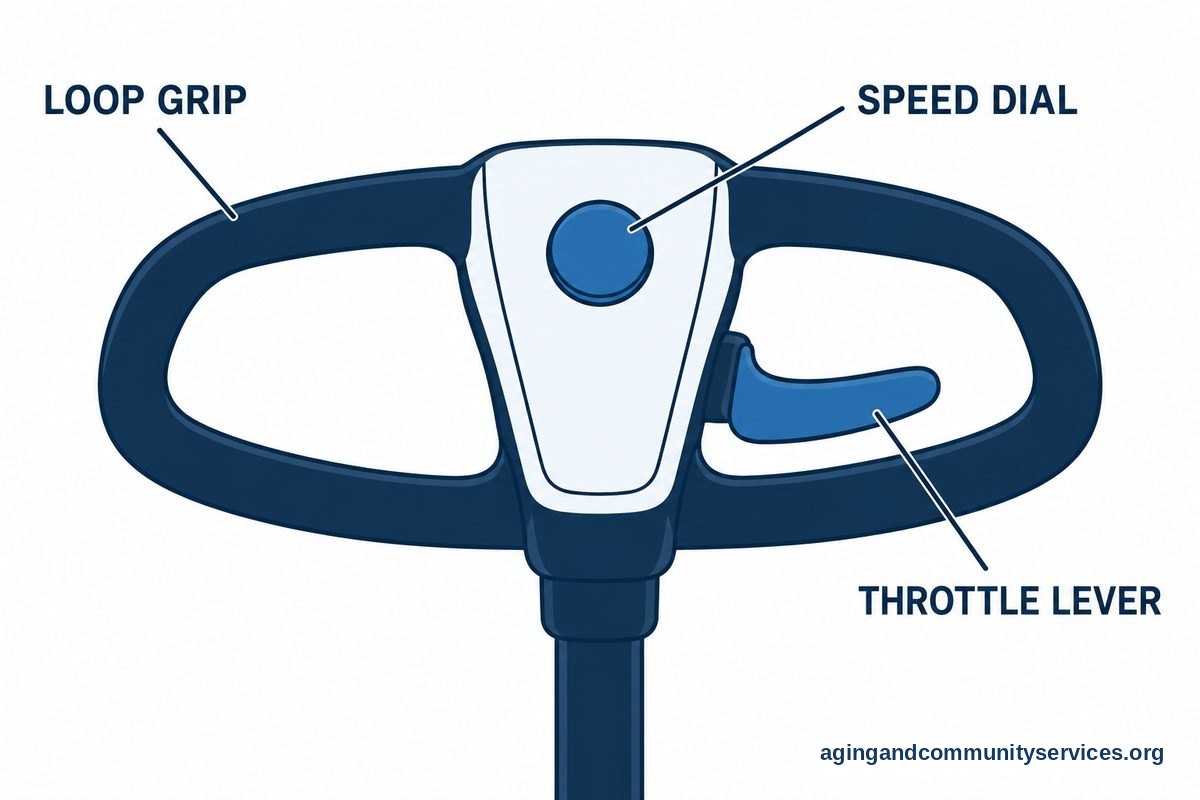
The steering column, known as the tiller, holds the speed dials, horn, and throttle levers. You want a setup that feels natural to your hands and wrists.
T-shaped tillers look like bicycle handlebars. They require you to grip with both hands and pull a lever toward you with your fingers. Delta tillers form a continuous loop. They allow you to rest your hands comfortably and push the lever forward using your thumbs or the base of your palm, which works well if your grip is stiff.
What to Do Next
Getting ready to make a purchase involves just a few practical steps to make sure you get the right fit.
- Measure your doorways: Take a tape measure and check the clear opening of your front door, bathroom, and bedroom doors. Compare these numbers with the total width of the models on your list.
- Speak with your care team: Talk with your physical therapist or doctor. They can evaluate your balance, posture, and hand strength to suggest the safest frame geometry for your daily routine.
- Explore insurance guidelines: Look into whether your health plan covers durable medical equipment. You can read up on whether a mobility scooter is covered by Medicare to see what paperwork or face-to-face evaluations your doctor must complete.
- Try a test drive: Visit a local medical supply showroom. Practice getting in and out of the seat, operating the throttle, and turning in small circles before you buy.
- Check community resources: If you need guidance on local programs for older adults, the Eldercare Locator can connect you with Area Agencies on Aging that provide local mobility assistance.
Frequently Asked Questions
How to choose mobility scooter size for small homes?
Focus on three-wheel designs or compact travel units with a small turning radius. Measure your narrowest hallway and doorway before shopping, and make sure the overall scooter width is at least two inches narrower than your tightest opening.
Can I take a mobility scooter on an airplane?
Yes, most airlines allow mobility scooters at no extra charge. You will need to tell the airline the type of battery your unit uses, as sealed dry-cell and lithium batteries have specific handling guidelines for flight safety.
How long do mobility scooter batteries typically last?
Most rechargeable scooter batteries last between one and three years, depending on how often you ride and recharge them. Plugging your scooter into the charger after each day of use helps keep the battery cells healthy.
What is the difference between solid and pneumatic tires?
Solid tires never go flat, making them maintenance-free for indoor and retail use. Pneumatic tires are filled with air and provide a softer, smoother ride outside because the rubber absorbs bumps and cracks in the road.