

When comparing a pulse oximeter vs Apple Watch, the right choice comes down to your personal health goals and comfort with technology. A dedicated fingertip pulse oximeter is ideal for people who want quick, straightforward readings without any complicated setup. An Apple Watch or similar smartwatch suits those who prefer all-day activity tracking and do not mind charging a wearable device every night.
Many families explore these devices to support loved ones who are aging in place safely and comfortably. Monitoring oxygen levels at home has become common practice for keeping an eye on respiratory wellness. Understanding how each tool works helps you pick the right fit for your household.
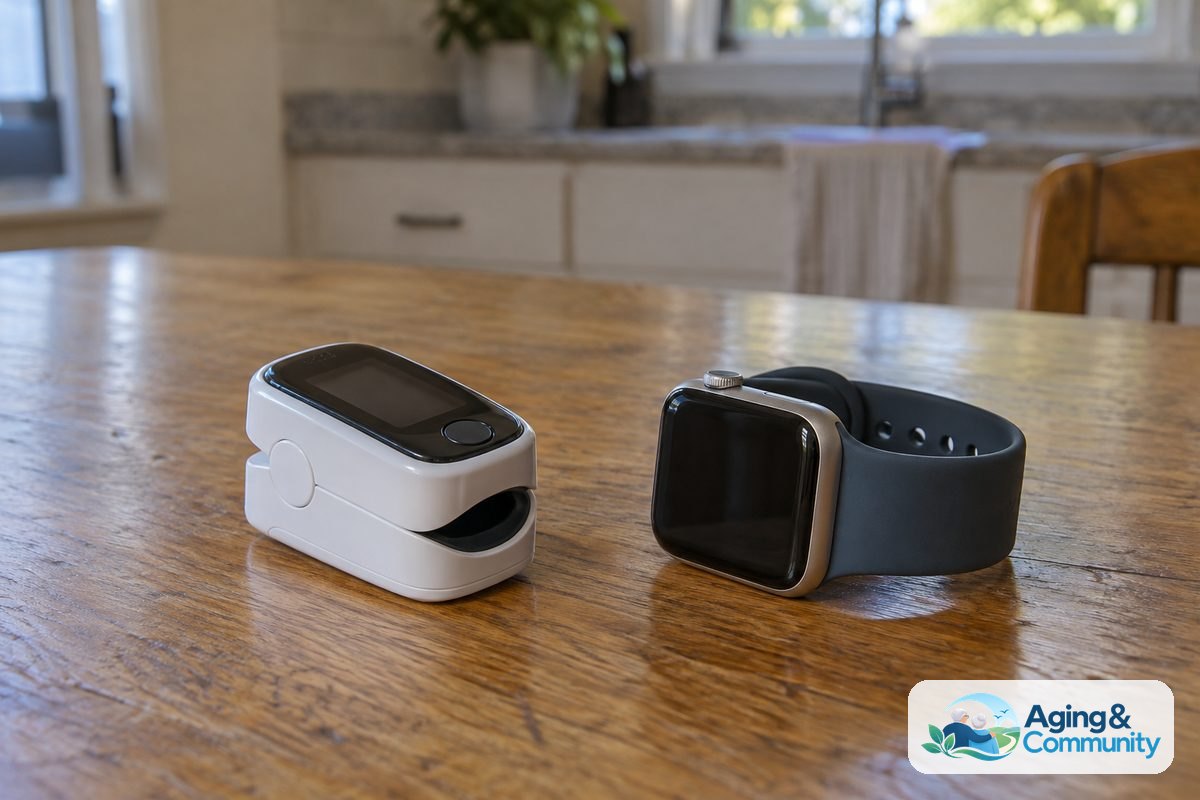
Pulse Oximeter vs Smartwatch Comparison
Both tools can provide helpful insights into your daily well-being. However, they work differently and serve distinct daily needs. The table below outlines how a standard medical fingertip unit compares to a modern smartwatch.
| Feature | Fingertip Pulse Oximeter | Apple Watch or Smartwatch |
|---|---|---|
| Placement | Clips gently onto a fingertip | Worn around the wrist all day |
| Ease of Use | One button or automatic turn-on | Touchscreen with apps and menus |
| Battery Life | Standard batteries that last months | Rechargeable battery lasting one to two days |
| Primary Purpose | Spot-checking blood oxygen and pulse | General fitness, wellness, and notifications |
| Display Readout | Large, bright numbers on the clip | Customizable screen with small text options |
| Setup Needed | None required out of the box | Requires a compatible smartphone connection |
| Medical Use | Commonly used in clinical settings | Designed strictly for general wellness |
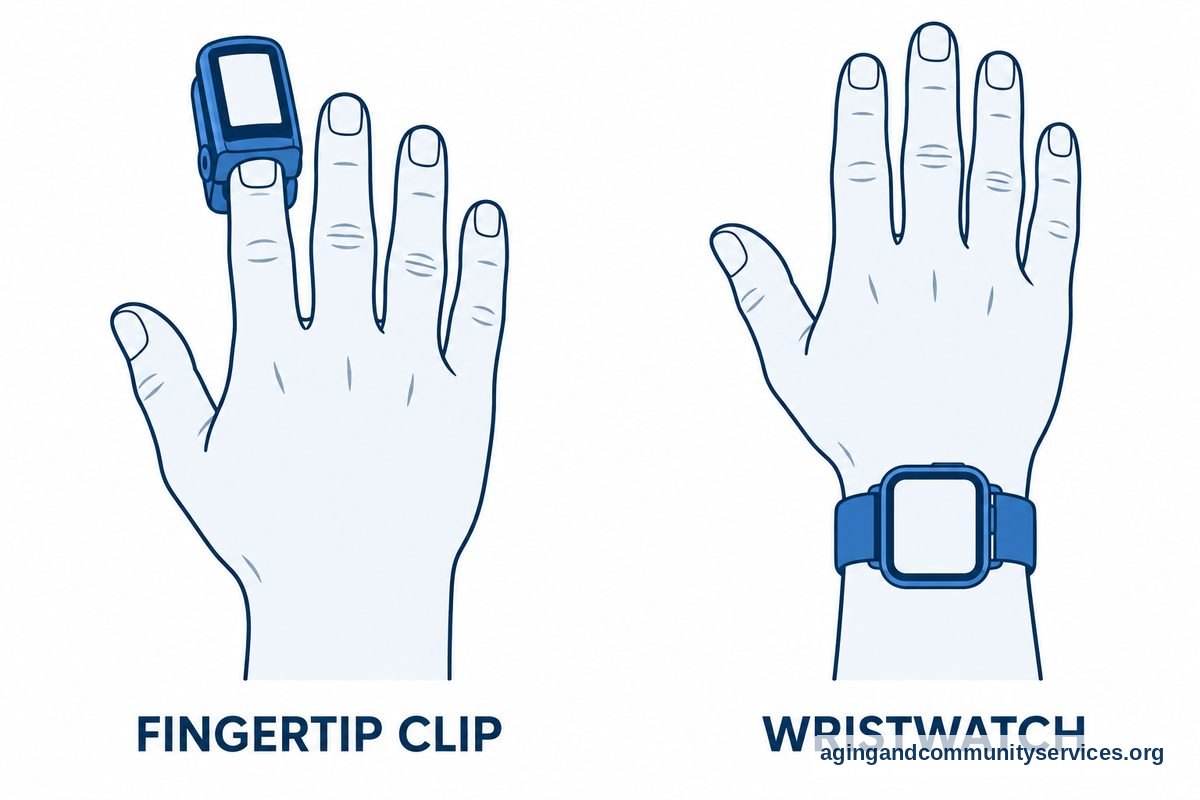
Dedicated Fingertip Pulse Oximeters
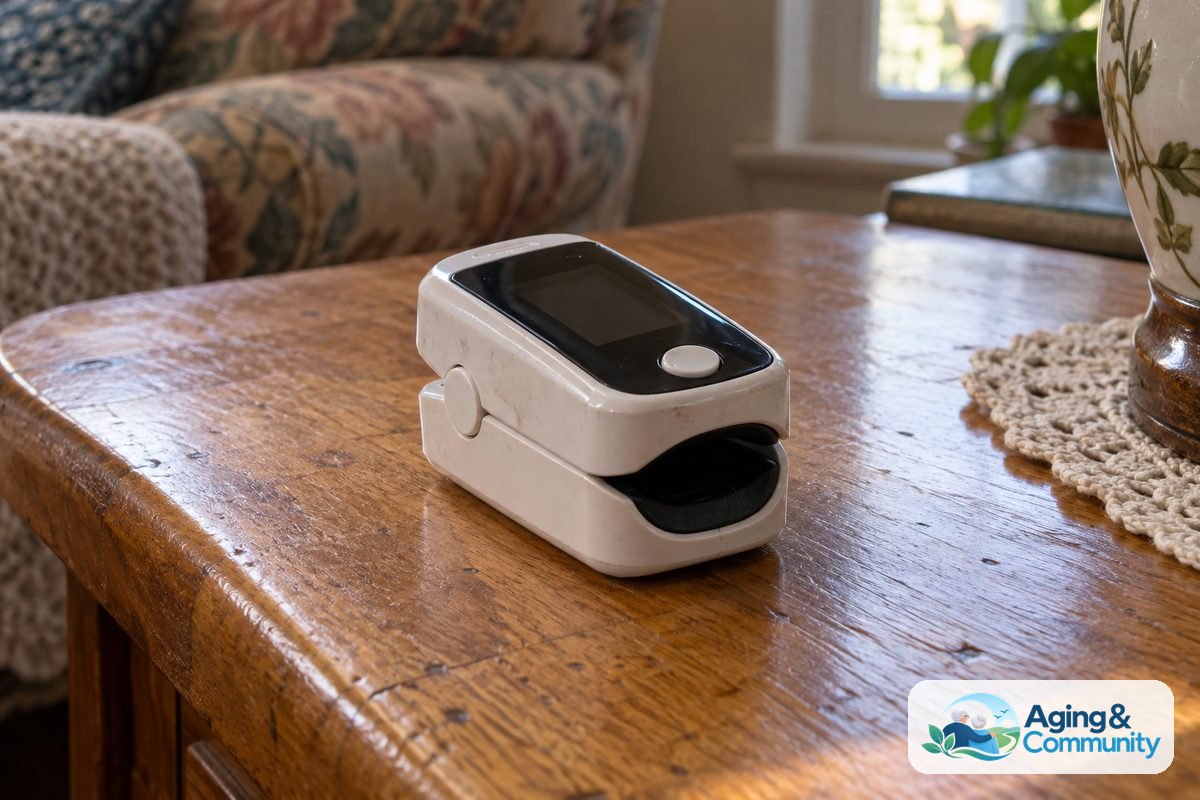
A fingertip pulse oximeter is a small, spring-loaded clip that slides over the end of your finger. It shines small beams of red and infrared light through the fingernail and tissue to measure how much oxygen your red blood cells are carrying. You can read our practical guide on how to choose a pulse oximeter to see which features matter most for home use.
Who It Suits
Fingertip monitors are wonderful for older adults who want clear health numbers without fuss. If you only need to check your numbers once or twice a day, a clip-on unit is fast and private. The numbers appear on a high-contrast screen in large digits, making them very easy to read across the room.
These units also work well for caregivers who assist family members with daily health routines. You simply slide the unit on the finger, wait a few seconds, and write the numbers down in a logbook. To make sure you get a reliable reading every time, review these steps on how to use pulse oximeter tools properly at home.
Limits
A fingertip monitor only works while it is on your finger and you are sitting still. It cannot alert you to changes while you walk the dog, work in the garden, or sleep at night. Cold fingers, tremors, and dark nail polish can also interfere with the light sensors, leading to brief errors or blank screens.
These tools also do not save long-term history automatically unless you buy a specialty model with memory. For most standard units, you must keep track of your own numbers using pen and paper. If you forget to write them down, the reading disappears as soon as the unit turns off.
Apple Watch and Other Smartwatches
A smartwatch sits on your wrist and monitors various body signals throughout the day and night using wrist-based optical sensors. In addition to wellness tools, these watches provide daily conveniences like step counting, weather forecasts, and gentle reminders to stand up and stretch. Similar comparisons come up when looking at a blood pressure monitor vs apple watch for cardiovascular wellness.
Who It Suits
A smartwatch is a great fit for active individuals who enjoy wearing a watch and want passive, background health tracking. It can take spot measurements of your blood oxygen and also gather readings while you rest. If you enjoy seeing charts of your heart rate over weeks or months, a smartwatch makes that data easy to view on a phone.
Smartwatches also provide safety features that appeal to families. Many modern watches include fall detection that can call for help if you take a hard fall. For general advice on staying steady on your feet, the National Institute on Aging offers helpful tips on falls and falls prevention.
Limits
Smartwatches are not medical devices. The blood oxygen features on wearable watches are intended solely for general fitness and wellness trends. The wrist is also a challenging place to read blood oxygen accurately, because bone, tendons, and movement can disrupt the sensor beams.
A smartwatch must also be charged regularly, often every single day. If you forget to place it on its charger, the watch will run out of power and stop collecting information. In addition, setup requires a compatible smartphone, an account, and regular software updates, which can feel overwhelming if you prefer simple gadgets.

How to Decide
Finding the right match depends on your daily habits, your comfort with electronic devices, and what your doctor recommends for your care plan, much like choosing bathroom aids in a personal hygiene guide. Consider these common situations:
- Choose a fingertip pulse oximeter if your doctor has asked you to log specific blood oxygen levels each morning and evening.
- Choose a fingertip pulse oximeter if you want a simple device that works immediately without syncing to a smartphone or home wireless network.
- Choose a fingertip pulse oximeter if you want large, uncluttered numbers that are easy to view without reading glasses.
- Choose an Apple Watch or smartwatch if you already wear a wristwatch and want passive health trends tracked in the background.
- Choose an Apple Watch or smartwatch if you want bonus features like step counting, gentle medication reminders, and automatic fall detection.
- Choose both if you enjoy the daily lifestyle benefits of a smartwatch, but want a dedicated clip-on tool in your medicine cabinet for reliable spot-checks.
If you need extra help finding community support or local wellness resources for an older family member, the Eldercare Locator connects callers directly to trusted local agencies. Talking with your doctor can also help clarify which numbers you should focus on during your daily checks.
Frequently Asked Questions
Is a pulse oximeter more accurate than an Apple Watch?
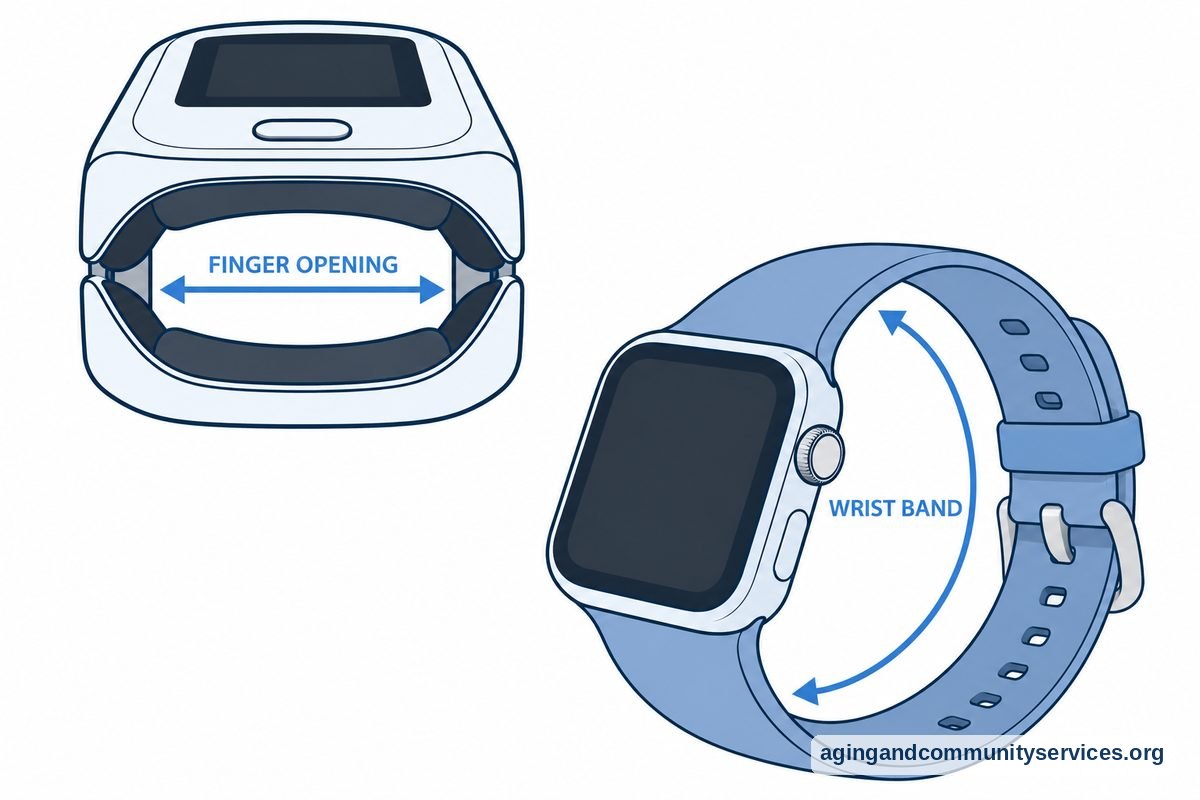
Yes, fingertip pulse oximeters are generally considered more reliable for spot checks. Fingertips have a rich network of small blood vessels close to the surface, and the light shines directly through the finger. A watch must bounce light off the top of the wrist, where skin thickness, movement, and watch band tightness can reduce accuracy.
Can an Apple Watch replace my medical pulse oximeter?
No, an Apple Watch is not meant to replace a medical-grade device. Smartwatches are designed for overall wellness, exercise tracking, and personal interest. If your primary care doctor has asked you to monitor your oxygen saturation for a health condition, use a dedicated fingertip pulse oximeter as instructed.
Why do wrist oximeter readings fluctuate so much?
The wrist contains bones, large tendons, and varying amounts of soft tissue that make optical measurements tricky. If your watch band is slightly loose, outside light can leak into the sensor. Moving your arm, talking, or having chilly skin can also cause the wrist sensor to show an unusually low or inconsistent number.
Do I need an iPhone to use a pulse oximeter?
No, standard fingertip pulse oximeters work completely on their own. They run on regular household batteries and show your results on a built-in screen. An Apple Watch, on the other hand, requires an iPhone for initial setup, regular updates, and viewing detailed health history charts.
Can cold hands affect both devices?
Yes, cold hands can affect readings on both fingertip units and smartwatches. When your hands and fingers are cold, the blood vessels near the skin naturally narrow to preserve body warmth. Warming your hands by rubbing them together or washing them with warm water before a test will help produce a clearer reading.
Should I talk to my doctor before buying either device?
Speaking with your doctor, physical therapist, or occupational therapist is always a great step. They can explain which device suits your physical routine and what your normal target numbers should be. They can also review your home readings during regular checkups to help you stay on track.