

Learning how to use bed rail clamps correctly ensures that support bars stay locked firmly to the bed frame. These sturdy metal or plastic fasteners grip the bed base so the rail does not shift when someone leans on it. Taking a few quiet minutes to install them properly brings peace of mind and stability to the bedroom.

Steps on How to Use Bed Rail Clamps
- Clear the work area and position the rail. Slide the mattress slightly away from the bed edge and place the rail legs against the solid steel or wood frame where support is needed most.
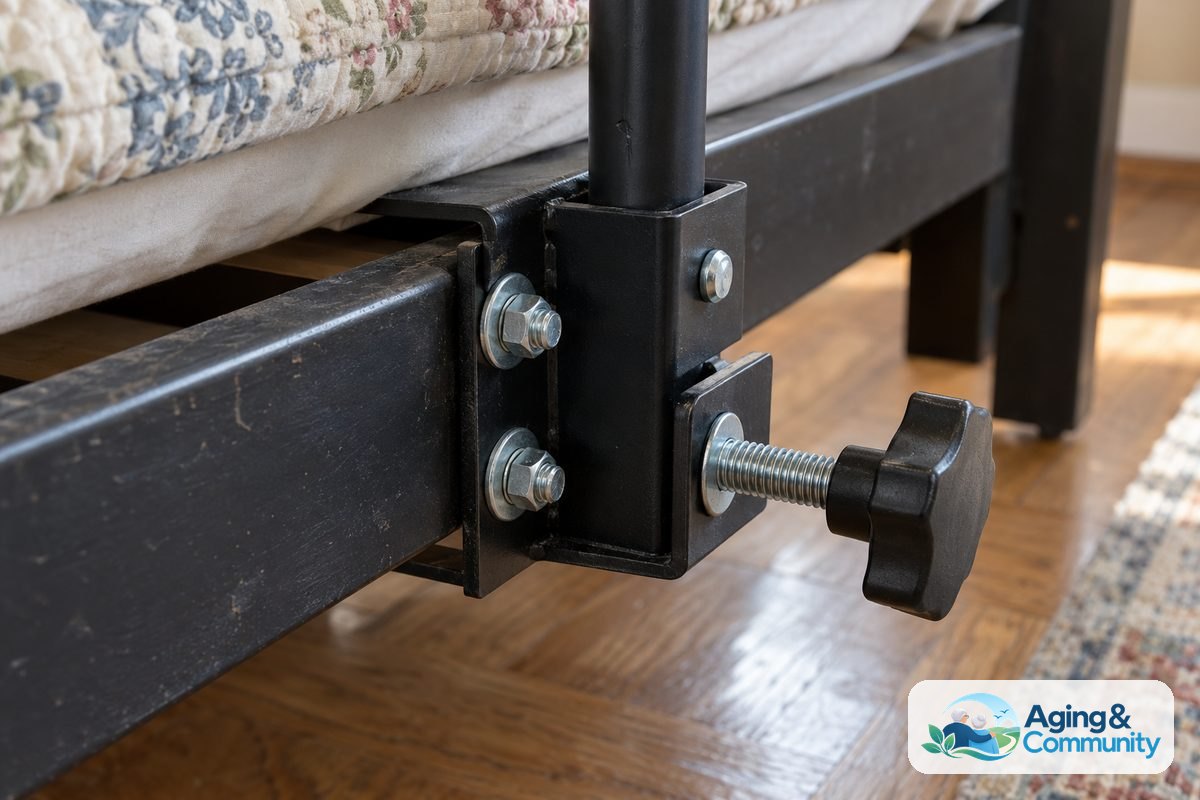
- Align the clamp brackets. Position the clamp pieces around both the rail support tube and the bed frame rail so the bolt holes match up evenly.
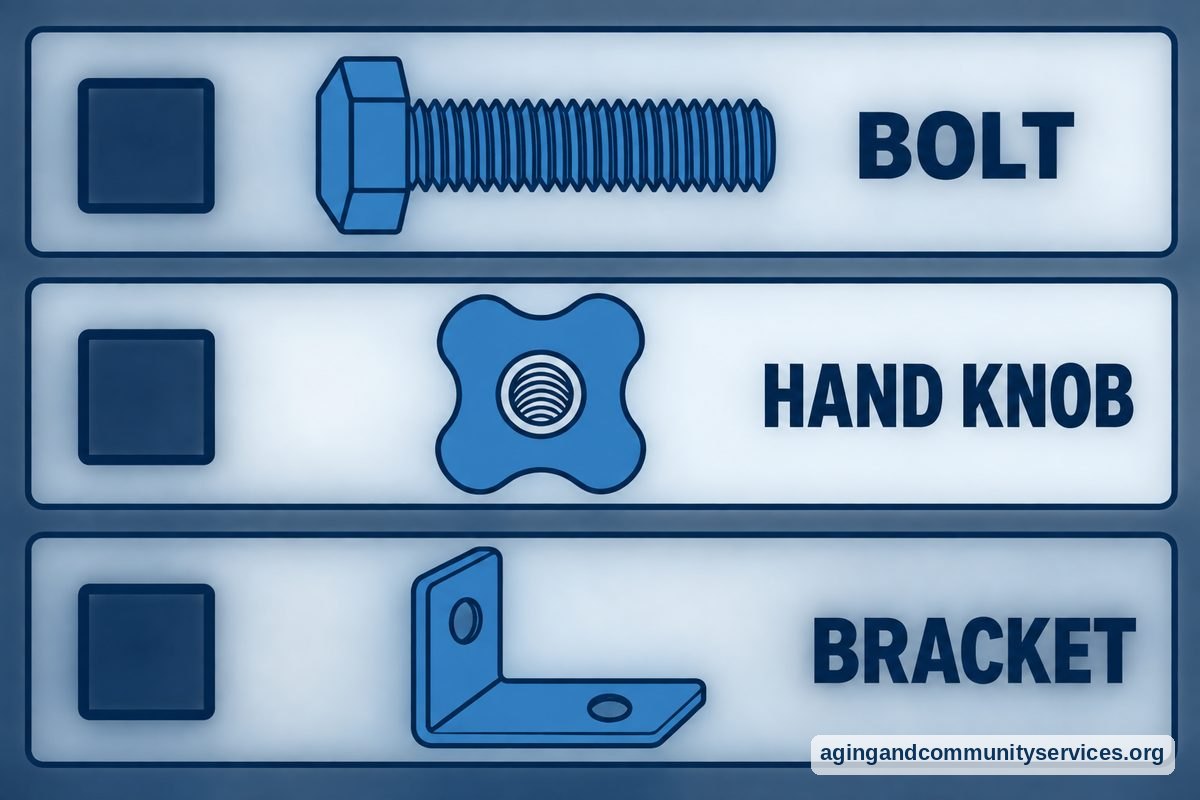
- Insert the hardware by hand. Thread the included bolts or turn knobs through the clamp holes by hand first to make sure the threads catch smoothly without binding.
- Tighten the bolts evenly. Use the supplied wrench or hand knob to tighten each fastener, alternating between sides so the clamp pulls down straight and flat against the frame.
- Perform a firm push-pull test. Grip the top of the bed rail with both hands and apply firm pressure in all directions to verify the clamp does not wobble, slide, or tilt.
- Slide the mattress back in place. Push the mattress snugly against the rail base, making sure there is no gap between the mattress edge and the newly secured rail.
Common Mistakes to Avoid
- Attaching clamps to movable bed parts. Never clamp a rail to the moving head or foot sections of an adjustable bed unless the manufacturer explicitly states it is safe.
- Leaving wide gaps beside the mattress. Clamps must hold the rail flush against the mattress wall to avoid open spaces where limbs could slip.
- Overtightening on hollow metal frames. Cranking bolts too hard can crush thin metal bed tubing, which actually weakens the hold of the clamp.
- Forgetting to check hardware regularly. Household bed rails experience daily motion, so loose clamp knobs must be retightened every few weeks.
- Using mismatched hardware. Never replace lost clamp bolts with random screws from a toolbox that might bend or slip under body weight.
When to Call for Help or Professional Advice
Installing home equipment should never feel confusing or unsafe. If your bed frame has an unusual shape or does not seem strong enough for heavy clamps, pause your project. You can consult an occupational therapist or a physical therapist who specializes in home safety assessments. These professionals can inspect your bedroom setup and offer personalized advice on whether your current rail style suits your physical needs.
You can also reach out to the Eldercare Locator to find local community support, handy-worker programs, or home assessment specialists in your town. When you contact a professional or customer service line, tell them the exact brand of your bed rail, the style of your bed frame, and the height of your mattress. Having these details ready helps them give you clear, accurate answers right away.
Choosing the Right Clamp Style for Your Bed
Not every bed rail uses the same mounting method. Some systems rely on C-clamps that wrap around an angle-iron frame, while others use cross-bars with U-bolts that hold round metal tubing. Before you tighten any hardware, confirm that you have the right components for your specific furniture style.
Traditional metal frames with narrow side ledges generally accept screw-down brackets with ease. Wooden frames with wide side rails often require flat surface clamps or strap systems that loop underneath the entire mattress support board. Reviewing helpful advice on how to choose a bed rail can help you match the clamp mechanism to your wooden or metal frame before you start.
If your bed uses wooden slats rather than a box spring, standard clamps might need a solid wooden board placed beneath them to distribute weight evenly. Never clamp directly onto a single weak slat, as the wood could crack under daily pressure. Taking time to inspect the structure beneath the bedding ensures the clamp has something rigid to squeeze.

Daily Safety Checks and Ongoing Maintenance
Even the strongest bed rail clamps can loosen gradually over time due to normal bed movement. Creating a simple monthly maintenance habit keeps the rail secure and dependable. Run your fingers over the clamp knobs on the first day of each month to see if they turn easily.
A well-anchored rail provides steady assistance when sitting up or turning over in bed. Reviewing how to use bed rail for elderly family members helps everyone in the home understand how to grasp the bar correctly without pulling the clamp sideways. Keeping equipment steady is a key part of supporting comfortable aging in place over the years.
If you notice any paint chipping, bent bolts, or cracked plastic knobs, replace the damaged clamp parts immediately. Most manufacturers offer replacement hardware packs so you do not need to purchase an entire new rail. Wipe the metal clean with a damp cloth during bed linen changes to keep dust and fabric threads out of the clamp threads.
Alternative Support Options for Different Beds
Some modern beds, including certain platform models and motorized bases, simply cannot accommodate standard bolt-on rail clamps safely. In these situations, forcing a clamp into place could void a mattress warranty or damage the motorized lift mechanisms underneath. Exploring reliable bed rails for elderly can reveal options that use wide anchor boards instead of clamps.
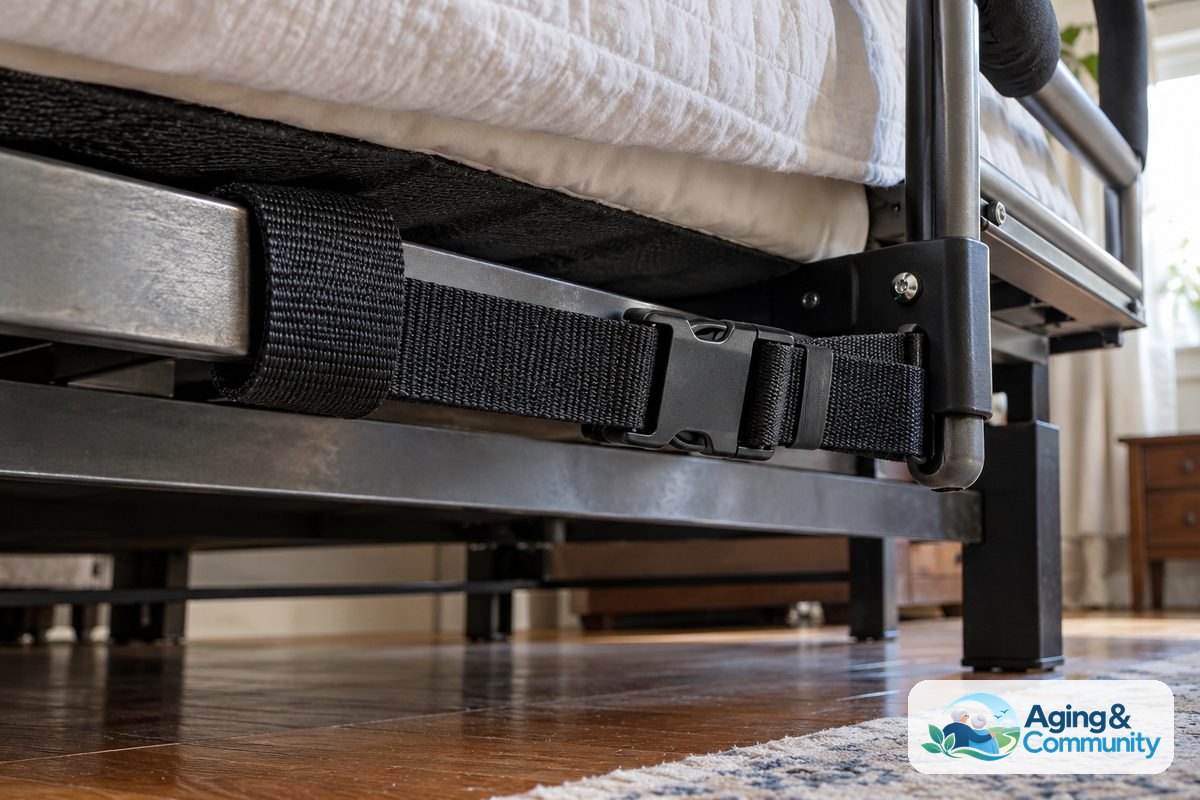
Another practical alternative is using compact bed assist handles that slide smoothly between the mattress and box spring. These low-profile options often use safety straps that buckle around the far side of the bed frame rather than heavy metal clamps. They provide a steady handhold for sitting up without requiring any drilling or metal brackets on the perimeter of the bed.
Exploring different physical support products allows older adults to keep their bedrooms feeling comfortable, functional, and restful. An occupational therapist can help you weigh the pros and cons of clamped rails versus strap-secured assist handles based on personal balance, hand grip strength, and mobility goals.
Frequently Asked Questions
Do bed rail clamps damage wooden bed frames?
Metal clamps can leave dents or scratch the finish on soft wooden bed frames if they are applied directly to bare wood. You can protect the wood by placing a small strip of felt, heavy cardboard, or thin rubber padding between the clamp bracket and the bed surface. Tighten the clamp firmly enough to stop all motion, but avoid forcing the screw so hard that it crushes the wood grain.
Can I put bed rail clamps on an adjustable bed?
Standard rigid clamps usually cannot be installed on adjustable beds because raising the head or foot will bend the clamp or twist the rail. You must verify that both your bed manufacturer and the rail maker permit clamped attachments on moving frames. Specialized rails made for motorized beds typically feature rotating hinges or attach strictly to the stationary central base under the bed.
How tight should bed rail clamp bolts be?
The clamp bolts should be hand-tightened until snug, then turned another half-turn with a tool until the bracket no longer shifts under hard pressure. You should not be able to twist, lift, or slide the rail with your bare hands. Avoid using high-powered drills or oversized wrenches, which can easily strip the screw threads or crack plastic fittings.
What should I do if my bed rail clamps keep sliding?
If clamps slide along a smooth metal frame, remove them and wrap two layers of friction tape or non-slip rubber shelf liner around the frame tubing before reinstalling the clamp. This adds grip without damaging the metal. If the clamp still slips after adding friction material, the bracket may be too large for the diameter of your frame tubing, and a smaller clamp size is required.
How often should I inspect the clamps on a bed rail?
Inspect the clamps once a week during the first month of use to ensure they have settled securely into place. After the first month, a thorough check once every four to six weeks is usually sufficient. Give the rail a firm pull test every time you change the bed sheets to make sure the clamps remain tight and aligned.