

Learning how to use a walker in the bathroom gives you steady support in one of the tightest rooms in your home. The basic method involves moving slowly, keeping all four points on the floor, and backing up toward seats rather than turning quickly. With a few clear habits, navigating small doorways, sinks, and toilets becomes much more manageable.

Main Steps for Using a Walker in the Bathroom
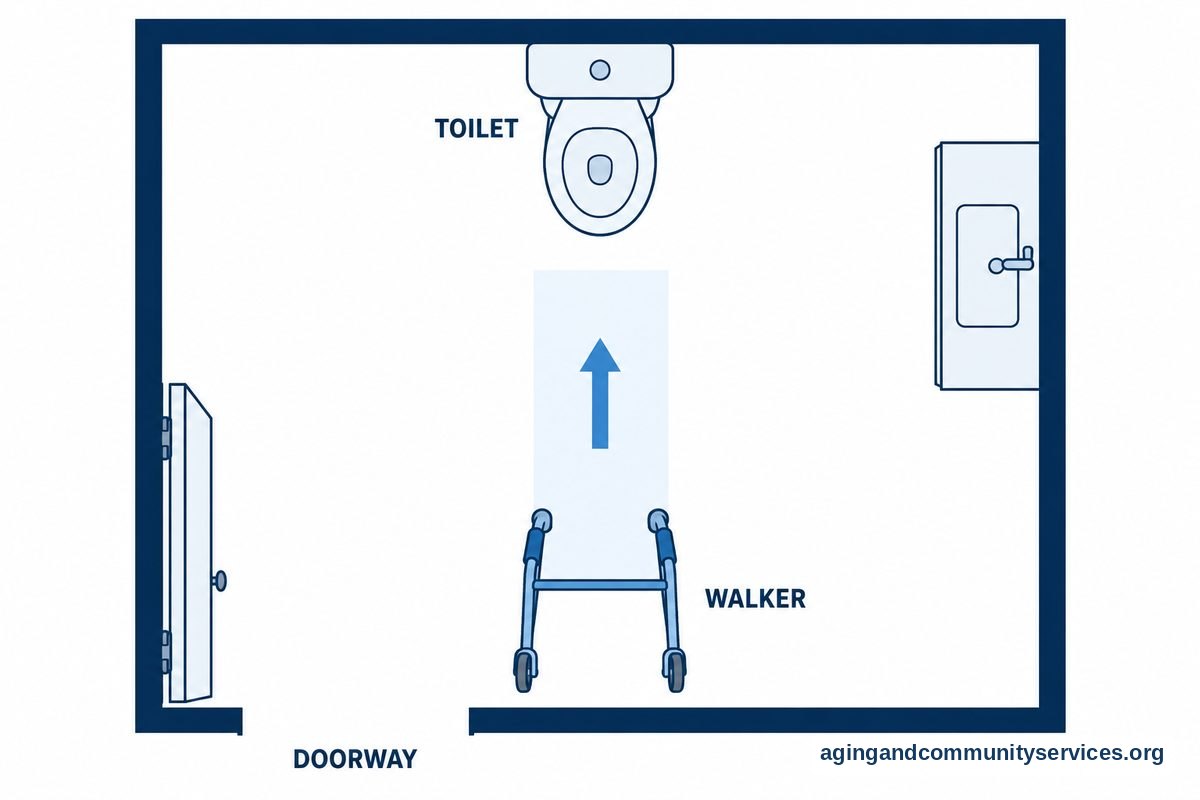
- Clear the doorway and enter facing forward. Push the walker slightly ahead of you into the doorway, step forward with your weaker leg first, and follow with your stronger leg while keeping your body upright.
- Approach your destination straight on. Roll or lift the device toward the toilet, sink, or shower entry without cutting sharp angles that could tip the frame.
- Turn around gradually in small steps. Take multiple small shuffling steps to face away from the fixture instead of pivoting on one foot in a single motion.
- Back up until your legs touch the seat. Step backward gently until you feel the front edge of the toilet or shower bench against the back of your calves.
- Lock the wheels if you use a rollator. Press down firmly on both brake handles until they click into the locked position before you attempt to sit.
- Reach back for secure support surfaces. Move your grip from the device handles to the armrests, grab rails, or steady vanity surface one side at a time as you lower yourself down smoothly.
Common Mistakes to Avoid
- Holding onto the walker grips while sitting down or standing up, which can cause the frame to tip backward.
- Rushing through turns in narrow spots between the door frame and the sink vanity.
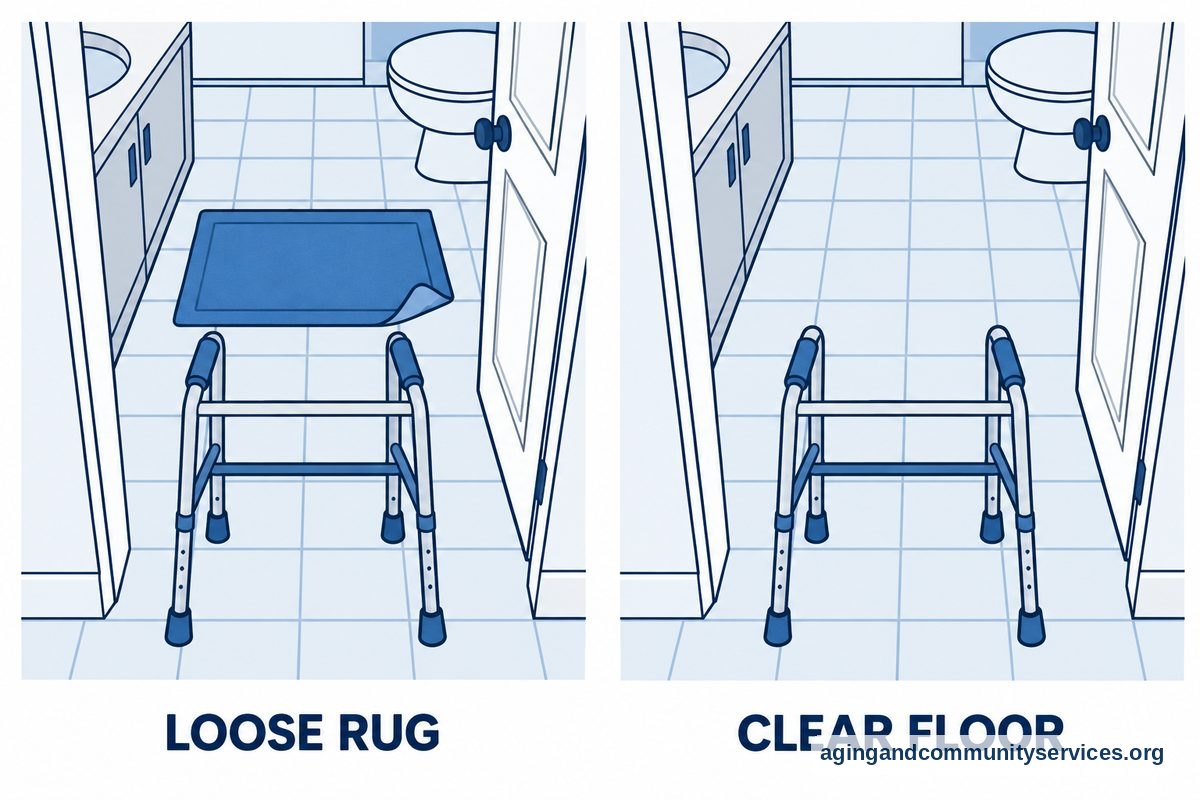
- Leaving throw rugs or bath mats on the tile floor where the wheels or rubber tips can snag.
- Carrying towels, toiletries, or clothing in your fingers while trying to steer the frame.
- Forgetting to lock the hand brakes on a wheeled model before shifting your body weight.
When to Call for Professional Advice
Bathrooms vary widely in layout, and standard techniques may need adjustments to fit your space. If you feel unsteady, dizzy, or crowded while moving through the door, contact an occupational therapist or physical therapist. A licensed therapist can visit your home, review your movements, and suggest equipment heights that suit your body.
You can also reach out to your primary care doctor if you experience joint pain or weakness during transfers. When calling, explain the exact trouble you face, such as difficulty rising from the seat or trouble fitting the frame past the door trim. For local support services, the Eldercare Locator connects older adults with community resources and safety assessments.
Navigating Around Sinks and Small Cabinets
Sink areas present distinct challenges because cabinet bases often block the front wheels of your mobility aid. To wash your hands safely, walk toward the basin until the crossbar touches the cabinet front. Stand tall, keep both feet flat on the tile, and keep your hips aligned over your heels.
Never lean your chest heavily over the basin edge to reach the water handles. Keep everyday items like soap, towels, and toothbrushes close to the front counter edge. If standing at the sink causes fatigue, you can position a sturdy stool nearby or install wall supports. Reviewing general bathroom safety for seniors can provide helpful tips on arranging your personal care supplies.
Getting On and Off the Toilet with a Walker
Using the commode requires moving from a walking stance to a secure sitting position. Once you turn around and feel the toilet bowl against the back of your legs, keep your balance steady. Do not rely on the walker for leverage while lowering your body.
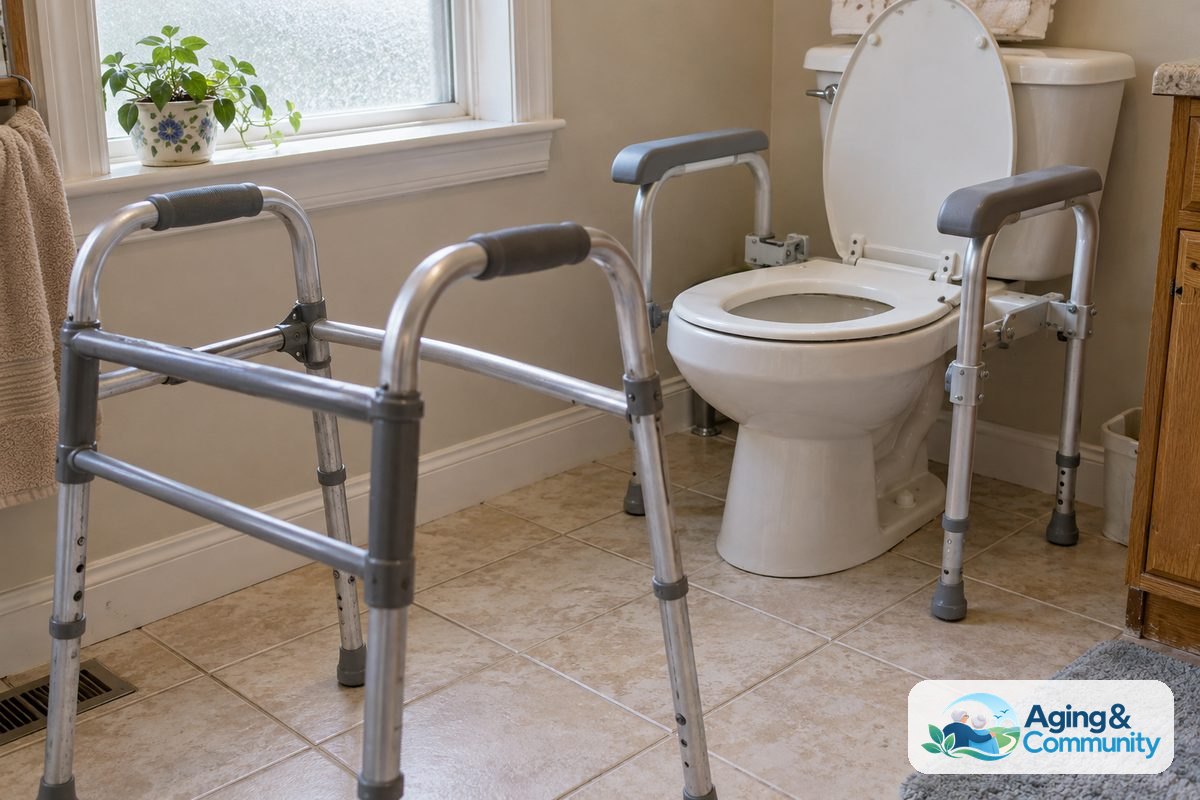
Instead, reach one hand back to grasp a permanent fixture or seat arm. You can pair your walking device with a dedicated frame by studying how to use a toilet safety frame for stable support next to the bowl. Once you have a firm hold, lower yourself down smoothly without dropping abruptly onto the porcelain.
When standing up, reverse the process entirely. Push upward from the toilet frame or seat edges using your leg and arm strength. Bring your body completely upright, balance for two seconds, and then place your palms back onto the walker grips before taking your first step forward.
Moving Safely Near Tubs and Showers
Shower entries demand extra attention because moisture makes tiles slippery. Keep your walker outside the shower stall or curtain line so the rubber tips stay completely dry. Wet rubber tips lose traction and can slide across smooth flooring without warning.
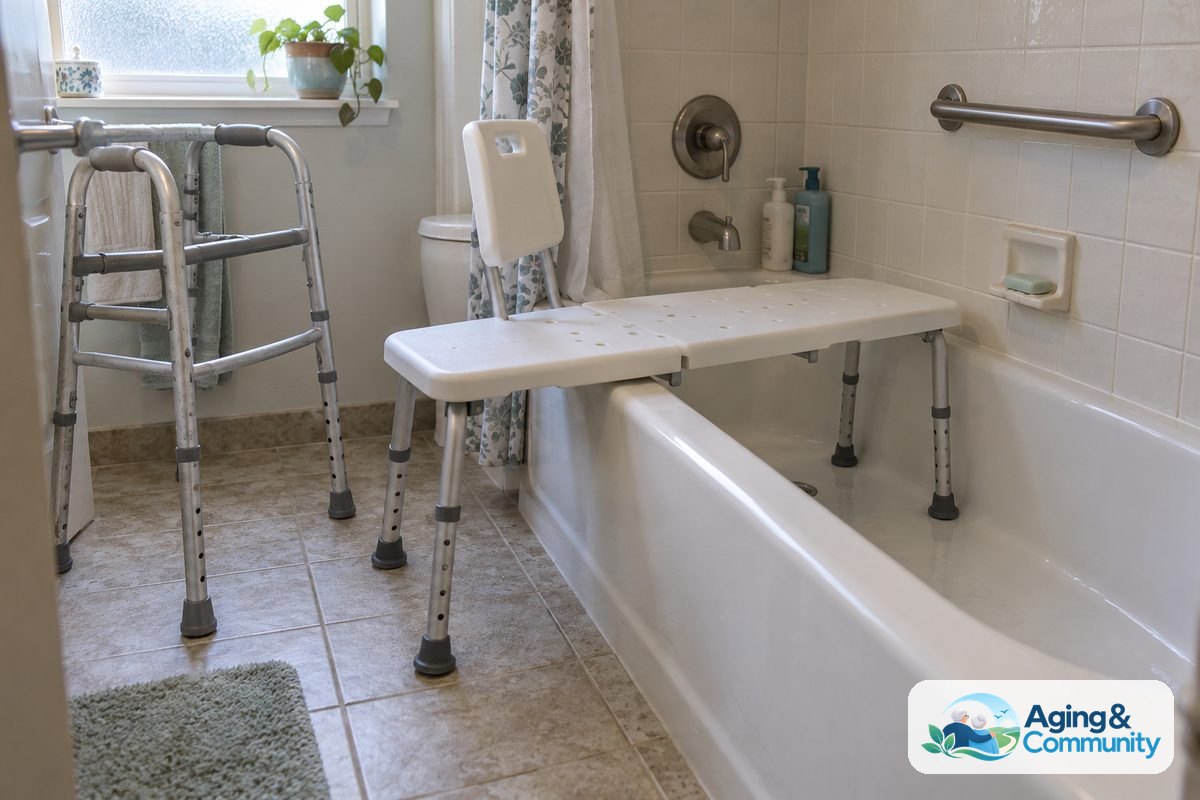
If you use a bench or stall seat, walk your device directly alongside the bathing area. You can learn how to use shower chair equipment properly to make this transfer smooth and controlled. Back up toward the tub edge, reach for a wall rail, and sit down before swinging your legs over the tub ledge.
Solid wall rails give you something firm to grasp during these transitions. You can discover how to use grab bars near the stall entrance so you never have to steady yourself on towel racks or shower doors. Helpful articles from the National Institute on Aging: Aging in Place provide additional guidance on modifying fixtures for independent living.
Frequently Asked Questions
Can I take my walker directly into the shower stall?
Standard walkers should not be placed inside a shower stall or tub. Water can rust the metal joints and cause the rubber tips to slide on wet surfaces. Keep the walker parked just outside the shower curtain on dry floor space.
What should I do if my bathroom door is too narrow for the frame?
If your doorway is narrow, talk with an occupational therapist about narrow-base frames or swing-clear hinges. Swing-clear hinges can add up to two inches of clearance without requiring full door frame removal. Never attempt to turn the walker sideways while squeezing through an opening.
How do I stop my walker from sliding on wet bathroom tile?
Keep a bath mat with a non-skid rubber backing directly where water drops land, but leave clear walking paths across bare, dry tile. Wipe up any puddles immediately. The National Institute on Aging: Falls and Falls Prevention notes that managing tripping hazards and wet floors can lower the risk of balance loss at home.
Is a four-wheel rollator safe to use around the commode?
A rollator can be used near the commode only if you lock the hand brakes firmly before you begin turning or sitting, as with any rollator vs universal rollator explained options. Even with brakes locked, you must push off from the toilet seat or wall supports rather than pushing down on rollator handles.
Should I remove my bathroom rugs when using a walking frame?
Yes, removing thin rugs and decorative mats is recommended. Rug edges easily catch on rubber tips or get caught under small wheels, which can cause sudden balance issues.