

Learning how to use walker to get off toilet safely starts with understanding where your body weight goes. You should never pull up directly on the frame handles, because the frame can tip back toward you. Instead, you push up from the seat surface or wall rails first, find your balance, and then place your palms onto the walker grips.
Bathrooms are often tight spaces with slick tile and hard porcelain fixtures. Taking your time with each move protects your joints and keeps your footing secure. With a steady pattern, using the commode can feel manageable and routine every single day, especially when choosing the right bidet or hand shower.

Step-by-Step: How to Use Walker to Get off Toilet
- Position the frame correctly: Place your walker squarely in front of the toilet bowl, facing toward you, but close enough so you can easily step into the frame once you are upright.
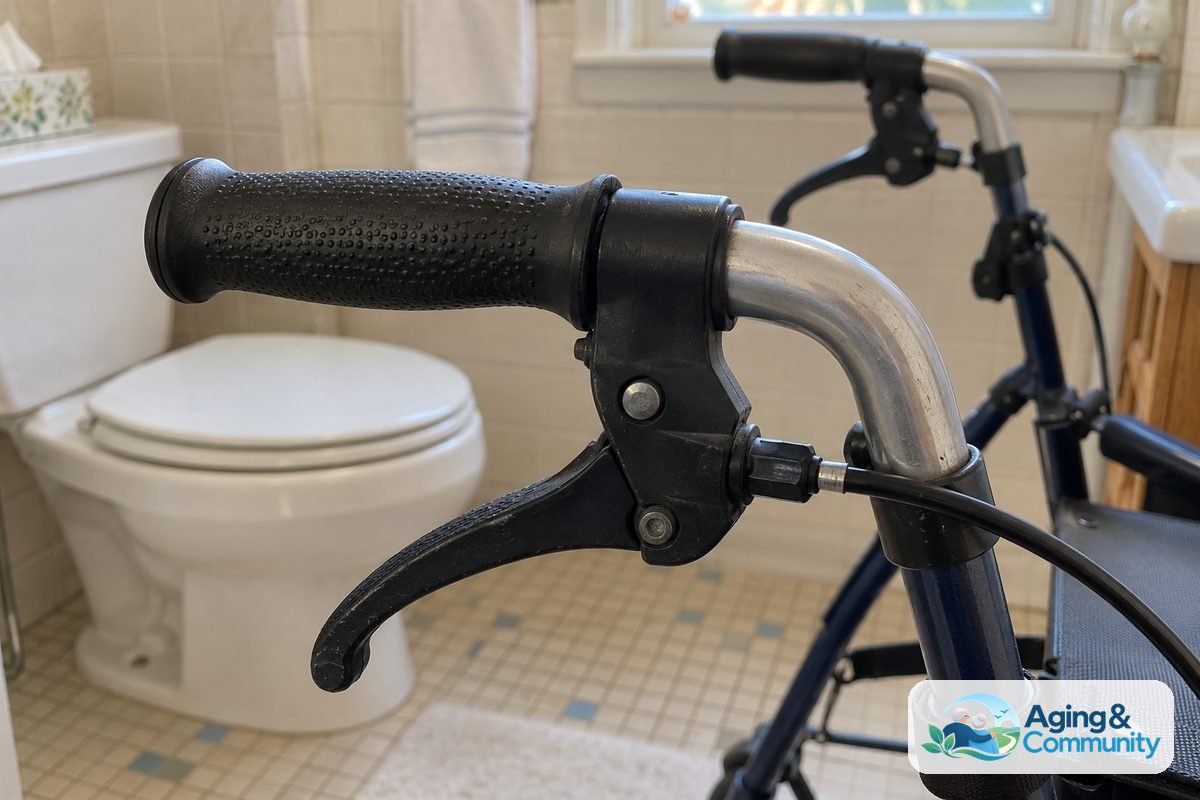
- Lock all wheels firmly: If you use a rolling model, click the hand brakes into their locked position before you shift your weight.
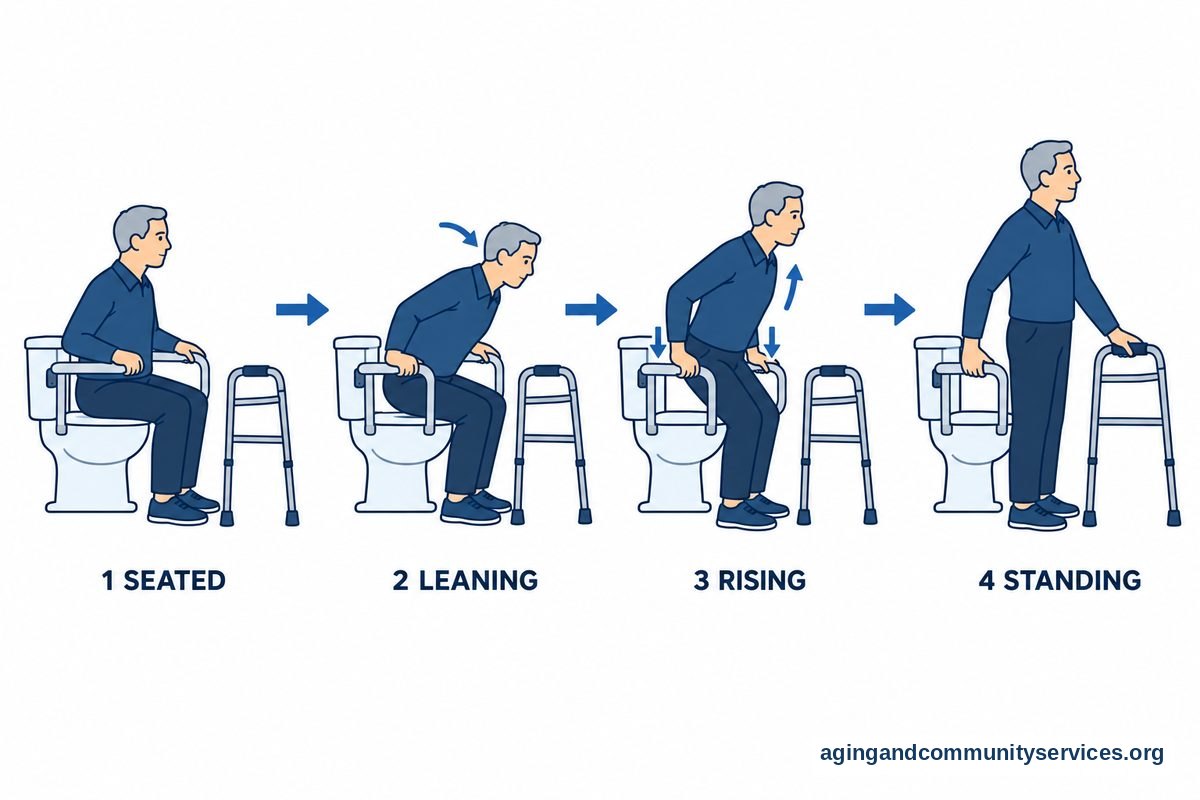
- Scoot forward on the bowl: Move your hips toward the front edge of the commode seat until your feet rest flat and wide on the floor.
- Lean your torso forward: Bend gently at the hips so your nose is positioned over your toes, which centers your weight right above your feet.
- Push upward from the toilet seat: Keep both palms flat on the commode rim or sturdy armrests, then push down through your legs and arms together to rise.
- Transfer your grip to the frame: Once your knees are straight and you feel balanced on your feet, move one hand at a time to the walker handgrips.
Taking a pause before you start to walk is an important part of the routine. Standing upright for five or ten seconds allows your blood pressure to settle. Once your vision is clear and your feet feel firmly planted, you can release the wheel locks and begin your normal steps.
Common Mistakes to Avoid
- Pulling on the top frame: Grabbing the walker handles to yank your body upright can tip the device backward onto your lap.
- Leaving wheels unlocked: Forgetting to engage the wheel locks on a rolling frame allows the unit to roll away while you are standing up.
- Rushing the movement: Standing up too fast can cause lightheadedness, which makes it harder to stay balanced.
- Placing feet too far forward: Tucking your heels back under your knees gives you far more leverage than keeping your legs stretched out.
- Reaching with both arms at once: Taking both palms off your support surface at the exact same moment leaves you without any balance aid during the transfer.
When to Call for Help or Professional Advice
If standing up from the commode causes joint pain, dizziness, or shortness of breath, it is time to seek professional input. You can consult a primary care doctor, a physical therapist, or an occupational therapist. These professionals can check your leg strength, review your balance, and evaluate whether your current mobility device is set to the correct height.
When you speak with a therapist, describe your bathroom layout in clear detail. Tell them the height of your toilet seat, whether there is room to turn your walker, and how much effort it takes to stand. If you need help finding qualified specialists in your area, the Eldercare Locator connects older adults with local community support services and home safety resources.
You should also seek outside help if family members find it physically hard to assist you. When a caregiver has to lift a large portion of your body weight, both people face a risk of muscle strains. A home safety assessment can identify simple changes that restore your independence.
Helpful Bathroom Modifications for Walker Users
Using a mobility aid inside a small restroom can feel crowded. A standard commode sits around fourteen to fifteen inches from the floor, which requires deep knee bends and strong leg muscles. Making a few basic adjustments to the surrounding area can turn standing up into a much smoother motion.
Adding height to your seating surface is often the easiest fix. Many families install raised toilet seats for elderly household members to reduce the distance hips need to travel. Raising the seat by even three or four inches significantly lowers the strain placed on knees, hips, and lower back muscles.
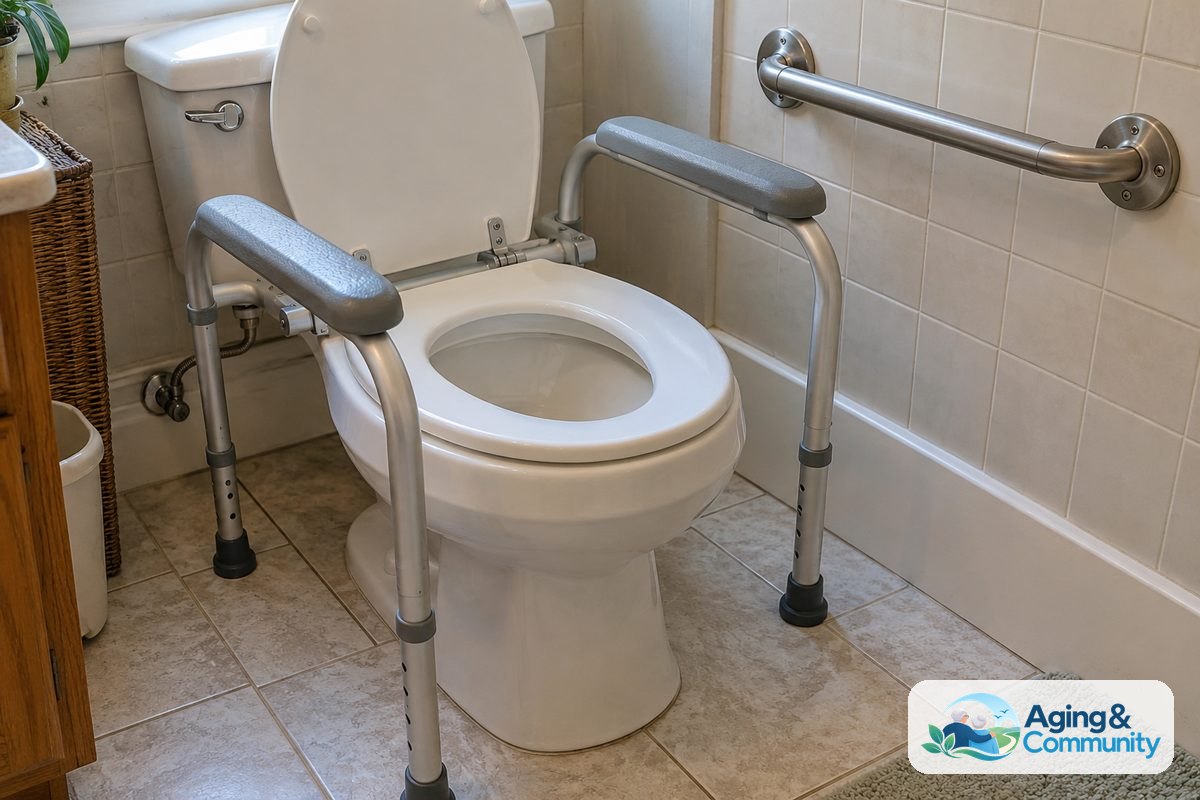
Support arms around the fixture also make a big difference during the push-off phase. You might consider adding toilet safety rails for elderly users who need rigid bars on both sides of the bowl. Comparing a toilet safety frame vs raised toilet seat will help you pick the combination that fits your bathroom dimensions.
Wall-mounted supports provide another reliable point of contact. Setting the right grab bar height for toilet areas ensures your arms rest at a comfortable, natural angle when pushing upward. The National Institute on Aging on Aging in Place notes that home modifications like grab bars and cleared walkways help people remain secure in their own residences.
Bathroom Layout and Daily Navigation Tips
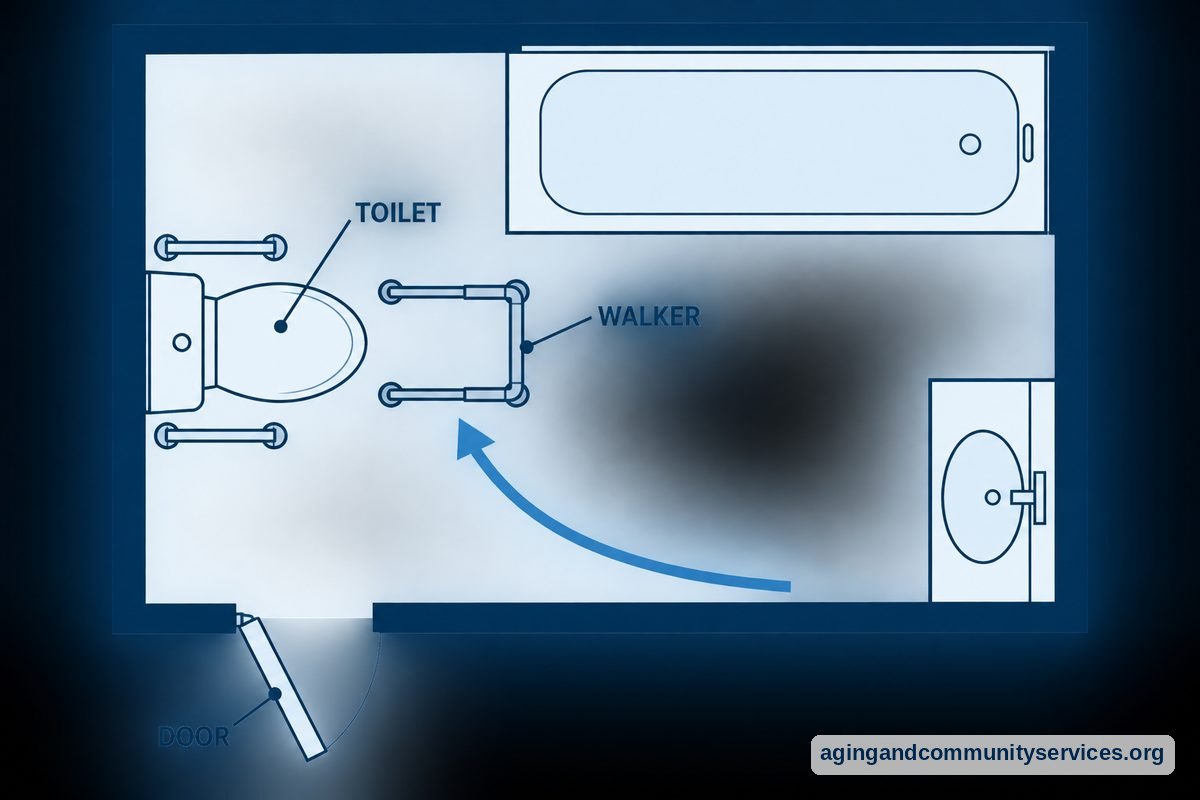
Navigating into the restroom requires just as much care as getting up from the seat. Approach the commode by turning slowly using small steps. Never pivot abruptly on one foot, as this can twist knees and throw off your balance.
Back up toward the toilet until you feel the front edge of the bowl against the backs of your calves. Once you feel that contact, release the walker grips one at a time, reaching backward to place your palms on the commode seat or safety rails. Lower your body gently while keeping your weight centered over your heels.
Keeping the bathroom floor dry is essential for safe mobility. Remove loose bath mats and throw rugs, which can easily catch on walker tips or slide across slick tiles. According to the National Institute on Aging guidance on falls, clearing tripping hazards throughout living spaces can lower the risk of balance accidents.
| Bathroom Setup Item | Proper Use with a Walker | Key Safety Benefit |
|---|---|---|
| Standard Walker | Park in front; hold commode to push up | Keeps the metal frame from tipping backward |
| Four-Wheel Rollator | Lock brakes completely before moving | Stops wheels from rolling away during transfer |
| Raised Commode Seat | Reduces the angle of your hip bend | Requires less leg effort to reach a standing posture |
| Safety Rails or Bars | Place palms flat to bear body weight | Provides rigid leverage directly beneath your shoulders |
Frequently Asked Questions
Can I pull myself up using the walker handles?
No, you should never pull upward on the frame handles to leave the commode. Walkers are lightweight and designed to handle downward force rather than sideways or backward pulling. Pulling the handles toward your chest can cause the front legs of the frame to lift, which could tip the device over.
What should I do if my bathroom is too small for a walker?
If your bathroom doorway or floor space cannot fit a walker, stop the frame at the threshold. From that point, transfer your hold to firmly installed wall grab bars inside the room. An occupational therapist can visit your home to recommend a layout that keeps you supported all the way to the seat.
Is a standard walker better than a rollator for toilet transfers?
A standard walker without wheels offers maximum stability because it cannot roll out from under you. However, a rolling walker works well if you remember to engage the brake locks every time you sit down or stand up. The best choice depends on your arm strength, grip ability, and balance. See the MedlinePlus Mobility Aids page for more background.
How high should my walker handles be adjusted?
When you stand tall with your shoes on and your arms resting loosely at your sides, the top of the handgrips should align with the crease of your wrists. This height allows a slight, comfortable bend in your elbows when you grasp the handles, giving you ideal leverage while walking.