

When planning care for an aging family member, people often wonder how long Medicaid will pay for nursing home services. The short answer is that Medicaid does not have a set time limit, meaning it can continue to pay for nursing home care for as long as you remain eligible. As long as a person meets their state’s financial rules and continues to have a medical need for this level of support, coverage can go on indefinitely.

Medicaid Has No Set Time Limit for Nursing Home Stays
Unlike standard health insurance policies that cap benefits after a certain number of days, Medicaid is designed to handle long-term custodial support. This includes help with basic daily activities such as bathing, dressing, eating, and moving safely from bed to chair. Because Medicaid is the largest payer of long-term care in the country, it provides ongoing stability for residents who have exhausted their own funds.
As long as the facility is certified to accept Medicaid and your personal eligibility stays current, the program will continue paying its share of your care. For a broader overview of funding choices, you can read our complete guide on long-term care costs. Keep in mind that rules are set at the federal level but managed by individual states and counties, so exact practices can vary across state lines.
Understanding the Medical Need Requirement
To keep receiving benefits, a resident must continue to show a medical need for nursing facility care. This is often called meeting a nursing home level of care. State agencies review medical records, doctor evaluations, and daily care notes to confirm that a person cannot live safely without skilled support or hands-on assistance.
If a person improves after therapy and can manage daily activities safely on their own, the state might determine that a nursing facility is no longer necessary. In those situations, other community programs may be suggested. You can review details on clinical evaluations in our guide on how to qualify for Medicaid.

Annual Renewals and Financial Eligibility
Medicaid coverage does not run out simply because time has passed, but you must keep your financial eligibility in good standing. States conduct an annual renewal process to verify that income and countable assets remain within state boundaries. If your financial situation changes, your benefits could be paused or ended.
- Asset changes: Receiving an inheritance, selling a piece of real estate, or receiving cash gifts can push assets over the program threshold.
- Income shifts: Changes in pension amounts or other income streams must be reported to the local caseworker.
- Spend down rules: Many individuals spend down their excess assets on legitimate medical and care bills to remain under the limit.
- Look-back period: Medicaid reviews past asset transfers made during a specific look-back period, which can cause temporary penalties if money was given away.
Learning how to apply for nursing home Medicaid will help you understand the documents required for both the initial application and your yearly redetermination.

How Medicare and Medicaid Differ on Time Limits
It is very common to mix up Medicare and Medicaid when calculating time limits. Original Medicare does not pay for long-term custodial care in a nursing facility. It is primarily designed for short-term recovery, not lasting residential help.
Medicare may help cover a limited period of care in a skilled nursing facility, but only after a qualifying inpatient hospital stay and only while you require active skilled therapy or nursing. For specific details on these day limits, consult the official guide on skilled nursing facility care at Medicare.gov. Once Medicare benefits stop, Medicaid often steps in if the person qualifies financially and clinically. To explore this transition further, see our article on does Medicaid cover nursing homes.
Care Options Beyond Nursing Facilities
Not everyone who qualifies for nursing home level care needs to remain in a traditional facility for the rest of their life. Depending on the state and your loved one’s preferences, other options might be available:
- Home and community-based services: Many states offer waiver programs that provide personal care, homemaker support, and adult day care directly at home. You can learn more about how state waivers work in our guide on how Medicaid pays for assisted living care services.
- PACE programs: The Programs of All-Inclusive Care for the Elderly provide complete medical and social services to older adults who need a nursing-home level of care but can live safely in the community.
- Veterans benefits: Wartime veterans and their surviving spouses who require help with daily living activities may qualify for the VA aid and attendance pension benefit, which helps pay for care in various settings.
- Resident advocacy: If you ever have concerns about nursing home discharge notices or care quality, a long-term care ombudsman can advocate on your behalf at no charge.
What You Can Do Next
Navigating public benefits takes patience and clear organization. Taking things one step at a time will keep the process manageable for you and your family.
- Contact your local Area Agency on Aging: These agencies serve every community in the nation. Call the Eldercare Locator at 1-800-677-1116 or visit eldercare.acl.gov to find yours. You can also dial 211 to reach community referral specialists.
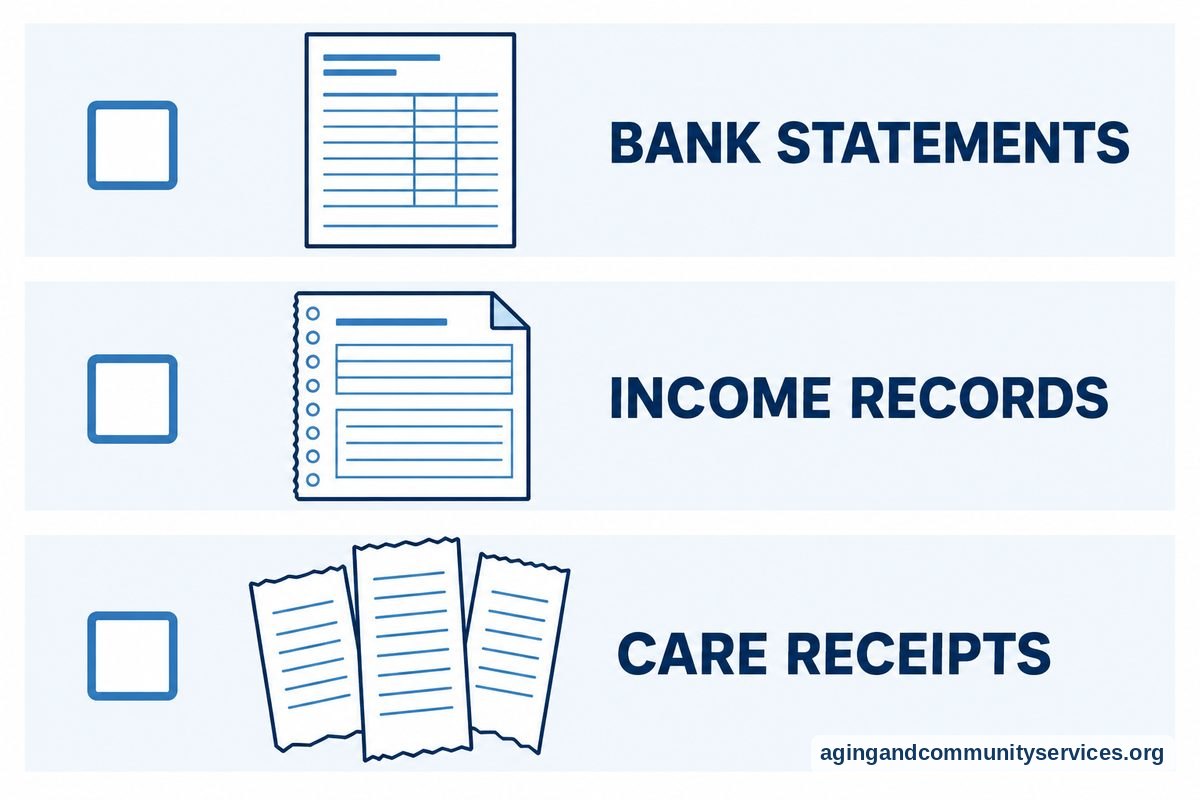
- Gather financial records: Keep bank statements, proof of income, and receipts for care expenses organized in a central folder for the annual renewal.
- Use online benefit screeners: Visit the National Council on Aging’s BenefitsCheckUp website to search for public programs that might help lower daily expenses.
- Talk with the nursing home business office: The social services team or billing staff at the facility can alert you when renewal forms are coming due.
- Consult healthcare providers: Speak with a doctor, physical therapist, or occupational therapist to ensure your loved one’s ongoing care plan clearly documents their physical and cognitive needs.
Frequently Asked Questions
Can a nursing home evict someone if Medicaid takes time to approve?
Federal rules provide protections for residents while a Medicaid application is pending, as long as the facility accepts the program and the application was submitted properly. The facility staff must follow specific discharge rules and give written notice if an issue arises. A local long-term care ombudsman can step in to explain your rights and assist with any disagreements.
What happens if a resident inherits money while on Medicaid?
Any inheritance will count toward your financial resources in the month it is received. If the inheritance pushes total assets above the state limit, Medicaid benefits may pause until the funds are spent down on valid medical, dental, or personal needs. It is best to report these changes immediately to avoid administrative penalties.
Will Medicaid pay if a person goes to the hospital?
When a nursing home resident requires a temporary hospital stay, states often have bed-hold policies that pay the facility to keep the bed open for a limited number of days. If the hospital stay exceeds the state’s bed-hold limit, the facility must offer the next available semi-private room once the person is ready to return, assuming Medicaid eligibility continues.
Does Medicaid take your family home while paying for care?
The primary home is often treated as an exempt asset while a person is living in a nursing home, particularly if a spouse or dependent relative still lives there. However, every state operates an estate recovery program that may seek reimbursement from the estate after the resident passes away, subject to specific hardship protections.