

Many families wonder, does Medicare pay for assisted living when a loved one needs daily support? The short answer is no, Original Medicare does not pay for long-term custodial care in an assisted living community. It is designed to cover acute medical treatments rather than everyday help with living activities.

What Medicare Covers and What It Leaves Out
Medicare focuses on clinical medical needs rather than housing or long-term personal assistance. Custodial care refers to non-medical help with routine daily activities such as bathing, dressing, eating, and using the bathroom. Because assisted living communities primarily provide this type of personal care and housing, Medicare does not pay those monthly costs.
However, if you live in an assisted living community, your standard Medicare benefits still apply to your medical care. Medicare Part A and Part B continue to cover doctor visits, physical therapy, and hospital care, regardless of where you reside.
There is also a limited benefit for short rehabilitation stays. Medicare may pay for a limited number of days of skilled nursing facility care following a qualifying inpatient hospital stay. This care must involve skilled nursing or therapy services, not just custodial assistance.

How Medicaid Differs from Medicare
Medicaid is a joint federal and state program that serves as the largest payer of long-term nursing home care in the country. Unlike Medicare, Medicaid can help with custodial care costs for individuals who qualify based on income, assets, and medical need.
In most situations, Medicaid does not pay for room and board in assisted living settings. However, many states offer home and community-based services waivers that pay for personal care services delivered inside an assisted living residence. Understanding how does Medicaid pay for assisted living can help you see which state options might apply to your family.
Because Medicaid eligibility rules are strict, the state reviews asset transfers made during a specific look-back period before your application. Many people spend down assets to qualify, but you should always check the exact rules in your area because they vary widely by state.
Other Ways to Pay for Care
When Medicare does not cover residential care, families often look to private resources and other assistance programs. Exploring long-term care costs early helps you understand your realistic budget.
- Private Insurance: Standard health insurance and Medicare Supplement plans do not cover custodial housing. However, private long-term care insurance and certain hybrid life insurance policies may pay for care, depending on the terms of your specific contract. You can review whether your insurance helps pay for assisted living to see what benefits you hold.
- Veterans Benefits: Eligible wartime veterans and surviving spouses who need daily assistance may qualify for the VA pension with Aid and Attendance. This monthly cash benefit can be used to help offset personal care costs. State veterans homes and VA community living centers also provide residential options for eligible service members.
- PACE Programs: In communities where they operate, PACE programs serve adults who are age fifty-five or older who need a nursing-home level of care but can live safely in the neighborhood. PACE coordinates and provides comprehensive medical and social services.

What About Memory Care?
Memory care is specialized residential care designed for people living with Alzheimer’s disease or other forms of dementia. Because memory care involves intensive daily supervision and housing, Medicare does not pay for room and board in these units. To learn more about this coverage, read our guide on whether Medicare pays for memory care.
Just as with general assisted living, some state Medicaid waiver programs may help cover specific care services provided in a memory care setting. Families usually pay for the room and board portion through personal funds, veterans benefits, or private long-term care insurance policies.

Practical Steps You Can Take Next
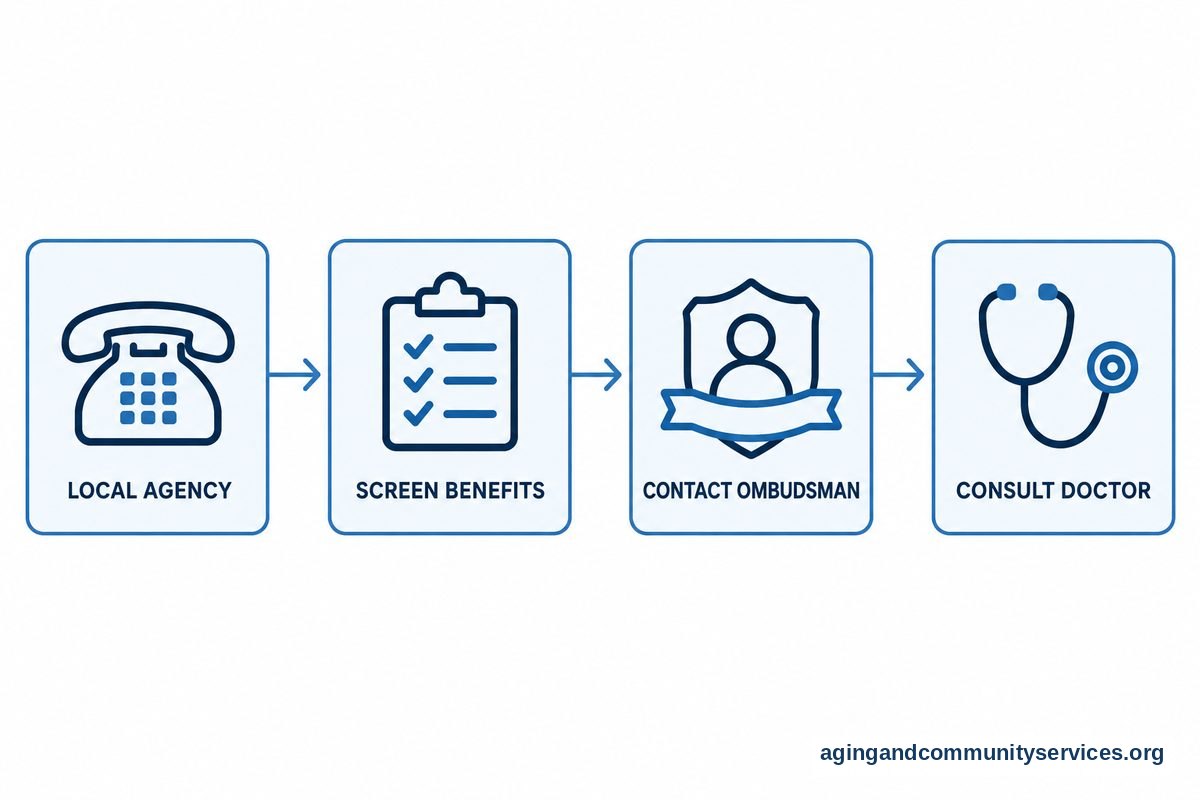
Navigating senior care options can feel overwhelming, but you do not have to figure it out alone. Here are a few clear steps you can take today to explore your options:
- Contact your Area Agency on Aging: Area Agencies on Aging serve every community across the United States. You can find your local agency by calling the Eldercare Locator at 1-800-677-1116 or by visiting eldercare.acl.gov. Local staff can explain community-based waivers and local support programs.
- Call the 211 helpline: Dialing 211 connects you to local specialists who provide free information about community services, food programs, and housing assistance.
- Run a benefits screening: The National Council on Aging offers a free online tool called BenefitsCheckUp. It screens for federal, state, and local programs that can help pay for daily necessities and health care.
- Connect with an ombudsman: Long-term care ombudsmen are free advocates who support residents living in assisted living and nursing facilities. They can provide unbiased guidance on resident rights and facility quality.
- Review alternative funding sources: Research guides on how to get help paying for assisted living to discover local and state programs you might not know about.
- Consult your care team: Talk with your doctor, physical therapist, or occupational therapist to get an objective assessment of what level of daily assistance you or your family member truly needs.
Frequently Asked Questions
Does Medicare pay for any part of assisted living?
Medicare does not pay for the housing, meals, or daily personal care provided in an assisted living facility. However, your Medicare Part A and Part B coverage will continue to pay for approved medical services, such as doctor visits, outpatient therapies, and prescription medications, while you live there.
Will Medicare cover short-term rehabilitation in a facility?
Medicare can cover a limited number of days in a skilled nursing facility if you meet specific rules. You must have a qualifying inpatient hospital stay first, and you must require daily skilled nursing or therapy services. This coverage is strictly for medical rehabilitation, not ongoing custodial living.
Can Medicaid help if Medicare will not pay?
Yes, Medicaid can help eligible individuals who have limited financial resources. While Medicaid generally does not pay for the room and board portion of assisted living, many states have waiver programs that pay for personal care services provided in those settings.
What is the difference between custodial care and skilled care?
Skilled care requires the direct expertise of licensed professionals, such as registered nurses or physical therapists, to treat a medical condition. Custodial care involves non-medical help with routine activities like dressing, bathing, and eating, which do not require specialized medical training.
Who can I contact for unbiased help in my community?
You can call the Eldercare Locator at 1-800-677-1116 to find your local Area Agency on Aging. You can also reach out to a local long-term care ombudsman, who acts as an advocate for facility residents at no cost to your family.