

When legs feel heavy after long sitting, gentle air compression can add a timed rhythm of pressure and release, which is why many families compare the best leg massagers for circulation before choosing one for home comfort. The right choice depends less on fancy extras and more on fit, controls, heat, and whether your parent can set it up without strain. For a simple calf-focused wrap, the CINCOM Leg Massager keeps the design to 2 plus 2 larger airbags and a plug-in adapter. If fuller coverage matters, the MZCNU Leg Compression reaches from feet to thighs with 4 air chambers and 6 heat zones.
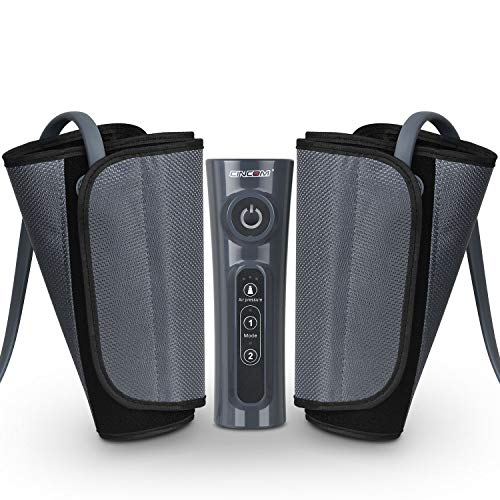
Pros
- 2+2 larger airbags provide full lower-leg coverage
- Velcro wraps adjust for calves up to 21 inches
- 12V/1A adapter avoids battery charging routines
Cons
- Maximum 21-inch calf fit may be tight over clothing
- Requires access to an outlet for the 12V/1A adapter
- Air compression may feel bulky for frail lower legs

Pros
- 4 independent air chambers cover feet to thighs
- 6 heat zones warm knees, calves, and soles
- 12 intensity levels and 6 modes tailor sessions
- Velcro knee and thigh straps adjust the fit
Cons
- Corded adapter limits where it can be used
- Zippered cuffs may be awkward for stiff hands

Pros
- 2 heat levels and 4 massage modes for varied comfort
- 4 pressure intensities adjust for sensitive legs
- Includes 2 extenders for calves up to 29.5 inches
- 20-minute auto-off limits overly long sessions
Cons
- Requires wrapping both feet and calves before each use
- Air compression may feel too firm at higher settings
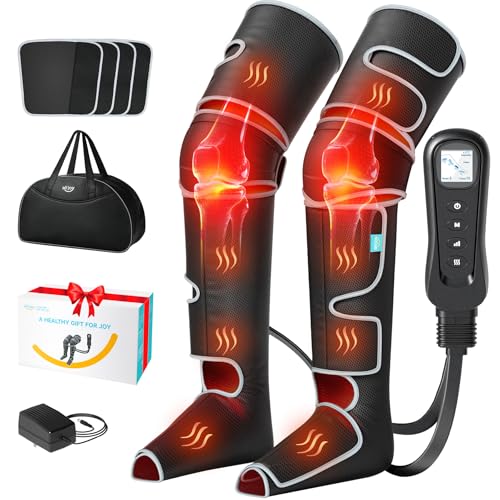
Pros
- 5 massage modes and 4 intensity levels for variety
- 2 heat levels warm the foot and knee areas
- 4 extenders help fit different leg sizes
- 15-minute auto shutoff limits overlong sessions
Cons
- 42C and 52C heat may feel too warm for sensitive skin
- Full-leg wrap design may take time to position correctly
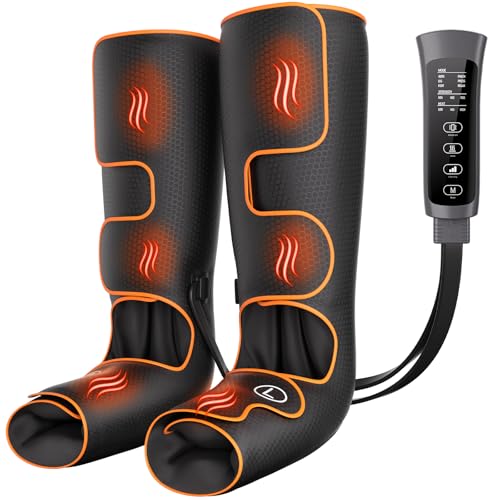
Pros
- 6 massage modes include kneading, wave, and pulsing
- 3 intensity levels let users choose gentler pressure
- 3 heat levels add warmth during compression sessions
- Fits calf circumferences from 11.8 to 27.6 inches
Cons
- Foot length range tops out at 11.8 inches
- Velcro straps may take effort for limited hand strength

Pros
- 3 modes and 3 intensities for adjustable compression
- 3 heat settings span 30 to 50 degrees for warmth
- Type-C charging supports cordless use around the home
- Each wrap weighs 0.9 pounds for easier carrying
Cons
- Temperature scale may be confusing without Fahrenheit shown
- Single-button control can limit fine adjustments during use
A Closer Look at Our Top Pick
For many households, the most sensible starting point is the CINCOM model because it stays focused on the lower leg and avoids a long list of steps. Its 2 plus 2 larger airbags are meant to cover the calf area, and the Velcro wraps adjust for calves up to 21 inches. That matters when your parent wants a routine that feels repeatable: wrap both calves, connect the 12V/1A adapter, and use the controller. There is no battery routine to remember, which can be a real advantage when a device lives beside a favorite chair.
The trade-off is fit and bulk. A 21-inch calf limit may be close if the person wears thick clothing or has larger calves, and air compression can feel bulky on frail lower legs. Still, a calf-focused compression massager with a 12V/1A adapter is easier to place than full foot, calf, and thigh sleeves. On paper, this makes it a strong first look for someone who wants seated lower-leg comfort without zippered cuffs, thigh straps, or several heat zones to manage.
Find Your Situation
- the CINCOM Leg Massager: suits the person who wants calf coverage with 2 plus 2 larger airbags and Velcro wraps fitting up to 21 inches. Watch out: it needs an outlet for the 12V/1A adapter.
- the MZCNU Leg Compression: suits someone who wants feet, calves, thighs, and knees included through 4 independent air chambers and 6 heat zones. Watch out: zippered cuffs may be awkward for stiff hands.
- the ALLJOY Leg Massager: suits a larger calf fit, since the wraps include 2 extenders and fit calves up to 29.5 inches. Watch out: both feet and calves need wrapping before each use.
- the ALLJOY Leg Massager: suits someone who wants foot, calf, and thigh massage with 5 modes and a 15-minute auto shutoff. Watch out: 42C and 52C heat may feel too warm for sensitive skin.
- the KELIRAO Leg Compression: suits the person who wants calf and foot wraps with 6 massage modes, 3 intensity levels, and 3 heat levels. Watch out: Velcro straps may take effort for limited hand strength.
- the LINGTENG Leg Massager: suits someone who wants portable calf or arm relaxation with Type-C charging and wraps weighing 0.9 pounds each. Watch out: the single-button control can limit fine adjustments.
How We Narrowed It Down
We compared published specifications rather than handling the products, focusing on what tends to matter most at home: coverage area, calf fit, heat settings, intensity choices, controller simplicity, auto shutoff, and whether the device is corded or cordless. We excluded options that did not give clear numbers for fit, settings, shutoff timing, or power style, because those details affect day-to-day use. We also gave extra attention to designs with at least 3 intensity choices or a timed shutoff, since a repeatable session is easier for an older adult and a family helper to manage. If your parent has swelling, pain, skin changes, neuropathy, a recent procedure, or a medical condition involving the legs, ask a doctor or physical therapist before using compression. For home setup, clear cords and seated transfer paths matter too, and the National Institute on Aging offers practical fall-prevention guidance at falls and falls prevention.
What to Look For
Start with where the pressure lands
Coverage is the first practical choice. Some designs focus on calves, while others include feet, knees, thighs, or all 4 areas. If your parent only wants lower-leg comfort while reading or watching television, a calf-focused wrap may be easier to place. If the person wants fuller seated coverage, a model with 4 air chambers or foot-to-thigh sleeves may make more sense, similar to how back massagers for chairs offer varied coverage options.
Match the calf size before you compare modes
Fit is more important than having 6 modes if the wrap is hard to close. Calf ranges in this group run from 21 inches up to 29.5 inches, with another option fitting from 11.8 to 27.6 inches. Measure over the clothing the person usually wears at home. A wrap that barely closes may feel tighter once air compression begins.
Choose controls your parent will actually use
A controller should feel understandable after 1 or 2 sessions. A backlit LCD controller can help when room lighting is low, while a one-button control may feel simpler but offers fewer quick adjustments. If the person has stiff hands, zippered cuffs, Velcro straps, and multiple sleeves can matter as much as the display, much like how ease of use matters across different massage tools for seniors. The best control setup is the one your parent can repeat without frustration.
Use heat carefully, especially with sensitive skin
Heat can make a session feel more soothing, but numbers matter. In this group, heat ranges include 2 levels, 3 levels, 6 heat zones, and settings listed from 30 to 50 degrees. One full-leg option lists 42C and 52C heat, which may feel too warm for sensitive skin. Start low, keep clothing and skin comfort in mind, and stop the session if warmth feels sharp or unpleasant.
Before you buy, picture the whole setup
Think through the first 5 minutes before comparing extras. Corded models need an outlet nearby, while a Type-C rechargeable wrap can move around the home more easily. a cordless calf wrap weighing 0.9 pounds per side may suit a person who changes chairs during the day. A plug-in model may be better if remembering to charge another device would become a nuisance.
For circulation concerns, timing and gentleness matter
Auto shutoff is helpful because sessions stay bounded without constant clock-watching. The options here include 15-minute and 20-minute shutoff designs, which are easier to build into a seated routine. Intensity range also matters: 3, 4, and 12 levels appear across the group. For an older adult, the right setting is usually the gentlest one that feels comfortable and easy to repeat, whether using a calf wrap or exploring knee massagers for seniors.
When this is not enough, bring in local help
A leg massager is a comfort device, not a substitute for medical care or hands-on support. If your parent needs help getting equipment on, arranging a safer chair area, or finding local aging services, the Eldercare Locator can connect families with community resources and can also be reached at 1-800-677-1116. If symptoms change, or if compression feels uncomfortable after 1 short session, pause and ask a clinician. A product with 3 intensity levels still needs to fit the person and the situation.
Quick Tips for Choosing
- Measure calf circumference before comparing 6 modes or heat zones.
- Choose 15-minute or 20-minute auto shutoff if timing is hard to track.
- Pick corded power if charging routines are easy to forget.
- Consider Type-C charging if the person changes seats often.
- Start with the lowest of 3, 4, or 12 intensity levels.
- Avoid complicated sleeves if stiff hands make setup tiring.
Frequently Asked Questions
Can a leg massager improve circulation?
Air compression can create rhythmic pressure and release, which some people find comforting during seated routines. It should not be treated as a way to diagnose, treat, cure, or prevent a circulation condition, even if it has 3 or more intensity settings.
How long should an older adult use one?
Many shoppers like auto shutoff because it limits sessions without needing a separate timer. In this group, timed shutoff options include 15 minutes and 20 minutes.
Is heat a good idea?
Heat can feel pleasant, but sensitive skin needs caution. Some products offer 2 or 3 heat levels, while one lists 42C and 52C settings, so the lowest comfortable setting is the safer starting point.
Are full-leg models better than calf-only models?
Not always. Full-leg sleeves can cover feet, calves, knees, and thighs, but they may also take longer to position. A calf-only wrap can be easier when the person wants a simpler 2-leg routine.
What if my parent has larger calves?
Look at the stated calf fit before anything else. The options here include limits such as 21 inches, 27.6 inches, and 29.5 inches.
Are corded models hard to live with?
They can be simple if the chair is near an outlet and the cord path stays clear. A 12V/1A adapter avoids charging, but it does mean the person uses the device in 1 familiar spot.
Are cordless wraps easier?
Cordless use helps if the person moves between chairs or wants fewer cords around the sitting area. Type-C charging still adds a routine, and each wrap in one portable option weighs 0.9 pounds.
What controls are easiest for stiff hands?
Large, clear controllers are often easier than cuffs that need careful zippering or strap alignment. A one-button design sounds simple, but it may limit fine changes across 3 modes and 3 intensities.
Should the pressure feel strong?
No, comfort matters more than force. If a product has 4 pressure intensities or 12 intensity levels, begin at the lowest setting and increase only if the person feels comfortable.
When should we ask a professional first?
Ask before using compression if your parent has leg swelling, skin concerns, nerve issues, recent procedures, or a diagnosis involving circulation. A doctor or physical therapist can help decide whether compression is appropriate for that person.
Which One to Start With
If you are buying for a parent and want the least complicated starting point, begin with the CINCOM Leg Massager. It focuses on the calves, uses 2 plus 2 larger airbags, fits up to 21 inches, and runs from a 12V/1A adapter. That combination makes sense for someone who sits in the same chair and prefers a repeatable routine without charging.
If fit is the concern, move first to a wrap set with 2 extenders for calves up to 29.5 inches. That gives more room than a 21-inch limit and still includes practical safeguards such as a 20-minute auto-off. It does require wrapping both feet and calves, so it is better when your parent or a helper can manage setup without rushing.
If the person wants more coverage and does not mind a more involved process, the MZCNU Leg Compression is the fuller-featured choice on paper. Its 4 independent air chambers reach from feet to thighs, and 6 heat zones add warmth around knees, calves, and soles. Choose it when the person values coverage and adjustability over speed. If hands are stiff, pause before choosing any zippered or full-leg design, because ease of setup often decides whether a product becomes part of a real routine.