

Tight muscles often become harder to reach when shoulder motion, hand strength, or balance changes, so the right tool is less about force and more about control, reach, and setup. The best massage tools for seniors should let your parent work slowly from a stable chair, adjust pressure in 1 small area at a time, and stop before hands or feet feel overworked. After comparing the 6 options here, the Ranarose Deep Tissue stands out for broad reach with 8 nodes, while the TheraFlow Foot Roller is a seated, hands-free choice for foot comfort with 5 massage rows.

Pros
- 8 massage nodes target different body areas
- 1-pound body is light for one-handed positioning
- BPA-free hypoallergenic plastic suits daily contact
- 24.2-inch length helps reach back and neck spots
- 3-year warranty adds support after purchase
Cons
- Manual pressure may tire hands during longer sessions
- 24.2-inch rigid cane needs storage space in small bags
- Plastic nodes do not vibrate or heat like powered massagers

Pros
- Includes 3 massage pieces for varied pressure styles
- Plastic tools are hard for firm trigger point work
- 4-legged knob shape spreads hand force broadly
Cons
- Hard plastic may feel too intense on tender areas
- Small handheld pieces still require grip strength

Pros
- Hooked cane shape helps 65+ users reach back areas
- Deep tissue knobs give 65+ users focused pressure
- Black finish suits 65+ shared caregiving spaces
Cons
- Manual pressure may tire hands during longer sessions
- Curved shape can be awkward to store in small drawers

Pros
- 4-point palm grip helps control targeted pressure
- Smooth acrylic surface wipes clean after each use
- 100% battery-free design avoids charging hassles
Cons
- Manual pressure may tire weak hands or wrists
- Small palm tool may not cover broad back areas quickly

Pros
- 5 massage rows give varied full-sole contact
- 4 ridged rows plus 1 nub row vary pressure
- Schima Superba wood supports daily rolling
- 1 reflexology chart adds guided foot placement
Cons
- Wood texture may feel too firm for sensitive feet
- Requires seated floor placement and foot motion
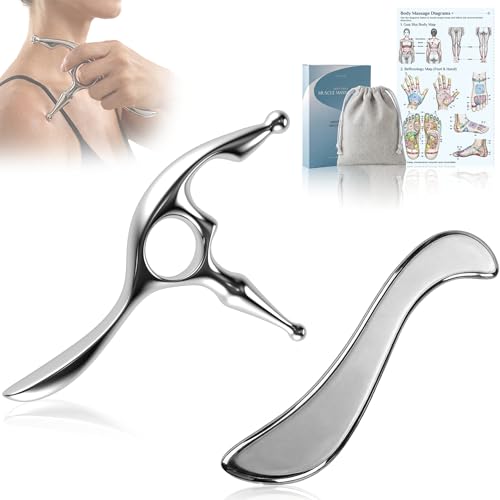
Pros
- 2-piece kit covers trigger points and scraping
- Stainless steel surfaces rinse clean after oil
- Stainless steel triangle shifts pressure from thumbs
- Stainless steel S-scraper reaches neck and knees
Cons
- Requires oil or serum for the smoothest glide
- May be too firm for very sensitive skin areas
- Small tools can be hard to grip with weak hands
A Closer Look at Our Top Pick
The Ranarose Deep Tissue is the easiest place to start if the main need is reaching the back, neck, or body knots without adding much weight to the routine. It is a trigger point massage cane with 8 nodes, so the person can choose a smaller or broader contact point depending on the spot. Its weight is under 1 pound, which matters when a tool has to be lifted, positioned, and held steady for a short session. The BPA-free plastic is also described as hypoallergenic for skin contact, a practical detail for a product that may touch the neck, shoulders, arms, or back.
On paper, this is still a manual tool, so it asks something from the hands and arms. Longer sessions may tire the hands, and the hook shape can feel awkward if the person has limited shoulder motion. It also has no heat or vibration, which may be a benefit for someone who wants a simple, battery-free routine, but not for someone looking for powered features. For many households, an 8-node trigger point cane gives the best balance of reach, light handling, and simple storage support because it includes a 3-year warranty.
Find Your Situation
- the Ranarose Deep Tissue: suits your parent if back, neck, or body knots are hard to reach and a tool under 1 pound would be easier to lift. Watch out: the manual pressure can tire hands during longer sessions.
- the hautllaif Manual Trigger: suits a caregiver or older adult who wants 3 handheld pieces for neck, arms, thighs, and calves. Watch out: the hard plastic may feel too intense on tender areas.
- the LiBa Back Massager: suits a person 65+ who wants a hooked cane shape for focused back or neck pressure. Watch out: the curved shape can be awkward to store in small drawers.
- the Melonsun Palm Massage: suits someone who wants a 4-point palm grip for targeted neck, back, or shoulder pressure without batteries. Watch out: the small palm tool may not cover broad back areas quickly.
- the TheraFlow Foot Roller: suits seated foot routines because it has 5 massage rows and a non-slip base. Watch out: the wood texture may feel too firm for sensitive feet.
- the Rena Chris Trigger: suits a caregiver or older adult who wants 2 stainless steel pieces for focused work on feet, shoulders, neck, or arms. Watch out: small tools can be hard to grip with weak hands.
How We Narrowed It Down
We compared published specifications rather than handling the products, then looked for tools that make sense for older adults and family caregivers doing short home routines. We gave more weight to reach, grip style, cleaning, simple setup, and whether the product could be used from a seated position. We excluded options that depend mainly on complex controls, unclear contact surfaces, or product claims that go beyond comfort and massage use. We also avoided ranking by price, ratings, or review counts. If your parent has new pain, numbness, swelling, skin changes, or a medical condition that affects sensation, ask a doctor or physical therapist before choosing any massage tool. For general home safety context, the National Institute on Aging notes practical steps for safer movement and fall prevention when reviewing everyday routines.
What to Look For
Start with the body area that is hardest to reach
A tool for the back needs a different shape than a tool for the feet. Hooked canes, like models with 8 nodes or deep tissue knobs, are better suited to reaching behind the body with less twisting. Chair back massagers with palm tools and 4 contact points are easier to steer on a shoulder or upper arm, but they cover less area. For feet, a roller with 5 massage rows lets the person stay seated while moving both the tool and pressure slowly.
Choose pressure the person can control
Manual tools are useful because pressure can be increased or reduced in 1 small step at a time. The trade-off is that hands, wrists, or shoulders may tire if the session runs too long. Hard plastic and stainless steel can feel firm, while wood adds a ridged texture under the foot. A caregiver should start lighter than expected and let the person describe what feels comfortable.
Think about grip before you think about strength
A small tool can be easy to store but harder to hold if the person has weak hands. The hautllaif set includes 3 pieces, and its 4-legged knob shape spreads hand force more broadly than a single thumb point. A triangle grip, like the one in the stainless steel kit, shifts pressure away from the thumbs. If grip is the main concern, choose a shape that uses the palm or whole hand instead of a fingertip.
For back and neck routines, reach matters more than force
Older adults often need help reaching the area between the shoulder blades, even when they can manage other daily tasks. A hooked cane shape can reduce the need to twist, but it may still be awkward for someone with limited shoulder motion. A hooked trigger point cane for back areas is most useful when the person can guide the tool slowly and stop after a few focused passes. If a caregiver is helping, agree on 1 simple signal to pause.
For foot comfort, keep the setup steady
A foot roller should be used from a stable chair, with both feet able to rest on the floor between passes. The wooden roller here has 5 massage rows, including 4 ridged rows and 1 nub row, so pressure can vary across the sole. Its non-slip base helps keep sessions controlled, much like how knee supports provide stability during movement, and the person still needs enough foot motion to roll comfortably. If the wood texture feels too firm, use shorter sessions rather than pressing harder.
Before you buy, picture the cleanup and storage
Massage tools are easier to keep in rotation when cleanup takes 1 simple step. Smooth acrylic can wipe clean, while stainless steel surfaces rinse clean after oil. A curved cane may not fit in a small drawer, so plan where it will live before ordering. If the person shares a caregiving space, a simple color and obvious shape can make the tool easier to identify.
When this is not enough, bring in local help
A massage tool is only 1 part of a comfort routine, and it should not replace care when symptoms change or daily movement becomes harder. If your parent needs help finding transportation, in-home support, or caregiver resources, the Eldercare Locator can connect families with local services. You can also call 1-800-677-1116 for that public service. When in doubt, ask a clinician how a tool fits with the person’s mobility, skin sensitivity, and exercise plan.
Quick Tips for Choosing
- Pick 1 main body area before comparing shapes.
- Favor seated use if balance or stamina varies.
- Choose lighter tools when arm fatigue is common.
- Use firm materials gently on tender skin.
- Plan storage for curved or longer tools.
- Stop a session if discomfort increases.
Frequently Asked Questions
Are manual massage tools a good choice for older adults?
Manual tools can be a good choice when the person wants simple pressure control without cords or batteries, similar to how knee supports for women offer straightforward joint relief. The best fit depends on grip strength, reach, skin sensitivity, and whether a caregiver can help for 1 short session.
How long should a home massage session last?
Start with a short routine rather than a long session. If hands, feet, or shoulders feel tired after a few passes, stop and try again later with lighter pressure.
What type of tool is easiest for back knots?
A hooked cane shape is often easier for the back because it can reach behind the body. The person still needs enough shoulder motion to position it without strain.
What type of tool is easiest for feet?
A foot roller can be easier because it lets the person sit while moving the foot over the surface. Look for a stable base and varied rows, such as 5 massage rows, for more control.
Are hard plastic tools too firm?
Hard plastic can feel strong on tender areas, especially when pressure is concentrated in 1 small point. Use a lighter touch first and avoid pressing through discomfort.
Are stainless steel massage tools practical at home?
Stainless steel can be practical because it rinses clean after oil. It can also feel very firm, so it is better for careful, focused use than broad pressure on sensitive areas.
What if my parent has weak hands?
Look for a tool that uses the palm, a broad grip, or a caregiver’s help rather than finger strength alone. Small tools may be harder to hold even if they are easy to store.
Should a caregiver apply the pressure?
A caregiver can help with hard-to-reach spots, but the person receiving pressure should guide the pace. Agree on 1 word or gesture that means stop right away.
Do these tools need heat or vibration?
Not always. A simple manual tool can be easier to manage because there are no controls, batteries, or charging steps.
When should someone ask a clinician first?
Ask a doctor or physical therapist first if there is new pain, numbness, swelling, skin irritation, or reduced sensation. A clinician can help match pressure and body area to the person’s health needs.
Which One to Start With
If you want 1 first choice for a parent who mainly struggles to reach the back or neck, start with the Ranarose Deep Tissue. It has 8 nodes, weighs under 1 pound, and gives enough shape variety for the back, neck, and other body spots without adding cords or charging. The main caution is that it still depends on manual pressure, so it is better for brief, focused sessions than long routines.
If the person’s main need is foot comfort from a chair, choose a seated wooden foot roller with 5 massage rows. It keeps the hands out of the task and uses a non-slip base, which is helpful when the person wants a simple floor setup. The wood texture is firm, so start with light rolling and stop before the feet feel overworked.
If a caregiver will be doing most of the work, the better starter may be a small set rather than a cane. The Rena Chris kit has 2 stainless steel pieces, including a triangle tool that shifts pressure away from thumbs and an S-scraper that can reach the neck and knees. For families who want several pressure styles in a simple manual set, the hautllaif option has 3 pieces, but it still requires grip strength. Choose the tool that matches the hardest daily problem first: reach, hands-free foot use, or caregiver-controlled pressure.