

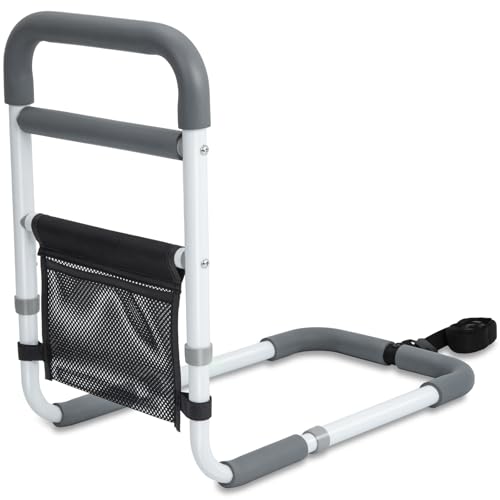
Getting out of bed asks the body to do several things at once: roll, sit up, plant both feet, shift weight, then stand. A bedside rail can give your parent a fixed handhold during that sequence, but the right choice depends on mattress height, bed type, grip comfort, and how much bedside coverage feels useful rather than intrusive. After comparing 6 models on paper, the best bed rails for elderly shoppers are the ones that match the bed first, then the person’s transfer routine. Two strong starting points are the YrHeiper Bed Rails for a compact 350 lb support rating and the Stander EZ Adjust for adjustable 20 to 30 inch coverage.
Pros
- ASTM F3186-17 certified for bedside safety testing
- 350 lb frame with stabilizing leg for heavier users
- Fits Twin to King beds with 7.9 to 13 inch mattresses
- Steel frame and wipeable non-slip foam grip
Cons
- May not suit mattresses thinner than 7.9 inches
- Tie-down straps may need periodic checking
- Compact rail offers limited coverage along the bed
Pros
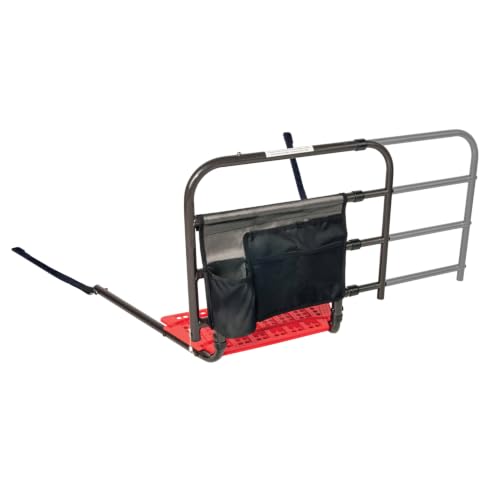
- Adjusts from 20 to 30 inches for bedside coverage
- Supports up to 300 lbs for sitting or standing
- Fits 10-14 inch mattresses on traditional beds
- ASTM F3186-17 tested adult portable bed rail
Cons
- Not intended for adjustable beds or hospital beds
- Requires mattress thickness of 10 to 14 inches
- Safety strap setup may take caregiver assistance

Pros
- 350 lb capacity with 13 ft straps for bed-frame anchoring
- 31.9 to 35.8 in height range suits 7 to 13 in mattresses
- 180° fold-down rail can open access along the bedside
- LED light has 3 modes and 10 ft motion detection
Cons
- Extra-high rail may feel bulky on lower twin beds
- Needs strap anchoring to the frame for best stability
- Motion light stays on 25 seconds, which may be brief

Pros
- Reinforced steel bars support up to 350 lb
- Height adjusts from 16.9 to 21.3 inches
- Fits 2 to 10 inch mattress heights
- Rail width extends from 23.6 to 31.5 inches
Cons
- May not suit mattresses thicker than 10 inches
- Bed frame fit may need checking on nonstandard beds

Pros
- 16 CFR Part 1270 safety certification included
- 350 lb load rating for heavier adult users
- Foam handrail offers a softer non-slip grip
- Heavy-duty steel frame supports daily bedside use
Cons
- Fixed 25-inch horizontal length may not suit every bed
- Must sit between mattress and frame, limiting some setups

Pros
- 17.3 to 21 in height range suits varied beds
- 6-pocket organizer keeps bedside essentials close
- Fits 7 to 13 in mattresses on major bed sizes
- 24 in base length helps keep placement steady
Cons
- Not for adjustable, water, or inflatable beds
- Mattress compatibility stops at 13 in thick
A Closer Look at Our Top Pick
The YrHeiper model stands out because it keeps the job clear: a heavy-duty bedside grab bar with a 350 lb frame, a stabilizing leg, and tool-free straps. Its mattress fit range is also practical for many home beds, covering Twin to King sizes with mattresses from 7.9 to 13 inches. The rail is compact, so it is better suited to someone who mainly needs a steady handhold for sitting and standing, rather than long coverage along the side of the bed. The steel frame and wipeable non-slip foam grip also make sense for daily routines where hands may be dry, damp, or weak in the morning.
On paper, a compact 350 lb bedside grab bar is easiest to justify when your parent already knows where they want to place a hand during transfers. The ASTM F3186-17 certification is a useful detail because portable adult bed rails need careful fit and setup. The trade-off is coverage: a shorter rail can feel less confining, but it will not run far along the mattress edge. The tie-down straps also deserve periodic checking, especially after sheet changes or mattress rotation.
Find Your Situation
- the YrHeiper Bed Rails: suits a standard Twin to King bed with a 7.9 to 13 inch mattress and a person who wants a compact 350 lb handhold. Watch out: the shorter rail gives limited side coverage.
- the Stander EZ Adjust: suits someone who wants adjustable coverage from 20 to 30 inches and a 300 lb support rating. Watch out: it is not intended for adjustable beds or hospital beds.
- the Barleyear Bed: suits a caregiver who wants a 180 degree fold-down rail, a 350 lb rating, and a motion LED with 10 ft detection. Watch out: the extra-high design may feel bulky on a lower twin bed.
- the BigDolphin Bed Rails: suits thinner mattresses from 2 to 10 inches and people who want width adjustment from 23.6 to 31.5 inches. Watch out: it may not suit mattresses thicker than 10 inches.
- the Cupluw: suits someone who wants a fixed 16 inch grip, a 350 lb load rating, and 16 CFR Part 1270 approval. Watch out: the fixed 25 inch horizontal length may not fit every bed layout.
- the PELEGON Bed Rails: suits standard beds with 7 to 13 inch mattresses and someone who values a 6-pocket organizer. Watch out: it is not for adjustable, water, or inflatable beds.
How We Narrowed It Down
We compared published specifications rather than handling the products, focusing on support rating, mattress compatibility, bed type limits, rail height, rail width, anchoring method, and bedside storage. We favored models with clear numbers, such as 300 lb or 350 lb support ratings, stated mattress ranges, and named safety standards like ASTM F3186-17 or 16 CFR Part 1270. We excluded choices that did not clearly fit ordinary home decision-making, such as rails without a stated mattress range or without enough setup detail to compare. For families thinking about falls and home routines, the National Institute on Aging offers practical context on falls and falls prevention without turning shopping into guesswork. If your parent has new weakness, dizziness, recent surgery, or changing mobility, ask a doctor or physical therapist before choosing a rail.
What to Look For
Start with the mattress, not the rail
The mattress range is the first filter because a rail that sits too high, too low, or too loosely can feel awkward. Some models fit 7 to 13 inch mattresses, while another fits 10 to 14 inches. If your parent’s bed has a topper, measure the full mattress height with the topper in place. A good match should let the handle sit where the person naturally reaches while sitting up.
Match the handhold to the transfer
Think about whether your parent needs a small grab point or a longer rail to guide the sitting position. A 16 inch grip can work well for a clear hand placement, while 20 to 30 inches of rail coverage gives more side reference. Wider rails can also help when the person shifts slowly before standing. The goal is a steady handhold, not a barrier that makes normal movement harder.
Check the support rating honestly
Support ratings in this group are either 300 lb or 350 lb, and they matter most during sitting and standing. Choose a rating that gives comfortable headroom above the person’s body weight and usual movement style. A caregiver should also check that straps, legs, and base pieces are set up exactly as directed. The number is only useful when the bed and frame match the rail’s design.
Look at bedside access at night
Some people want a rail that stays fixed, while others need a fold-down design for easier bed making or caregiver access. A 180 degree fold can open the bedside, and a motion light with 10 ft detection may help with orientation in a dark room. The trade-off is bulk, especially on smaller or lower beds. For a high-feature option, a fold-down rail with motion lighting is worth comparing against simpler handles.
Before you buy, measure the whole setup
Measure mattress height, bed size, and the space between the bed and nearby furniture. One rail fits mattresses from 2 to 10 inches, while another starts at 10 inches, so guessing can lead to a poor fit. Also check whether the bed is standard, adjustable, water, inflatable, or hospital style. Several rails in this group have bed type limits that matter more than the brand name, especially if your parent uses a bed designed for mobility challenges.
When this is not enough support
A bed rail is only one part of a transfer routine, and it is not the right answer for every situation. If the person needs hands-on help, has frequent lightheadedness, or cannot follow a consistent 2-step transfer routine, talk with a clinician. Local aging services can also help families think through home support, and the Eldercare Locator connects older adults and caregivers to nearby resources at 1-800-677-1116. The safest shopping choice is often the one that fits the larger care plan.
Do not overlook the small storage details
Storage pockets sound minor, but they can reduce awkward reaching for glasses, a phone, or a remote. One model has a 6-pocket organizer, while others include a pouch or mesh pocket. Keep only light, frequently used items there so the rail does not become cluttered. The person should still be able to grip the handle without brushing against stored items.
Quick Tips for Choosing
- Measure mattress height before looking at style.
- Confirm the bed type before choosing a rail.
- Pick 300 lb or 350 lb support based on real use.
- Choose longer coverage if the person shifts before standing.
- Choose compact coverage if space is tight.
- Recheck straps after bedding changes.
Frequently Asked Questions
What size bed rail is best for an older adult?
The best size depends on mattress height, bed type, and how the person moves from lying down to standing. A compact 16 inch grip may be enough for a steady transfer, while 20 to 30 inches of coverage can offer more guidance along the bed edge.
Can a bed rail be used on any bed?
No, fit varies by bed type and mattress thickness. Some rails are limited to standard beds, and some are not intended for adjustable beds, hospital, water, or inflatable beds.
How much weight should a bed rail support?
The models compared here list either 300 lb or 350 lb support ratings. Choose a rating that fits the person’s body weight and how much force they place on the rail when sitting or standing.
Are longer bed rails better?
Not always. A longer rail can provide more bedside reference, but a compact rail may feel easier to use in a small room or for a person who only needs 1 steady handhold.
What mattress height should I measure?
Measure the full height of the mattress, including any topper that stays on the bed. The rails here cover ranges such as 2 to 10 inches, 7 to 13 inches, and 10 to 14 inches.
Do bed rails need straps?
Many portable rails use straps to anchor the rail to the bed frame. If straps are included, they should be installed carefully and checked after sheet changes or mattress movement.
Is a fold-down rail worth it?
A fold-down rail can help when a caregiver needs clearer bedside access or when making the bed. It may also add bulk, so check the rail height and room layout before choosing one.
Should I choose a rail with a storage pouch?
A pouch can be useful for small items like glasses, a remote, or a phone. Keep the pouch light so it does not interfere with the person’s hand placement on the rail.
What safety standards should I notice?
Look for named standards such as ASTM F3186-17 or 16 CFR Part 1270 when they are listed. A standard does not replace proper fit, but it gives another way to compare rails on paper.
When should a family ask a professional?
Ask a doctor or physical therapist when mobility changes quickly, transfers require hands-on help, or dizziness is part of the routine. A professional can help decide whether a rail, another aid, or a different bed setup makes sense.
Which One to Start With
If you want the most straightforward place to begin, start with the YrHeiper Bed Rails for a standard home bed with a 7.9 to 13 inch mattress. Its 350 lb rating, stabilizing leg, ASTM F3186-17 certification, and compact shape make it a sensible first comparison for a person who mainly needs a dependable handhold at the mattress edge. It is not the right starting point if your parent wants long side coverage, but it is a clean fit for many ordinary transfer routines.
If your parent tends to shift along the bedside before standing, look next at the Stander EZ Adjust. The 20 to 30 inch adjustable rail gives more coverage than a compact grab bar, and the 300 lb support rating suits many adults. Its organizer pouch is also practical when glasses, medication, a remote, and a phone need to stay close. Just remember its 10 to 14 inch mattress range and standard-bed limits.
For a caregiver who needs bedside access to change linens or assist from the side, a 180 degree fold-down rail with LED lighting is the more flexible starting point. The 350 lb rating, 31.9 to 35.8 inch height range, and 10 ft motion detection make it feature-rich on paper. Choose it when those features solve a real routine, not just because it has more parts.