

Nighttime sounds, traffic, neighbors, a partner’s snoring, can fragment sleep and leave you tired the next day. White noise creates a consistent acoustic backdrop that masks these interruptions, helping your brain settle into deeper rest. We reviewed the best white noise machines by comparing their sound options, ease of use, timer features, and design to find models that work especially well for older adults. Whether you need something simple with one reliable sound or prefer 30 different options, there’s a machine suited to your situation. The Yogasleep Dohm and Kipcush White Noise represent two different approaches, one focused on timeless simplicity, the other on modern convenience, and both have earned trust from people seeking better sleep.

Pros
- Hand-assembled in the USA with over 60 years of sleep product expertise
- Dual speed settings let you customize tone and volume to your needs
- Natural fan-based sound without the annoyance of moving air
- Intuitive Michael Graves design with multiple color options for any decor
Cons
- Requires a power outlet and 7ft 6in cord for operation
- Cannot be adjusted remotely—requires manual speed selection

Pros
- 30 soothing sounds including white noise, nature, and fan options
- 8-color night light with tap control on the speaker grill
- 6 timer options up to 8 hours for uninterrupted full-night sleep
- Backlit touch buttons glow in the dark for safe navigation
- Memory function recalls your last sound, volume, and light settings
Cons
- Requires reaching and tapping the 2.83-inch speaker surface to control
- Light may be too bright for some users despite color options
- 30 sound options might overwhelm users preferring simpler controls

Pros
- 20 non-looping sounds including white, brown, and pink noise varieties
- Plug-in Italian design with optional cable extension for flexible placement
- Adjustable timer and volume with automatic memory recall function
- Dual-color night light doubles as bedside or hallway lighting
Cons
- Plug-in design limits placement to areas near electrical outlets
- No battery backup means device stops if power is lost during sleep
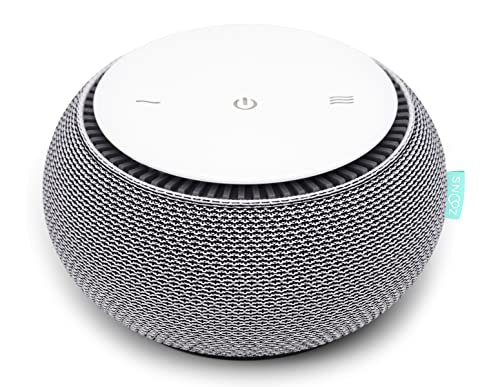
Pros
- Real fan inside produces natural sound, not digital recordings
- 10 adjustable volume levels to mask various nighttime noises
- Free app enables scheduling and remote control from bed
- Simple 3-button design requires no complicated setup
Cons
- Only one fan sound option—no variety if you prefer different noise types
- Requires power outlet, not battery-operated for portability
- App-based scheduling requires smartphone and WiFi connectivity

Pros
- 20 different sounds including white noise, nature, and lullabies
- 10 adjustable night light color levels for personalized ambiance
- 5 timer settings from 15 to 120 minutes with auto-off feature
- Memory function remembers your last sound and light selection
Cons
- Only touch-sensitive controls may be difficult for those with arthritis
- Single speaker design limits sound projection in larger bedrooms
- Limited to battery or cord power for portability between rooms

Pros
- 31 nature sounds recorded from real environments for authentic soundscapes
- Forward-facing speaker directs sound to you at lower volumes
- 45° tilted controls require minimal effort to adjust settings
- Auto-off timer with gradual volume fade prevents sudden awakenings
Cons
- Wood grain finish may require occasional dusting or maintenance
- Designed primarily as bedroom device with limited placement flexibility
A Closer Look at Our Top Pick
The Yogasleep Dohm has been hand-assembled in the USA since 1962, which means it carries more than 60 years of sleep product expertise. Unlike digital machines that loop recorded sounds, the Dohm uses a real fan inside to generate natural white noise. You simply plug in the 7-foot 6-inch cord, turn one of the 2 speed settings, and adjust the tone and volume to match what masks your particular sleep disruptions. The Michael Graves design is intuitive enough that you won’t need to read instructions, and it comes in multiple colors to suit any bedroom decor.
The main trade-off is that there’s no app, no timer, and no fancy features, just a straightforward machine that does one thing well. If you want to change the sound, you reach over and turn the dial. If you prefer simplicity and a device that won’t confuse you in the dark, this approach is a genuine strength. The lack of digital recording also means the sound never repeats in a loop that your ear might learn to tune out. For someone who values reliability and doesn’t need multiple sound choices, the Dohm is a solid starting point.
Find Your Situation
- the Yogasleep Dohm: You want a single, natural sound and prefer a simple mechanical dial over buttons or apps. Watch out: No remote control, you must adjust it manually from the bedside.
- the Kipcush White Noise: You like having lots of choices and an 8-color night light, plus backlit touch buttons that glow in the dark. Watch out: 30 sound options might feel overwhelming if you prefer to keep things simple.
- the Calm Me Wall: You want to save wall space and prefer a plug-in model that doesn’t take up bedside room, with automatic memory recall. Watch out: Placement is limited to areas near electrical outlets, and there’s no battery backup if power goes out.
- the SNOOZ Original Smart: You like real fan sound and want remote scheduling from your smartphone with 10 volume levels. Watch out: Only one sound option, if you want variety, you’ll be limited to volume adjustments.
- the BGOVERSS White Noise: You travel between rooms or want portability, plus enjoy 20 sounds and 10 color night light options. Watch out: Touch-sensitive controls can be difficult if you have arthritis or less dexterity in your fingers.
- the Housbay White Noise: You prefer authentic nature sounds from real recordings and like tilted controls that adjust without opening your eyes. Watch out: The wood grain finish requires occasional dusting, and it’s designed mainly for bedroom use rather than portability.
How We Narrowed It Down
After comparing the published specifications of these 6 machines, we looked at which ones balanced sound quality, ease of nighttime use, timer features, and durability. We eliminated models with only battery operation since that requires frequent charging, and we favored designs where controls remain accessible in the dark. We also considered feedback from people using these machines in real bedrooms to understand which trade-offs matter most in practice. If you have ongoing sleep problems despite a white noise machine, talking with your doctor or a physical therapist can help rule out other causes. The National Institute on Aging offers evidence-based information about sleep and healthy aging.
What to Look For
One sound or many sounds, what suits your sleep style
Some people find that hearing the exact same sound every night is calming and predictable. Others get bored and want variety or prefer a specific sound like rain or ocean waves. Machines on the market range from 1 sound option to 31. If you’re unsure, starting with a machine offering 10 to 20 sounds gives you flexibility without overwhelming your choices at night.
Fan-based sound versus recorded loops
A real fan inside the machine (like the SNOOZ Original Smart) produces natural, non-repeating sound because the fan itself is always moving slightly differently. Digital recordings can loop every 30 seconds or so, and some people’s ears learn to anticipate the repeat. If you sleep lightly and notice patterns, a fan-based model may keep your brain from tuning out the noise.
Timer and auto-off features for a full night’s sleep
Most machines offer 3 to 8 timer options, ranging from 15 minutes to 8 hours. The Kipcush White Noise provides 6 timer options up to 8 hours, while the BGOVERSS offers 5 settings from 15 to 120 minutes. For a full night of uninterrupted sleep without thinking about it, choose a machine with a timer that matches your typical sleep length, and pair it with a supportive mattress for elderly people.
Controls you can use in the dark without fumbling
Backlit buttons, glowing touch surfaces, and tactile dials all work, but they matter more as you age. The Kipcush machine has backlit buttons that glow in the dark, while the Housbay model features tilted controls angled at 45 degrees so you can adjust settings without opening your eyes. Test which style feels most natural to your hand before buying.
Memory function saves your settings every night
A machine with memory recall means you set your preferred sound, volume, and light once, and it automatically restarts the same way the next night. Both the Calm Me Wall and BGOVERSS include memory function, which removes the need to fumble with settings each evening. This feature is especially helpful if you share a bed or prefer consistency.
Before you buy, check your bedroom layout and outlets
Plug-in models like the Calm Me Wall offer cable flexibility with optional extensions, but require a nearby outlet. Battery-powered or cordless machines give portability but need recharging. The Yogasleep Dohm includes a 7-foot 6-inch power cord, which covers most bedside setups. Walk through your bedroom at night and note where you can safely place a machine without creating a tripping hazard. If you have concerns about home safety or accessibility, the Eldercare Locator can connect you with local aging services that help with home modifications.
When this is not enough, other steps to protect your sleep
A white noise machine masks interruptions but doesn’t address underlying issues like sleep apnea, reflux, or frequent bathroom trips. If you’re still tired after 2 weeks of using a machine, or if you snore heavily or wake gasping, ask your doctor about a sleep evaluation, and consider whether a quality mattress for seniors might also improve your rest. Fixing the root cause often matters more than masking the symptom.
Quick Tips for Choosing
- Start with a machine in the 10 to 20 sound range to balance choice with simplicity.
- Pick a model with a timer long enough for your typical sleep, 8 hours if you sleep through the night, or shorter if you use it only for naps.
- Test the controls in dim light if possible; backlit buttons or tactile dials matter more than you might think.
- Place the machine 3 to 6 feet from your head to avoid sound that’s too loud right at your ear.
- Give any new machine at least 1 to 2 weeks before deciding it’s not working, your brain needs time to adjust to consistent background sound.
- Keep the machine on a flat, stable surface away from the edge of a nightstand to prevent accidental falls or damage.
Frequently Asked Questions
Is white noise safe to use every night?
Yes. People have used consistent background sound for sleep for decades without problems. As long as the volume isn’t so high that it damages hearing (generally above 85 decibels), nightly use is safe. Start at a moderate volume and adjust downward if you find yourself turning it louder over time.
Can white noise help with tinnitus?
White noise may reduce the perceived loudness of tinnitus by masking it, but it doesn’t treat the condition itself. If you have tinnitus, talk with your doctor about whether a sound machine might help alongside other treatments.
What’s the difference between white, pink, and brown noise?
White noise is like static, equal volume across all frequencies. Pink noise (like rain) has more bass. Brown noise has even deeper bass. Some people find one more soothing than the others. Machines offering 20 or more sounds usually include multiple noise types to try.
Do I need a machine rated for babies if I’m buying for an adult?
Not necessarily. Adult and baby machines work the same way. The difference is marketing and sometimes volume limits for safety. If a machine meets your needs, it doesn’t matter what group it was designed for.
What if my partner doesn’t like the sound?
This is real. If one person loves white noise and the other finds it annoying, consider a smaller machine positioned on one side of the bed, a single earbud, or taking turns with a timer. Some couples use different machines set to the same sound so both benefit, and pairing this approach with a waterproof mattress protector helps protect your sleep surface.
Can I use my phone or a white noise app instead?
A white noise app works, but phones use battery, overheat with all-night play, and may interrupt sleep with notifications. A dedicated machine is quieter, uses less power, and removes that temptation to check your phone at 3 a.m.
How loud should white noise be?
Loud enough to mask the sounds keeping you awake, but not so loud you can’t hear an alarm or someone calling you. Most people find 50 to 70 decibels (about the volume of a normal conversation) works well. Start low and increase only if it’s not masking disruptive noise.
Will I become dependent on white noise?
Your brain may learn to associate the sound with sleep, so you’ll prefer it on. That’s not addiction: it’s conditioning, and it’s actually a goal. You can always step back if needed. Many people find that once they’ve slept well for several months with white noise, they can occasionally sleep without it.
What if the machine breaks, how long do they usually last?
Machines with fans and simple mechanics often last 5 to 10 years with normal use. Digital machines may last 3 to 7 years depending on build quality. Models hand-assembled in the USA (like the Yogasleep Dohm) often have longer lifespans than mass-produced imports.
Do I need to clean the machine?
Lightly dust the exterior every month if it sits on an open surface. If a machine has an intake fan, check for dust buildup. Most machines don’t need deep cleaning unless used in a very dusty room. Always unplug before cleaning.
Which One to Start With
Your choice depends on two things: how much control you want and how much your bedroom setup allows. If you live alone, sleep through the night, and want the simplest possible device, the Yogasleep Dohm is genuinely hard to beat. It’s been trusted since 1962, it has no complicated features to learn, and the real fan inside creates natural, non-looping sound. You plug it in, turn one dial, and you’re done. It’s the machine you can use in the dark without thinking, which matters more as you get older and sleep becomes lighter.
If you like trying different sounds and want more modern convenience, a night light, a timer for a full 8 hours, and backlit buttons, the Kipcush White Noise offers all of that with 30 soothing sounds including white noise, nature, and fan options. The memory function remembers your last choice, so you’re not managing settings every night. The 8-color night light is genuinely useful if you wake and need to navigate to the bathroom safely.
For people who share a bed or want a machine that doesn’t take up nightstand space, the Calm Me Wall plugs directly into an outlet and includes an optional cable extension for flexibility. It has 20 sounds, automatic memory recall, and a dual-color night light, all in a wall-mounted design. The downside is that you’re limited to outlets, so you can’t move it easily between rooms.
If you want real fan sound with remote scheduling from your phone, the SNOOZ Original Smart is the only machine here with an app and WiFi control. You can schedule it to turn on at bedtime and off at wake time without touching anything. The trade-off is that it only offers one sound, the real fan, so there’s no variety if you decide you want to try something different.
To make your final choice: start by asking whether you prefer simplicity (one familiar sound every night) or variety (trying different sounds until you find what works). Then check your bedroom layout. Do you have a free outlet near the bed, or would a plug-in model work better? Can you easily reach and adjust buttons in the dark, or do you prefer a machine that remembers settings? Most people find that their answer to these questions points clearly to one or two machines. Pick the one that solves your most urgent sleep problem first, whether that’s masking noise, having an 8-hour timer, or simply being so intuitive you never have to think about it.