

Standing up, pivoting, and taking a few supported steps can become harder when the person needs steady hands at the waist rather than a pull on the arm. The best gait belts for elderly shoppers should match the helper’s grip, the person’s waist size, and the kind of move happening most often, whether that is a chair transfer, a short walk, or a bathroom routine. After comparing the 6 options here on paper, the Vive Gait Belt stands out for its 7 padded handles and 4 inch width, while the COW&COW COW is a simpler 2 inch cotton belt with a steel buckle.
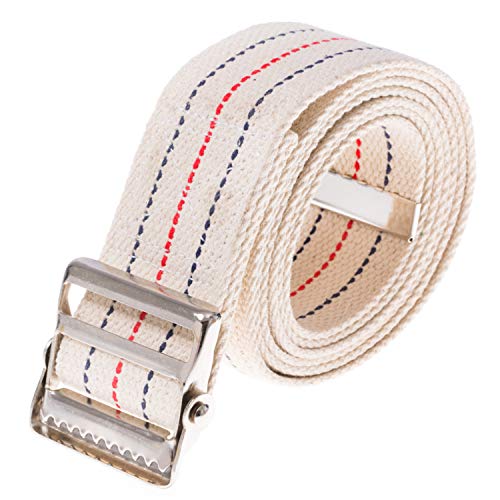
Pros
- 2 inch cotton webbing feels broad against the waist
- Adjusts to 60 inches for a range of body sizes
- Nickel chrome steel buckle gives a firm closure
- 350 lb webbing capacity suits many adult users
Cons
- Metal buckle may feel hard if it presses into the body
- Cotton webbing needs hang drying after machine washing

Pros
- 7 padded handles support grip changes during transfers
- Adjusts to waists up to 51 inches with metal buckle
- 350 lb capacity for many adult transfer routines
- 4 inch wide nylon webbing helps spread pressure
Cons
- 51 inch maximum waist may not fit larger users
- 350 lb limit is not suitable for bariatric needs
- Requires caregiver strength and transfer training
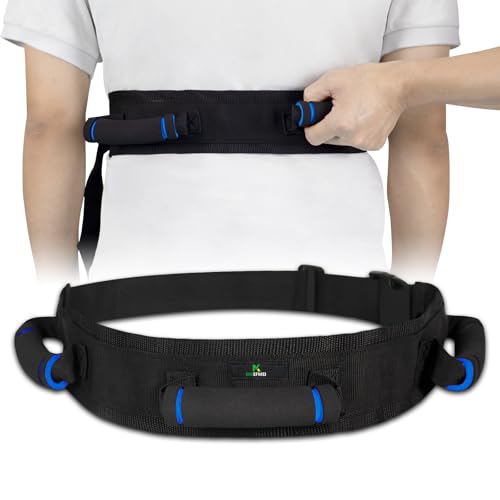
Pros
- Nylon and thick mesh fabric are machine washable
- Adjustable buckle fits 29 to 48 inch waists
- Soft sponge grips on multiple padded handles
- Reinforced stitching supports lasting nylon use
Cons
- Waist fit stops at 48 inches for larger users
- Caregiver still needs strength for safe transfers
- Machine washing may take time after daily use

Pros
- 60 inch length adjusts for different waist sizes
- 2 inch width gives caregivers a broad grip area
- Cotton fabric may feel softer during assisted moves
- Metal buckle offers a firm, adjustable closure
Cons
- Requires caregiver training for safe transfer technique
- Metal buckle may feel bulky when seated or lying down

Pros
- 7 handles give caregivers several grip positions
- 5-inch wide pad adds broader back support area
- Nylon and sandwich mesh fabric can be washed
- Polymer plastic buckle avoids metal rust smells
Cons
- May feel bulky for smaller waists due to 5-inch pad
- Multiple handles may snag on chair arms or bedding

Pros
- 7 padded handles allow grip from multiple angles
- Supports up to 350 lb for many adult users
- Adjusts to waists up to 51 inches
- Nylon webbing with reinforced stitching
Cons
- Plastic buckle may feel less durable than metal
- 51 inch waist limit may not fit larger users
A Closer Look at Our Top Pick
For many families starting from scratch, the Vive Gait Belt with the 350 lb rating is the easiest place to begin comparing. Its main advantage is not just that it has 7 padded handles, but that those handles give a caregiver more than 1 place to hold during a stand, pivot, or short room move. That matters because a straight strap asks the helper to grab the belt itself, while handled designs can make side, rear, or angled support more practical. The 4 inch nylon webbing also spreads pressure over a broader area than a narrow strap.
The fit limit is important. This belt adjusts to waists up to 51 inches, so it is not the right starting point if the person needs more room at the waist or a bariatric transfer aid. It also still depends on caregiver strength and safe transfer technique. On paper, a 7 handle transfer belt with a 350 lb capacity makes sense for homes where a helper is assisting with seated transfers and short assisted moves, not lifting the person outright. If your parent dislikes extra bulk, a simpler 2 inch strap may feel less cumbersome.
Find Your Situation
- the COW&COW COW: suits a caregiver who wants a simple 2 inch cotton belt with a 60 inch length and a steel buckle. Watch out: the metal buckle may feel hard if it presses into the body.
- the Vive Gait Belt: suits transfers where 7 padded handles and a 4 inch width help the caregiver change grip during moves. Watch out: the 51 inch maximum waist may not fit larger adults.
- the MKEFMEI Transfer: suits a person with a 29 to 48 inch waist when washable nylon and mesh are priorities. Watch out: the fit stops at 48 inches, which may be limiting.
- the Winteriew Gait: suits families who want a 60 inch cotton strap with a 2 inch width and a metal buckle. Watch out: the buckle may feel bulky when seated or lying down.
- the Leetye Mei Gait: suits seated moves where 7 handles and a 5 inch wide pad give the caregiver more grip options. Watch out: the wide pad may feel bulky on smaller waists.
- the Vive Gait Belt: suits many adult transfer routines with 7 padded handles, a 4 inch width, and support up to 350 lb. Watch out: the plastic buckle may feel less durable than metal.
How We Narrowed It Down
We compared the published specifications for 6 gait belts rather than handling the products. The most useful differences were handle count, waist range, belt width, buckle type, fabric, washing instructions, and stated weight capacity. We excluded options from consideration if the listing facts did not clearly support everyday transfer decisions such as fit, grip, or cleaning. We also gave less weight to broad claims and more weight to measurable details like 7 handles, 60 inch length, 51 inch maximum waist, or 350 lb capacity. A doctor or physical therapist can help decide whether a gait belt is appropriate for the person and teach safe body mechanics. The National Institute on Aging notes practical home and health steps related to falls and falls prevention, which is a helpful broader context when families are reviewing mobility support.
What to Look For
Start with the move you help with most
A belt for a chair pivot may need different features than one used for a few supported steps across a room. If your parent mainly needs help standing and turning, 7 handles can give the caregiver several grip positions. If the routine is simple walking support, a 2 inch cotton strap may be easier to position. Match the belt to the repeated task, not the most difficult day, and consider outdoor mobility options like an electric tricycle for independent movement when appropriate.
Check the waist range before anything else
Fit is the first practical screen because a belt that is too short cannot be made safer by better technique. Some options adjust to 48 inches, while others list 51 inches or a 60 inch strap length. Measure over the clothing the person usually wears during transfers. Leave room for seasonal clothing or a robe if those are part of the routine.
Decide whether handles are worth the extra bulk
Handles can be helpful when the caregiver needs to stand beside or slightly behind the person. A belt with 7 padded handles gives more choices than a plain strap, especially during a seated move. The trade-off is that handles and padding can catch on chair arms, bedding, or clothing. For a smaller waist, a 5 inch pad may feel like more belt than the person wants.
Look closely at the buckle style
Metal buckles can provide a firm closure, and some simple cotton belts use steel or nickel chrome steel hardware. A quick release buckle can be easier when the belt needs to come off after toileting or a chair move. Plastic buckles avoid metal rust smells, but some shoppers may prefer the feel of metal hardware. If the person sits with the belt on briefly, check whether the buckle presses into the body.
Before you buy, think about cleaning
Gait belts can pick up daily household wear because they are used close to clothing and hands. Cotton webbing may be machine washable but need hang drying, while nylon and mesh designs may also be washable. If the belt is used every day, drying time matters more than it first appears. A backup belt may be useful if cleaning takes the main one out of service.
For elderly transfers, width changes how pressure feels
A 2 inch belt gives the caregiver a straightforward grip and may feel less bulky around the waist. A 4 inch belt spreads pressure over a wider area during assisted moves. A 5 inch pad can add broader back support, but it can also feel large on a smaller frame. For many families, a 5 inch padded transfer belt with 7 handles is worth considering only if the added size fits the person comfortably.
When this is not enough support
A gait belt is a caregiver aid, not a lifting device, and it still requires strength, timing, and practice. If the person needs more than hands-on guidance, ask a clinician to review the transfer setup. Local support may also help with training, equipment questions, or caregiver services through Eldercare Locator at 1-800-677-1116. If 2 people are needed for a move, do not treat a belt as a substitute for that help.
Quick Tips for Choosing
- Measure the waist over normal clothing before comparing belts.
- Choose 7 handles if grip angles matter during transfers.
- Choose a 2 inch strap if low bulk matters most.
- Check whether the buckle is metal or plastic.
- Match the weight capacity to the person’s current body weight.
- Plan for washing and drying if the belt is used daily.
Frequently Asked Questions
What is a gait belt used for?
A gait belt gives a caregiver a place to hold at the waist during assisted standing, pivoting, or short walking. It is meant for guidance and support, not for lifting the person off the floor or carrying body weight. For those with lower body injuries, a knee scooter for mobility may be another helpful option.
Who should put the belt on?
The caregiver who has been shown safe technique should position and secure the belt. A physical therapist can demonstrate placement, hand position, and timing for 1 caregiver or 2 caregivers.
How tight should it be?
It should be snug enough that it does not slide during the move, but not so tight that it pinches or interferes with breathing. A common practical check is whether the caregiver can fit a few fingers under the belt while it stays secure.
Can a gait belt be used for walking?
Yes, some gait belts are designed for assisted walking as well as standing and transfers. The caregiver still needs to stay close, use proper body mechanics, and avoid pulling the person forward by the belt. For longer distances or when standing becomes difficult, a lightweight wheelchair may provide better support.
Are handles better than a plain strap?
Handles can make grip changes easier because several designs have 7 padded handles. A plain 2 inch strap can be simpler and less bulky if the person only needs light hands-on guidance.
Is a metal buckle better than a plastic buckle?
Metal buckles can feel firm and durable, while plastic quick release buckles may be easier to open quickly. Comfort matters too, because a hard buckle can press into the body when seated.
What width should families consider?
Common widths in this group include 2 inch straps, 4 inch webbing, and a 5 inch pad. Wider belts may spread pressure more, while narrower belts may feel less bulky.
Can one caregiver use a gait belt alone?
Sometimes 1 trained caregiver can assist with a simple move, but that depends on the person’s strength, balance, and transfer needs. If the move feels too heavy or uncertain, ask a clinician whether 2 helpers or different equipment is needed.
Can a gait belt be washed?
Several belts use washable cotton, nylon, or mesh materials. Check the product directions because some cotton webbing may need hang drying after machine washing.
What capacity should I look for?
Some belts in this comparison list 350 lb support, while others focus more on length, width, and fit. Always compare the stated capacity with the person’s current body weight and the type of help being provided.
Which One to Start With
If you are buying for a typical home transfer routine and the person fits within a 51 inch waist limit, start with the Vive Gait Belt. The 7 padded handles, 4 inch width, metal buckle, and 350 lb capacity give it the most balanced set of published features for assisted standing, pivoting, and short moves. It is the easiest first comparison point because it addresses grip, pressure spread, and closure in 1 design.
If your parent dislikes bulk or only needs straightforward hands-on guidance, choose a 2 inch cotton transfer belt with a 60 inch length instead. It has fewer grip features, but the simple cotton webbing and steel buckle may be easier to understand and position. This is also a sensible option when multiple handles would get in the way around narrow chairs or bedding.
If seated moves are the main concern and a wider pad sounds comfortable, the Leetye Mei Gait is the one to compare next. Its 7 handles and 5 inch wide pad are best suited to families who want more grip positions and broader back contact, while accepting that the extra size may feel bulky. For any choice, the right fit and trained technique matter more than the longest feature list.