

When the foot slides, pinches, or sits unevenly inside a shoe, each step can feel less steady than it should, especially on smooth kitchen floors, sidewalks, or during a turn. The best shoes for elderly with balance problems usually start with 3 practical details: enough width, a closure your parent can manage, and a sole that feels predictable underfoot. For swollen or tender feet, the FitVille Diabetic Shoes open wide with an adjustable strap, while the BARERUN Walking Shoes offer an 11 Wide fit with a level zero drop sole. This guide compares 6 options on paper so families can match shoe design to daily routines.

Pros
- Seamless interior uses soft foam padding for comfort
- High rebound EVA sole adds cushioned walking support
- EasyTop Wings V2 strap opens wide for fitting
Cons
- Slip-on shape may still need hands to align the strap
- Deep Gray color offers limited style flexibility

Pros
- Size 9 wide fit gives toes extra room up front
- Rubber sole has anti slip patterns for smooth floors
- Plush lining and insole add warmth for indoor wear
Cons
- Plush lining may feel too warm in hot weather
- House slipper styling may not suit dressier outings

Pros
- Mesh upper helps feet stay cooler during walks
- Rubber sole has non-slip treads for indoor floors
- Zero drop sole keeps heel and forefoot level
- 11 Wide size offers extra room for swollen feet
Cons
- Zero drop feel may be unfamiliar for some walkers
- Mesh upper may not feel warm enough in cold weather

Pros
- Wide toe box gives size 8.5 feet extra forefoot room
- Breathable knit upper helps feet stay dry indoors
- Wear resistant rubber soles add grip for outdoor walks
- Zero drop sole keeps heel and forefoot at 0 mm rise
Cons
- Barefoot zero drop feel may require a slow adjustment
- Knit upper may feel less protective in wet weather
- Wide fit may feel loose on narrower heels

Pros
- Size 14 Wide option gives extra toe room for comfort
- Mesh upper helps feet breathe during longer walks
- Soft foam outsole cushions steps on hard floors
- Slip-resistant rubber outsole adds traction
Cons
- Top flap closure may feel bulky under long pants
- Dark blue color limits outfit matching choices
- Wide fit may feel loose on narrow heels during walks
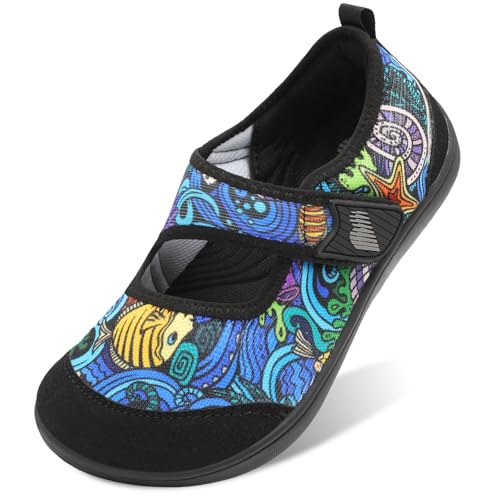
Pros
- Mesh upper helps feet stay cooler during walks
- Rubber sole has non-slip tread for varied surfaces
- Zero-drop sole keeps heel and forefoot level
- Adjustable strap fits 8.5-9 wide feet more flexibly
Cons
- Zero-drop feel may require a slow adjustment period
- Colorful boho style may not suit dressier outfits
A Closer Look at Our Top Pick
For many families starting from a practical place, the FitVille men’s EasyTop Wings option is the clearest first look because it addresses 2 common shopping problems at once: a swollen or wide foot and a closure that does not require standard laces. The wide open adjustable strap is the main reason. It gives a caregiver more room to guide the foot in without pushing tender toes through a narrow opening, then secure the top with less fiddling than a tied shoe.
On paper, the design also pays attention to interior comfort. The seamless interior uses soft foam padding, and the high rebound EVA sole adds cushioned walking support for hard indoor surfaces. This is not a medical treatment, and it will not replace professional fitting advice, but it is a sensible starting point for a man whose foot shape makes ordinary slip ons or lace up sneakers difficult. The trade off is that the slip on shape may still need hands to align the strap, and the Deep Gray color gives only 1 understated style direction. If the priority is a very wide opening, a wide opening adjustable men’s shoe is the one I would compare first.
Find Your Situation
- the FitVille Diabetic Shoes: suits a man with swollen or wide feet who needs a wide open EasyTop Wings V2 strap and soft foam padding. Watch out: the slip on shape may still take 2 hands to line up the strap.
- the L-RUN L: suits a woman wearing 9 Wide who wants a roomier toe box, hook and loop closure, and plush indoor warmth. Watch out: the plush lining can feel too warm when the house runs hot.
- the BARERUN Walking Shoes: suits a woman wearing 11 Wide who wants a cooler mesh upper, adjustable strap, and a flat zero drop feel. Watch out: zero drop soles can feel unfamiliar during the first several walks.
- the Spesoul Wide Womens: suits a woman wearing 8.5 who needs a wide toe box, breathable knit upper, and rubber soles for outdoor walks. Watch out: the wide fit may feel loose on narrower heels.
- the FitVille Diabetic Shoes: suits a man wearing 14 Wide who wants a mesh upper, top flap closure, and slip resistant rubber outsole. Watch out: the top flap may feel bulky under long pants.
- the BARERUN Womens Walking: suits a woman between 8.5 and 9 Wide who wants an adjustable strap, mesh upper, and non slip tread for varied surfaces. Watch out: the colorful boho style may not suit dressier outfits.
How We Narrowed It Down
We compared published specifications rather than handling the products, with the same priorities a careful family shopper would use: width, closure style, interior softness, sole description, and whether the shoe fits a clear daily situation. We excluded shoes that did not give a strong reason to choose them for swollen, wide, sensitive, or hard to fit feet. We also put less weight on style when comfort features were more concrete, because a size 14 Wide men’s sneaker and a size 9 Wide women’s slipper serve very different needs. For balance concerns, it is worth asking a doctor or physical therapist to look at gait, foot shape, and current footwear together. The National Institute on Aging notes that shoes and home safety are part of a broader falls prevention conversation at falls and falls prevention, which is a helpful place to start without treating shoes as the only answer.
What to Look For
Start with how the shoe opens
A shoe designed to prevent falls can have a good sole and still be the wrong choice if your parent struggles to get the foot inside. Wide open straps, top flaps, and hook and loop closures are easier to adjust than standard laces for many households. The FitVille EasyTop Wings V2 design opens wide, while the L-RUN option uses 1 hook and loop style closure across the top. If a caregiver helps with dressing, the opening matters as much as the sole.
Choose width before style
Width affects comfort and footing because cramped toes can make the person change how they step. In this group, the listed sizes include 8.5, 8.5 to 9 Wide, 9 Wide, 11 Wide, and 14 Wide, so the right match starts with the actual foot size. A wide toe box is helpful when swelling or bunions make the forefoot sensitive, and shoes for balance problems often feature this design. Style can come second, especially if the shoe will be worn mostly at home.
Look for traction that matches the floor
Soles should match where the person walks most often. The L-RUN shoe lists anti slip patterns for smooth floors, while the BARERUN women’s options list non slip tread for indoor floors or varied surfaces. For a parent who moves between kitchen tile and a short outdoor path, a wide adjustable shoe with non slip tread may be more useful than a soft house only slipper. Check the sole pattern before choosing based on color.
Be thoughtful about zero drop soles
Zero drop means the heel and forefoot sit level, with the Spesoul listing a 0 mm rise. Some people like that flat feeling because it feels simple and grounded. Others need a slow adjustment, especially if they have worn raised heel shoes for many years. If your parent is unsure, start with short indoor wear before using a zero drop shoe for longer walks.
Before you buy, picture the daily routine
The right shoe for elderly balance for 1 person may be wrong for another because routines differ. A plush lined slipper style may feel good during quiet indoor days, while a breathable mesh upper may be better for longer walks or warmer rooms. If the person dresses with help, choose a closure that another person can secure quickly without squeezing the foot. If the shoe will be worn outside, give extra attention to rubber soles and how protective the upper feels.
When this is not enough
Shoes are only 1 part of steadier movement. If your parent is changing how they walk, avoiding certain rooms, or struggling with transfers, it is reasonable to ask for local support beyond footwear. The Eldercare Locator can connect families with local services, and the phone number is 1-800-677-1116. A professional can help sort out whether shoes, home layout, strength, vision, or medication timing should be discussed.
Do not ignore warmth and weather
Upper material changes how often the shoe gets worn. Plush lining adds warmth indoors, but it may feel too warm in hot weather. Mesh and knit uppers help feet stay cooler or dry indoors, but 2 of the options note that these lighter uppers may feel less warm or less protective. Match the shoe to the room temperature and the person’s usual walking surface.
Quick Tips for Choosing
- Measure both feet if swelling changes during the day.
- Prioritize the listed width before choosing a color.
- Pick hook and loop or strap closures if tying laces is difficult.
- Use plush lining for warmth, not for hot rooms.
- Introduce zero drop soles with short walks at first.
- Check the heel fit if the shoe is very wide.
Frequently Asked Questions
Are wider shoes always better for an older adult?
No. A wide shoe helps when the forefoot is crowded, swollen, or sensitive, but too much width can let a narrow heel slip. Several options here are Wide or Extra Wide, so fit around both the toes and heel matters.
What closure is easiest for a caregiver?
Hook and loop straps, top flaps, and wide opening straps are usually simpler than tied laces. They let a caregiver loosen the top, guide the foot in, and adjust the fit in 1 routine.
Should my parent wear house slippers outside?
Only if the shoe is designed for the surfaces involved. Some slipper styled shoes have rubber soles or anti slip patterns, while others may feel better limited to indoor floors.
What does zero drop mean?
Zero drop means the heel and forefoot sit at the same level. One listed shoe gives this as 0 mm rise, which can feel different from a shoe with a raised heel.
Is a soft sole enough for comfort?
Softness can help on hard floors, but it is not the only detail. Look at the closure, width, upper material, and tread pattern together before choosing.
How should a shoe fit swollen feet?
It should give the toes room without letting the heel slide around. Adjustable closures are useful because swelling can change during the day.
Are mesh uppers a good idea?
Mesh uppers can help feet stay cooler during walks. They may not feel as warm in cold weather, so the right choice depends on the person’s usual room temperature and walking plans.
Can shoes fix balance concerns?
Shoes can support a steadier, more comfortable base, but they are not a treatment or complete solution. A doctor or physical therapist can help look at gait, strength, vision, and home setup.
How many pairs should we compare before buying?
Start by comparing 2 or 3 that match the person’s size, width, and daily setting. A size 14 Wide men’s sneaker and a size 9 Wide women’s indoor shoe solve different problems.
What matters most for indoor floors?
Look for a rubber sole, anti slip pattern, or non slip tread that suits smooth floors. Also check that the upper and closure keep the foot from shifting inside the shoe, and consider pairing shoes with non-slip socks for added stability.
Which One to Start With
If you are buying for a man with swollen or wide feet and you want the simplest starting point, choose the FitVille Diabetic Shoes first. The wide open EasyTop Wings V2 strap is the most caregiver friendly feature in this group, and the seamless interior with soft foam padding makes sense for tender feet. It is especially practical when the main issue is getting the shoe on without forcing the foot through a tight opening.
If you are shopping for a woman who wears 9 Wide and spends much of the day indoors, start with the L-RUN L. The hook and loop closure, plush lining, and anti slip patterned rubber sole point toward house wear on smooth floors. Choose it when warmth and easy adjustment matter more than a dressy look.
If the person wants a cooler walking shoe and already prefers a flatter feel, compare an 11 Wide zero drop walking shoe. The mesh upper, adjustable strap, and non slip treads make it a reasonable indoor and outdoor option, but the zero drop feel deserves patience. For a narrower heel, watch the fit carefully before relying on any wide shoe for longer outings.