

Tight turns, narrow doorways, and car-trunk lifting often matter more than extra features when your parent needs a rolling aid for everyday routes. The best 3 wheel walkers for seniors are usually about fit, weight, wheel size, and whether the person can manage a 3-wheel frame with steady attention. On paper, the HOMLAND Foldable 3 stands out for a 10.56 lb aluminum frame and a 25.9-inch doorway fit, while the Drive Medical Deluxe gives caregivers a different balance with an 11-pound frame and a 300-pound capacity. A 3-wheel walker can be easier to steer, but it is not the right starting point for every person.

Pros
- 11-pound aluminum frame is easier to lift into a trunk
- 300-pound capacity suits many adult users
- 7.5-inch casters support indoor and outdoor rolling
- Steel basket, tray, and pouch add carrying options
Cons
- Basket and tray may add bulk during tight indoor turns
- 7.5-inch casters can feel large in cramped rooms

Pros
- Aluminum frame keeps total weight to 10.56 lb
- Fits through 25.9-inch-wide doorframes at home
- 3-wheel layout helps maneuver on narrow routes
- Adjustable handles on aluminum frame fit users
Cons
- 3-wheel design may feel less stable than 4-wheel walkers
- Storage bag suits small essentials, not larger groceries
- No seat, so rest breaks require a separate chair

Pros
- 10.2 lb aluminum frame is light for car loading
- 5 handle heights adjust from 34 to 38 inches
- Triangular aluminum frame supports up to 260 lb
- Aluminum walker includes removable storage bag
Cons
- 3 wheel design is best kept to level indoor ground
- 260 lb weight limit may not fit larger users
- Requires physical, visual and cognitive ability

Pros
- 3-wheel frame turns easily through narrow spaces
- Foldable 3-wheel design fits more easily in cars
- Height-adjustable handles improve 3-wheel brake reach
- Removable grey bag adds storage to the 3-wheel frame
Cons
- 3-wheel layout may feel less steady than 4-wheel walkers
- Included bag offers less capacity than a basket or tray
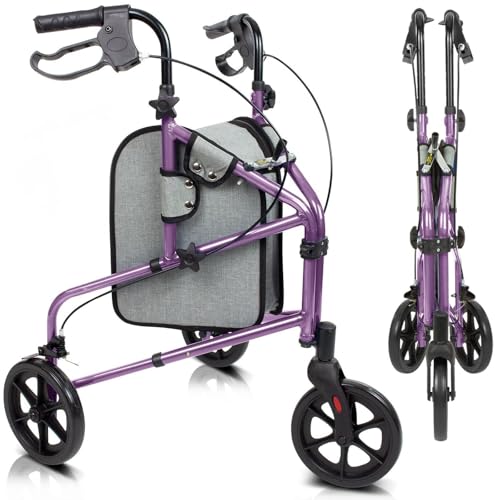
Pros
- 3-wheel layout turns more easily in narrow hallways
- Foldable 3-wheel design fits more easily in a car
- 3-wheel walker includes a removable grey storage bag
- Lifetime guarantee covers the 3-wheel walker
Cons
- Three wheels may feel less grounded than four-wheel rollators
- Narrow frame may not suit users needing wider base support
- Storage bag capacity may be limited for larger errands

Pros
- Light 11 lb weight helps with car trunk lifting
- 8-inch casters support indoor and outdoor rolling
- 34 to 38 inch handle range fits varied user heights
- 260 lb weight capacity for many larger adults
Cons
- Three-wheel design may feel less steady than four-wheel models
- No seat included for resting during longer outings
A Closer Look at Our Top Pick
After comparing the published specifications, the HOMLAND Foldable 3 listed under ASIN B0F42TZPTC is the first place many families should look if tight indoor routes are the main problem. Its 10.56 lb aluminum frame is light enough to make car loading less of a chore for many caregivers, and the 25.9-inch-wide doorframe fit is a practical number for homes with narrow passages. The 3-wheel layout is also meant for maneuvering through narrow routes, which is the main reason families consider this style instead of a wider 4-wheel rollator.
The main trade-off is steadiness. A 3-wheel design may feel less stable than a 4-wheel walker, so it is best for the person who can manage steering, braking, and turning with attention. The removable bag is useful for small essentials, but not larger groceries. If your parent needs frequent rest breaks, this model also has no seat, so a separate chair or planned stopping point matters. For shoppers focused on a light frame and narrow home routes, this 10.56 lb aluminum 3-wheel walker is the most balanced starting point on paper.
Find Your Situation
- the Drive Medical Deluxe: suits a person who needs an 11-pound aluminum frame, a 300-pound capacity, and added carrying options. Watch out: the basket and tray may add bulk during tight indoor turns.
- the HOMLAND Foldable 3: suits a person who wants a 10.56 lb aluminum frame and a 25.9-inch doorway fit. Watch out: the storage bag is better for small essentials than larger groceries.
- the soundfuse Lightweight 3: suits a person who wants a 10.2 lb aluminum frame, 5 handle heights, and a 34 to 38 inch range. Watch out: the 260 lb weight limit may not fit every larger adult.
- the Vive Mobility 3: suits a person who needs a foldable narrow rollator with height-adjustable handles and a removable grey bag. Watch out: the included bag offers less capacity than a basket or tray.
- the Vive Mobility 3: suits a person who wants a narrow foldable aid, height-adjustable handles, and a lifetime guarantee. Watch out: the narrow frame may not suit someone who needs a wider base of support.
- the HOMLAND Foldable 3: suits a person who wants an 11 lb walker, 8-inch casters, and a 34 to 38 inch handle range. Watch out: no seat is included for resting during longer outings.
How We Narrowed It Down
We compared published specifications rather than handling the products, with attention to frame weight, capacity, wheel size, handle range, folding style, storage, and the real trade-offs of a 3-wheel layout. We excluded options from consideration when the listed facts did not clearly support a comparison across the 6 products here. We gave more weight to models with specific numbers, such as 10.2 lb, 10.56 lb, 11 lb, 25.9 inches, 34 to 38 inches, 260 lb, and 300 lb. For any mobility aid, especially when balance, vision, thinking, or strength is a concern, ask a doctor or physical therapist before buying. The National Institute on Aging offers practical fall-related guidance at falls and falls prevention, which can help families prepare better questions for a clinician.
What to Look For
Start with the path through the house
A 3-wheel walker is often chosen because the route is narrow, not because the feature list is longer. The HOMLAND model with a 25.9-inch doorway fit gives a useful reference point for checking halls, bathrooms, and bedroom entries. Measure the tightest daily route, then compare that number with the walker width or doorway fit stated for the product. If the person turns often in a kitchen or hallway, remember that baskets and trays can add bulk.
Match the frame weight to the caregiver
Frame weight matters when a walker goes in and out of a car. The lightest option here is 10.2 lb, while other listed models are 10.56 lb and 11 lb. A difference of less than 1 lb can still matter if the caregiver lifts it several times in one outing. If car loading is frequent, a 10.2 lb foldable aluminum frame deserves attention.
Look at the handle range, not just the height claim
Handles should allow the person to grip and brake without reaching awkwardly. Two products list a 34 to 38 inch handle range, and one lists 5 handle heights in that same range. That range can be helpful when more than 1 person may adjust the fit, or when shoes change the standing height slightly. If the person cannot comfortably reach the brakes, a 3-wheel walker is not a good match.
Think carefully about 3 wheels in tight spaces
The strength of a 3-wheel layout is maneuvering in narrow routes. The trade-off is that 3 wheels may feel less steady than 4-wheel walkers for some people. This is especially important if the person moves quickly, gets distracted, or has trouble managing turns. A 3-wheel walker should be chosen for controlled steering, not just a smaller footprint.
Before you buy, decide what the walker needs to carry
Storage can change how a walker feels during daily use. The Drive Medical Deluxe includes a steel basket, tray, and pouch, while several 3-wheel models include a removable bag. A bag works for small essentials, but the listed notes say it is not meant for larger groceries. If the person regularly carries more than 1 small set of items, consider whether storage bulk will interfere with turns.
When this is not enough support
A 3-wheel walker may not be enough if the person needs a wider base or wants to sit during longer outings. Two products here state no seat, so rest breaks require a separate chair or planned stop. One product also notes that physical, visual, and cognitive ability are required. For local help beyond a product comparison, Eldercare Locator can connect older adults and caregivers with support by phone at 1-800-677-1116.
Check capacity without making it the only filter
Capacity is a safety-related fit number, but it should not be the only number you check. The Drive Medical Deluxe lists a 300-pound capacity, while two other models list 260 lb. If the person is near a listed limit, choose a different walker category or ask a clinician for guidance. Also check handle range, wheel size, and whether the person can manage the brake reach.
Quick Tips for Choosing
- Choose 10.2 lb, 10.56 lb, or 11 lb if car lifting is a daily issue.
- Use the 25.9-inch doorway fit as a measuring reference for narrow rooms.
- Pick 34 to 38 inch handles when that range matches the person.
- Consider 8-inch casters or 7.5-inch casters for mixed indoor and outdoor rolling.
- Avoid a no-seat model if the person needs frequent seated rest breaks.
- Keep the 260 lb or 300-pound capacity number in the decision.
Frequently Asked Questions
Is a 3-wheel walker better than a 4-wheel walker?
A 3-wheel walker can be easier to turn in narrow spaces. Rated walkers with 4 wheels may feel steadier for some people, so the better choice depends on the person and the route.
Who should consider a 3-wheel walker?
A 3-wheel walker can suit a person who needs help moving through tight indoor routes. The person should be able to steer, brake, and turn with attention.
How light should a 3-wheel walker be?
The models here range from 10.2 lb to 11 lb for listed frame weight. A caregiver who loads the walker into a car may prefer the lighter end of that range.
Do 3-wheel walkers have seats?
Some 3-wheel walkers do not include a seat. If seated rest breaks are part of the outing, plan for a separate chair or choose another style.
What handle height range should I look for?
Two products here list a 34 to 38 inch handle range. The person should be able to hold the handles and reach the brakes without stretching.
Are larger wheels always better?
Larger wheels can help with rolling over varied indoor and outdoor surfaces. Wheels such as 7.5 inches or 8 inches may also feel bulky in cramped rooms.
What can the storage bag hold?
A removable bag is best treated as space for small essentials. It should not be assumed to replace a larger basket, tray, or grocery bag.
What weight capacity should I choose?
The listed capacities here include 260 lb and 300-pound options. Choose a capacity that comfortably fits the person, and ask a clinician if the person is close to a limit.
Can a 3-wheel walker fit in a car?
Several models here are foldable, and listed weights include 10.2 lb, 10.56 lb, and 11 lb. Car fit still depends on the trunk opening and who is lifting it.
Should I ask a professional before buying?
Yes, especially if balance, vision, thinking, or strength affects daily movement. A doctor or physical therapist can help match the aid to the person, not just to the doorway.
Which One to Start With
If your parent mainly needs a light, narrow walker for home routes, start with the HOMLAND Foldable 3. Its 10.56 lb aluminum frame, 25.9-inch doorway fit, and 3-wheel layout line up well with the most common reason families shop this category: getting through tight indoor spaces without choosing a bulky frame. The removable bag is enough for small essentials, but it is not the right answer for larger grocery trips.
If a caregiver’s biggest job is lifting the walker into a car, the 10.2 lb soundfuse aluminum walker is the lighter published option here. It also has 5 handle heights from 34 to 38 inches, which gives a clear fit range to compare with the person’s posture and brake reach. Keep its 260 lb limit and level-ground guidance in mind.
If capacity and built-in carrying options matter more, choose the Drive Medical Deluxe. Its 300-pound capacity, 11-pound aluminum frame, 7.5-inch casters, basket, tray, and pouch make it a practical choice for someone who wants more carrying structure. The trade-off is that those extras may feel bulkier in tight indoor turns. For longer outings where a seat is important, none of the no-seat options should be treated as a substitute for planned rest stops.