

Adding weight to a walk changes how the shoulders, trunk, hips, and balance system share effort, so the best weighted vests for senior women should be chosen with fit and starting load in mind, not just the highest number on the label. For many older adults, a 4 lb starting point is easier to discuss with a doctor or physical therapist than a fixed 12 lb vest. After comparing the 6 options here, the BAGAIL Adjustable Weighted stands out for its 4 lb base and six 1 lb weights, while the MERACH Adjustable Weighted offers a similar 4 to 10 lb range for gradual walking progress.
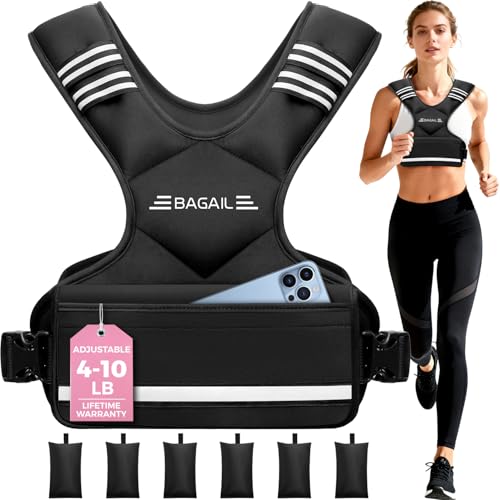
Pros
- 4 lb base allows a lighter starting load option
- Six 1 lb ironsand bags support gradual changes
- Soft neoprene U-neck helps limit shoulder pressure
- 10 inch front Velcro pocket fits large phones
Cons
- Maximum weight may feel too heavy for some beginners
- Neoprene can feel warm during longer summer walks
- Front pocket may bounce with bulky items inside

Pros
- 12 lb iron sand fill adds steady workout resistance
- Adjustable straps fit 31.5 to 45 inch chests
- Spandex fabric wipes clean with a damp cloth
- Rear mesh pocket carries phone with 12 lb vest
Cons
- 12 lb may feel too heavy for some beginners
- One size fit may not suit chests outside 31.5 to 45 inches
- Wipe clean only, not ideal for heavy sweat buildup
Pros
- 8 lb load adds measured resistance for training
- Lycra and SBR fabric wicks sweat during activity
- 360° reflective strips improve outdoor visibility
- 31.5 to 37.8 in chest fit with buckle straps
Cons
- 8 lb may feel too heavy for very gentle routines
- Chest range tops out at 37.8 in, limiting fit
- Wipe clean only may be less convenient after sweating

Pros
- 12LB load adds measured resistance for walks
- Iron sand fill supports balanced weight placement
- Breathable materials help limit heat buildup
- Adjustable straps help secure the 12LB vest
Cons
- Added 12LB load may be too much for frail users
- Weighted design can feel warm during longer walks
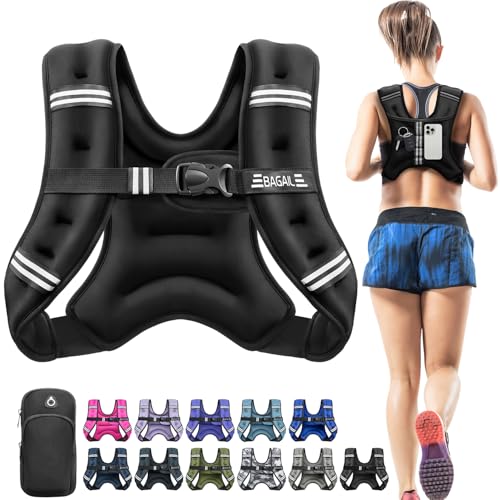
Pros
- 10 lb load adds intensity without hand weights
- Neoprene fabric is breathable and sweat resistant
- Fine iron sand helps distribute weight evenly
- Phone pouch fits most phones up to 7 inches
Cons
- 10 lb weight may feel too heavy for some beginners
- Neoprene can feel warm during longer summer walks
- Phone pouch is limited to most phones up to 7 inches

Pros
- Adjusts from 4 to 10 lb using six 1 lb packs
- Neoprene fabric helps limit rubbing during walks
- 3 reflective strip zones improve low light visibility
- Six 1 lb iron sand packs allow gradual changes
Cons
- 10 lb maximum may feel too light for stronger users
- Side buckles may be awkward with limited hand strength
- Vest adds bulk over jackets during colder walks
A Closer Look at Our Top Pick
The BAGAIL Adjustable Weighted is the easiest place to start on paper because it begins with a 4 lb base and includes six 1 lb ironsand bags. That matters for an older walker because a smaller change is easier to notice, discuss, and undo if the vest feels awkward. The U-neck shape and soft neoprene are designed to limit shoulder pressure, which is useful when the person already pays close attention to neck or upper back comfort. Its 10 inch front Velcro pocket can hold a large phone, and 360 degree reflective strips add visibility during low light walks.
This is still a weighted vest, not a casual layer, so the 10 lb upper range may be more than some beginners want. Neoprene can also feel warm during longer summer walks, and the front pocket may bounce if it carries bulky items. For a family shopper, the best reason to consider this vest first is control: start at 4 lb, add 1 lb at a time, and check how the person feels during a familiar route before changing anything else.
Find Your Situation
- the BAGAIL Adjustable Weighted: suits a woman starting with 4 lb and adding six 1 lb bags only when walks feel steady. Watch out: the 10 lb maximum may feel too heavy for some beginners.
- the ZELUS Weighted Vest: suits an active older adult who can manage a fixed 12 lb load and has a 31.5 to 45 inch chest. Watch out: one size fit may not work outside that chest range.
- the ZELUS Weighted Vest: suits someone who wants an 8 lb option with 360 degree reflective strips and a 31.5 to 37.8 inch chest fit. Watch out: the chest range tops out at 37.8 inches.
- the Poudee Weighted Vest: suits a person already walking, jogging, or doing strength routines who wants a 12LB vest with adjustable straps. Watch out: 12LB may be too much for frail users.
- the BAGAIL Comfort: suits an active woman who wants a fixed 10 lb vest with even weight distribution and a phone pouch for most phones up to 7 inches. Watch out: 10 lb may feel too heavy for some beginners.
- the MERACH Adjustable Weighted: suits a walker who wants 4 to 10 lb loading in 1 lb steps, plus pockets for a phone and keys. Watch out: side buckles may be awkward with limited hand strength.
How We Narrowed It Down
We compared published specifications for 6 weighted vests rather than handling the products. The main filters were starting weight, adjustability, chest fit, fabric, visibility details, phone storage, and whether a caregiver could check the vest before a walk. We gave more attention to vests that start at 4 lb or 8 lb because smaller loads are easier to introduce than a fixed 12 lb option. We excluded any choice that could not be described with clear product numbers from the provided details, and we did not consider prices, ratings, or review counts. Before adding resistance to walking or strength work, ask the person’s doctor or physical therapist what amount and routine make sense. For general home safety context, the National Institute on Aging discusses falls and practical safety steps at its falls and falls prevention page.
What to Look For
Start lighter than pride suggests
A 4 lb starting load gives the person room to notice how walking feels before adding more. The most flexible options here move in 1 lb steps, which is easier to adjust than jumping straight to 10 lb or 12 lb. If your parent is new to resistance walking, the 4 lb vest with six 1 lb weights is easier to reason through than a fixed heavier vest. The goal is not to prove toughness on day 1.
Make the chest fit a real measurement
Fit affects comfort as much as weight, especially when the vest has buckle straps. One ZELUS option lists a 31.5 to 45 inch chest range, while the 8 lb ZELUS option lists 31.5 to 37.8 inches. Measure over the clothing the person actually wears for walks. A vest that is too loose can shift, and a vest that is too tight can make a short walk unpleasant.
For senior women, watch shoulder and neck comfort
A U-neck shape can help keep weight away from the front of the neck. Soft neoprene may limit rubbing, but it can also feel warm during longer summer walks. If the person has narrow shoulders, check the vest while standing and again after a few minutes of walking. A 4 lb base is easier to reassess than a fixed 10 lb or 12 lb load.
Check pockets before you rely on them
Phone storage sounds simple, but pocket size and bounce matter during a walk. One BAGAIL vest has a 10 inch front Velcro pocket, while the BAGAIL Comfort phone pouch fits most phones up to 7 inches. A rear mesh pocket can keep a phone out of the way, but it may be harder to reach without help. If the phone is heavy or bulky, test the pocket on a short route first.
Before you buy, think about hands and buckles
Side buckles can help secure a vest, but they may be awkward for a person with limited hand strength. Adjustable straps are useful only if the person or caregiver can fasten them consistently. Try to choose a vest that can be checked in 1 simple routine before each walk. If a caregiver helps, make the fit check part of the same 2 minute habit as shoes and phone.
Visibility helps, but it is not the whole plan
Reflective strips can make low light walks easier for others to notice. Several options here include 360 degree reflective strips or 3 reflective strip zones. That said, route choice, footwear, and steady pacing still matter. For local support with transportation, caregiver help, or aging services, the Eldercare Locator can connect families by phone at 1-800-677-1116.
When this is not enough support
A weighted vest adds resistance, but it does not replace supervision, mobility aids, or a tailored exercise plan. If the person feels unsteady with 4 lb, do not move to 8 lb or 10 lb just because the vest allows it. A physical therapist can suggest safer ways to build strength using body weight, seated work, or short walking intervals. The vest should match the person’s current routine, not force a new one too quickly.
Quick Tips for Choosing
- Start with 4 lb if the person is new to weighted walking.
- Use 1 lb changes when the vest allows gradual adjustment.
- Measure the chest before choosing a 31.5 inch minimum fit.
- Check whether a 10 lb or 12 lb load feels realistic.
- Choose reflective strips for dawn or dusk walks.
- Keep phone storage light to limit bounce.
Frequently Asked Questions
Are weighted vests a good idea for older women?
They can be useful for some active older adults when the starting weight is modest, such as 4 lb. For those seeking other low-impact options, e-bikes for senior women may also be worth exploring. The person’s doctor or physical therapist should weigh in before adding resistance to walks or workouts.
What weight should a senior woman start with?
For a first vest, a 4 lb starting point is easier to manage than 10 lb or 12 lb. If the vest uses 1 lb increments, changes can be smaller and easier to track.
Is an 8 lb weighted vest light enough?
An 8 lb vest may suit an active person who already walks or exercises comfortably. For a very gentle routine, even 8 lb may feel like too much at first.
Is a 12 lb vest too heavy?
A 12 lb vest can add steady resistance for someone who already does walking or strength work. It may be too much for frail users or anyone just starting resistance walking.
Should the weight be adjustable?
Adjustability is helpful because the person can begin at 4 lb and move in 1 lb steps. Fixed 10 lb and 12 lb vests leave less room for small changes.
How should a weighted vest fit?
It should sit snugly without squeezing the chest or shifting around. If the listed range is 31.5 to 37.8 inches, measure carefully before choosing that size.
Can a weighted vest be worn over a jacket?
It can add bulk over colder weather layers. If the vest uses side buckles, check that the person can fasten them over the jacket before walking.
Do reflective strips matter?
Reflective details can help during low light walks, especially when a vest has 360 degree coverage. They are still only one part of a sensible walking plan.
Can the phone pocket replace a purse?
A phone pocket can be useful for short walks, especially if it fits a phone up to 7 inches. Bulky items may bounce, so keep the pocket light.
How do you know when to add more weight?
Only consider adding 1 lb after the person handles familiar walks comfortably. If posture, pace, or comfort changes, return to the lower weight and ask a professional.
Which One to Start With
If you are choosing for your parent and want the safest practical starting point from this group, begin with adjustability. A vest that starts at 4 lb and changes by 1 lb gives you more control than a fixed 10 lb or 12 lb option. For most new weighted walkers, the BAGAIL Adjustable Weighted is the first place to look because it combines a 4 lb base, six 1 lb weights, a U-neck shape, and a 10 inch front pocket. It is not automatically right for everyone, but it gives families a clear way to start small and pause before increasing the load.
If your parent wants a similar gradual range but likes the idea of pockets for a phone and keys, the 4 to 10 lb MERACH walking vest is the other sensible first look. Its six 1 lb iron sand packs allow gradual changes, and 3 reflective strip zones help with low light visibility. The trade-off is that side buckles may be harder for limited hand strength, so check that before committing.
For a person who already exercises and wants more challenge without hand weights, the 10 lb BAGAIL vest with a phone pouch may be a better match than the lighter adjustable choices. I would reserve the 12 lb options for someone who already handles added resistance comfortably and has a chest measurement within the listed range.