

When deciding between a bed cane vs bed rail, the right choice depends on your daily routines and support needs. A bed cane works well for someone who only needs a sturdy handhold to sit up, stand, or steady themselves when getting out of bed. A bed rail is better suited for a person who wants a wider barrier along the mattress edge to help them reposition and stay securely in place at night.
Both tools can make your bedroom feel more secure and support your independence. Making small home adjustments is a big part of aging in place comfortably. Taking time to compare your options helps you find the right match for your mattress style and daily movements.
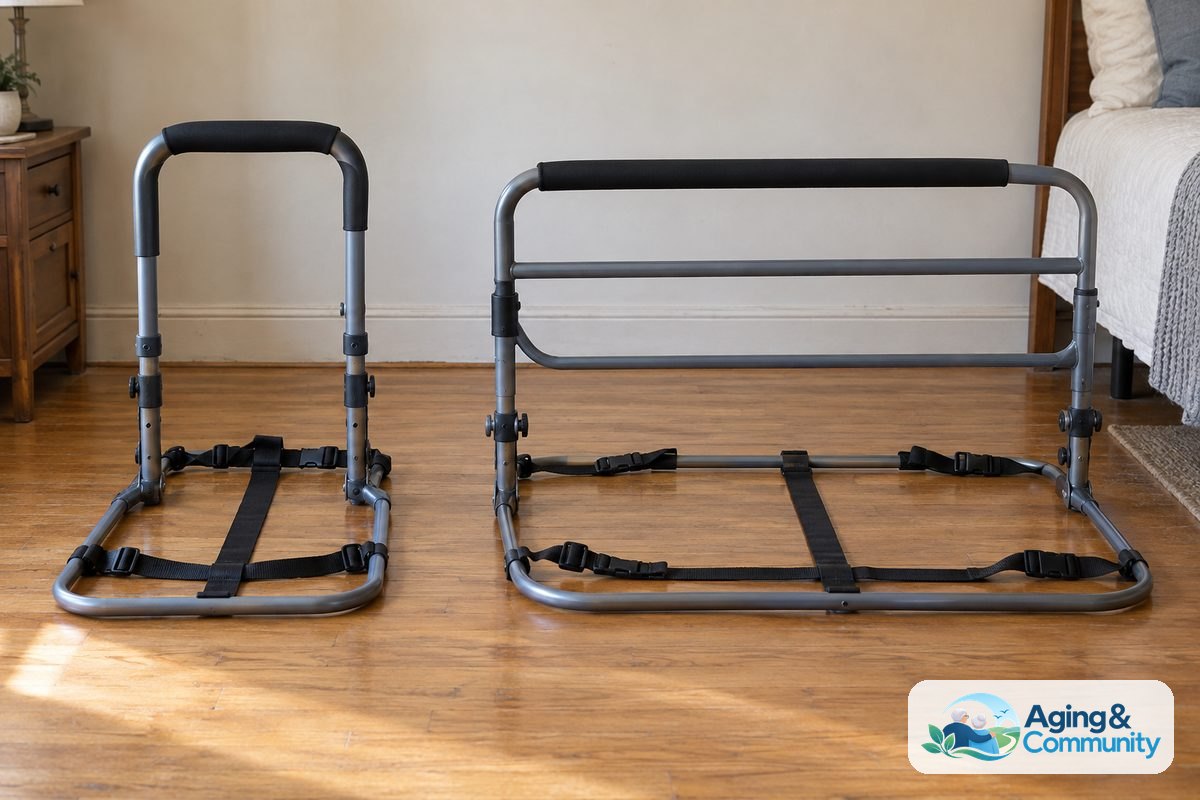
Comparing a Bed Cane and a Bed Rail
While both devices slide between the mattress and box spring, they look and function differently. Here is a side by side look at the practical details.
| Feature | Bed Cane | Bed Rail |
|---|---|---|
| Primary Purpose | Provides a single handhold to stand up or sit down | Provides rolling support, boundary awareness, and standing help |
| Physical Size | Compact, narrow footprint with a single upright handle | Longer horizontal profile running along the bedside |
| Movement in Bed | Minimal help for turning or shifting weight across the bed | Gives multiple grip points for turning over and repositioning |
| Bed Footprint | Takes up very little room and stays out of the way | Covers a larger portion of the mattress side |
| Visual Appearance | Unobtrusive and looks like a simple grab handle | Looks more like a supportive guard or hospital rail |
| Travel and Storage | Easy to disassemble, pack, or move to another room | Larger pieces that are harder to pack for travel |
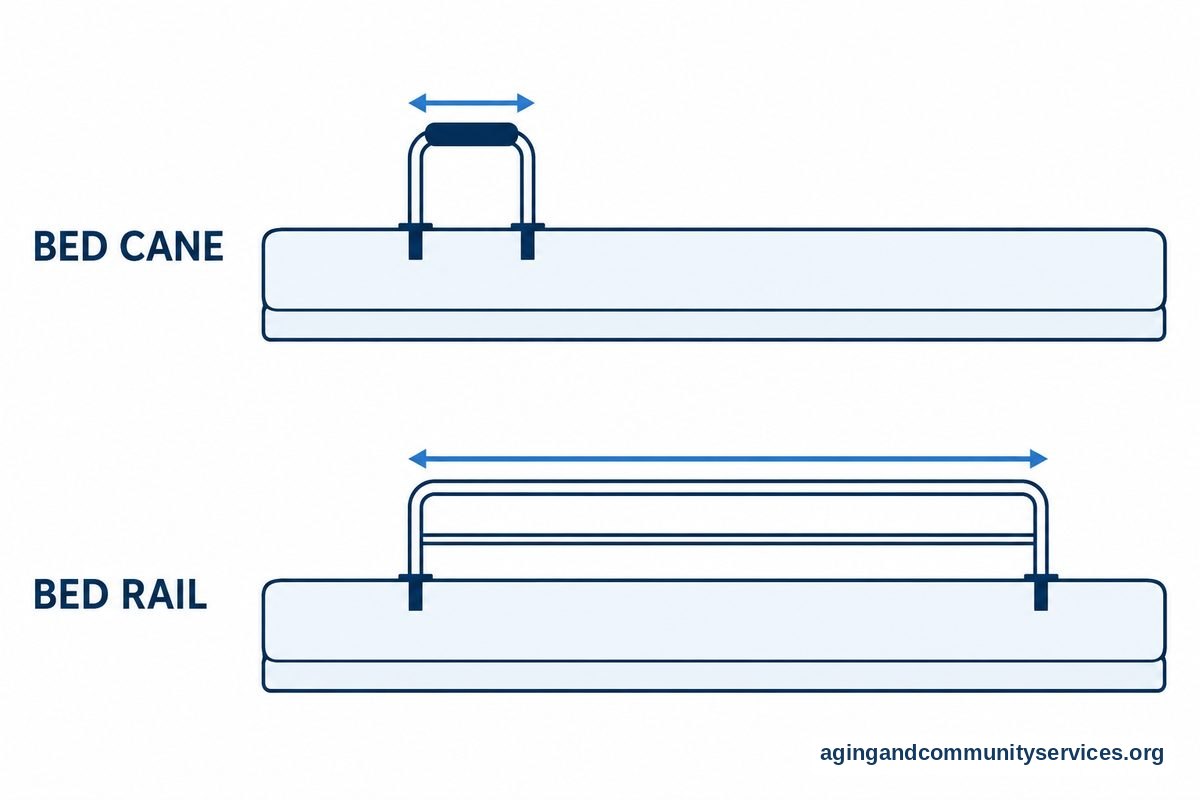
Understanding the Bed Cane
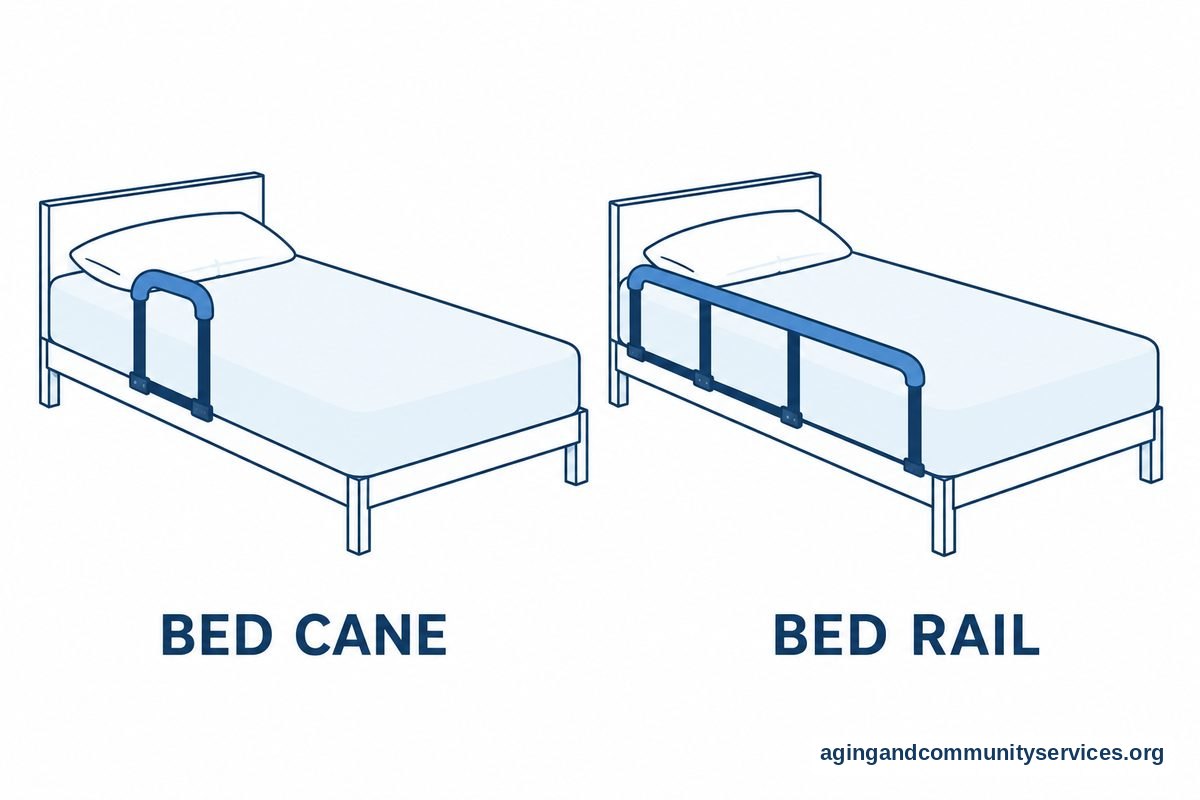
A bed cane is a compact mobility aid designed to give you leverage. It usually features a solid baseboard or metal frame that slides between the mattress and the bed frame. A single vertical handle rises up along the edge of the mattress. Many models feature a padded, ergonomic grip that feels similar to a walking cane.
Because it focuses on leverage rather than coverage, a bed cane takes up very little visual or physical space. It leaves the side of the bed mostly open, which makes it easy to swing your legs out and stand up without having to scoot around a long barrier. Some designs also feature a small fabric organizer pouch hanging from the handle for eyeglasses, a television remote, or a phone.
Who It Suits
A bed cane is an excellent option for older adults who feel reasonably steady in bed but want extra leverage when rising. If your main challenge is pushing yourself up from a lying position to a seated position, the cane offers a firm, reliable spot to push down. It also helps anyone who needs a quick anchor to steady their balance before taking their first steps across the bedroom floor, much like having gait belt vs transfer belt differences explained for safe mobility support.
People who live in smaller bedrooms or who share a bed often prefer a cane. Because it is small, your partner can easily get in and out of bed on their side, and making the bed each morning is simple. If you are comparing narrow handles, you can also look into bed assist handles to see similar compact variations.
Limits to Keep in Mind
A bed cane offers a single grip point, so it does not provide full-length support. If you tend to roll toward the edge while sleeping, a bed cane will not keep you from rolling off the bed. It also provides limited help if you need to turn from your back to your stomach, because the handle stays in one fixed, narrow spot.
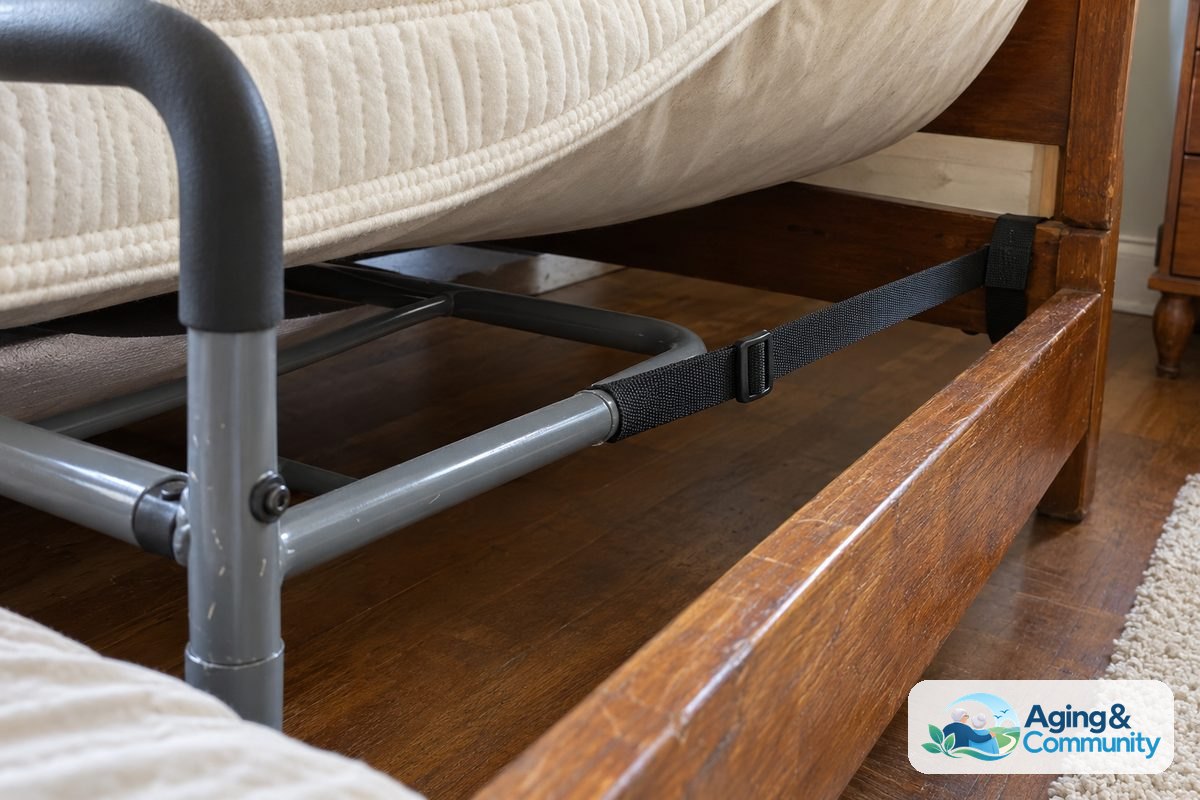
You must also ensure your mattress has enough weight to keep the base secure. While most canes include a safety strap that wraps around the opposite side of the bed frame, an exceptionally lightweight foam mattress might lift if you pull hard on the handle.

Understanding the Bed Rail
A bed rail is a broader piece of safety equipment that runs horizontally along the edge of the mattress. Some rails are fixed in place, while others can be pivoted down, swung outward, or adjusted in length. Like the cane, most home bed rails slide under the mattress and anchor to the bed frame using heavy duty nylon safety straps.
The extended length of a rail creates a physical border along the side of the bed. This design allows you to reach out and hold onto the rail from multiple spots, whether you are resting your head on your pillow or sitting near the middle of the mattress.
Who It Suits
Bed rails work best for individuals who need continuous support throughout the night. If you have weakness in your core or hips, a rail gives you something to pull against as you roll over, adjust your blankets, or shift your hips. It also provides physical boundary cues, letting you know where the edge of the mattress is so you do not roll too close to the side.
Family caregivers often prefer rails when assisting someone with morning routines. You can explore standard bed rails for elderly needs to see different lengths and weight ratings. Once you choose one, learning how to use bed rail for elderly safety helps ensure it stays firmly secured without dangerous gaps.
Limits to Keep in Mind
The primary limit of a bed rail is its physical footprint. A longer rail can make getting out of bed slightly more complicated, as you must scoot down toward the foot of the bed or fold the rail down before swinging your legs over. If the rail is difficult for you to unlatch on your own, it could leave you feeling restricted.
There is also the risk of entrapment if the rail is improperly installed. Any gap between the rail and the mattress can create a hazard. You must inspect the straps regularly to make sure the rail has not pulled away from the mattress edge.
How to Decide
Choosing between these two tools comes down to your movement patterns, your strength, and your bed setup. Reviewing advice on falls and falls prevention can help you evaluate your whole bedroom environment. You can also consult an occupational therapist or physical therapist for tailored advice. Here is how to decide which option matches your home:
- Choose a bed cane if you only need a single grip point to push up into a standing posture.
- Choose a bed cane if you have a smaller bedroom and want to keep your bedding looking neat and open.
- Choose a bed cane if you travel frequently and need a support aid that packs flat into a suitcase or trunk.
- Choose a bed rail if you struggle to turn over or reposition your body while lying flat.
- Choose a bed rail if you want a clear physical barrier to keep from rolling near the mattress edge during sleep.
- Choose a bed rail if you need a long surface to hold onto while an aide or family member helps you dress.
If you are still weighing different handles and rails, you may also want to read about the nuances of a bed rail vs bed lever to see how rotating levers compare to stationary rails.
Frequently Asked Questions
Can a bed cane keep me from rolling out of bed?
No, a bed cane is not wide enough to serve as a guardrail. Its purpose is to give you a solid handle to push against when standing or sitting. If you need a barrier to keep from rolling toward the mattress edge, a standard or full length bed rail is the better tool.
Are bed canes and bed rails safe on adjustable beds?
Standard models that slide between the mattress and box spring are generally not safe for adjustable beds. When the head or foot of the bed moves, the frame can bend the support bars or create large gaps that pose a safety hazard. Look specifically for models designed to attach directly to the metal frame of an adjustable bed base, and check with the bed manufacturer before installing anything.
How do I make sure my bed support does not slip?
Most modern canes and rails come with a long safety strap. You must wrap this strap around the box spring or bed frame on the opposite side of the bed and pull it tight. This tension holds the base plate firmly against the mattress underside and stops the support from sliding outward when you lean on it.
Can I install a bed cane on my own?
Many people can install a bed cane independently, but lifting a heavy mattress can be difficult. It helps to have a second person lift the edge of the mattress while you slide the support base underneath and secure the anchor strap to the opposite rail.
Where can I find professional help choosing bedroom equipment?
You can ask your primary care physician for a referral to an occupational therapist. An occupational therapist can visit your home, evaluate your bedroom layout, and recommend the exact style of equipment that fits your physical needs. You can also contact the Eldercare Locator to find aging and mobility resources in your local community.