

Reaching high shelves or cabinets becomes riskier when balance changes or strength shifts with age. A sturdy 4 step ladder with handrails and secure footing can make these tasks manageable again, whether your parent needs to grab items from kitchen cabinets or you’re helping them access stored goods. The best 4 step ladders for seniors combine stable weight capacity, textured pedals that won’t slip, and handrails soft enough to grip without strain. After comparing published specifications across 6 models, we found options ranging from 330 to 800 pound capacity, heights from 33 to 55 inches, and storage depths as thin as 2.64 inches. This guide walks you through which ladder fits your household, what safety features actually matter, and how to choose without overreaching your needs.

Pros
- Handrails with soft sponge wrapping offer non-slip grip support
- Rubberized feet protect floors while anchoring the 16 lb ladder firmly
- 500 lb weight capacity accommodates most users comfortably
- Folds to 9.4 inches deep for compact storage in small spaces
Cons
- 55.1 inch height may be insufficient for reaching upper cabinets or shelving
- 16 pound weight requires some strength to move between rooms
- 4-step design limits reach compared to taller ladder options
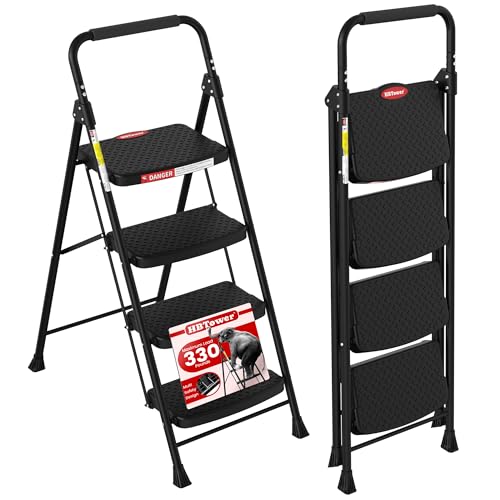
Pros
- Supports up to 330 lbs for reliable stability
- Anti-slip treads and feet prevent shifting on floors
- Secure locking mechanism prevents accidental collapse
- Folds compactly for easy storage in tight spaces
Cons
- Four-step height may not reach very high areas
- 14.55 lb weight requires some strength to carry safely
- Wide pedal design takes up floor space when unfolded

Pros
- Top handrail provides stability support while climbing up and down
- Wide 7.9" x 11.8" pedals with textured surface for secure grip
- Folds down to 45.7" x 16.7" for convenient storage in closets
- Thickened rubber feet protect floors and increase stability
Cons
- 41.7" maximum height may not reach very tall cabinets or shelves
- Lightweight design means less sturdy feel compared to heavier models
- Four steps limit reach for people of very tall stature

Pros
- Folds down to just 2.64 inches thick for compact storage
- 500-pound weight capacity accommodates most users safely
- Non-slip rubber feet protect flooring while preventing sliding
- Wide textured pedals and rubber handles reduce grip strain
Cons
- 48-inch height may be too tall for accessing lower cabinets
- Folded size of 53.54 inches is awkward to store in closets
- Weighs more than typical household step stools for easy carrying
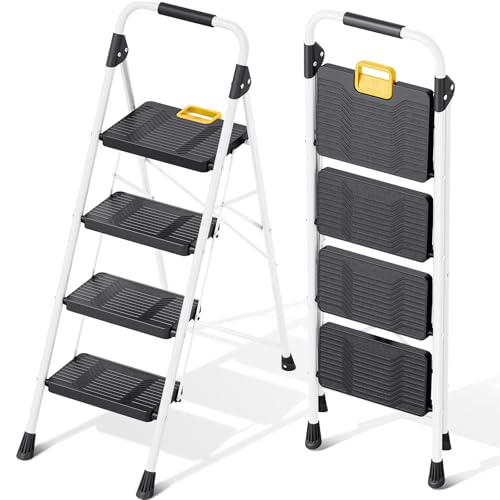
Pros
- Supports up to 800lbs with premium steel construction
- Wide 14.01" x 11.3" non-slip pedals for secure footing
- Soft sponge handrails and shark-tooth anti-slip feet
- Ergonomic grip-style safety lock for easy operation
Cons
- Only 4 steps may not reach high shelving or tall storage
- Folding mechanism requires hand strength to operate
- Steel construction makes it heavier than aluminum alternatives

Pros
- 500-pound weight capacity accommodates most users safely
- Anti-slip texture on pedals and rubber feet prevent slipping
- Handrails on both sides provide extra stability while climbing
- Attachable tool bag keeps supplies organized and accessible
- 19-pound weight makes it portable for different rooms
Cons
- 33-inch height may not reach very high shelves or cabinets
- Folded size of 68.5 inches requires significant storage space
- Steel frame construction means it's heavier than aluminum alternatives
A Closer Look at Our Top Pick
The HBTower Step Ladder with handrails stands out because it combines the features older adults need most: soft sponge-wrapped handrails that don’t pinch bare hands, a 500 pound weight capacity that covers most people comfortably, and rubberized feet that grip tile and wood floors without scratching. At 16 pounds and folding to just 9.4 inches deep, it fits in a hall closet or kitchen corner without taking over your space. The automatic safety latch prevents accidental collapse while you’re on the ladder, which reduces the anxiety many people feel when climbing alone.
The 55.1 inch height reaches most upper kitchen cabinets and bathroom shelving, though very tall wall-mounted storage or ceiling-level items may stay out of reach. If your parent is shorter or reaches items mostly at shoulder height, this ladder delivers stable support. The 4-step design means each step is roughly 13 to 14 inches apart, which suits people who move carefully and don’t want a steep climb. Unlike taller options, this won’t feel overwhelming to someone who climbs infrequently or prefers conservative footing.
Find Your Situation
- the HBTower Step Ladder: Someone needing handrails, moderate height, and easy storage in a small home. Watch out: at 55.1 inches, it won’t reach very tall upper cabinets.
- the HBTower 4 Step: A lighter-duty option for someone under 330 pounds who values compact foldability. Watch out: the narrower 330 pound capacity excludes heavier individuals.
- the HBTower 4 Step: Someone prioritizing a top handrail and wide 7.9 by 11.8 inch pedals for confident footing. Watch out: at 41.7 inches tall, it’s the shortest option here and won’t reach high shelves.
- the KINGRACK 4 Step: A person needing 500 pound capacity and the thinnest fold at 2.64 inches for apartment or condo living. Watch out: folded length of 53.54 inches requires hallway or closet depth space.
- the KINGRACK 4 Step: Someone heavier or sharing a ladder with family members, thanks to the 800 pound capacity and wide 14.01 by 11.3 inch pedals. Watch out: steel construction makes it heavier and harder to carry between rooms.
- the Valeo 4 Step: A household wanting an included tool bag to hold supplies while climbing, reducing juggling. Watch out: at 33 inches, it’s the shortest model and only suits lower-to-mid shelf access.
How We Narrowed It Down
We compared published specifications from 6 models rather than handling each one in person, focusing on weight capacity, step height, fold-down dimensions, and safety features listed by manufacturers. We excluded ladders taller than 55 inches because 4-step models at that height become less stable for older adults, and we ruled out any without either handrails or very wide pedals, since grip and footing are non-negotiable for safety. Every model here has either rubberized feet or textured pedals to prevent sliding. If your parent has balance concerns or a recent fall, talk with their doctor or physical therapist before buying any ladder, and read the product instructions fully. The National Institute on Aging offers fall-prevention guidance specific to home setup.
What to Look For
Handrails or a top handle you can actually grip
Handrails should be soft enough not to dig into your palm during a long reach. Three of these models feature sponge or rubber wrapping on handrails, which reduces hand fatigue and lets your parent climb with confidence. A top handle alone, without side rails, works if the person climbing only needs it to steady themselves going up and down, not to pull themselves higher.
Weight capacity that matches your household
Weight capacity ranges from 330 to 800 pounds here. If your parent weighs under 220 pounds and climbs alone, a 330 pound ladder is safe. If the ladder will be shared or used by someone heavier, jump to 500 or 800 pounds. Staying well under the maximum keeps the ladder feeling stable and less tippy. Capacity also builds in margin if your parent is carrying items while climbing, even light ones.
Step pedal size and texture
Wider pedals, roughly 8 by 12 inches or larger, let your parent place their whole foot flat instead of balancing on a thin edge. All these models include textured or anti-slip surfaces. Textured pedals feel more secure than smooth ones, especially for people wearing socks or smooth-soled shoes. Test the texture by running your hand across it before buying if possible.
Height that fits your rooms
These ladders for seniors range from 33 to 55.1 inches tall. Measure the distance from the floor to the items your parent reaches most often, then add a few inches for safe reach angle. Avoid stretching on tiptoe on the top step. A 55-inch ladder reaches most kitchen uppers. A 41-inch ladder suits bathroom cabinets and mid-shelf pantry items. If your parent mostly needs ground-level storage or lower cabinets, don’t buy a tall ladder they won’t use.
Before you buy, think about how it gets stored
Folded depth ranges from 2.64 to 68.5 inches. If storage space is tight, the slimmest models (2.64, 9.4, or 16.7 inches) fit in corner closets or behind doors. If your parent lives in a larger home with a garage or shed, folded length matters less. Store the ladder somewhere your parent can easily pull it out without asking for help or dragging it across rough ground, which wears the feet.
Weight and whether your parent can move it alone
Ladders here weigh between 14 and over 20 pounds. Someone with limited arm or shoulder strength may struggle with anything over 16 pounds. If your parent needs to move the ladder between rooms several times a week, lighter aluminum models feel less exhausting. Steel ladders (those with 800 pound capacity, for example) are sturdier but heavier. A caregiver visiting weekly can help move a heavier ladder into position.
When this ladder is not enough
A 4-step ladder maxes out at roughly 55 inches of reach. If your parent regularly accesses very tall closet shelves, ceiling-mounted storage, or cabinets above standard 8-foot walls, they need a taller option or professional help. If they have serious balance problems, severe arthritis in their hands, or recent surgery, ask their doctor before ladder use. The Eldercare Locator can connect you with local programs that help older adults with household tasks if climbing becomes unsafe.
Quick Tips for Choosing
- Test the handrail texture with your bare hand before buying if the store allows it.
- Measure the space where you’ll store the ladder so the folded size actually fits.
- Write down the reach height you need, then pick a model that reaches it without stretching on the top step.
- Choose a weight your parent can pull out and set up without calling for help.
- Check that all four feet touch the ground evenly once unfolded, and tighten any adjustable feet before first use.
- Read the manual fully and never stand on the very top step, even though you technically can.
Frequently Asked Questions
How do I know if a 4-step ladder is tall enough for my home?
Measure from the floor to the highest item your parent reaches, then add 12 inches for safe reach. A 4-step ladder typically reaches 40 to 55 inches depending on the model. If your items are above 50 inches, measure twice and consider the thinnest model that clears that height comfortably.
Can someone with arthritis use a ladder with soft-grip handrails?
Yes, soft sponge or rubber-wrapped rails are easier on arthritic hands than bare metal. They reduce the pressure needed to hold on and don’t pinch skin. If gripping is still painful, consider asking a caregiver to help with high reaching instead.
What’s the difference between a step ladder and a step stool?
A step ladder has legs on both ends and stands alone, while a step stool is smaller and lighter. Bed ladders are another specialized option for getting in and out of bed. All six models here are step ladders because they provide stability from multiple points of contact and suit household tasks like reaching cabinets.
Do I need to assemble a folding ladder when I buy it?
Most arrive folded but fully assembled and ready to use. A few models may need you to tighten bolts or adjust rubber feet, which takes a few minutes with a wrench. Check the product details to confirm whether assembly is required.
What floor surfaces are safe for using a ladder?
Hard, level floors like tile, wood, or linoleum are safest. Carpet can shift underfoot, so use extra care. Outdoor concrete is fine if it’s not wet or mossy. If your parent uses a pool, pool ladders require similarly stable footing. Avoid uneven ground, stairs, or slopes.
How often should I replace a step ladder?
With normal home use, a well-made ladder lasts many years. Replace it if feet are worn smooth, rungs crack, or the automatic lock mechanism fails. Check hinges and bolts yearly and tighten anything loose.
Can two people climb a ladder at the same time?
No. Step ladders are designed for one person. Even with high weight capacity, a second person changes the balance and can tip the ladder. Always have only one person on the ladder at a time.
What should I do if my parent falls while using a ladder?
Call 911 if there is any doubt about injury severity, especially for head, spine, or hip pain. Even minor falls should be reported to their doctor. After recovery, revisit whether ladder use is still safe or whether alternative solutions like a reaching tool or helper make more sense.
Is a ladder with wheels safer or less safe?
Wheels add complexity and require locking, which some older adults forget to engage. The models here have fixed, non-wheeled bases, which is simpler and less likely to roll unexpectedly. Non-wheeled ladders are considered safer for older adults.
What’s the safest way to carry a folded ladder from one room to another?
Carry it with both hands, keeping it close to your body. If it’s over 18 pounds and your parent lives alone, ask a neighbor, family member, or caregiver to help set it up in advance rather than moving it repeatedly.
Which One to Start With
If you’re shopping for your parent for the first time and aren’t sure which direction to go, start with the HBTower Step Ladder. It hits the practical middle ground: tall enough to reach most household items at 55.1 inches, light enough to move at 16 pounds, and built with both handrails and rubberized feet that reduce anxiety on either end of the climb. The 500 pound capacity suits most older adults, and it folds thin enough for apartments. The soft-grip handrails mean your parent won’t develop hand fatigue from gripping hard metal. The automatic safety latch is a quiet confidence booster for someone climbing alone.
If your parent is heavier or the ladder will be shared among family members of varying sizes, jump straight to the KINGRACK 4 Step with 800 pound capacity. The wider 14.01 by 11.3 inch pedals and soft sponge handrails feel less tippy and more planted. The trade-off is weight and storage footprint. Steel construction makes it sturdier but means a caregiver may need to set it up or position it for your parent rather than having them move it solo.
If your parent lives in a tight space (apartment, small condo) or needs to store the ladder out of sight, the KINGRACK 4 Step that folds to 2.64 inches is the clear choice. It’s thinner than a sheet of plywood when folded, fitting behind doors or in narrow closets. It still supports 500 pounds and includes non-slip rubber feet and wide pedals. The slight trade-off is that the folded length of 53.54 inches requires a closet with decent depth, but if you have that space, you’ve solved the storage problem entirely. After comparing these three, you’ll have covered most household situations. If none of them fits—perhaps your parent only needs to reach lower items, or storage is extremely constrained—the other models in the list above offer more specialized solutions for niche needs.