

Wet feet, soap, and a narrow tub edge can make a simple bathroom routine feel less steady, especially when your parent has only a towel bar or wall surface nearby. The best bathroom grab bars for elderly shoppers should match the exact place where the hand naturally reaches, not just the wall that looks open. After comparing 6 options on paper, the Moen Home Care stands out for a 24 inch stainless steel handhold, while the songsoso Adjustable is a removable clamp style for a smooth tub wall from 3.1 to 6.7 inches. The right choice depends on wall structure, grip diameter, and whether the person needs support while stepping, turning, or standing.

Pros
- 24 inch length gives a broad gripping area
- Stainless steel construction resists corrosion
- 1.25 inch diameter is sized for secure grasping
- Supports up to 500 lbs with proper mounting
Cons
- SecureMount hardware is sold separately
- 500 lb rating depends on stud or SecureMount installation

Pros
- Adjusts from 15 to 18 inches for different users
- Fits 3.1 to 6.7 inch smooth, flat tub walls
- 1.5 inch H-shaped steel tubing adds firm support
- Triple rubber pads help grip and protect the tub
Cons
- Not suitable for curved, angled, or textured tub edges
- Clamp needs a smooth, flat wall between 3 and 7 inches
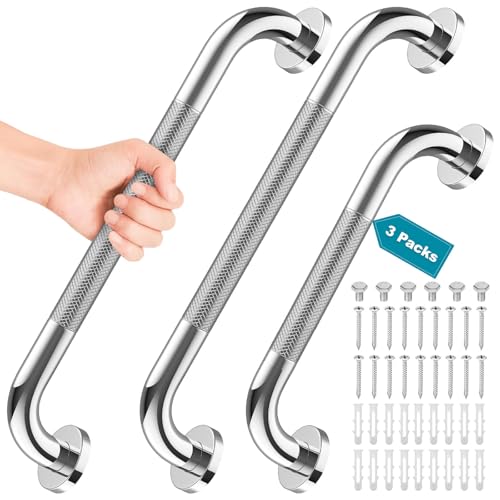
Pros
- Includes 2 16-inch bars and 1 12-inch bar
- Stainless steel construction resists bathroom rust
- Rated to support up to 500 lbs when installed properly
- Knurled texture adds grip on the 1.0 inch diameter
Cons
- Requires wall mounting with screws, not a tool-free option
- 1.0 inch diameter may feel small for some larger hands

Pros
- Three bars cover 18, 36, and 42 inch placements
- 304 stainless steel suits humid bathroom use
- 1.5 inch outside diameter is ADA compliant
Cons
- Commercial look may feel institutional at home
- Requires solid wall or partition mounting hardware

Pros
- Two 16 inch bars support multiple placement spots
- Stainless steel construction for bathroom moisture
- Knurled anti-slip texture adds grip in the shower
- 500 pound support rating with lengthened screws
Cons
- Wall mounting into studs may limit exact placement
- 16 inch length may be short for wider transfer areas

Pros
- 500 lb capacity for supported wall-mounted use
- Stainless steel suits wet bathroom environments
- 12 inch length fits compact shower wall spaces
- 1 inch grip diameter may suit smaller hands
Cons
- Only 12 inches long, limited reach for wider showers
- 1 inch diameter may feel too slim for larger hands
- Requires drilling with a 1/4 inch bit into the wall
A Closer Look at Our Top Pick
For many homes, the most useful starting point is a straight wall-mounted bar with enough length to catch the hand before, during, and after a step into the tub or shower. On paper, a 24 inch stainless steel shower bar gives more reach than a compact 12 inch bar, while staying simpler than a 3 bar commercial bundle. The 1.25 inch diameter is also a practical middle ground: larger than the 1 inch bars in this group, but not as broad as a 1.5 inch commercial rail. Its concealed screw design keeps the installation looking more finished, which can matter in a shared bathroom.
The main caution is installation. The 500 lb rating applies only when the bar is mounted into studs or with Moen SecureMounts, and that hardware is sold separately. That means this is not the choice to buy and casually place wherever the tile pattern looks neat. It is the choice to consider when a caregiver can confirm solid backing or arrange a careful installation. If the bathroom has a predictable reach point near the shower entrance, a 24 inch bar can cover more hand positions than a shorter rail, without requiring the larger footprint of 36 or 42 inch bars.
Find Your Situation
- the Moen Home Care: suits a shower or tub wall where a 24 inch handhold and 1.25 inch grip feel like the right middle size. Watch out: the 500 lb rating depends on stud mounting or Moen SecureMounts.
- the songsoso Adjustable: suits a smooth, flat tub wall from 3.1 to 6.7 inches when a removable clamp rail makes more sense. Watch out: it is not for curved, angled, or textured tub edges.
- the Tetutor 3 Pack: suits a bathroom where 2 bars of 16 inches and 1 bar of 12 inches can create several handholds. Watch out: the 1.0 inch grip may feel small for larger hands.
- the Prestige Distribution Prestige: suits a larger shower, restroom stall, or toilet area needing 18, 36, and 42 inch rails. Watch out: the commercial look may feel institutional at home.
- the Fertoriy 2: suits a home that needs 2 matching 16 inch stainless steel bars near a shower, tub, stairs, or living area. Watch out: stud placement may limit the exact spot.
- the AmazerBath Grab Bars: suits a tight shower wall where a 12 inch bar and 1 inch grip are enough. Watch out: the short length gives limited reach in wider spaces.
How We Narrowed It Down
We compared published specifications rather than handling the products, so the focus was on measurable details: bar length, grip diameter, mounting style, wall fit, material, and stated support rating. We excluded options that did not clearly fit a bathroom use case for an older adult or caregiver, and we favored products with specific numbers such as 12, 16, 24, 36, or 42 inch lengths. We also looked closely at trade-offs, because a clamp rail that fits a 3.1 to 6.7 inch tub wall solves a different problem than a wall-mounted stainless steel bar. If your parent has a recent change in balance, strength, or transfer ability, ask a doctor or physical therapist where a bar should be placed. The National Institute on Aging notes that falls can happen in daily settings, including bathrooms, in its falls and falls prevention guidance.
What to Look For
Start with the exact reach point
Before choosing a length, watch where the person naturally reaches when stepping into the tub, standing from a shower chair or transfer bench, or turning near the faucet. A 24 inch bar can cover more hand positions than a 12 inch bar, but only if it lands where the hand actually goes. A 16 inch bar may be enough beside a narrow entry, while a 36 inch or 42 inch rail may suit a wider wall. Placement matters as much as the bar itself.
Match the mounting style to the bathroom
Wall-mounted bars need screws and a solid surface, often studs or other approved backing. A clamp rail works differently: it grips a tub wall, such as a smooth edge from 3.1 to 6.7 inches. If drilling into tile is not practical, a removable clamp can be useful, but it has stricter tub-shape limits. If the tub edge is curved, angled, or textured, choose a different style.
Think about grip diameter, not just length
Grip diameter affects how secure a hand can feel around the bar. In this group, sizes include 1 inch, 1.25 inch, and 1.5 inch diameters. A 1 inch grip may suit smaller hands, while 1.5 inch can feel familiar in ADA-style commercial spaces. If your parent has larger hands, a slim 1 inch bar may not feel as comfortable.
Before you buy, check the wall behind the tile
A 500 lb support rating only means something when the installation matches the product requirements. For example, one 24 inch model reaches that rating with stud mounting or SecureMount hardware. Other wall-mounted bars also depend on screws, solid backing, and careful placement. Do not treat a grab bar like a towel bar, because the forces on it are different.
Choose texture when wet hands are likely
Bathrooms involve soap, water, and quick hand changes, so texture can help the person identify the grip surface. Some bars use knurled texture on a 1 inch or 16 inch rail, giving the hand a more defined surface. Smooth stainless steel can still work well, especially at 1.25 inch or 1.5 inch diameters. The best texture is the one the person will actually hold without discomfort.
When this is not enough, widen the plan
A grab bar is only 1 part of a bathroom setup. If the person needs help with several steps in the routine, look at the path from toilet to sink to tub, not just 1 wall. Local support can also help families think through home changes, and the Eldercare Locator connects older adults and caregivers with services by phone at 1-800-677-1116. A physical therapist can also suggest where handholds should go for the person’s specific routine.
Decide whether the bathroom should look residential or commercial
Some families prefer a concealed-screw bar because it blends into a home bathroom. Others need longer 18, 36, or 42 inch rails and do not mind a more commercial look. A 3 bar bundle can make sense in a larger restroom or stall, but it may feel too institutional in a small home bath. Appearance should not outweigh fit, but it can affect whether the person accepts the change.
Quick Tips for Choosing
- Pick the reach point before picking a finish.
- Use a 24 inch bar when the hand needs room to travel.
- Use a 12 inch bar only for a compact, specific grip spot.
- Check whether the tub wall is smooth and flat before buying a clamp rail.
- Consider 1.25 inch or 1.5 inch grips for hands that dislike slim rails.
- Plan for proper mounting before relying on any 500 lb rating.
Frequently Asked Questions
Where should a bathroom grab bar go first?
Start where the person reaches during the hardest movement, often the tub entry, shower turn, or toilet rise with toileting aids. A 16 inch or 24 inch bar can be useful only if it matches that natural hand path.
Is a longer grab bar always better?
Not always. A 36 inch or 42 inch rail gives more reach, but a 12 inch bar can be right for a tight wall with one clear hand position.
What grip diameter is easiest to hold?
That depends on the person’s hand size and comfort. Common choices in this group include 1 inch, 1.25 inch, and 1.5 inch diameters.
Can a grab bar be installed without drilling?
Some tub rails use a clamp instead of screws. The clamp style in this comparison fits smooth, flat tub walls from 3.1 to 6.7 inches.
Are suction grab bars the same as mounted grab bars?
This comparison focuses on screw-mounted bars and a clamp-style tub rail, not suction bars. For steady support, check the exact mounting method and rating before purchase.
What does a 500 lb rating mean?
It means the product is rated for that support level only under the required installation conditions. For some bars, that means studs, specific mounting hardware, or included screws used correctly.
Is stainless steel a good bathroom material?
Stainless steel is commonly used in wet bathroom environments. Several products in this comparison use stainless steel for showers, tubs, or humid spaces.
How many grab bars does one bathroom need?
Some bathrooms need 1 well-placed bar, while others work better with 2 or 3 handholds. The answer depends on the route the person takes through the space.
Can a grab bar be used near stairs or outside the bathroom?
Some 16 inch bars are described for bathrooms, showers, tubs, stairs, or living areas. Make sure the wall or surface can support the installation before choosing the location.
Should a family install a grab bar themselves?
Some families can install a bar if they can locate solid backing and follow the hardware requirements. If there is tile, uncertain wall structure, or a 500 lb rating involved, hiring a skilled installer is often the calmer choice.
Which One to Start With
If you want one sensible starting point for a typical tub or shower wall, start with the Moen Home Care. Its 24 inch length gives the hand more room than a 12 inch compact bar, and the 1.25 inch diameter sits between the slimmer 1 inch options and the broader 1.5 inch commercial rail. It is the best first look when your parent needs a steady handhold along a wall and you can arrange proper stud mounting or Moen SecureMount installation.
If drilling is the main obstacle and the tub has a smooth, flat wall from 3.1 to 6.7 inches, choose the songsoso Adjustable instead. Its clamp setup gives a removable grip point, and the 300 lb rating is tied to that tub-rail style. It is not the right answer for a curved or textured tub edge, so measure before buying.
For a bathroom that needs several handholds at once, especially near more than 1 reach point, consider a 3 bar stainless steel set. The mix of 2 bars at 16 inches and 1 bar at 12 inches can cover a shower entrance, a side wall, and a smaller spot near the controls. Choose the larger 18, 36, and 42 inch commercial bundle only when the room truly needs longer rails and the more institutional look will not bother the person using it.