

Bending, twisting, gripping fabric, and reaching behind the heel can turn a simple morning routine into a long sequence of small obstacles. The best dressing aids for seniors are meant to add reach, leverage, or a steadier grip so your parent can dress with less awkward movement. After comparing 6 options on paper, the Phantawell 35 stands out for shoes, socks, shirts, and pants because it combines a 35.5-inch reach with a dressing stick shape. For a broader recovery setup, the Nourislif 7PC covers 7 separate needs, including a 33-inch grabber, 45-inch sock aid, and 40-inch leg lifter.

Pros
- Adjusts between 35.5 and 22.5 inches for sitting
- 2-in-1 design combines shoe horn and dressing stick
- 35.5-inch reach helps limit bending while standing
Cons
- Long handle may feel awkward in tight closets
- Assembly pieces could be misplaced during travel

Pros
- 33-inch reacher grabber extends floor and shelf access
- 45-inch sock aid has adjustable ropes and foam handles
- 27-inch dressing stick uses protective vinyl coating
- 40-inch leg lifter helps reposition a leg in bed or car
Cons
- 7 separate pieces may be bulky to store in small rooms
- 16.5-inch shoehorn may feel short for taller users

Pros
- 27-inch reach helps with pants, shoes, socks, and jackets
- Protective vinyl hook grips fabric without bare metal
- Lightweight wood shaft is smoother on delicate fabrics
- 2-piece twist design packs down for travel
Cons
- Wood shaft may not suit users who need a flexible tool
- 27-inch length can feel short for very tall users
- Twist joint may loosen with frequent assembly
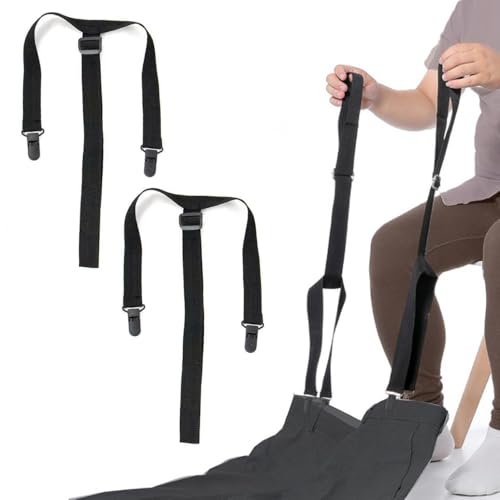
Pros
- 2-piece set supports dressing at home or while traveling
- 26-41 inch adjustable straps fit different body sizes
- Reinforced polyester alloy clips hold clothing edges
- Tear-resistant nylon straps add everyday durability
Cons
- Clips may not grip very thick waistbands securely
- Requires enough hand strength to fasten both clips

Pros
- Includes both 19-inch and 32-inch reacher grabbers
- 42-inch leg lifter helps guide feet into bed or car
- Sock aid has foam handles for a steadier grip
- 22-inch bath sponge extends lower-body washing
Cons
- Seven separate tools may be bulky to store
- Reachers may be awkward for heavier objects

Pros
- 2-piece set supports use in bedroom and travel bag
- Metal clips attach firmly to most waistbands
- Extended dual straps help with one-handed pulling
- Soft webbing is gentler on hands and shoulders
Cons
- Metal gripping teeth may mark delicate waistbands
- Clip placement may be hard with very limited hand strength
A Closer Look at Our Top Pick
The Phantawell 35 earns the first look because it solves more than 1 common dressing problem with a single tool. Its 35.5-inch reach can help the person guide a heel into a shoe, pull clothing into place, or remove a sock while limiting deep bending. The adjustable length also matters: it can shorten to 22.5 inches for seated dressing, which is useful when the person prefers a chair for balance or comfort. The S-shaped hook gives it more range than a plain shoehorn, since it can catch fabric on shirts, pants, or socks.
On paper, the main trade-off is space. A 35.5-inch handle can feel clumsy in a narrow closet, and the assembly pieces may be easier to misplace during travel. Even so, a 2-in-1 shoehorn and dressing stick is a sensible starting point when the person mostly needs help with footwear and clothing reach rather than a full 7-piece kit. It is also less bulky than a multi-tool set, while still giving enough length for standing or sitting routines.
Find Your Situation
- the Phantawell 35: suits the person who wants 1 tool for shoes, socks, shirts, and pants, with a 35.5-inch reach and a 22.5-inch shorter setting. Watch out: the long handle may feel awkward in tight closets.
- the Nourislif 7PC: suits a post-surgery routine that needs 7 pieces, including a 33-inch grabber, 45-inch sock aid, 27-inch dressing stick, and 40-inch leg lifter. Watch out: 7 separate pieces may be bulky in small rooms.
- the Nourislif 27: suits someone who wants a lighter 27-inch wooden dressing stick for pants, shoes, socks, and jackets. Watch out: the 27-inch length can feel short for a very tall person.
- the Tovyzalg Adjustable Clip: suits pants, skirts, or underwear because the 2 adjustable straps extend from 26 to 41 inches. Watch out: the clips require enough hand strength to fasten both sides.
- the RMS Premium 7: suits a broader hip, knee, back, or limited-bending setup with 7 tools, including 19-inch and 32-inch reachers. Watch out: the reachers may feel awkward with heavier objects.
- the Dekvoraq Dressing: suits pants dressing with 2 clip-and-pull tools and extended dual straps for one-handed pulling. Watch out: the metal gripping teeth may mark delicate waistbands.
How We Narrowed It Down
We compared published specifications rather than handling the products, then focused on 6 aids that address everyday dressing tasks with clear measurements. We favored tools with useful reach, such as 35.5 inches for a shoehorn and dressing stick, 45 inches for a sock aid, or 32 inches for a reacher. We excluded products that did not fit a dressing routine, products centered only on bathing, and products where the main purpose was not clothing, socks, shoes, or reach support. We also looked for a clear trade-off on each item, because a 7-piece kit can help with more tasks while taking more storage space. If your parent is dressing after surgery or has movement limits tied to a medical plan, ask a doctor or physical therapist which motions and tools are appropriate. For general home safety context, the National Institute on Aging notes practical ways to make daily spaces easier to move through on its falls and falls prevention page.
What to Look For
Start with the hardest part of getting dressed
Choose the tool around the task that slows the person down most often, not around the largest set. If shoes and socks are the daily issue, a 35.5-inch shoehorn or a 45-inch sock aid may be more helpful than a general grabber. If pants are the issue, a 2-strap clip tool can be more direct than a dressing stick. A 7-piece kit makes sense when there are several hard points in the same routine.
Match the reach to sitting or standing
Length matters because dressing often happens from a chair, bed, or standing position. A 22.5-inch shorter setting may be easier while seated, while 35.5 inches gives more reach when standing. A 27-inch dressing stick can feel manageable in a bedroom, but it may be short for a very tall person. The right reach is the one that lets the person avoid strained angles during the same 1 or 2 daily tasks.
Think about socks and shoes as separate jobs
Socks and shoes ask for different motions, even though they happen together. A 45-inch sock aid with ropes and foam handles helps guide a sock from the foot end, while a long shoehorn guides the heel into the shoe. A tool such as a 35.5-inch long-handled shoe aid is stronger for footwear reach than for pulling a sock fully onto the foot. If socks are the main concern, compare the sock aid length before the shoehorn length.
Look closely at pants, skirts, and underwear
Lower-body clothing can be harder than shirts because the person may need to pull fabric up from the floor or knee level. Clip-and-pull straps in the 26 to 41 inch range can help lift a waistband without deep bending. Metal clips may hold most waistbands firmly, while reinforced polyester alloy clips add another grip style. For delicate fabrics, remember that gripping teeth can leave marks on 1 waistband even when they hold well.
Before you buy, count the pieces and the storage space
A 7-piece hip kit can cover dressing, reaching, bathing, and leg positioning in 1 purchase, alongside back lotion applicators. The trade-off is that 7 tools need a place near the bed, chair, closet, or bathroom. A single 2-in-1 dressing stick and shoehorn takes less space, but it cannot replace a 40-inch leg lifter or a 33-inch grabber. If your parent misplaces items easily, fewer pieces may make the routine simpler.
Make sure the grip fits the person’s hands
Hand strength and finger control matter as much as length. Foam handles on a sock aid can feel steadier than thin ropes alone, while soft webbing can be gentler for pulling pants. Clip tools need enough hand strength to attach 2 clips before pulling. A protective vinyl hook can be easier on fabric than bare metal, especially with lighter clothing.
When this is not enough, add human support
A dressing aid can add 19 inches, 32 inches, or 45 inches of reach, but it cannot replace personal instruction when the routine is complex. If the person needs help planning care, transportation, or local aging services, the Eldercare Locator connects older adults and caregivers to support and can be reached at 1-800-677-1116. A caregiver may also need to set up the tool in the same spot each day so the person is not searching for 1 small part. When dressing takes more effort than a simple tool can address, a professional assessment is the better next step.
Quick Tips for Choosing
- Pick 1 main task first: shoes, socks, pants, or reaching.
- Use 35.5 inches or longer when standing reach is the priority.
- Use a 22.5-inch to 27-inch tool when seated control matters more.
- Choose 7 pieces only if several daily tasks need support.
- Choose clip straps for pants, skirts, or underwear.
- Keep the tool within 1 arm’s reach of the dressing chair.
Frequently Asked Questions
What does a dressing stick do?
A dressing stick adds reach for clothing, shoes, socks, or jackets. Many versions use a hook around 27 inches or longer to pull, push, or guide fabric.
Is a long shoehorn different from a dressing stick?
A long shoehorn is shaped to guide the heel into a shoe, often at lengths such as 35.5 inches. A dressing stick uses a hook to move clothing, so a 2-in-1 tool can cover both jobs.
Who might prefer a full hip kit?
A full kit may suit someone who needs help with several tasks in the same routine. A 7-piece set can include reachers, a sock aid, a dressing stick, a shoehorn, and a leg lifter.
Are clip-and-pull tools only for pants?
Clip-and-pull tools are often used for pants, skirts, and underwear. Their 26 to 41 inch strap range can help bring a waistband upward from a seated or standing position.
What length is useful for a reacher?
A shorter 19-inch reacher may work near a chair or bedside. A 32-inch or 33-inch reacher can be better for floor or shelf access.
Can a dressing aid help with socks?
Some dressing sticks can help remove socks, but putting socks on usually works better with a sock aid, including compression sock aids. A 45-inch sock aid gives more rope length for pulling from the foot.
What should caregivers check before buying?
Caregivers should check the person’s hardest dressing step, the usual chair height, and whether 1 hand or 2 hands are available. They should also consider whether a 7-piece set will stay organized.
Are metal clips safe for all clothing?
Metal clips can attach firmly to many waistbands, but gripping teeth may mark delicate fabric. If the person wears fragile clothing often, use 1 less delicate waistband for practice.
Is a travel-friendly dressing aid worth it?
A 2-piece twist design can pack down more easily than a fixed long stick. The trade-off is that the joint may loosen with frequent assembly.
How should someone store dressing aids?
Store the tool where dressing happens, usually within 1 arm’s reach of a bed, chair, or closet. Larger 7-piece kits may need a basket or bin so the pieces stay together.
Which One to Start With
If you are buying 1 item and the main problems are shoes, socks, shirts, or pants, start with the Phantawell 35. Its 35.5-inch reach gives more standing distance than a 27-inch dressing stick, and the 22.5-inch setting makes seated dressing more practical. It is also a 2-in-1 tool, so your parent is not managing 7 pieces on the first day.
If the person is coming home with a broader routine that includes floor reach, sock pulling, leg positioning, and bathing reach, start with a 7-piece recovery set with a 45-inch sock aid. The 33-inch grabber, 27-inch dressing stick, and 40-inch leg lifter cover more situations than a single hook tool. The storage burden is real, but the wider coverage can be worth it when several dressing and daily setup tasks are difficult.
If pants are the specific sticking point, choose the Dekvoraq Dressing or a similar 2-piece clip style before buying a full kit. The extended dual straps are aimed at one-handed pulling, and the 2 tools can be kept in a bedroom and travel bag. For very delicate waistbands or very limited hand strength, a dressing stick may be the gentler first try.