

A tight lid is usually a friction and leverage problem: the hand has to hold the jar steady, press into the lid, and twist at the same time. For older adults with weaker grip or sore joints, even a 1.2 inch cap or a 3.5 inch jar lid can turn meal prep into a pause. The best jar openers for elderly shoppers are not all the same tool. Some add traction, some add a longer handle, and some do the turning with battery power. If your parent mainly needs extra grip, the LUTER 4pcs Jar is a simple place to begin. If twisting is the bigger issue, the KITCHENMUH Electric Jar may make more sense.

Pros
- 4 piece set includes both square and round pads
- Rubber texture adds friction for weak hands
- 5 x 5 inch square pads cover larger lids
- 4.92 inch round pads suit many bottle tops
Cons
- Flat rubber pads may not help with very tight seals
- No rigid handle for users needing extra leverage
- Small 4.92 inch round size may miss wide lids

Pros
- Fits lid diameters from 1.2 to 3.5 inches
- Runs on 2 AA batteries with no cord needed
- Works on standard round glass screw top jars
Cons
- AA batteries are required but not included
- Needs clean, dry lid and rubber feet for grip

Pros
- Fits wide lid sizes from 1.2 to 3.5 inches
- One-touch opening runs on 2 AA batteries
- Compact 8.46 x 4.33 x 2.87 inch body stores in drawers
- Grips glass jar lids and rotates automatically
Cons
- Batteries are required and 2 AA are not included
- Wet or oily glass lids can slip during opening
- Only fits jar bodies up to 3.5 inches wide
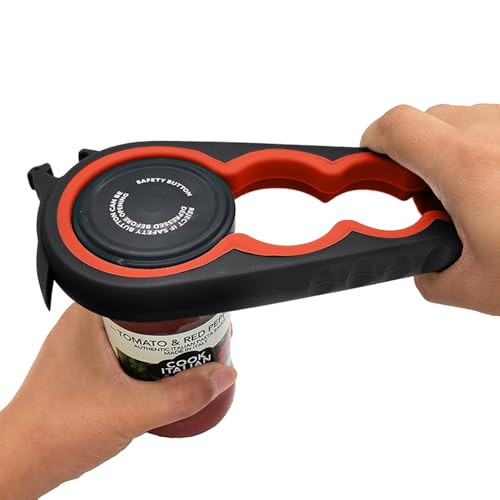
Pros
- Eight circular openings fit 1 to 3 inch lids
- Rubber lining helps hold small and medium lids
- Food grade PP and rubber are simple to clean
- Slim 6-in-1 tool stores in a drawer or on hooks
Cons
- May not fit lids outside the 1 to 3 inch range
- Large lids require using the mouth shaped hook
- Learning the eight openings may take practice
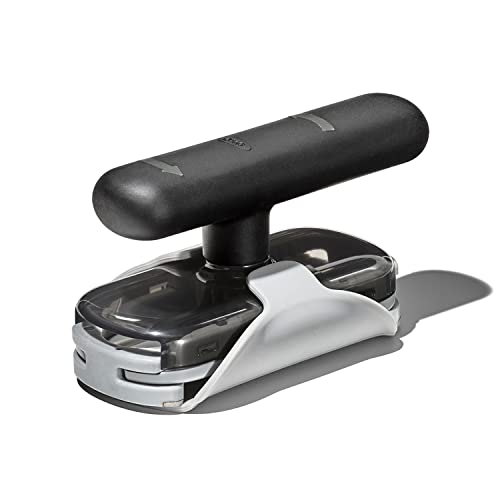
Pros
- Large handle gives arthritic hands more surface to grip
- Non-slip base pad helps hold pickle jars steady
- Sharp teeth bite into bottle and jar lids securely
- Twisting design adjusts from vanilla bottles to pickle jars
Cons
- Sharp teeth may leave marks on some softer lids
- Separate base pad adds one more piece to position
- May still require twisting strength for very tight seals

Pros
- Zigzag metal teeth add bite on tight jar lids
- Includes 3 screws for under cabinet mounting
- Opens small ketchup caps and large pickle jars
Cons
- Metal teeth may mark softer plastic lids
- Under cabinet mounting needs screw installation
A Closer Look at Our Top Pick
For many households, the most practical first choice is the OXO Good Grips Jar Opener because it combines leverage, a non-slip base pad, and sharp teeth that bite into bottle and jar lids. That matters when the person can still twist but needs a larger handle and a steadier jar. The separate base pad is a useful part of the design: it helps keep a pickle jar from sliding while the hand focuses on turning the lid. On paper, the twisting design adjusts from vanilla bottles to pickle jars, so it can cover more than 1 narrow cap size.
The trade-off is that this is still a manual opener. Very tight seals may still ask for some twisting strength, and the sharp teeth may leave marks on softer lids. It also has 2 pieces to position, which may not suit a person who wants 1 fixed spot in the kitchen. Still, for a caregiver choosing 1 everyday tool before moving to battery power or cabinet mounting, a large-handled jar opener with a non-slip base is a sensible middle ground.
Find Your Situation
- the LUTER 4pcs Jar: suits a person who needs 4 rubber pads for extra traction on lids, with 5 x 5 inch square pads for larger tops. Watch out: flat pads may not help much with very tight seals.
- the KITCHENMUH Electric Jar: suits a person who wants cordless help on compatible screw top lids from 1.2 to 3.5 inches. Watch out: it needs 2 AA batteries, and they are not included.
- the INSTACAN Higher Torque: suits a person who wants one-touch operation for twist-off lids from 1.2 to 3.5 inches. Watch out: wet or oily glass lids can slip during opening.
- the Otstar Jar Opener: suits a person who wants a slim 6-in-1 tool with 8 circular openings for 1 to 3 inch lids. Watch out: learning which opening to use may take practice.
- the OXO Good Grips: suits a person who can twist but needs a large handle and a non-slip base pad to steady the jar. Watch out: it may still require twisting strength for very tight seals.
- the UNINAI Jar: suits a person who wants a mounted opener in 1 steady kitchen spot, with zigzag metal teeth and 3 screws. Watch out: under cabinet mounting needs screw installation.
How We Narrowed It Down
We compared published specifications rather than handling the products, focusing on the parts that usually matter most in an older adult’s kitchen: lid range, grip surface, handle size, storage, and setup. We excluded choices that did not clearly explain how the tool grips, turns, or steadies a lid. We also gave less weight to tools that solve only 1 narrow cap problem unless they add a clear advantage, such as 4 gripper pads or under cabinet mounting with 3 screws. Because hand pain, weakness, or joint stiffness can have many causes, ask a doctor or physical therapist if jar opening has suddenly become hard or painful. For broader home safety habits, the National Institute on Aging notes that simple changes around the home can support steadier daily routines in its falls and falls prevention guidance.
What to Look For
Start with the kind of help the hand needs
Some people need friction, some need leverage, and some need the tool to do the turning. A 4 piece rubber set is useful when the person can twist but cannot get enough traction. A long handle or large handle helps when there is still enough wrist motion, but the hand needs more surface area. Battery power is worth considering when even a 1.2 inch lid is frustrating to turn.
Match the opener to the lids in the kitchen
Check the usual jars before choosing. Electric openers in this group fit compatible lids from 1.2 to 3.5 inches, while one manual 6-in-1 tool lists 1 to 3 inch lid openings. If your parent often opens pickle jars, vanilla bottles, and ketchup caps, a wider range matters more than a neat drawer shape. For mixed kitchens, a slim multi-opening jar and bottle tool can cover several small and medium lids.
For weak hands, reduce the number of jobs at once
Opening a jar asks 2 hands to do different jobs: one steadies the jar and one turns the lid. A non-slip base pad can reduce the work of holding the jar still. An under cabinet opener can put the gripping teeth in 1 fixed place, which may be easier than chasing a loose tool in a drawer, though some people also benefit from a separate grabber tool for other kitchen tasks. If a tool has 2 pieces, make sure the person is comfortable positioning both pieces before a meal.
For arthritis, avoid tiny grips and slippery setups
A larger handle can be easier to hold than a narrow ring or small tab. Rubber lining, textured pads, and metal teeth all add grip in different ways, but they are not equal for every lid. Wet or oily glass can make some electric openers slip, so the lid and gripping feet should be clean and dry. If the person has pain with twisting, a one-touch opener that uses 2 AA batteries may be easier to consider than another manual tool.
Before you buy, think about storage and setup
A drawer tool is easy to put away, but it has to be found each time. A mounted opener stays in 1 kitchen spot, but it needs screw installation with 3 screws. A 4 piece pad set can live in several places, such as near the stove or by a favorite breakfast jar. Choose the storage style the person will actually use during a regular meal.
When this is not enough, widen the support circle
If jar opening is only 1 of several kitchen tasks that have become harder, it may help to look beyond the tool itself. A caregiver can move frequently used jars to an easier shelf, loosen a lid before leaving, or switch to containers with friendlier tops. Local programs may also know about household supports, and the Eldercare Locator can connect older adults and caregivers to services by phone at 1-800-677-1116. The right answer may be 1 opener plus a few small kitchen changes.
Do not ignore the trade-offs in metal teeth
Metal teeth can bite into tight lids, which is useful when rubber alone is not enough. The same teeth may mark softer plastic lids, so they are better for function than for keeping lids tidy. A zigzag tooth design can handle small ketchup caps and large pickle jars, but mounting decides where the person must stand. If the kitchen has only 1 convenient prep spot, that fixed position can be an advantage.
Quick Tips for Choosing
- Choose rubber pads if the person mainly needs extra traction.
- Choose a large handle if the person can still twist with support.
- Choose battery power if turning the lid is the hard part.
- Check whether common lids are near 1 inch or closer to 3.5 inches.
- Keep wet or oily lids dry before using an electric opener.
- Pick mounted storage only if screw installation is acceptable.
Frequently Asked Questions
What type of jar opener is easiest for older hands?
The easiest type depends on whether the person needs friction, leverage, or powered turning. A rubber pad helps with grip, a large handle helps with leverage, and a 2 AA battery opener helps with twisting, while a grabber for arthritis may help reach items on high shelves.
Are electric jar openers better than manual ones?
Electric openers can be better when twisting is the main problem. Manual openers can be better when the person wants 1 simple tool with no batteries, much like how a back applicator can serve a single purpose without batteries.
What lid sizes should I check before buying?
Look at the jars used most often, especially small caps and larger food jars. Several options here cover ranges such as 1 to 3 inches or 1.2 to 3.5 inches.
Can a jar opener help with bottle caps too?
Some manual tools are made for both jars and bottles. A 6-in-1 design with 8 circular openings is meant to cover several cap and lid sizes.
Do rubber gripper pads work on tight seals?
Rubber pads add friction, which can help when the hand slips on the lid. They may not give enough leverage for a very tight seal.
Will metal teeth damage lids?
Metal teeth can leave marks on softer lids because they bite into the surface. That trade-off may be acceptable for a lid that is hard to open.
Are under cabinet jar openers hard to set up?
Under cabinet models need screw installation. One mounted option includes 3 screws, so it is best for a kitchen where a fixed opener location makes sense.
What if my parent has trouble holding the jar steady?
Look for a non-slip base pad or a mounted design. These approaches reduce the need to grip the jar and turn the lid at the same time.
Do electric jar openers need special care?
They work best when the lid and gripping parts are clean and dry. Some models require 2 AA batteries, so keeping spare batteries nearby is practical.
How many jar openers should a household have?
Many households do well with 1 main opener near the prep area. A 4 piece gripper pad set can be useful when help is needed in more than 1 spot.
Which One to Start With
If you are buying for your parent and want 1 balanced first try, start with the OXO Good Grips. It gives the hand a large handle, uses sharp teeth for lid bite, and includes a non-slip base pad to steady the jar. That combination is useful when the person can still twist but needs more control than a bare hand can provide. It is also easier to understand than a tool with 8 openings, which matters when the opener will be used during a real meal.
If twisting is the part your parent struggles with most, choose a one-touch electric opener for 1.2 to 3.5 inch lids instead. It uses 2 AA batteries and rotates automatically on compatible glass jar lids, so the hand does less turning. Just plan to keep lids dry and remember that the jar body fit is limited to 3.5 inches wide.
If the kitchen needs help in 1 fixed place, the UNINAI Jar is the better starting point. Its zigzag metal teeth and 3 screw under cabinet setup suit a person who wants to bring the jar to the opener, rather than search a drawer. For a simpler backup, a 4 piece rubber pad set is still worth considering, but it should not be the only plan for very tight seals.