

Medication routines get harder when dose times multiply, tablets look alike, or a caregiver can only refill a case once a week. The best pill dispensers for elderly shoppers are the ones that match the real routine first, then add reminders, locks, or larger compartments only when they help. After comparing 6 options on paper, I would start with the Windtrace Automatic Pill for a home routine that needs alarms and a longer refill cycle, or the Amazon Basic Care for a simple morning and evening plan. The right choice depends on how many daily doses the person takes, who fills the organizer, and how easily the person notices lights, sounds, and labels.

Pros
- 28 large compartments support longer refill intervals
- Includes 6 dosage rings for different schedules
- Food grade tray material for medication storage
- Runs on 4 AA batteries included in the package
Cons
- Programming may take practice for some older adults
- Loud alarm could bother light sleepers or shared rooms

Pros
- 7-day layout separates morning and evening doses
- Each compartment holds 12 aspirin sized tablets
- 7-day planner keeps a full week in one case
Cons
- Only 2 dose times per day, not midday or bedtime
- Large 12-tablet capacity may still crowd big capsules
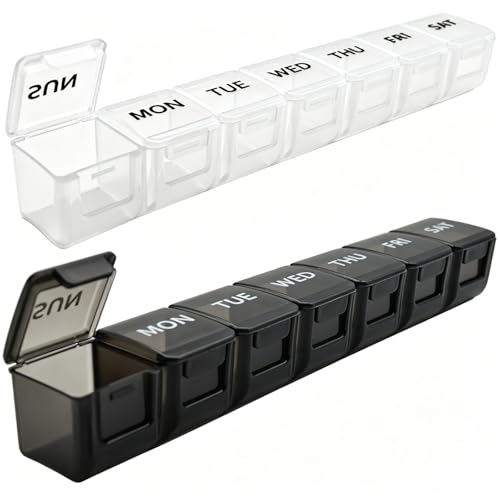
Pros
- Includes 2 travel medicine boxes for separate routines
- BPA-Free food grade material for daily pill storage
- Each compartment holds 10 fish oils or 12 vitamins
- 1.2 x 1.2 x 1.1 inch sections fit larger pills
Cons
- Only 7 compartments, so extra daily doses need another case
- Small labels may be harder to read for low vision users

Pros
- 28 compartments hold up to 24 aspirin-sized tablets each
- 6 interchangeable dosage rings support varied schedules
- Total capacity reaches 672 pills for longer refill cycles
- 3-button controls and clear LCD simplify setup
Cons
- Large capacity may feel bulky for travel or small counters
- Audible alerts may bother light sleepers or roommates
- Locked lid still requires key management by caregiver

Pros
- 14 lift-out boxes cover 7 mornings and evenings
- Alarm grows louder for 5 minutes at pill time
- Repeats every 30 minutes until box is opened
- 2 AA batteries last about 14 months
Cons
- Does not lock, so lids can be opened at any time
- Initial setup may need a caregiver or family member

Pros
- 28 compartments hold up to 672 aspirin sized pills
- 6 dosage rings support varied daily schedules
- 4 AA battery power keeps it cordless for travel
- Transparent lid includes LCD and mini magnifier
Cons
- Requires refilling and setup when prescriptions change
- Battery powered design depends on spare AA cells
- Compartments may be small for very large tablets
A Closer Look at Our Top Pick
The Windtrace Automatic Pill Dispenser is the most broadly useful starting point because it combines a 28 compartment tray, loud alarms, and a flashing blue light in one device. That matters when the person takes medicine or supplements on a schedule and needs a cue that is harder to overlook than a plain plastic box. The 28 compartments can support longer refill intervals, which may help a family member who visits on a regular schedule. It also includes 6 dosage rings, so the setup can be matched to different daily routines rather than forcing every household into the same pattern.
On paper, an automatic dispenser with 28 large compartments makes the most sense when someone else can help with programming at first. The trade-off is that setup may take practice, especially for an older adult who does not enjoy digital controls. The loud alarm can also be a poor fit for light sleepers or a shared bedroom. Still, for a home counter or bedside table, it offers a helpful mix of capacity, reminder cues, and included 4 AA batteries without making the routine depend on a phone.
Find Your Situation
- the Windtrace Automatic Pill: suits a person who needs a 28 compartment automatic tray with loud sound and a flashing blue light. Watch out: programming may take practice, and the alarm may be too loud in a shared room.
- the Amazon Basic Care: suits a simple 7-day routine with morning and evening tablets in large compartments. Watch out: it only covers 2 dose times per day, so midday or bedtime medicines need another plan.
- the MODENGKONGJIAN 2: suits travel or separate routines because it includes 2 weekly cases with 7 compartments each. Watch out: the small labels may be harder to read for someone with low vision.
- the EMP EZIMEDPIL EziMedPil: suits a caregiver-managed home routine that needs 28 compartments, a lockable frosted lid, and audible plus visual alerts. Watch out: the larger capacity can feel bulky on a small counter.
- the Med-Q Med: suits a 7 morning and evening routine where a flashing red light points to the right box. Watch out: it does not lock, so boxes can be opened at any time.
- the EMP EZIMEDPIL EziMedPil: suits a person who needs 28 compartments, audio and visual alarms, and a transparent lid with an LCD and mini magnifier. Watch out: battery power means someone needs to keep spare AA cells available.
How We Narrowed It Down
We compared published specifications rather than handling the products, so the focus stayed on routine fit, compartment count, reminder style, locking, readability, and caregiver workload. We excluded choices that did not clearly support an older adult or caregiver routine, and we gave less weight to organizers that could not separate at least a week of doses or clearly describe their schedule. A doctor or physical therapist can help decide whether a reminder device, a simpler organizer, or a broader home routine is the safer fit for the person. If balance, lighting, or the path to the medicine area is part of the concern, the National Institute on Aging has practical home safety guidance for falls and falls prevention that can be discussed with a clinician.
What to Look For
Start with the number of dose times
Count the dose times before choosing the container. A 7-day AM/PM organizer can work well when the person only needs morning and evening doses. If the routine includes midday or bedtime medicine, a 2-time layout may create extra sorting work. Automatic dispensers with 6 dosage rings can better match more varied schedules, as long as someone can set them correctly.
Match the refill cycle to the caregiver
A 28 compartment dispenser can stretch the time between refills for some routines. That can help when a family member fills the tray during a regular visit. A 7-day case is easier to understand, but it may need attention more often. Choose the cycle that the helper can maintain, not the one that sounds most convenient in theory.
Look at sound, light, and who will notice them
Some people respond best to a loud alarm, while others notice a flashing light first. The Windtrace model uses both a loud alarm and a flashing blue light, while the Med-Q design uses a flashing red light and an alarm that repeats every 30 minutes until the box is opened. These cues can be helpful, but they should fit the home. In a shared bedroom, a very loud alarm may bother another person.
Think about locks without overvaluing them
A lockable lid can help a caregiver keep a prepared tray in order. The EziMedPil 28-day locked model adds a frosted privacy lid and a lockable design, which may suit a household where medicines are prepared ahead of time. A lock is not a substitute for a clear refill process, because someone still has to manage the key. If the person opens compartments early, a locked automatic design may be more appropriate than an open weekly case.
Before you buy, check compartment size
Large tablets and capsules change the choice quickly. The Amazon Basic Care compartments hold 12 aspirin sized tablets, while the MODENGKONGJIAN sections measure 1.2 by 1.2 by 1.1 inches and hold 10 fish oils or 12 vitamins. If the person takes bulky supplements, do a careful count before choosing a small case. For a higher-capacity option, a locked automatic dispenser with 28 compartments may be easier to organize at home.
Choose labels the person can actually read
Labels matter as much as the tray. Small print can slow the person down, especially in dim light or early in the morning. Clear lids can make tablets easier to see, while a mini magnifier on a lid may help with checking the display. Eye care needs similar attention to readability: eye drop dispensers with clear markings help with accuracy just as readable labels help with pills. If labels are hard to read, use the simplest routine that still separates the needed dose times.
When this is not enough, add human support
A dispenser can organize doses, but it cannot decide whether a medicine schedule is still right. If the person is missing doses, opening boxes early, or feeling confused by a 7-day setup, it may be time to add more support. Local aging services can help families find practical options through Eldercare Locator or by phone at 1-800-677-1116. Bring the full medicine list to a clinician or pharmacist before changing any routine.
Quick Tips for Choosing
- Choose 7-day storage for simple weekly sorting.
- Choose 28 compartments when refills need to be less frequent.
- Use AM/PM layouts only for 2 daily dose times.
- Pick audible and visual alerts if one cue is often missed.
- Check whether a lock adds help or just adds key management.
- Keep spare AA batteries near any battery-powered dispenser.
Frequently Asked Questions
Are automatic pill dispensers better than weekly pill boxes?
They are better for some routines, not all routines. An automatic dispenser can help when the person needs timed alerts or 28 compartments, while a weekly box can be easier for a simple 7-day plan.
How many compartments should I choose?
Start with the number of dose times in a day, then multiply by the refill period. A 7-day AM/PM case covers 2 dose times per day, while a 28 compartment tray can support more schedule patterns.
Do locked dispensers make sense for every older adult?
No. A lock can help when a caregiver prepares doses and wants the tray to stay organized, but it also adds key management. If the person handles the whole routine independently, an unlocked 7-day case may be simpler.
What if my parent takes large capsules?
Check the compartment capacity before choosing. Some weekly cases list space for 10 fish oils or 12 vitamins, while some automatic trays list capacity by aspirin sized tablets, and compare pill cutters and crushers separately.
Are alarms useful if the person has hearing changes?
They can be, especially when paired with a visual cue. Look for designs that combine sound with a flashing light or clear display, then place the dispenser where the person will notice it.
Can a pill dispenser replace caregiver check-ins?
No. A dispenser can sort doses and provide reminders, but it cannot confirm whether the routine is still appropriate. Caregiver check-ins are still useful when prescriptions change or the person seems unsure, just as a pulse oximeter monitors health but does not replace medical judgment.
How often does a dispenser need refilling?
That depends on the layout and the number of daily doses. A 7-day organizer usually fits a weekly refill habit, while a 28 compartment tray may allow a longer interval for some schedules.
What is the easiest type to understand?
For many people, a 7-day case with morning and evening sections is the easiest. It shows the week at a glance and avoids programming, but it only fits 2 daily dose times.
Should I choose a travel case or a home dispenser?
Choose a travel case when the person needs a compact organizer for short trips or separate routines. Choose a home dispenser when alarms, lights, or 28 compartments matter more than portability.
What should I do when prescriptions change?
Refill the organizer only after confirming the new schedule with the prescriber or pharmacist. Any automatic dispenser also needs its rings, alarms, or compartment plan checked when the routine changes.
Which One to Start With
If you are choosing for a parent and feel stuck, decide by the routine rather than by features. For a typical home setup with several daily medicines and a caregiver who can help with programming, start with the Windtrace Automatic Pill. Its 28 compartments, 6 dosage rings, loud alarm, and flashing blue light make it the strongest first look for a schedule that needs more than a plain box. The main reason to skip it is also clear: if the person dislikes setup steps or shares a sleeping space, the loud alert may be a poor fit.
For a simpler morning and evening routine, choose a 7-day AM/PM organizer with large compartments instead. It avoids programming and keeps the week visible, with each compartment holding 12 aspirin sized tablets. For travel, split routines, or a backup case, the MODENGKONGJIAN 2 is the more practical option because it includes 2 separate weekly boxes. If the household needs a lock, privacy lid, and higher capacity at home, the EMP EZIMEDPIL EziMedPil is the better starting point, especially when a caregiver can manage refills and the key. For a person who benefits from a flashing red light pointing to the next box, the Med-Q style may be worth considering, but remember that it does not lock.