

Getting up from a standard toilet becomes harder as people age because it requires deep bending and strong leg strength. A raised toilet seat solves this by lifting the seating surface several inches higher, so your parent doesn’t have to bend as far or push as hard. Many models include padded armrests for extra stability during transfers. The best raised toilet seats for seniors combine secure installation, adequate weight capacity, and a design that fits your bathroom’s toilet shape. We compared published specifications across 6 leading models to help you find the right one for your situation.
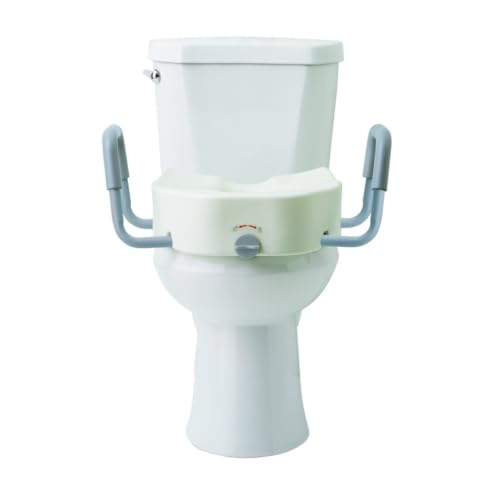
Pros
- 400 lb weight capacity supports users across a range of body types
- Removable armrests allow easy detachment for thorough cleaning
- 5-inch height elevation reduces strain when sitting and standing
- Plastic material resists moisture and bathroom humidity exposure
Cons
- Only fits elongated toilet bowls, not round or compact models
- Padded armrests may compress over time with daily use

Pros
- Adds 5 inches of height, reducing strain when sitting and standing
- 5 large slip-resistant pads provide stability and security
- Supports up to 300 pounds with durable, lightweight construction
- No assembly needed; lifts off easily for cleaning and portability
Cons
- Only fits round toilet seats, not oval or elongated models
- 5-inch height may feel too high for some users in standard bathrooms
- Pads may wear or lose grip over time with frequent cleaning

Pros
- Adds 5 inches of height to reduce strain when sitting or standing
- Removable padded arms provide adjustable support for different needs
- 300-pound weight capacity accommodates most users safely
- Tool-free installation works on almost any standard toilet
Cons
- At 5 inches high, may feel unstable for users needing maximum elevation
- 18-inch width between arms may be too narrow for larger individuals
- Requires regular cleaning with non-abrasive detergent for maintenance

Pros
- Extra-large 16.5-inch seat provides spacious seating surface
- Soft gray foam grips offer secure hand support for standing
- Non-slip rubber feet keep the riser stable during transfers
- Foldable design enables quick storage and portability
Cons
- Non-absorbent padded seat may feel cold or slippery when wet
- Adjustable legs require proper setup to prevent wobbling
- Extra height may make transfers difficult for very short users
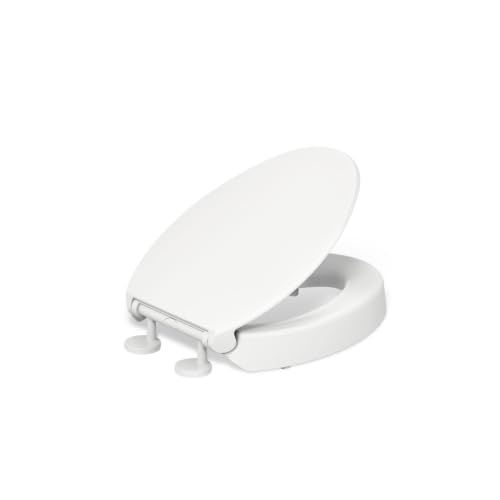
Pros
- 3-inch height elevation supports easier sitting and standing
- Quick-Release design allows simple removal for thorough cleaning
- Quiet-Close lid prevents loud slamming and startling
- Grip-Tight bumpers keep seat stable and prevent shifting
Cons
- Not returnable if packaging is opened, limiting trial options
- Fits only elongated toilets, not round bowl styles
- 3-inch height may feel too high for petite or shorter users

Pros
- Adjustable height range from 18.1" to 23" fits various users
- 400lb weight capacity accommodates most seniors safely
- Padded seat with non-slip rubber leg pads prevent sliding
- Armrests and welded support structure offer stable transfers
Cons
- Requires measuring toilet dimensions before purchase to ensure fit
- Padded seat requires regular cleaning to maintain hygiene
A Closer Look at Our Top Pick
The Medline 5 stands out for people who want a durable, secure option with genuine accessibility features. It lifts the seat 5 inches, which matches the height reduction most people find helpful without feeling too high. The padded armrests are removable, so your parent can detach them for cleaning or if they prefer a lower profile. The front clamping mechanism locks the seat firmly to the toilet bowl, which matters because stability during transfers is essential for safety.
This model supports up to 400 pounds, making it suitable for a wide range of body types. The plastic construction resists moisture and bathroom humidity, so it won’t degrade from daily shower spray or moisture exposure. One thing to keep in mind: it only fits elongated toilet bowls. If your bathroom has a round or compact bowl, this won’t work. The padded armrests may compress over time with daily use, though they remain functional. For households with an elongated toilet and someone who values secure installation and removable components for cleaning, this is a practical starting point.
Find Your Situation
- the Medline 5: Elongated bowls, secure locking, 400-pound capacity. Watch out: won’t fit round or compact toilets.
- the HealthSmart 5: Round bowls, no assembly, portable. Watch out: 300-pound capacity and pads may wear over time.
- the Drive Medical 2: Any standard toilet, removable arms, tool-free. Watch out: 18-inch width may be tight for larger frames.
- the Medical king Toilet: Extra-large 16.5-inch seat, foldable, 400-pound capacity. Watch out: padded seat may feel cold or slippery when wet.
- the KOHLER Hyten 3: Elongated bowls, quiet-close lid, 3-inch height. Watch out: lower height may feel too high for shorter users, not returnable if opened.
- the HOMLAND Toilet Seat: Adjustable 18.1 to 23 inches, 400-pound capacity. Watch out: requires measuring before purchase.
How We Narrowed It Down
We compared published specifications from the manufacturer data for each model, focusing on weight capacity, height elevation, bowl shape compatibility, and the availability of armrests or grip features. We did not handle or test the products ourselves. We excluded models with weight capacities below 300 pounds, since they don’t accommodate a full range of body types. We also prioritized designs that either lock securely or include slip-resistant pads, because stability during transfers is non-negotiable. If your parent has significant pain or weakness when standing, a conversation with their doctor or physical therapist can help identify whether a raised toilet seat, a grab bar, or a combination of both would work best. The National Institute on Aging offers guidance on fall prevention and bathroom safety modifications.
What to Look For
Height matters more than you’d think
Most models add either 3 or 5 inches. A 5-inch lift is a standard choice because it reduces strain for many people without making the toilet feel oddly high. However, someone who is very short or has limited hip flexibility might feel more stable with a 3-inch lift. The Eldercare Locator can connect you with occupational therapists in your area who can assess your parent’s specific needs. A 5-inch height typically works well in standard bathrooms; going higher requires more space and may make transfers harder.
Check your toilet bowl shape first
Toilet bowls come in three main shapes: elongated, round, and compact. An elongated bowl is about 2 inches longer and holds a raised seat that is wider. A round bowl is smaller all around. Before you buy, measure your toilet or look at the tag under the rim. Many people don’t realize they have a round bowl until they try to fit an elongated seat. Buying the wrong shape means returning it and waiting for a replacement.
Weight capacity must cover your parent and then some
Look for at least 300 pounds, ideally 400 pounds. Even if your parent weighs less, a higher capacity means the seat can handle the shifting weight during sitting and standing without flexing or moving. Six of our options support either 300 or 400 pounds. That margin of safety is important for stability.
Armrests reduce the load on legs and arms
Padded armrests let your parent push off with their arms while standing, reducing strain on weak or arthritic legs. Some models have removable armrests, which is helpful for cleaning or if your parent prefers the toilet without them. Others have fixed arms. Consider whether your parent uses armrests; some people find them helpful, while others prefer an open design.
Securing method: locking versus friction pads
Some raised seats clamp or lock to the toilet bowl to prevent shifting. Others use slip-resistant pads on the bottom. Locking mechanisms are more secure and don’t loosen over time. Friction pads are simpler to install and remove but may wear or lose grip with repeated cleaning. For someone with balance concerns, a locking mechanism offers extra peace of mind.
Before you buy, confirm the toilet is accessible
Make sure there’s enough space around the toilet for your parent to move safely. Some bathrooms have vanities, walls, or narrow spaces that can make transfers difficult even with a raised seat. If your parent uses a walker or wheelchair, ensure the chair can fit close enough. A few inches of clearance on at least one side makes a big difference during transfers, as can raised commode chairs.
When this height is not enough
If a raised toilet seat alone doesn’t help, your parent may benefit from grab bars mounted to the wall beside or behind the toilet, or toilet safety rails. Grab bars provide upper body support and can be combined with a raised seat. A wall-mounted bar is a permanent installation, so it’s worth discussing with your parent before committing. Some people use both a raised seat and a grab bar for maximum security and confidence.
Quick Tips for Choosing
- Measure your toilet bowl shape and dimensions before ordering.
- Check that the seat height isn’t so high your parent’s feet dangle uncomfortably.
- Confirm armrests (if included) don’t interfere with wheelchair or walker access.
- Look for slip-resistant pads on the bottom to prevent sliding on tile or linoleum.
- Plan for regular cleaning; padded seats need non-abrasive detergent to stay hygienic.
- If your parent lives in two homes, consider a portable model that’s easy to remove and reinstall.
Frequently Asked Questions
Are raised toilet seats covered by insurance or Medicare?
Some Medicare Advantage plans or Medicaid programs may cover raised toilet seats if prescribed by a doctor, but coverage varies by state and plan. Contact your parent’s insurance provider to ask about durable medical equipment benefits. Even if insurance doesn’t cover it, raised seats are relatively affordable compared to bathroom renovations.
Can I install a raised seat myself?
Yes, most models are designed for DIY installation. Some clamp on without tools; others require a wrench to tighten bolts underneath the toilet. Follow the manufacturer’s instructions carefully. If your parent isn’t comfortable doing it themselves, ask a family member or a handyperson to help.
Will a raised seat fit in a small bathroom?
Most raised seats add only a few inches to the overall height and don’t change the width much. However, some models with large seats or wide armrests may take up more space. If the bathroom is very tight, measure the space in front of and beside the toilet to make sure your parent can sit and stand safely.
How do I clean a raised toilet seat?
Most raised seats are made of plastic or have removable padded components. Wipe the seat with a soft cloth and mild soapy water or a disinfectant spray. Avoid abrasive scrubbers, which can scratch the surface. If the seat has removable armrests or a detachable pad, take them off for a thorough wash.
What if my parent finds the seat too high?
A 5-inch seat may feel too high for some people, especially those under 5 feet 4 inches tall or with limited hip mobility. If that happens, look for a 3-inch model instead, or compare tall toilets. You can also add a small footrest in front of the toilet so your parent’s feet don’t dangle uncomfortably.
Can I use a raised seat on a toilet with a bidet function?
Many modern toilets have integrated bidet seats or electronic features. Check the toilet’s manual to see if a raised seat can be safely installed without blocking or damaging the mechanism. Some raised seats won’t work on these toilets, so measure and research compatibility first.
How long does a raised toilet seat last?
With regular cleaning and proper installation, most raised seats last 3 to 5 years or longer. Padded armrests may compress over time, but the seat remains functional. If the plastic cracks, the seat becomes wobbly, or the padding deteriorates enough to be uncomfortable, it’s time to replace it.
Is a raised seat safe for everyone?
Raised seats are designed for people with mobility challenges, but they’re not right for everyone. Toddlers or very young children should not use an adult raised seat without close supervision. If your parent has severe balance issues or cognitive impairment, they may need additional support like grab bars or a caregiver nearby.
What’s the difference between a raised seat and a toilet frame?
A raised seat sits on top of the existing toilet and lifts the seating surface. A toilet frame (or commode frame) is a separate stand with legs that goes around the toilet and includes armrests and a seat. Frames take up more space but offer a complete support structure. A raised seat is more compact and is a good first step for many people.
Can I return a raised toilet seat if it doesn’t work?
Return policies vary by retailer and manufacturer. Some products have restrictions, such as not being returnable if the packaging is opened. Check the return policy before buying, especially if your parent wants to try it at home first. Some retailers offer trial periods or satisfaction guarantees.
Which One to Start With
If your parent has an elongated toilet and wants the most secure, stable option, start with the Medline 5. The front locking mechanism keeps the seat firmly in place, and the 400-pound capacity covers most users. The removable armrests are a nice touch for cleaning. This is a traditional, no-frills choice that prioritizes stability and durability.
If your parent has a round toilet and prefers a simpler setup with no tools or assembly, the HealthSmart 5 is straightforward. It lifts off easily for cleaning and is portable if your parent travels between homes. The slip-resistant pads keep it from sliding, though they may wear over time. At 300 pounds capacity, it works for most people, but the 5-inch height may feel high in a standard bathroom.
If your parent is on the larger side or wants the most spacious seating surface, consider the Medical king Toilet. The 16.5-inch seat is noticeably wider than standard models, and the 400-pound capacity is reassuring. The foldable design means it stores easily if needed. One trade-off: the padded seat may feel cold or slippery when wet, so keep towels handy and clean it regularly to prevent the surface from becoming slick.
If your parent is very short or prefers a more modest height increase, the KOHLER Hyten 3 adds only 3 inches and includes a quiet-close lid that prevents slamming. It’s designed for elongated toilets and is made by a trusted brand. However, note that it’s not returnable if the packaging is opened, so make sure before you commit.
If you’re not sure about the exact height your parent needs or want maximum flexibility, the HOMLAND Toilet Seat adjusts from 18.1 to 23 inches, so you can fine-tune the height after installation. The 400-pound capacity is solid, and the non-slip rubber pads prevent sliding. The tradeoff is that you’ll need to measure your toilet carefully and adjust the legs during setup to avoid wobbling.
A raised toilet seat is a practical, low-cost first step. Most people notice an immediate difference in comfort and confidence. If your parent remains hesitant or struggles even with a raised seat, ask their doctor whether additional aids like grab bars or a full toilet frame might help.