

Getting started is often less about motivation and more about fit: a seat that feels steady, pedals that do not ask for awkward reaching, resistance that begins gently, and controls that make sense from a seated position. The best recumbent bikes for seniors should make home movement feel simple enough to repeat, especially when your parent shares a living room, needs a supportive backrest, or wants numbers they can read at a glance. After comparing the 6 options here, the Birdfeel Recumbent stands out for its 16 resistance levels and padded seat, while the MERACH Recumbent Exercise fits a wide 4’11” to 6’5″ height range with quiet 25dB operation.

Pros
- 10 lb flywheel supports smooth magnetic resistance
- 16 resistance levels for gentle to harder rides
- LCD tracks speed, time, distance, calories, and pulse
- 85% pre-assembled for faster home setup
- Padded seat and ergonomic backrest add comfort
Cons
- May still require caregiver help during 30-minute setup
- Recumbent frame can take up noticeable floor space

Pros
- 3-level handlebar height and 2 angle settings
- Adjustable seat fits riders 4'11" to 6'5"
- Breathable seat is 100% thicker for comfort
- 330 lb capacity supports many household users
- Sub-25dB operation is quiet for shared rooms
Cons
- App pairing may frustrate users who avoid phones
- Arm handles add setup adjustments before each ride
- Large recumbent frame may be hard to move or store
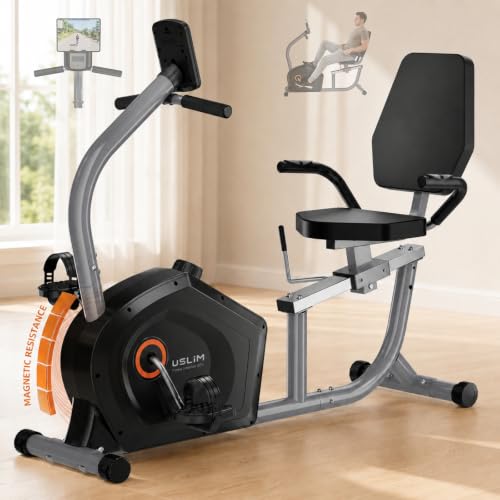
Pros
- 16 magnetic resistance levels for varied daily rides
- 400 lb capacity on a commercial-grade steel frame
- 12.60-inch adjustable seat range supports shared use
- LCD monitor tracks 6 workout metrics in real time
Cons
- Assembly still requires about 30 minutes of setup
- LCD display may feel basic compared with app consoles
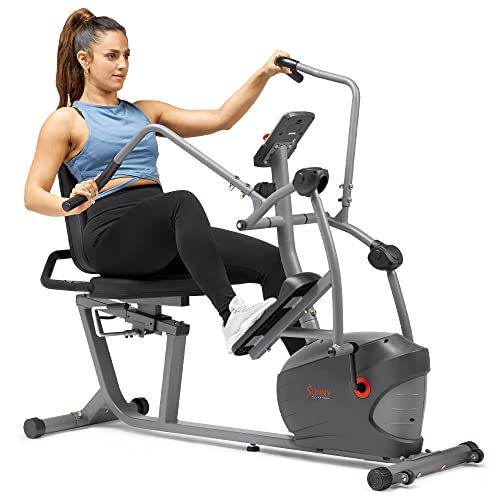
Pros
- 8 magnetic resistance levels for gradual intensity
- 1,000+ trainer-led workouts in SunnyFit app
- 10,000+ virtual scenic tours add variety
Cons
- App features may feel unnecessary for offline exercisers
- Moving handles may be tiring during longer sessions

Pros
- 16 magnetic resistance levels for varied intensity
- Runs under 25dB for very quiet home riding
- Steel frame supports riders up to 350 lbs
- LED display tracks time, speed, and distance
Cons
- Recumbent footprint may take more floor space
- Manual 16-level resistance requires reach and turning

Pros
- 8 magnetic resistance levels for varied effort
- Steel frame supports users up to 380 lbs
- Sliding seat fits heights from 4’9” to 6’3”
- LCD tracks time, speed, distance, calories, pulse
Cons
- Arm exerciser may feel awkward for users with shoulder pain
- Larger recumbent frame needs dedicated floor space
A Closer Look at Our Top Pick
The Birdfeel Recumbent is the easiest starting point for many households because it keeps the important parts straightforward. Its 10 lb flywheel supports smooth magnetic pedaling, and the 16 resistance levels give your parent room to begin lightly and make small changes over time. The LCD tracks speed, time, distance, calories, and pulse, which is enough feedback for most home routines without making the console feel like a project. The padded seat and ergonomic backrest also matter because comfort often decides whether the bike gets used more than once.
Caregivers should still plan on helping with setup. The bike is 85% pre-assembled, but the listed setup time is about 30 minutes, and a recumbent frame can take noticeable floor space. That trade-off is common in this category: a lower, seated riding position tends to feel more stable, but it is not as compact as a small upright machine. If you want one practical place to begin, a quiet magnetic bike with 16 levels and pulse tracking is a sensible first comparison point before looking at larger frames or arm exercisers.
Find Your Situation
- the Birdfeel Recumbent: suits a person who wants 16 resistance levels, a 10 lb flywheel, pulse sensors, and an 85% pre-assembled frame. Watch out: setup may still take about 30 minutes and may go better with caregiver help.
- the MERACH Recumbent Exercise: suits shared homes because the seat fits riders from 4’11” to 6’5″, the capacity is 330 lb, and operation is under 25dB. Watch out: app pairing may frustrate a person who prefers not to use a phone.
- the USLIM Recumbent: suits households that want a 400 lb capacity, 16 resistance levels, and a 12.60-inch adjustable seat range. Watch out: the LCD display may feel basic if your parent expects app-style coaching.
- the Sunny Health & Fitness Sunny: suits a person who wants seated cardio with moving handles, 8 resistance levels, and app variety through 1,000+ trainer-led workouts. Watch out: the moving handles may feel tiring during longer sessions.
- the CURSOR FITNESS Recumbent: suits quiet daily riding with 16 resistance levels, under 25dB operation, and a 350 lb capacity. Watch out: the manual resistance knob requires reaching and turning.
- the ECHANFIT Recumbent: suits a shared household that wants 8 resistance levels, a 380 lb capacity, and a sliding seat for heights from 4’9″ to 6’3″. Watch out: the arm exerciser may feel awkward for a person with shoulder pain.
How We Narrowed It Down
We compared published specifications rather than handling the products, so the focus stayed on details a family can verify before ordering: resistance levels, seat adjustment, weight capacity, display information, noise ratings, setup notes, and whether the frame has transport wheels or moving handles. We excluded options that did not clearly fit the seated, low-impact home cycling category, and we gave less weight to features that depend heavily on app comfort. We also looked for practical limits, such as 30-minute assembly, large recumbent footprints, or controls that require reaching from the seat. Before starting a new exercise routine, especially if the person has pain, dizziness, recent surgery, or a new diagnosis, ask a doctor or physical therapist what range of motion and effort level make sense. The National Institute on Aging has plain guidance on staying steady and active in daily life through falls and falls prevention resources.
What to Look For
Start with the seat, not the screen
A recumbent bike only works well if your parent can sit comfortably for the whole session. Look for a padded seat, a backrest, and an adjustment range that matches the person who will ride most often. A 12.60-inch seat adjustment range, a 4’11” to 6’5″ fit range, or a 4’9″ to 6’3″ sliding seat can make shared use easier. Screens are helpful, but a comfortable seated position matters first.
Choose resistance that begins gently
Magnetic resistance is common in these picks because it allows seated pedaling without a lot of noise. A bike with 16 resistance levels gives smaller steps between easy and harder rides than one with 8 levels. That does not mean 16 is always better for every person. It simply gives more room to adjust effort in small amounts.
Make sure the bike fits the room
Recumbent frames take more floor space than many three-wheel bikes because the seat sits behind the pedals. If the bike will stay in a living room or bedroom, measure the route and decide where it can remain between sessions. Transport wheels can help caregivers reposition the frame, but they do not make a large bike disappear. A quieter option under 25dB may matter if someone watches TV nearby or shares the room.
Think about hands and shoulders
Some recumbent bikes add moving handles or an arm exerciser, which can make a seated workout feel more complete. That can be useful for a person who wants upper-body movement, but it may be too much for someone with shoulder discomfort. The recumbent bike with an arm exerciser and 8 magnetic levels is worth comparing if your parent specifically wants arms and legs involved. If the person mostly wants simple pedaling, fixed handles may feel calmer.
Before you buy, picture the first 30 minutes
Setup is part of the buying decision, not an afterthought. One bike here is 85% pre-assembled, while others still list about 30 minutes of assembly. If your parent lives alone, plan who will bring the box inside, attach parts, and adjust the seat the first time. For those seeking alternative options, e-bikes for senior women may also be worth considering. The easier that first session feels, the more likely the bike becomes part of a routine.
Match the display to the person
A simple LCD that shows time, speed, distance, calories, and pulse may be enough for many older adults. App features can add variety, including 1,000+ trainer-led workouts and 10,000+ scenic tours, but they also add pairing steps. If your parent avoids phones, a basic console may be less frustrating. If a family member helps with technology, app content can make repeat sessions feel less repetitive.
When this is not enough support
A home bike is only one piece of staying active at home. If your parent needs help finding local transportation, caregiver programs, or community support, the Eldercare Locator can connect families with local services and can also be reached at 1-800-677-1116. If the person cannot get on or off a recumbent seat comfortably, pause the purchase and ask a clinician or local support professional about safer setup options. A bike with a 400 lb capacity or a wide height range still has to match the person and the room.
Quick Tips for Choosing
- Pick 16 resistance levels if small effort changes are important.
- Choose 8 resistance levels if simple controls matter more.
- Measure the floor space before ordering a recumbent frame.
- Plan for about 30 minutes of setup when assembly is listed.
- Look for under 25dB operation in shared rooms.
- Skip arm exercisers if shoulder movement feels uncomfortable.
Frequently Asked Questions
Is a recumbent bike easier to use than an upright bike?
For many older adults, the seated position and backrest can feel more comfortable than leaning forward on an upright bike. The trade-off is that a recumbent frame usually takes more floor space.
How many resistance levels are enough?
An 8-level bike can be enough for simple daily pedaling. A 16-level bike gives smaller steps between gentle and harder effort, which can help when the person wants gradual changes.
Do pulse sensors replace medical monitoring?
No. Pulse sensors can give a general workout number on the display, but they do not diagnose or manage a medical condition. Ask a doctor what effort range is appropriate if there are health concerns.
Are app workouts necessary?
No. App workouts can add variety, including trainer-led sessions or scenic tours, but many people prefer a simple LCD and a familiar routine. Choose based on how comfortable your parent is with a phone or tablet.
What weight capacity should I choose?
Choose a bike with a capacity above the rider’s current weight, using the product’s listed limit. In this group, capacities include 330 lb, 350 lb, 380 lb, and 400 lb options.
Can one bike work for multiple family members?
Yes, if the seat adjustment range fits each rider. Height ranges such as 4’11” to 6’5″ or 4’9″ to 6’3″ are helpful when more than 1 person will use the bike.
How quiet should a home bike be?
If the bike will sit in a shared room, look closely at noise information. A rating under 25dB is a useful target for watching TV, talking, or riding while someone else is nearby.
Is a bigger flywheel always better?
Not always. A 10 lb flywheel can support smooth magnetic resistance, but comfort, seat fit, and control placement may matter more for an older rider.
Should I choose moving handles?
Moving handles can add upper-body activity while seated. They may also feel tiring or awkward for a person with shoulder discomfort, so consider whether arm movement is truly wanted.
How long does assembly usually take?
Some bikes may still require about 30 minutes of setup, even when much of the frame is pre-assembled. It is wise to have a caregiver or family member available for the first adjustment and ride.
Which One to Start With
If you are choosing for most households and want a balanced first pick, start with the Birdfeel Recumbent. Its 16 resistance levels, 10 lb flywheel, padded seat, ergonomic backrest, pulse sensors, and 85% pre-assembled frame cover the features many families ask for first. The main caution is the same one that comes with many recumbent bikes: expect about 30 minutes of setup and make room for the frame.
If height range and quiet operation matter more, choose the recumbent bike that fits riders from 4’11” to 6’5″. It also runs under 25dB and has a 330 lb capacity, which makes it a strong shared-room option. The moving handles and app pairing add more to adjust, so it is best when a family member can help dial in the first ride.
If weight capacity is the deciding factor, start with the USLIM Recumbent because its listed capacity is 400 lb and it still offers 16 magnetic resistance levels. If your parent wants arm movement, consider the 8-level arm-exerciser style instead, but avoid forcing that choice if shoulders are sensitive. For a quiet, simple daily ride without app pressure, a 16-level magnetic bike with under 25dB operation is also a practical path.