

Small differences in frame weight, wheel size, seat height, and handle range can change whether a rollator feels helpful on a normal day or awkward at the door, car, or sidewalk. The best rollators for seniors should match the person first, then the setting: tight rooms, uneven paths, longer errands, or short trips from chair to car. After comparing published specifications, the HOMLAND Foldable Rollator stands out for its 17.6 lb frame, 350 lb recommended user limit, and 33-40 in handles. For someone who wants a lighter lift, the Medline Rolling Walker is 12.6 lb with 6 in wheels and a 250 lb capacity.

Pros
- 17.6 lb Aluminum Alloy frame is lighter to lift
- 350 lb recommended limit with double support bars
- 8-inch rubber wheels suit indoor and outdoor paths
- 33-40 in handle height fits a wide user range
Cons
- 17.6 lb may still feel heavy for car loading
- 8-inch wheels can be bulky in tight indoor spaces

Pros
- 350 lb weight rating supports larger users
- 8-inch puncture-proof tires handle uneven ground
- 1.6-inch waterproof seat adds padded comfort
- 3 braking modes cover free, deceleration, and stop
Cons
- 22 lb frame may feel heavy for some users to lift
- 8-inch wheels may be bulky in very tight rooms

Pros
- 12.6 lb frame is lighter for lifting into cars
- Aluminum frame folds for transport and storage
- Handles adjust from 29.5 to 36 in for fit
- 12 x 12 in padded seat includes under-seat storage
Cons
- 250 lb capacity may not suit some larger users
- 6 in wheels can feel small on rough outdoor paths
- 12 x 12 in seat may feel narrow for longer rests

Pros
- 17.6 lb aluminum frame is lighter than many rollators
- 350 lb capacity supports a wide range of users
- 33-41 inch handles adjust for different heights
- 8 inch wheels suit sidewalks, grass, and gravel
Cons
- 17.6 lb weight may still be heavy for some caregivers
- 8 inch wheels can feel bulky in tight indoor spaces
- Seat may be narrow for users near the 350 lb limit
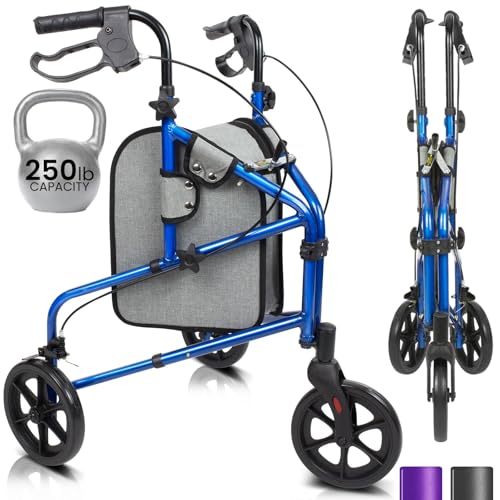
Pros
- 3-wheel layout is narrow for tight indoor turns
- Foldable 3-wheel frame fits more easily in a car
- Height-adjustable handles improve 3-wheel brake reach
- Removable grey bag adds storage to the 3-wheel walker
Cons
- 3-wheel design may feel less steady than 4-wheel models
- Grey storage bag may need removal for compact folding
- Cross-brace frame still takes space in small car trunks

Pros
- 300 lb recommended capacity with triangular frame
- Arc memory foam seat has widened thick padding
- Seat adjusts from 20 to 23 inches for fit
- Handles adjust from 33 to 40 inches
- 8-inch wheels suit gravel and uneven paths
Cons
- 8-inch wheels may feel bulky in tight indoor spaces
- 300 lb capacity may not suit larger users
- Seat height range may be high for very short users
A Closer Look at Our Top Pick
The HOMLAND Foldable Rollator is the one I would start with for many households because it balances lift weight, capacity, and adjustability without leaning too far in one direction. Its 17.6 lb aluminum alloy frame is lighter than heavier full-size models, while the 350 lb recommended user limit gives caregivers a wider fit range to consider. The 33-40 in handle range also matters because hand position affects posture, brake reach, and how natural the rollator feels during a short walk across a room or a longer outing.
The seat range is another reason it rises to the top on paper. A 20-23 in seat can help the person find a resting height that feels steadier than a seat that is too low or too high. The 8 in rubber wheels are a practical middle ground for indoor floors and outdoor paths, though they can feel bulky in tighter rooms. If your parent often rides in a car, remember that 17.6 lb may still take two hands to lift into a trunk. For a broad everyday option, this 17.6 lb rollator with a 350 lb recommended limit is the clearest first comparison.
Find Your Situation
- the HOMLAND Foldable Rollator: suits someone who wants a 17.6 lb frame, 350 lb recommended limit, 33-40 in handles, and a 20-23 in seat for broad adjustment. Watch out: the 8 in wheels can be bulky in tight indoor spaces.
- the VOCIC Z21 Rollator: suits the person who wants 8 in puncture-proof tires, a 350 lb weight rating, a 1.6 in waterproof seat, and 3 braking modes. Watch out: the 22 lb frame may feel heavy for lifting.
- the Medline Rolling Walker: suits caregivers who prioritize a 12.6 lb folding aluminum frame, 6 in wheels, and 29.5-36 in handles for easier car trips. Watch out: the 250 lb capacity and 12 x 12 in seat may not suit everyone.
- the HOMLAND Foldable Walker: suits outings where a 17.6 lb aluminum frame, 350 lb capacity, 33-41 in handles, and 8 in wheels are useful. Watch out: the seat may feel narrow for someone near the 350 lb limit.
- the Vive Mobility 3: suits narrow indoor turns, car trips, and daily mobility where a foldable 3-wheel layout and height-adjustable handles are priorities. Watch out: a 3-wheel design may feel less steady than a 4-wheel model.
- the soundfuse Foldable Rollator: suits someone who wants a 16 in ergonomic arc seat, 300 lb recommended capacity, 20-23 in seat adjustment, and 33-40 in handles. Watch out: the seat height range may be high for a very short person.
How We Narrowed It Down
We compared published specifications rather than handling the products, focusing on the numbers that matter most in daily use: frame weight, stated capacity, handle height, seat size or seat height, wheel size, folding design, and braking details. We excluded products that did not fit the rollator category, did not include seated support when that was central to the design, or did not offer enough practical fit information for a caregiver to compare. A doctor or physical therapist can help decide whether a rollator is appropriate for your parent and can check fit before regular use. The National Institute on Aging notes that balance, vision, medicines, and home setup can all matter in fall-related conversations, so it is worth reviewing its falls and falls prevention guidance while you compare mobility aids.
What to Look For
Start with the lift, not the label
A rollator that looks right on paper still has to be lifted into a car, turned in a hallway, and stored between uses. The lightest option here is 12.6 lb, while the heaviest listed frame is 22 lb. That spread matters if one caregiver handles loading alone. If car trips are frequent, a folding aluminum frame may matter as much as seat comfort.
Match the wheels to the places your parent actually goes
Wheel size changes the feel of a rollator on sidewalks, gravel, grass, and tight kitchen corners. Models with 8 in wheels are better suited to uneven paths than 6 in wheels on paper, but they can feel bulky in small rooms. If most walking is indoors, the smaller turning feel may be more useful than outdoor reach. If errands include rough pavement, consider 8 in puncture-proof tires with a 350 lb rating as a comparison point.
Seat height matters during real breaks
A seat is not just a convenience if your parent pauses often during errands or hallway walks. Seat heights in this group include 20-23 in and 20-22 in ranges, while one padded seat measures 12 x 12 in. A seat that is too low can make standing harder, while a seat that is too high can feel awkward. Check the seat height against the person’s usual chair before deciding.
For older adults sharing help with family, adjustability is not optional
Handle height affects hand position, shoulder comfort, and brake reach during everyday walking, just as with canes for seniors. The ranges here include 29.5-36 in, 33-40 in, and 33-41 in. A taller person may need the upper end of those ranges, while a shorter person may need to avoid a handle that starts too high. If more than 1 family member adjusts the rollator, simple height settings are worth prioritizing.
Before you buy, picture the narrowest doorway
The tightest part of the home often decides whether a rollator feels natural. A 3-wheel layout can help with narrow indoor turns, while 8 in wheels may take more space around furniture. Folding helps with storage, but a cross-brace frame can still take room in a small trunk. Walk through 2 daily routes in your mind before choosing: bed to bathroom and door to car.
When this is not enough, bring in local help
A rollator is only one part of a daily support plan, and it may not answer every mobility need. If your parent needs help beyond choosing a product, the Eldercare Locator can connect older adults and caregivers with local services by phone at 1-800-677-1116. A physical therapist can also check whether the person’s posture, brake reach, and turning pattern fit the device. That kind of local guidance can be useful before regular use begins.
Capacity should leave room for comfort
Stated capacities here include 250 lb, 300 lb, and 350 lb. Capacity is not the only fit detail, because seat width, seat height, and handle range also affect comfort. Someone near the upper end of a listed capacity may want a wider-feeling seat and a sturdier frame design. For seated breaks, compare both the number and the shape, such as a 16 in ergonomic arc seat with 300 lb recommended capacity.
Quick Tips for Choosing
- Choose 12.6 lb if lifting is the main concern.
- Choose 8 in wheels for more outdoor paths.
- Choose 6 in wheels for tighter indoor handling.
- Check handle height before seat comfort.
- Compare the seat to a chair your parent likes.
- Ask a clinician about fit before regular use.
Frequently Asked Questions
What size wheels are better for indoor use?
Smaller 6 in wheels can feel easier to manage in tight rooms and around furniture. Larger 8 in wheels may handle outdoor paths better, but they can feel bulkier indoors.
Is a lighter rollator always better?
Not always. A 12.6 lb frame is easier to lift, but a heavier 22 lb frame may come with features some people value, such as larger wheels or added seat padding.
What capacity should I look for?
Compare the person’s weight with the stated capacity, such as 250 lb, 300 lb, or 350 lb. Also look at seat size and frame shape because comfort is not only about the capacity number.
How high should the handles be?
The handles should allow a natural arm position and reachable brakes. Published handle ranges in this group include 29.5-36 in and 33-41 in, so measure carefully.
Is a 3-wheel rollator a good choice?
A 3-wheel design can be helpful for narrow turns and car trips. It may feel less steady than a 4-wheel design, so the person’s confidence and walking pattern matter, as with quad canes.
Are rollator seats all the same?
No. Seats can differ by height, padding, width, and shape, including 12 x 12 in padded seats and 16 in arc-style seats. The right seat should feel reasonable for short rests.
Can a rollator go on gravel?
Some 8 in wheels are described for gravel or uneven paths, where walking poles may also be compared. Even so, outdoor surfaces vary, so the person should move slowly and avoid routes that feel awkward.
What braking details matter?
Brake reach matters as much as brake type. One model lists 3 braking modes, but any brake should be easy for the person to reach and understand.
How much should caregivers focus on folding?
Folding matters if the rollator goes into a trunk, closet, or narrow entryway. A foldable frame can help, but wheel size and cross-brace shape still affect stored space.
Should I ask a professional before buying?
Yes, especially if your parent has changing strength, balance, vision, or medication needs. A doctor or physical therapist can help confirm whether a rollator and its fit make sense.
Which One to Start With
If you want one place to begin, start with the HOMLAND Foldable Rollator. Its 17.6 lb frame, 350 lb recommended user limit, 33-40 in handles, and 20-23 in seat give it the broadest middle ground for many families. It is not the lightest choice, and the 8 in wheels may feel large in tight rooms, but it gives you a strong baseline for comparing fit, capacity, and outdoor use.
If lifting into a car is the daily problem, choose the 12.6 lb folding aluminum rollator instead. The 6 in wheels and 250 lb capacity make it less broad in use, but the lower frame weight can matter a lot for errands and storage. If your parent spends more time outside on uneven paths, the VOCIC Z21 Rollator is the better starting point on paper because it lists 8 in puncture-proof tires, a 350 lb rating, and 3 braking modes. For narrow rooms and car trips, a 3-wheel design deserves a look, but it should be chosen only if the person is comfortable with that steadier-or-nimbler trade-off. The right first choice is the one that fits the person, the home, and the helper who lifts it.