

Thick toenails become harder to cut as we age, and bending to reach your feet while gripping a small clipper strains both hands and back. The best senior nail clippers solve this with wider jaw openings (15mm or more), extended handles (4 inches or longer), and designs that let you cut with less force. After comparing the specifications of six leading models, we found options suited to different hand strengths, mobility levels, and nail thickness. Whether you are shopping for yourself or helping your parent stay independent with grooming, you will find a match here. Start with the DRMODE Toenail Clippers if you want a balanced design, or jump to the EZPIK Toenail Clippers if reaching your feet is the main challenge.

Pros
- 9MM jaw opening handles thick nails five times wider than regular clippers
- Extended 3.8-inch handle reduces pressure needed through leverage principle
- Premium stainless steel blade stays sharp after repeated grinding and polishing
- Included catcher prevents nail clippings from splashing around the room
Cons
- Angled head design may require practice to find the right cutting angle
- Larger overall size makes storage more difficult than standard nail clippers
- Catcher attachment adds weight that some users may find tiring to hold
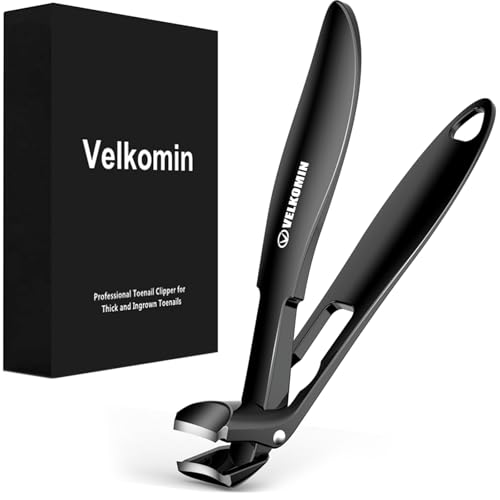
Pros
- Heavy-duty stainless steel construction resists wear over 18 months
- Curved blades open up to 9 millimetres for thick, stubborn nails
- Extended handle reduces bending and reaches feet more easily
- Built-in splash-proof catcher contains nail clippings neatly
Cons
- Requires gripping force that may challenge those with weak hands
- Curved blade design may take practice to position correctly
- 18-month warranty is shorter than some competing models offer

Pros
- Premium stainless steel blades stay sharp after repeated use
- 25-degree curved design conforms to natural nail shape
- Angled 7-shaped head reduces need to bend or twist arms
- Includes ingrown nail lifter and file for complete care
- Comes with elegant leather case for organized storage
Cons
- Multiple tools in set may be overwhelming for some users
- Requires learning different techniques for each clipper type
- Heavy-duty design means more hand strength needed to operate

Pros
- 4.8-inch handle provides excellent leverage for reaching feet
- 15mm wide jaw accommodates even the thickest toenails
- Stainless steel blades maintain sharpness through years of use
- Curved head and non-slip grip steady trembling hands
Cons
- Extra-long handle may feel unwieldy in small bathrooms
- Angled design requires learning proper cutting technique
- Not suitable for caregivers assisting multiple clients
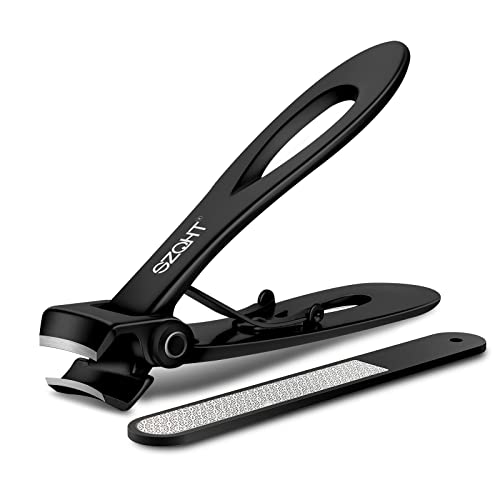
Pros
- Ultra-wide 15mm jaw opening accommodates thickest nails
- Premium stainless steel construction ensures long-lasting sharpness
- Reinforced handle provides extra grip strength for seniors
Cons
- Larger 3.54 inch size may be difficult for those with limited hand strength
- Top-down style clipper requires significant downward pressure to cut
- No cushioned grips mentioned for arthritic hands or reduced dexterity

Pros
- 15mm wide jaw opening accommodates thick or stubborn toenails
- Long handle reduces need for bending and awkward wrist angles
- Rust-resistant steel blades stay sharp for precise cutting
- Non-slip textured handle provides secure grip control
Cons
- Curved head design may require practice to find optimal cutting angle
- Heavier tool than standard clippers, which some may find tiring
- Not suitable for very small or delicate toenails
A Closer Look at Our Top Pick
The DRMODE Toenail Clippers stands out because it balances reach, cutting power, and control in one tool. Its 3.8-inch handle provides the leverage needed to cut with less hand pressure, and the 9mm jaw opens wide enough for thick nails without requiring excessive hand strength. The angled head takes some practice to position correctly, but once you find the angle, it lets you cut in a natural motion rather than fighting the nail. The built-in catcher keeps clippings from scattering across the floor, which matters if you are trimming in a bedroom or living room.
One real trade-off is size. The longer handle and catcher attachment mean this clipper takes up more bathroom cabinet space than a standard model, and the added weight can feel tiring if you have limited hand endurance. If you have very weak grip strength or arthritis that makes holding heavier tools difficult, one of the longer-handled electric clippers might suit you better. The angled design also means you will spend a few minutes learning the right cutting angle before it feels natural.
Find Your Situation
- the DRMODE Toenail Clippers: Balanced design for moderate hand strength and medium-to-thick nails. Watch out: the angled head requires practice and takes up storage space.
- the Velkomin Toenail: Heavy-duty option with a curved blade and 18-month warranty for stubborn nails. Watch out: cutting requires firm gripping force that may challenge weak hands.
- the DRMODE 2026: Complete 5-piece set with ingrown nail lifter and leather case for someone who wants multiple tools and organized storage. Watch out: multiple implements may feel overwhelming, and most require hand strength.
- the EZPIK Toenail Clippers: Longest handle at 4.8 inches, best for reaching feet without bending, and designed for arthritic or trembling hands. Watch out: the extra length can feel unwieldy in small bathrooms.
- the SZQHT Ultra Wide: Ultra-wide 15mm jaw and reinforced handle for the thickest nails and those with moderate grip. Watch out: top-down style requires significant downward pressure and has no cushioned grip.
- the BEZOX Toenail Clippers: Long handle with curved head, textured grip, and rust-resistant blade for reducing bending and wrist strain. Watch out: the curved head takes practice and the tool is heavier than standard clippers.
How We Narrowed It Down
We compared published specifications from six senior toenail clippers across jaw width, handle length, blade material, and design features. We looked at what each model claims to handle in terms of nail thickness and examined the trade-offs listed by manufacturers. We excluded standard-size clippers without features for seniors, models lacking stainless steel blades, and any without a jaw opening of at least 9mm. All six models use premium stainless steel and are marketed for thick nails, so we focused on differences in handle length, angle, and gripping challenges. If cutting your own nails becomes painful or you find yourself unable to position the clipper correctly, speak with a doctor or physical therapist before trying a different model. The National Institute on Aging offers guidance on staying independent with daily activities as you age.
What to Look For
Jaw width matters more than you think
A jaw opening of 9mm or wider lets you trim thick nails without repositioning or making multiple cuts. Smaller openings of 6mm or 7mm are standard on regular clippers, but every model here opens to at least 9mm. The widest options reach 15mm and are designed for nails that are genuinely stubborn or thickened by age, fungus, or diabetes.
Handle length reduces bending strain
Handles ranging from 3.8 to 4.8 inches act as levers that reduce the hand pressure you need to apply. A longer handle also lets you sit upright or in a chair while cutting instead of bending deeply. If bending to reach your feet is your main challenge, aim for 4.5 inches or longer.
Angled and curved heads work differently
An angled head sits at about 25 to 37 degrees to the handle and suits people who want to cut with a natural wrist motion. A curved head follows the shape of a rounded toenail more closely. Both require learning the right angle, but curved designs often feel more intuitive if your nails have a pronounced curve.
Built-in catchers contain mess
Three models include a nail-catching attachment that prevents clippings from bouncing across the bathroom or bedroom. This is a small feature but makes cleanup easier, especially if you have limited mobility and cannot easily sweep or bend to pick up pieces.
Hand strength and arthritis
Top-down style clippers require you to push down hard to cut, which can strain hands with arthritis or reduced grip strength. Side-squeeze designs or those with extra-long handles distribute effort more evenly. If you have arthritis, look for non-slip textured grips and avoid models that weigh more than 4 ounces, similar to how back lotion applicators prioritize ergonomic handles for ease of use.
Before you buy, test the weight
Holding a heavier clipper (some reach 4 to 5 ounces) for even a few minutes can fatigue hands with limited endurance. Ask a family member or friend if you can hold their clipper before ordering, or buy from a seller with a return window. Some people find that a lighter 3-ounce model with a longer handle works better than a heavier 4.5-ounce one.
When basic clippers are not enough
If your nails are very thick, yellowed, or crumbly, or if cutting causes pain, speak with a podiatrist or dermatologist before trying a new clipper. Sometimes thick nails signal a fungal infection or a circulation problem that requires professional care. The Eldercare Locator can help you find a foot care specialist or podiatry clinic in your area if you need professional trimming.
Quick Tips for Choosing
- Measure your current clipper handle and compare it to the 3.8 to 4.8-inch range offered here to see if a longer handle would help.
- If you struggle to grip or squeeze, prioritize models with textured or cushioned handles over those with plain metal.
- Check whether the clipper is top-down (press down to cut) or side-squeeze (press handles together) and try each style if possible.
- A 5-piece set works well if you trim nails regularly and enjoy having an ingrown nail lifter and file on hand; skip it if you prefer simplicity.
- Rust-resistant or stainless steel blades should stay sharp for years with basic cleaning and drying after use.
- Start with a model in the mid-range price and jaw width (9-12mm) if you are unsure; you can upgrade to a wider or longer model later.
Frequently Asked Questions
How often should I trim my toenails?
Most people benefit from trimming toenails every 4 to 6 weeks, or when they begin to press against the shoe or feel uncomfortable. If your nails grow very slowly or you are prone to ingrown nails, trim less frequently and consult a podiatrist about timing.
Why do toenails get thicker with age?
Nails thicken due to slower growth cycles, reduced circulation to the toes, and cumulative wear. Fungal infections and certain health conditions can also contribute to thickening over many years.
Can I use a regular fingernail clipper on my toenails?
Fingernail clippers have much smaller jaw openings (usually 5-7mm) and are not designed for the thicker keratin in toenails. Using them on thick toenails strains the tool and may damage the blade.
What if I cannot reach my feet to trim them myself?
A long-handled clipper of 4.5 inches or more reduces bending significantly. If even that is too difficult, grabber tools for arthritis can help you reach your feet, or ask a family member, friend, or professional foot care provider to help. Many podiatrists offer regular trimming for seniors with mobility challenges.
Do I need a catcher attachment?
A catcher is convenient if you trim in a bedroom or living room and want to avoid bending to clean up clippings. It is not essential if you trim in a bathroom with tile or linoleum that is easy to sweep.
How long does a senior clipper stay sharp?
Stainless steel blades in these models remain sharp for years of regular use if you rinse and dry the clipper after each trimming. Avoid cutting through extremely hard, fungal, or calcified nails repeatedly, as this dulls blades faster.
Is a curved or angled head better?
Both work well; it depends on your nail shape and wrist mobility. Curved heads follow the natural arc of a toenail, while angled heads suit people who prefer a straight cutting motion. Try both styles if possible, or ask a podiatrist which would suit your nails.
What if the clipper is too heavy to hold?
Lighter models under 4 ounces are available; prioritize a longer handle instead, which does the same job with less hand effort. If holding any tool is difficult, ask for help from a caregiver or professional.
Can I use a toenail clipper on fungal nails?
Yes, but fungal nails are often so thick or crumbly that cutting them is frustrating and may take multiple tools. A podiatrist can recommend a nail file or electric grinder designed for fungal nails, which is often more effective than clippers alone.
Do I need a warranty?
A warranty protects against defects but is less important than choosing a clipper that feels right in your hand. Most stainless steel clippers last many years with basic care, and defects usually show up in the first few uses.
Which One to Start With
If you have moderate hand strength and your main goal is cutting thick nails without constant repositioning, start with the DRMODE Toenail Clippers. The 3.8-inch handle and 9mm jaw are a solid middle ground, the angled head becomes intuitive after a few uses, and the built-in catcher keeps mess contained. It represents the kind of balanced design that works for many people.
If bending to reach your feet is the main struggle, the EZPIK Toenail Clippers with its 4.8-inch handle is worth considering. The extra reach means you can sit upright in a chair instead of bending, and the curved head and textured grip help steady trembling hands. The trade-off is that the longer tool may feel awkward in a small bathroom, so measure your space first.
If your nails are among the very thickest and you want the widest possible jaw without breaking a sweat, the SZQHT Ultra Wide with its 15mm jaw opening is designed for that job. The reinforced handle provides extra support, though the top-down cutting style does require firm pressure. This is the right pick if you have average or above-average hand strength and your nails are genuinely extreme.
For someone who wants a complete grooming kit and has a place to store it, the DRMODE 2026 set includes an ingrown nail lifter, file, and elegant leather case. The 37mm wide opening (about 15mm in practical terms) accommodates thick nails, the curved design reduces twisting, and the leather case keeps everything organized. The downside is that learning to use multiple tools takes time, and each one requires some hand strength.
Finally, if you want a long-handled option with a curved blade and modest hand-strength requirements, the BEZOX Toenail Clippers offers a textured grip and rust-resistant steel in a design intended for reduced bending and wrist strain. The curved head and longer handle work together to make cutting feel less like a wrestling match with your own feet.
Whichever you choose, expect a short learning curve of a few trims before the tool feels natural. Give yourself permission to adjust your technique and try different angles. If after two or three trims you find yourself struggling with pain, hand fatigue, or frustration, it is not a failure of the tool or your hands—it may simply mean another model would suit you better. Many sellers offer returns within 30 days, so you can test a second option without much risk.