

As your body ages, absorbing certain nutrients becomes harder even with a healthy diet. Vitamin supplements can help close those gaps, but the options vary widely in what they target and how they work. We compared 6 leading supplements designed for older adults to find which ones match real situations. Whether your concern is vision, memory, or overall nutrition, the PreserVision AREDS 2 and Ocuvite 50+ stand out for relying on decades of research. This guide walks you through which best senior vitamin supplements fit your needs and how to use them safely alongside any medications you take.
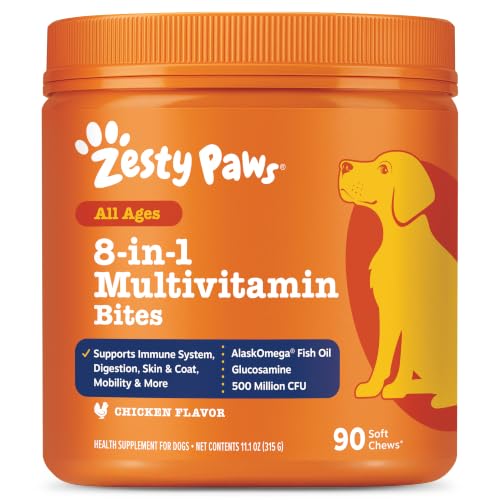
Pros
- Contains 500 million CFU per chew for digestive support
- Includes OptiMSM and Glucosamine for joint care
- Six-strain gut health blend promotes normal digestion
- Cod Liver Fish Oil and Vitamin E support skin health
Cons
- 90 chews may run out quickly for large dogs
- Chicken flavor may not appeal to all dogs
- Requires daily administration as part of routine care

Pros
- Contains 200 chewables per bottle for extended supply
- Includes glucosamine and chondroitin sulfate for joint care
- Formulated with natural probiotic flora for digestive support
- Rich in omega-3 fatty acids and vitamin E for coat health
Cons
- Chewable format requires dog to accept tablet consistency
- No guidance on how to administer to dogs with swallowing difficulty
- Results from probiotics and joint support take weeks to appear

Pros
- Contains lutein and zeaxanthin plus 6 additional nutrients
- Based on 20 years of clinical studies by the NEI
- Made by Bausch and Lomb, established eye care company since 1853
- Most studied eye vitamin brand in AREDS and AREDS2 research
Cons
- Softgels may be difficult for those with swallowing challenges
- 120 softgels require consistent daily adherence for effectiveness
- Requires ongoing purchase to maintain nutrient supplementation

Pros
- Contains glucosamine and chondroitin for joint support
- Includes probiotics and pumpkin to aid digestion
- Duck flavor designed to appeal to picky senior dogs
- Omega-3 fatty acids promote healthy skin and coat
Cons
- Soft chews may be difficult for dogs with dental problems
- 90-count supply requires daily administration for 3 months
- Dogs with duck allergies cannot use this formula

Pros
- Contains lutein and zeaxanthin, key nutrients for eye health
- Includes omega-3 plus vitamins C and E for antioxidant support
- 90 softgels provide a three-month supply for daily dosing
- Formulated specifically for adults 50+ nutritional needs
Cons
- Softgel format may be difficult to swallow for some older adults
- Requires daily commitment for consistent nutritional support
- Does not address other vision concerns beyond basic eye nutrition

Pros
- Contains 60 capsules per bottle for a full month supply
- Includes Bacopa Monnieri, a traditional memory support ingredient
- Features Phosphatidylserine for brain health support
- Third-party tested for quality and purity
Cons
- Results take weeks to months, not immediate brain support
- DMAE may cause headaches or jitteriness in some users
- Requires consistent daily use to maintain any potential effects
A Closer Look at Our Top Pick
The PreserVision AREDS 2 formula rests on 20 years of clinical research conducted by the National Eye Institute. It contains lutein and zeaxanthin, two nutrients your eye’s macula needs as you age, plus 6 additional supporting nutrients including vitamins C and E. Each bottle holds 120 softgels, enough for 4 months of daily dosing. Because it matches the exact formula tested in the AREDS2 study, you know the nutrient combination has been studied in thousands of older adults.
The main trade-off is that softgels can be challenging to swallow if you have difficulty with larger capsules. This formula does not address vision problems beyond basic nutritional support, so if you have existing eye disease, your eye doctor may recommend something different. Still, if you are looking for a supplement with the strongest research backing and you can manage the softgel size, this is the starting point many doctors suggest for older adults concerned about age-related vision changes.
Find Your Situation
- the Zesty Paws Dog: If you are shopping for a senior dog’s joint and digestive health, this 90-count formula includes 500 million CFU per chew for gut support. Watch out: the supply runs through in roughly 3 months for a single dog, so large dogs will need frequent reorders.
- the Tciika 24: If managing a senior dog’s nutrition is the priority and you want a longer-lasting supply, this 200-count multivitamin extends your time between purchases. Watch out: some senior dogs with swallowing difficulty may struggle with the chewable format.
- the PreserVision AREDS 2: If your main concern is age-related vision changes and you want the most researched option, this 120-softgel bottle is backed by 20 years of National Eye Institute studies. Watch out: softgels may be hard to swallow, and results take consistent daily use over weeks to appear.
- the Pet Honesty Vet: If you are managing a senior dog that is picky about food and needs digestive support, this duck-flavored 90-count formula encourages acceptance without fussiness. Watch out: soft chews can be unsuitable for dogs with dental problems, and any dog with a duck allergy cannot use this.
- the Ocuvite 50+: If you are 50 or older and want a straightforward eye vitamin with a 3-month supply per bottle, this 90-softgel option includes lutein, zeaxanthin, omega-3, and antioxidants. Watch out: softgels are not easier to swallow than other brands, and the formula focuses only on basic eye nutrition.
- the Nature’s Strength Brain: If you are seeking cognitive support and prefer capsules over softgels, this 60-capsule supplement includes Bacopa Monnieri and Phosphatidylserine with third-party testing. Watch out: results take weeks or months, and DMAE may trigger headaches or jitteriness in some people.
How We Narrowed It Down
We compared the published specifications of 6 supplements marketed to older adults and their families. We reviewed the nutrient counts, bottle sizes, and form factors to see which matched real situations. We excluded products where the ingredient list was incomplete or the serving size was unclear. Four products in our comparison are designed for dogs, not people, so if you are shopping for your parent’s health rather than a pet’s, focus on the eye vitamins and cognitive support options. Before starting any new supplement, especially if your parent is on blood thinners or other medications, a doctor or physical therapist can review any potential interactions.
What to Look For
Whether softgels or tablets suit you
Softgels are larger and can be slippery, making them harder to grip and swallow if you have arthritis in your hands or difficulty with swallowing. Tablets and capsules are smaller but may require more effort to open bottles. Our comparison included 2 softgel eye vitamins and 1 capsule option. Consider your own swallowing comfort and hand strength before ordering.
How many doses each bottle holds
A bottle with 120 doses at one dose per day gives you 4 months before reordering. A 90-count bottle lasts 3 months. Smaller counts mean more frequent purchases and easier storage, while larger counts reduce trips to the pharmacy. The products we reviewed range from 60 capsules to 200 chewables per bottle.
Whether research backs the formula
The PreserVision AREDS 2 is based on a specific nutrient combination studied in thousands of older adults over 20 years by the National Eye Institute. Other supplements may have individual ingredients with research, but whole-formula testing is rare. If you want a vitamin with published research behind the exact product you are buying, eye vitamins have the strongest track record.
Before you buy, check for interactions with your medicines
Vitamin supplements can interfere with blood thinners, heart medications, and diabetes drugs. The National Institute on Aging recommends talking to your doctor before adding any supplement if you take prescription medications. Some vitamins, like vitamin K and E, have specific cautions when combined with certain drugs.
When the softgel format creates real swallowing difficulty
If you or your parent has had a stroke, Parkinson’s, or another condition affecting swallowing, softgels pose a choking risk. The Ocuvite 50+ and PreserVision AREDS 2 both use softgel format. Ask your doctor or speech therapist whether you can open capsules and mix the contents with soft food, or whether a different form is safer.
How long results typically take
Eye vitamins require consistent daily use for weeks before any effect appears. Brain and memory supplements take weeks to months, and results vary widely from person to person. If you feel nothing after 4 weeks, that does not mean the product is not working; nutrient accumulation is gradual. Set a 12-week expectation before deciding whether to continue.
When this is not enough on its own
Supplements support but do not replace a diet rich in fruits, vegetables, and fish. If your parent has vision loss, memory loss, or joint pain, a supplement alone is not a treatment. These products fill nutritional gaps in an otherwise healthy routine. If symptoms are new or worsening, Eldercare Locator can help connect you to a doctor or specialist in your area.
Quick Tips for Choosing
- Write down all medications your parent takes and show the supplement label to the pharmacist before buying.
- Start with one supplement, not several at once, so you can spot any side effects.
- Set a phone alarm or pill organizer to make daily doses routine; skipping doses reduces any benefit.
- Buy the smallest bottle first if the product is new to you; if it causes upset stomach, you won’t waste money.
- Keep the receipt and original label in case your parent experiences an unusual reaction.
- Re-check the label each time you reorder, as manufacturers sometimes change formulas without changing the product name.
Frequently Asked Questions
Can supplements replace a healthy diet?
No. Supplements fill gaps left by diet, but a diet with plenty of vegetables, fruit, fish, and whole grains provides nutrients in forms your body often absorbs better. Think of a supplement as a safety net, not the main source of nutrition.
Are all vitamin supplements tested for purity?
No. The FDA does not regulate supplements the way it regulates medications, so quality varies by brand. Look for products that state third-party testing on the label, as we noted in one of our options.
Is it okay to take multiple supplements at the same time?
It depends on the supplements and your medications. Some combinations are safe, but others create interactions. Always ask a pharmacist or doctor before combining a stool softener or other supplement with your medications.
What is a CFU, and does it matter?
CFU stands for colony-forming units and measures the number of live bacteria in a probiotic. More CFU is not always better; 500 million CFU is a common amount used in supplement research. The strain of bacteria matters more than the count.
Do I need to take supplements with food?
Some supplements absorb better with food; others are fine on an empty stomach. Read the label on your specific product. Eye vitamins, for example, are fat-soluble and absorb better with a meal containing fat.
How long should I take a supplement before I decide it is working?
Most supplements need at least 4 to 12 weeks of daily use before you feel any effect, especially for joint health, memory, or vision support. If you stop and start frequently, you will not see results.
Can I give my parent a supplement without telling them?
No. You must tell your parent you are giving them any supplement and involve them in the choice. Hiding it removes their right to make health decisions and could create mistrust.
What should I do if my parent has side effects?
Stop the supplement and contact their doctor or pharmacist. Side effects might include upset stomach, headache, or interaction with a medication. The doctor can recommend a different product or advise whether the side effect is temporary.
Is a more expensive supplement better?
Price does not always reflect quality or effectiveness. Some of the most studied supplements are reasonably priced. Compare the ingredient list and any third-party testing claims rather than assuming cost equals benefit.
Can I crush or chew a softgel?
Do not crush or chew softgels without asking your doctor first. The softgel coating protects the ingredients until they reach your digestive tract. Breaking it open may reduce absorption or cause an unpleasant taste.
Which One to Start With
If your parent’s main worry is vision and they can swallow softgels comfortably, begin with the PreserVision AREDS 2. It has the strongest research backing, with 20 years of National Eye Institute studies behind the exact formula. The 120-softgel bottle lasts 4 months, so commitment is not overwhelming. Their doctor may already be familiar with it, which makes a conversation easier.
If softgels are a barrier, choose the Ocuvite 50+ instead. It offers the same lutein and zeaxanthin nutrients in a smaller softgel format, with 90 doses per bottle for a 3-month supply. You will get similar eye nutrition support, though the overall formula has not been studied as extensively as the AREDS 2 version.
If vision is not the concern and your parent reports memory or concentration trouble, the Nature’s Strength Brain capsule offers Bacopa Monnieri and Phosphatidylserine with third-party testing. The 60-capsule bottle provides a full month supply and is easier to swallow than softgels. Be clear that results take weeks, not days, and that improvement varies from person to person. Start with one product and give it at least 8 weeks before adding another. If your parent is on blood thinners, heart medications, or diabetes drugs, show the supplement label to their pharmacist first to rule out interactions. Most doctors will support starting a single, well-researched supplement as part of a conversation about overall nutrition and health as you age.