

Swelling changes how a sock behaves: a cuff that felt fine in the morning can press into the ankle later, and extra fabric can bunch under the foot if the fit is too generous. When comparing the best socks for elderly with swollen feet, start with opening width, sock height, fabric, and whether the person needs indoor grip. For a soft ankle option, the Cirorld Bamboo Viscose has a wide top that stretches to 10 to 11 inches. If your parent needs traction around the house, the FORTIVO 2 Pairs adds non-slip grippers in a 2-pair cotton hospital-style sock.

Pros
- Bamboo viscose fabric helps wick moisture
- 6 pairs come packed in a premium gift box
- Wide cuff stretches to 10 to 11 inches
- Full terry sole adds cushioned underfoot support
Cons
- Ankle height may not suit users wanting calf coverage
- Medium fit may be limiting for some men's sizes

Pros
- 6 pairs cover multiple days between laundry
- Bamboo viscose feels soft and wicks moisture
- Small/Medium fits men's 5-9 and women's 6-10
- Large/X-Large fits men's 9-12 and women's 10-13
Cons
- Ankle height offers less calf coverage than crew socks
- Wide stretch may feel loose on very narrow feet
- Only two size ranges, so fit may be imperfect

Pros
- 6 pairs covers nearly a week of daily wear
- 12-inch ankle stretch allows a looser fit
- Mesh knit top helps feet stay drier
- Cushioned foot adds comfort for 9-13 shoe sizes
Cons
- One size may still bunch on smaller feet
- White fabric can show stains after daily wear
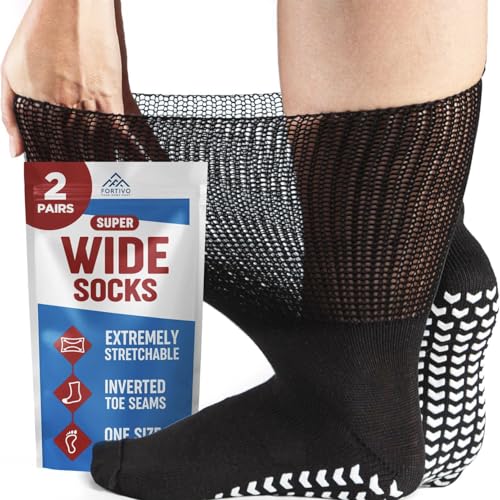
Pros
- Includes 2 pairs for rotation between washes
- 90% cotton blend supports breathable daily wear
- Men's 9-12 and 13-15 sizes cover larger feet
- Cotton with non slip grippers adds indoor traction
Cons
- Only fits men's 9-12 and 13-15 size ranges
- Grip soles may feel bulky inside regular shoes
- Long wide shape may be too warm for summer wear
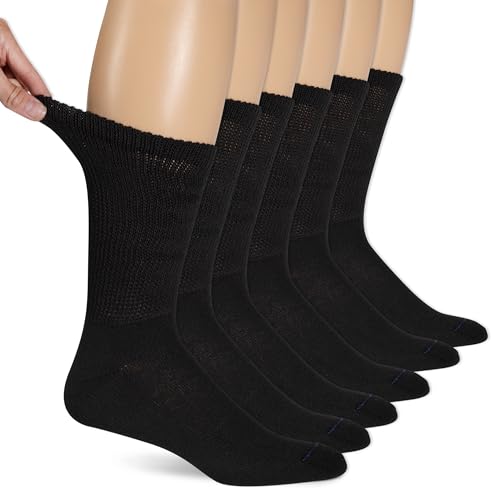
Pros
- APMA accepted for promoting good foot health
- TempRite Technology adapts to body temperature
- Ultra-Soft comfort top gently conforms to the leg
- Non-binding top avoids a tight, constricting feel
Cons
- Men's sizing may not fit women or smaller feet
- Cushioned fabric may feel bulky in snug shoes
- Stay-up design may still need adjusting on thin calves

Pros
- 90% cotton knit feels breathable for daily wear
- 5% spandex adds stretch around swollen feet
- Seamless cotton-rich toe gives a smoother interior
- Sizes span Men 7-15 and Women 8-16 feet
Cons
- Grip dots are meant for light indoor movement only
- Largest size stops at Men 15 and Women 16 feet
A Closer Look at Our Top Pick
For many households, the most practical starting point is the Pembrook because it balances softness, easy rotation, and size coverage in 1 simple package. It comes as 6 pairs, which matters when socks are changed daily or when laundry does not happen every day. The bamboo viscose fabric is described as soft and moisture-wicking, which can be helpful when your parent wants a gentler feel at the ankle and calf. The ankle height is also easier for many caregivers to position than a taller sock, especially when the person dislikes fabric up the leg.
The sizing is clear enough for a first try: Small/Medium fits men’s 5-9 and women’s 6-10, while Large/X-Large fits men’s 9-12 and women’s 10-13. That range will not solve every fit issue, and very narrow feet may feel less secure in a wide-stretch sock. Still, after comparing the 6 options on paper, a 6-pair bamboo viscose ankle sock with two size ranges is a sensible first pick when the main goal is a nonbinding cuff for swollen feet without moving straight to grip socks or cast-style width.
Find Your Situation
- the Cirorld Bamboo Viscose: best for women who want a soft ankle sock with a wide top that stretches to 10 to 11 inches and a 6-pair supply. Watch out: ankle height gives less calf coverage.
- the Pembrook: best for daily rotation when 6 pairs and 2 size ranges make shopping simpler for men’s 5-12 and women’s 6-13 feet. Watch out: the wide stretch may feel loose on very narrow feet.
- the Aisesine Men: best when the person needs a roomier ankle opening, since the stretch opening is 12 inches and the shoe-size range is 9-13. Watch out: 1 size can bunch on smaller feet.
- the FORTIVO 2 Pairs: best for supervised indoor walking when gripper soles and a 90% cotton blend are priorities. Watch out: the grip sole may feel bulky inside regular shoes.
- the Dr. Scholl’s Dr: best for men who want a cushioned non-binding sock with an ultra-soft comfort top and APMA acceptance. Watch out: the cushioned fabric may feel bulky in snug shoes.
- the MoyaSomnia Non: best for broad size coverage, since sizes span Men 7-15 and Women 8-16 with 3 or 6 pairs. Watch out: the grip dots are meant for light indoor movement only.
How We Narrowed It Down
We compared published specifications rather than handling the products, focusing on the details that matter most when feet are swollen: cuff style, stretch, height, fabric, size range, and whether the sole has grip. We excluded socks that did not clearly offer a non-binding, extra-wide, or diabetic-style design, because a standard tight cuff can be the wrong starting point for this situation. We also gave less weight to options with only 1 narrow use case when another sock covered more daily needs, such as a 6-pair rotation or sizes up to Men 15 and Women 16. If swelling changes quickly, appears uneven, or comes with discomfort, ask a doctor or physical therapist before relying on socks alone. For home safety planning, the National Institute on Aging shares practical fall-prevention steps at falls and falls prevention.
What to Look For
Start with the cuff, not the color
The cuff is where a sock most often feels too tight when feet and ankles swell. A wide top that stretches to 10 to 11 inches, like the design listed for a bamboo viscose ankle sock with a wide top, gives you a concrete number to compare against regular socks at home. Look for the lightest, most even contact around the ankle rather than a sock that has to be tugged into place.
Match the height to how much coverage the person wants
Ankle socks are easier to put on for many caregivers because there is less fabric to pull over the leg. The trade-off is coverage: ankle height offers less calf coverage than crew or longer socks. If your parent mainly dislikes pressure around the lower leg, a 6-pair ankle pack can be more practical than a taller style, much like how jackets for elderly ladies prioritize comfort over extra layers.
Think about indoor traction separately from shoe fit
Grip dots and gripper soles can help the person feel steadier during light indoor movement, but they are not the same as a shoe sole. The FORTIVO option has 2 pairs with cotton non-slip grippers, while the MoyaSomnia option comes in 3 or 6 pairs with grip dots. If the person wears shoes most of the day, remember that grip soles may feel bulky inside regular shoes.
Choose fabric by daily routine
Bamboo viscose appears in 2 of the options here and is described as soft and moisture-wicking, similar to the breathable fabrics used in nightgowns for elderly women. Cotton-rich socks also have a place: 90% cotton blends appear in the FORTIVO and MoyaSomnia options for breathable daily wear. For someone who changes socks 1 time a day, a 6-pair pack gives more room between laundry days.
Before you buy, check the shoe-size range
Do not rely only on the words wide or non-binding. The Pembrook Small/Medium fits men’s 5-9 and women’s 6-10, while Large/X-Large fits men’s 9-12 and women’s 10-13. For larger feet, the MoyaSomnia range spans Men 7-15 and Women 8-16, which may be a better first filter.
When swelling makes socks hard to put on
A 12-inch ankle stretch opening, as listed for an extra-wide ankle sock for shoe sizes 9-13, can make dressing less of a struggle when the foot needs more room. A full terry sole or cushioned foot can add comfort, but it may also take up space inside snug shoes. If the sock twists, bunches, or leaves marks after 1 wear, try a different size or style.
When this is not enough
Socks are only 1 part of comfort, dressing, and home movement. If your parent needs help finding local caregiver support, transportation, or aging services, the Eldercare Locator can connect families with local resources and can be reached at 1-800-677-1116. If a sock change does not solve the problem after 1 or 2 careful tries, bring the fit issue to a clinician or therapist.
Quick Tips for Choosing
- Measure around the ankle when swelling is usually at its highest.
- Choose 6 pairs if daily changes are part of the routine.
- Use grip socks mainly for light indoor movement.
- Pick cotton-rich fabric if breathability is the top concern.
- Pick bamboo viscose if a soft, moisture-wicking feel matters most.
- Check for marks after the first 1 full day of wear.
Frequently Asked Questions
Are diabetic socks the same as socks for swollen feet?
They often overlap, but the words do not mean exactly the same thing. In this group, the diabetic-style socks focus on non-binding tops, wide stretch, and cushioned or soft materials.
Should the sock be tight enough to stay up all day?
It should stay in place without digging into the skin. If a cuff leaves a clear ring after 1 day, it may be too tight for that person’s swelling pattern.
Are ankle socks better than crew socks for swollen feet?
Ankle socks can be easier to put on because there is less fabric to pull over the leg. They give less calf coverage, so the better choice depends on whether the person wants coverage or less fabric.
Do grip socks work inside shoes?
Grip socks are usually most useful indoors on smooth floors. Some grip soles can feel bulky inside regular shoes, especially when the shoe already fits snugly.
How many pairs should a caregiver buy first?
A 6-pair pack is useful when socks are changed daily and laundry is not done every day. A 2-pair pack can work when the goal is to test an indoor grip style first.
What fabric is best for daily wear?
Bamboo viscose is described here as soft and moisture-wicking. Cotton-rich options with 90% cotton are another reasonable choice when breathable daily wear is the priority.
What size should I choose if the person is between ranges?
Start by comparing the shoe size with the listed range, then think about ankle width and whether the foot is narrow. A very wide sock can feel loose on narrow feet even when the shoe size fits.
Can cushioned socks make shoes too tight?
Yes, cushioning can take up space inside snug shoes. If the person wears close-fitting shoes, try the socks with those shoes for 1 short indoor period first.
Are white socks a bad idea?
White socks can make it easier to notice dirt, but they can also show stains after daily wear. The choice is mostly about laundry habits and how often socks are changed.
When should we ask a professional about swelling?
Ask a doctor or physical therapist if swelling changes quickly, affects 1 side more than the other, or makes dressing and walking harder. Socks can improve comfort and fit, but they should not replace medical advice.
Which One to Start With
If you want the safest first choice for most families shopping online, start with the Pembrook. It gives you 6 pairs, bamboo viscose fabric, and 2 size ranges that cover men’s 5-12 and women’s 6-13. That combination is useful when your parent needs a non-binding ankle sock for daily wear and you do not yet know whether extra-wide grip socks will feel too bulky.
If the main problem is getting the sock over a swollen ankle, choose a 12-inch stretch-opening ankle sock instead, especially for shoe sizes 9-13. The roomy opening and cushioned foot make sense when dressing ease matters more than color or calf coverage. If the person needs traction for light indoor movement, move to the MoyaSomnia Non, which adds grip dots, a 90% cotton knit, and size coverage up to Men 15 and Women 16.
For women who want a softer ankle-height option with a more defined wide cuff, the Cirorld design is also worth considering because its top stretches to 10 to 11 inches and the pack includes 6 pairs. For men who prefer a familiar cushioned sock shape, the Dr. Scholl’s option has a non-binding comfort top and APMA acceptance. The right starting point is the one that matches the person’s most repeated problem: tight cuff, hard dressing, indoor traction, or shoe fit.