

An elderly woman living alone with cats can often enjoy comfort, routine, and companionship at home with the right support. The main goals are simple: keep the home easy to move through, make cat care manageable, and set up a plan for regular check-ins.
Cats can bring joy and structure to daily life. At the same time, litter boxes, food bowls, toys, and vet needs can add extra tasks. A calm plan helps the person and the cats stay well cared for without taking away independence.
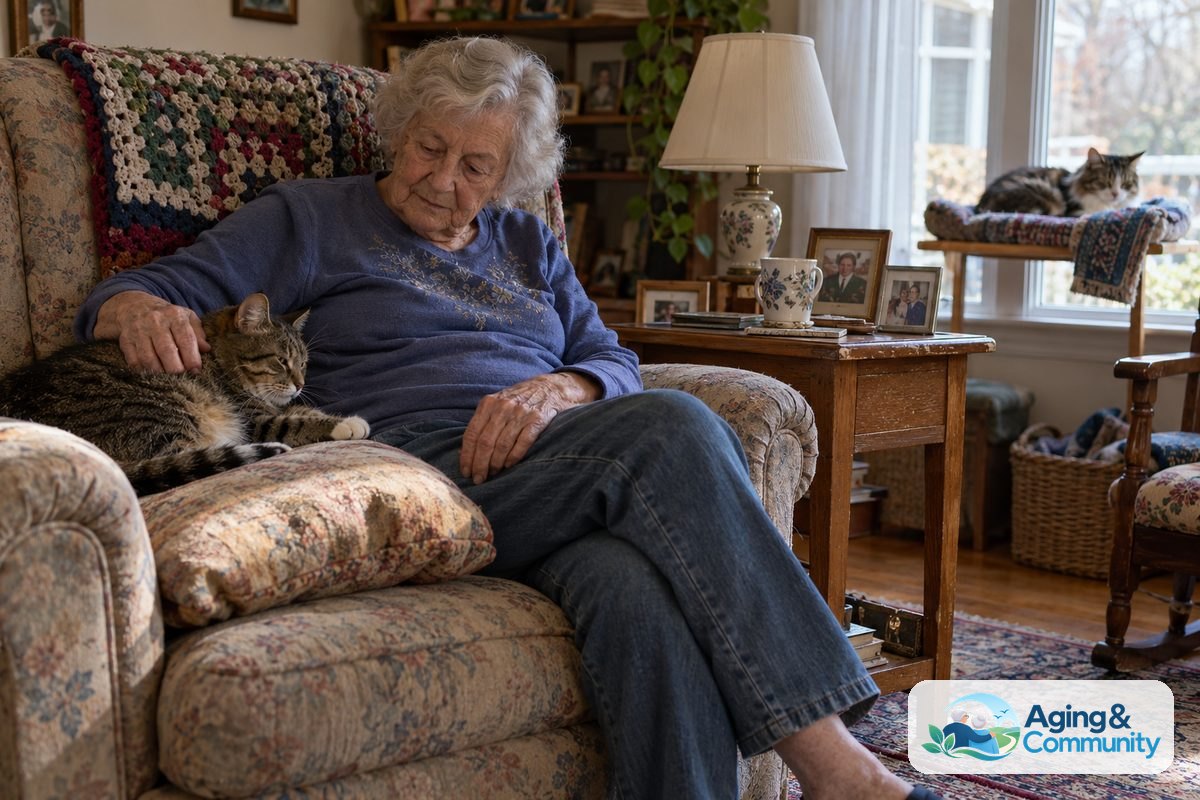
Start With Her Daily Routine
A good first step is to understand what daily life already looks like. Ask about mornings, meals, cat feeding, litter care, mail, laundry, sleep, and visits. The goal is not to take over. It is to notice where small changes could make the day easier.
For many people, a steady routine is more helpful than a long list of rules. Try to keep cat care tasks in the same places and at the same times each day. This makes it easier to remember what has been done.
- Keep cat food, treats, and medicine, if used, in one easy-to-reach spot.
- Use a simple checklist for feeding, water, and litter care.
- Place a weekly calendar near the phone or kitchen table.
- Write down vet appointments, delivery days, and family visits.
- Keep emergency contacts in large print near the main phone.
If you are helping from a distance, a written routine can also reduce confusion. A family member, neighbor, or paid helper can follow the same steps when they visit. For a broader look at daily support, a guide to elderly living alone can help families think through common needs.
Make Cat Care Easier And Safer
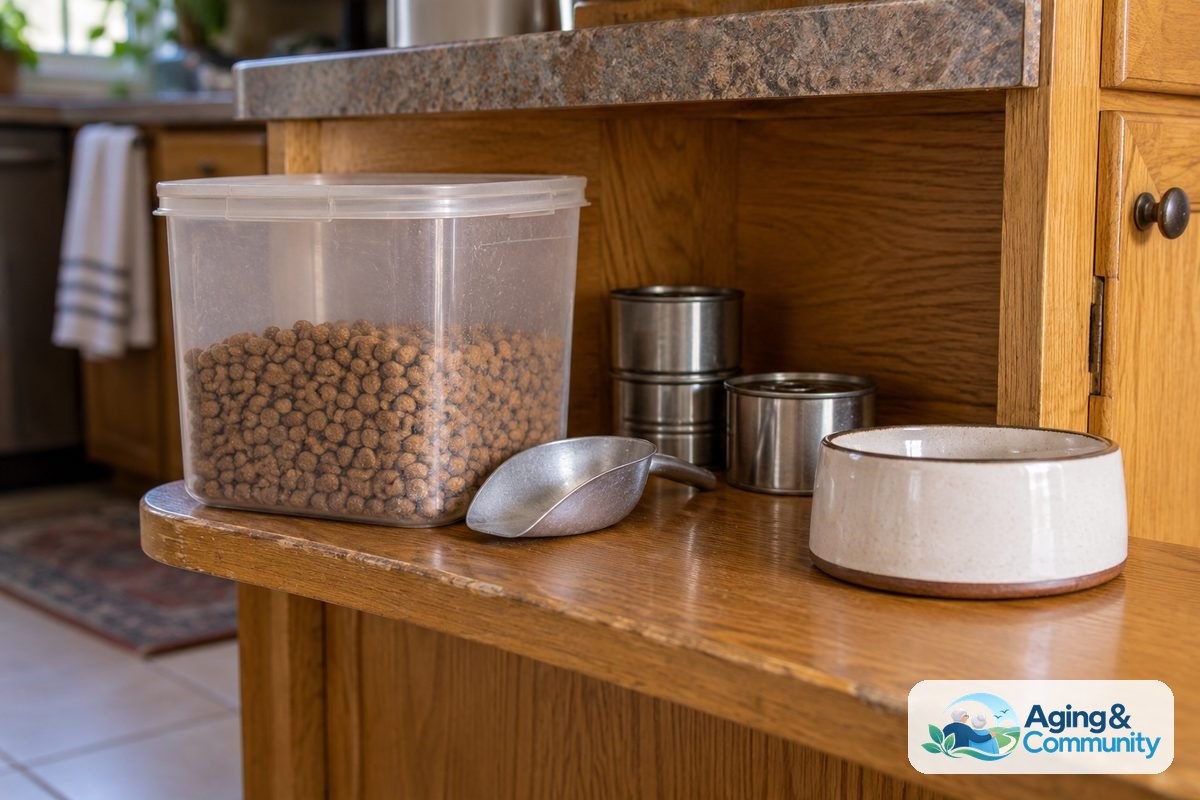
Cat care should be set up so it does not require bending, reaching, or carrying heavy items more than needed. Small changes can make feeding and cleaning easier while keeping the cats comfortable.
Place food and water bowls where they are easy to see and reach. A raised feeding area may be easier for some people, but it should not block a walking path. If bending is hard, ask a family member or helper to refill storage bins or move supplies to waist height.
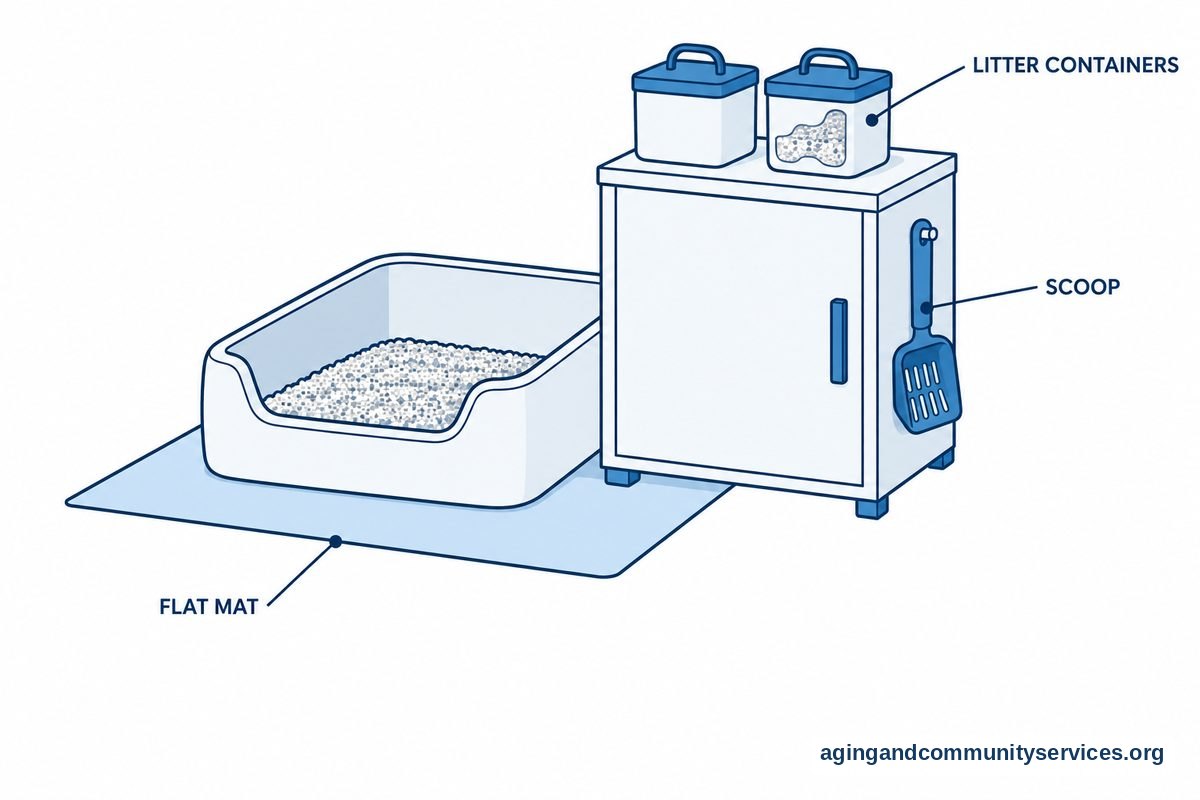
- Use smaller bags of litter or divide a large bag into lighter containers.
- Keep a scoop, bags, and cleaning wipes next to the litter box.
- Use a litter mat that lies flat and does not curl at the edges.
- Place litter boxes away from stairs if possible.
- Keep cat toys out of main walkways when playtime is over.
Some cats like to sit close to feet or move quickly across a room. That can surprise anyone, especially when carrying laundry, food, or water. Good lighting and clear walking paths make these moments easier to handle.
If cat care has become tiring, consider a rotating help plan. One person might handle litter changes, another might pick up supplies, and another might drive to the vet. The woman should be part of these choices whenever possible.
Reduce Trip Hazards Around The Home
Falls are a common concern at home, and cat items can add clutter if they are not placed carefully. The National Institute on Aging says steps such as removing clutter, improving lighting, and talking with a health care provider about fall risk can lower the risk of falls.
Look at the home from the front door to the bedroom, bathroom, kitchen, and litter area. Notice cords, rugs, boxes, pet beds, and bowls. The safest setup is often the simplest one.
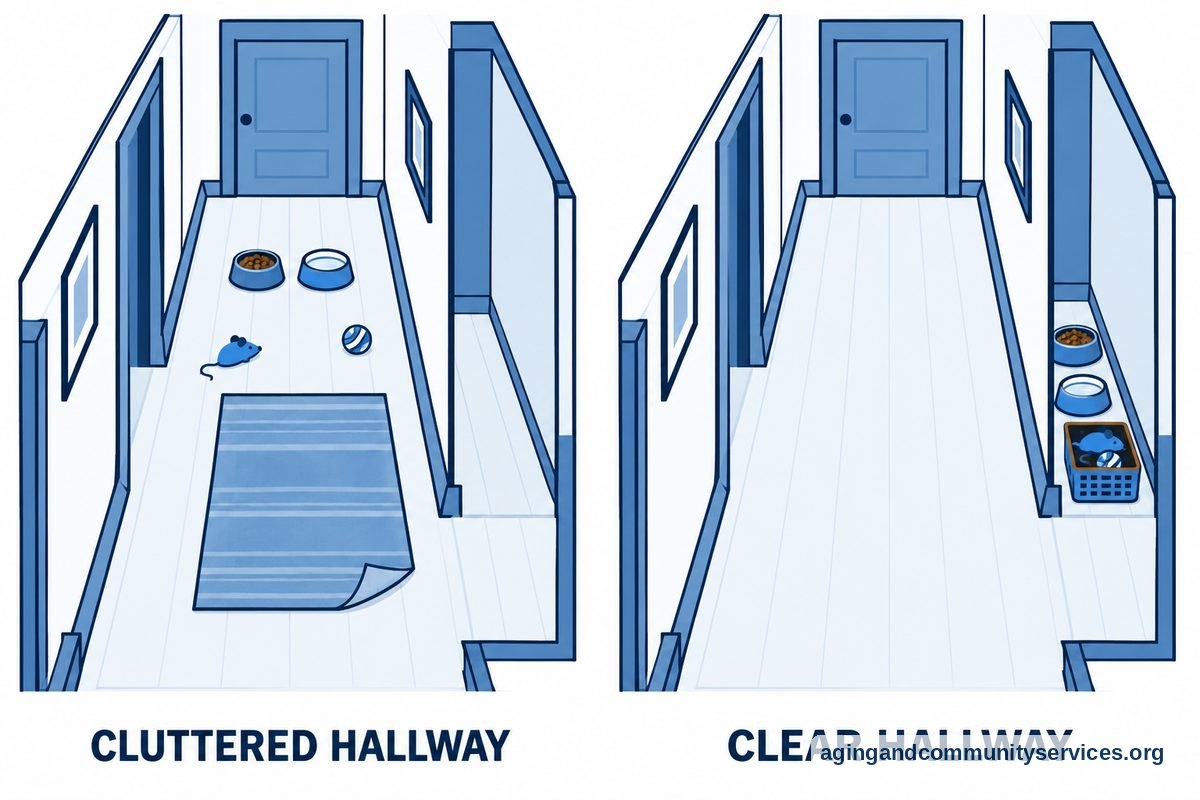
- Move food bowls and water bowls out of walking paths.
- Secure loose rugs or remove them if they slide.
- Keep hallways and stairs clear of cat toys.
- Add night lights from the bedroom to the bathroom.
- Keep a sturdy chair near areas where she puts on shoes or changes cat supplies.
It may help to ask a doctor, physical therapist, or occupational therapist about home safety if there have been recent slips, weakness, balance concerns, or trouble getting around. They can suggest changes based on the person, the home, and daily habits.
Families can also review safety for elderly living alone for ideas that fit a home with pets. Keep changes respectful. Ask before moving furniture, supplies, or cat items.
Plan For Check-Ins Without Taking Over
Regular check-ins can help everyone feel more settled. They do not need to feel like surveillance. A short call, text, door visit, or shared calendar can be enough for many homes.
Choose a plan that fits her preferences. Some people like a morning phone call. Others prefer a neighbor to wave from the porch or a family member to visit twice a week. The best plan is one she agrees to and will actually use.
- Set a regular time for calls or visits.
- Make a backup plan if she does not answer.
- Ask one trusted neighbor to be an emergency contact.
- Keep a house key with a trusted person if she agrees.
- Update pet care notes if routines change.
If family members are unsure how often to check in, a guide on monitoring elderly living alone can help shape a respectful plan. The focus should be support, not control.
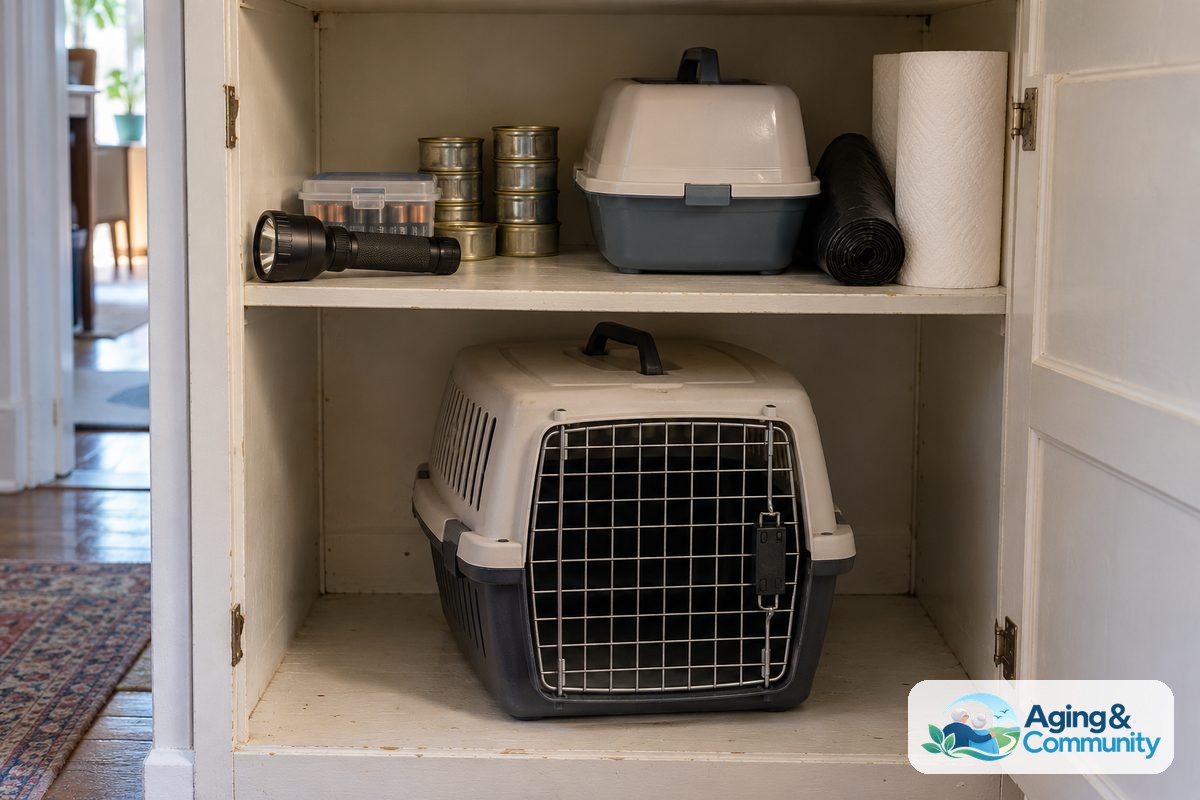
It is also wise to plan for the cats in case of an urgent trip, illness, or a short stay away from home. Write down the cats’ names, feeding amounts, vet contact, carrier location, and any behavior notes. Keep the list where helpers can find it.
Support Connection And Emotional Well-Being
Living alone does not always mean feeling lonely, and having cats can be a real source of comfort. Still, it helps to build connection beyond the home. Gentle social contact can support a fuller routine.
Ask what she enjoys rather than guessing. She may like short visits, church groups, library programs, phone calls, craft groups, or quiet time with one close friend. The right amount of contact is personal.
Watch for changes in normal patterns, such as not answering calls, missing meals, losing interest in favorite activities, or falling behind on cat care. These changes do not prove a medical problem. They are signs that a kind conversation may be needed.
If mood, memory, sleep, appetite, or daily function seem to change, encourage her to speak with a doctor. Families may also find it useful to read about living alone mental health in a balanced way.
Prepare The Home For Small Emergencies
A simple home plan can make hard moments easier. This includes people contacts, pet contacts, supplies, and clear notes. Keep the plan short and easy to find.
The National Institute on Aging has practical advice on growing older at home, including planning for help, services, and home changes. Families can use that idea to build a plan that fits both the person and the cats.
| Need | Simple Step |
|---|---|
| Contacts | Post family, neighbor, doctor, vet, and pharmacy names near the phone. |
| Cat care | Write feeding amounts, litter details, and carrier locations on one page. |
| Supplies | Keep a small backup of food, litter, trash bags, and paper towels. |
| Home access | Choose who has a spare key and when they may use it. |
| Power outage | Keep flashlights in easy places and check batteries often. |
Home protection can also include locks, lighting, smoke alarms, and safe ways to answer the door. A practical guide to home protection tips may help families review the basics without making the home feel closed off.
For local help, the Eldercare Locator can connect families with aging services in their area. It can be useful when you need help finding transportation, meal support, caregiver resources, or local programs.
What You Can Do Next
Start small. One or two changes done with respect are better than a full home makeover that feels upsetting. Ask what would make life easier, then listen carefully.
- Walk through the home together and look for cat items in walking paths.
- Move litter, food, and supplies to places that are easy to reach.
- Create a one-page cat care and emergency contact sheet.
- Set a check-in routine that she agrees to.
- Ask her doctor, physical therapist, or occupational therapist about mobility or home safety concerns if needed.
- Review the plan every so often, especially after a move, illness, new pet, or change in routine.
Keep the tone positive. The goal is to protect independence, comfort, and the bond she has with her cats. A clear plan can help everyone know what to do while keeping her voice at the center.
Frequently Asked Questions
Is It Safe For An Elderly Woman To Live Alone With Cats?
It can be safe for many people when the home is set up well and support is in place. The key is to reduce clutter, keep cat care manageable, and have regular check-ins. If there are concerns about balance, memory, or daily tasks, it is wise to speak with a doctor or occupational therapist.
How Many Cats Are Manageable For Someone Living Alone?
There is no single right number. It depends on her energy, space, budget, mobility, and the cats’ needs. A good sign is that food, water, litter, grooming, and vet care are being handled without strain. If those tasks are becoming too much, it may be time to add help.
Where Should Litter Boxes Be Placed?
Litter boxes should be easy to reach but not in the middle of a walking path. Avoid placing them where she must use stairs often if stairs are hard for her. Keep supplies nearby so cleaning does not require extra trips across the home.
How Can Family Help Without Making Her Feel Watched?
Ask what kind of help she wants first. Offer choices, such as a weekly supply drop, a short daily call, or help with litter changes. Explain that the goal is to make life easier, not to take away control.
What Should Be In A Pet Emergency Plan?
The plan should include the cats’ names, feeding amounts, litter routine, vet contact, carrier location, and any behavior notes. Add the names of people who can enter the home and care for the cats if she cannot do it for a short time. Keep the plan in a clear spot, such as near the phone or on the refrigerator.