

Heat assistance for seniors can mean two helpful things: help paying for home heating in cold months and safer ways to handle hot weather in warm months. If you are trying to keep a home comfortable on a tight budget, start with local energy aid programs, then add simple home safety steps for both winter and summer.
Many families search for this topic because the word heat can mean furnace bills, unsafe indoor warmth, or summer weather. This guide explains where to look for heating assistance, how heat affects the body with age, and what practical steps can make the home easier to manage.
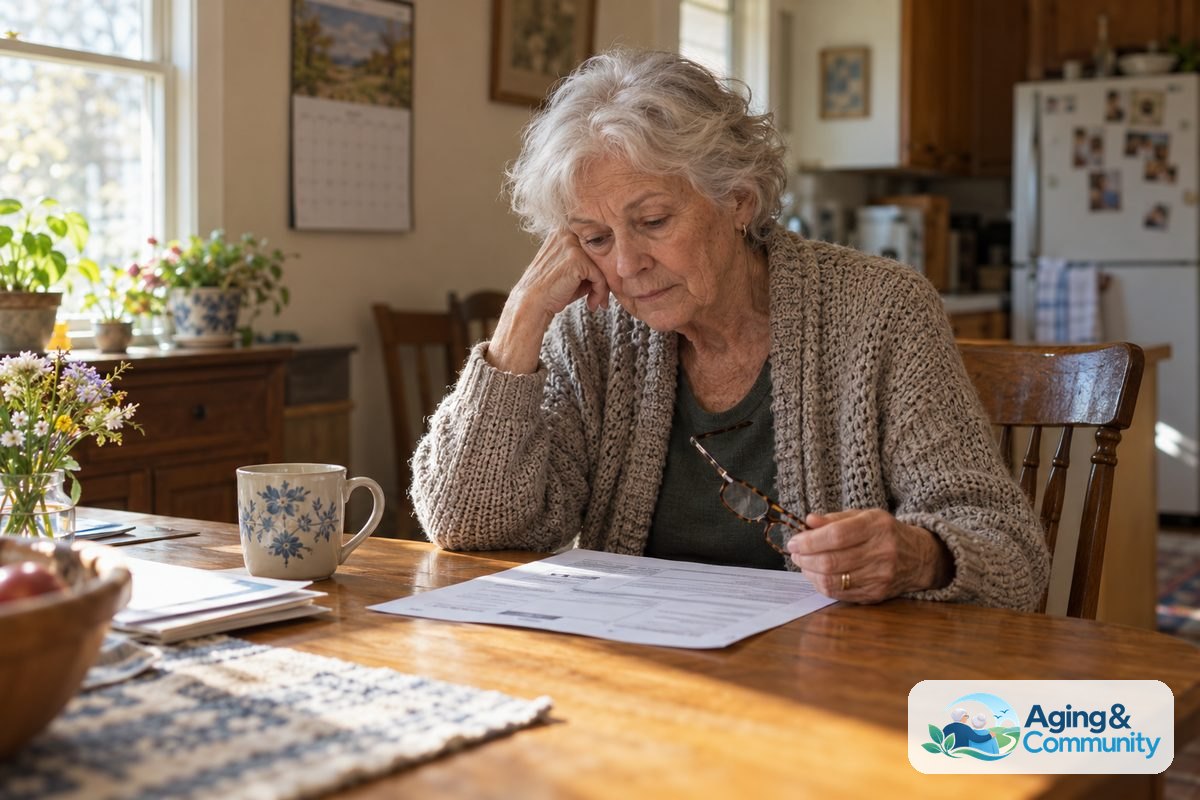
What Heat Assistance Can Include
Heat assistance often starts with help for utility bills, fuel delivery, furnace service, or weatherization. The exact help depends on where a person lives, income rules, home type, and the programs available in that area.
For many households, the first place to ask is the local community action agency, area agency on aging, utility company, or county social services office. These groups may know about heating programs for seniors, emergency fuel aid, payment plans, and home energy repairs.
Useful kinds of support may include:
- Help with heating bills during colder months
- Payment plans through a gas, electric, oil, or propane company
- Emergency assistance after a shutoff notice
- Weatherization, such as sealing drafts or adding insulation
- Furnace, boiler, or heating system checks when a program offers them
- Referrals to local nonprofit or faith-based home heating help
If you are not sure where to start, the Eldercare Locator can help connect families with local services. A utility company can also explain hardship programs, medical baseline programs where available, and rules about shutoffs.
How to Find Home Heating Help
When looking for heating assistance for elderly relatives or neighbors, keep the process simple. Gather the documents first, then call one local office at a time. Many programs ask for proof of identity, address, income, utility account details, and the current bill or notice.
It can help to write down each call. Note the agency name, date, person spoken to, next step, and any deadline. If an application is denied or incomplete, ask what is missing and whether there is an appeal or another program to try.
Use this checklist to stay organized:
- Find the most recent heating bill or fuel delivery statement
- Make a list of household members and income sources
- Check whether the home uses gas, electric, oil, propane, wood, or another fuel
- Ask the utility about hardship plans before a bill becomes urgent
- Ask local aging services about seasonal heating programs
- Keep copies of forms, letters, and confirmation numbers
Families often also review broader winter safety for seniors steps, especially if a home has stairs, drafty rooms, or space heaters. Heating help works best when the home is also checked for safe walkways, working smoke alarms, and clear exits.
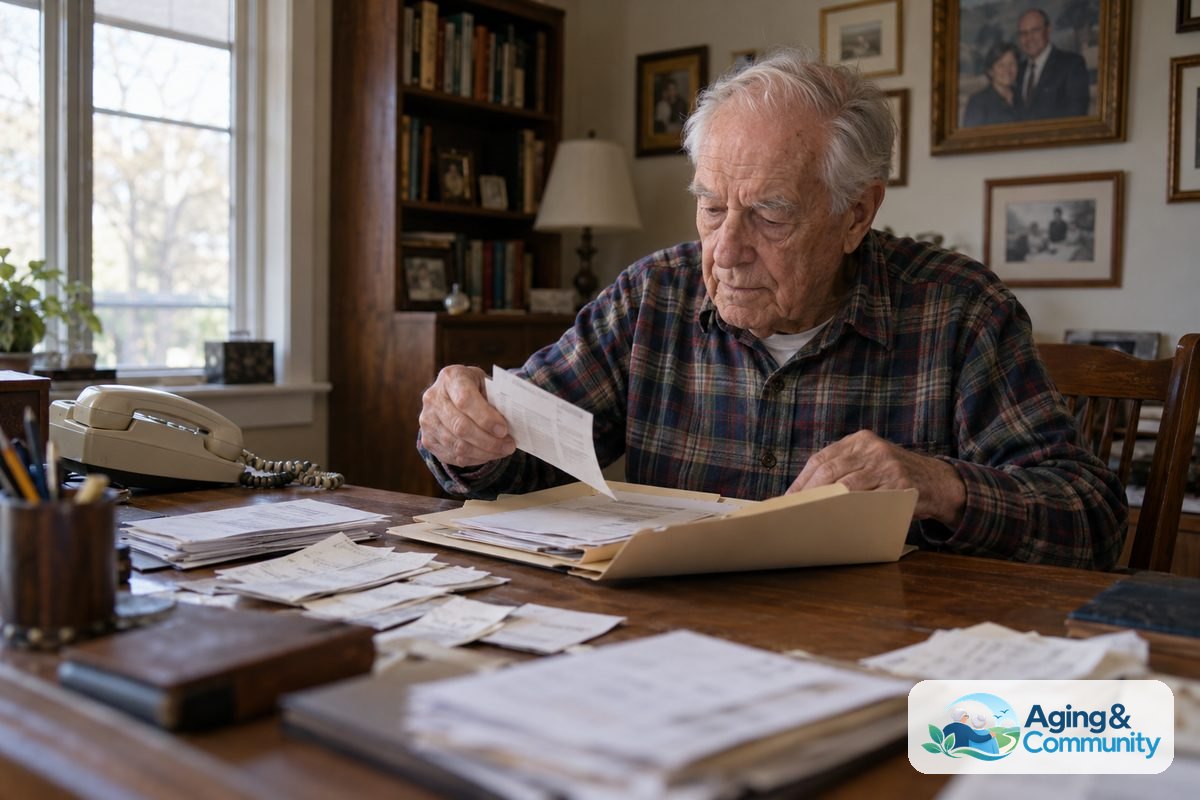
Choosing Heating Services Carefully
The best heating services for seniors are usually not the flashiest ones. A good service is licensed if required in the state, explains the work clearly, gives written details, and does not pressure the household to decide right away.
Before hiring anyone for furnace, boiler, chimney, or duct work, ask a few basic questions. If the person cannot answer clearly, pause and call another provider or ask a trusted family member to help review the offer.
- Is the company licensed or insured where required?
- Will the estimate be in writing?
- What work is included, and what is not included?
- Is there a warranty or service agreement?
- Can the utility company or local aging office confirm this program is real?
- Will payment be due all at once or in steps?
Be careful with door-to-door offers, urgent claims, or requests for payment methods that are hard to trace. A calm second opinion can save stress. For comfort items, some households also compare safe options like electric blankets for elderly family members, but these should be used only as directed and never with damaged cords or unsafe outlets.
Why Heat Can Be Harder With Age
Hot weather safety for older adults matters because the body may not adjust to heat as quickly as it once did. Some medicines, health conditions, and mobility limits can also make it harder to cool down, drink enough fluids, or notice that a room is getting too warm.
The National Institute on Aging says that hot weather can raise the risk of heat-related illness for some people as they age. This does not mean every warm day is dangerous. It does mean families should plan ahead, especially during long stretches of hot weather.
Common reasons heat can be harder include:
- Less awareness of thirst
- Homes without good cooling or airflow
- Limited ability to leave a hot room
- Medicines that may affect fluids or temperature control
- Heart, lung, kidney, or other health concerns
- Living alone without daily check-ins
If a person has health conditions, takes several medicines, or has had trouble in hot weather before, ask a doctor or pharmacist what precautions make sense. A physical therapist or occupational therapist can also suggest safer ways to move around the home, use fans, or reduce trips up and down stairs during hot days.
Hot Weather Safety Tips for the Home
Summer heat safety for seniors starts with a home plan. The goal is to reduce strain, keep routines simple, and make it easy to notice when the home is getting too warm.
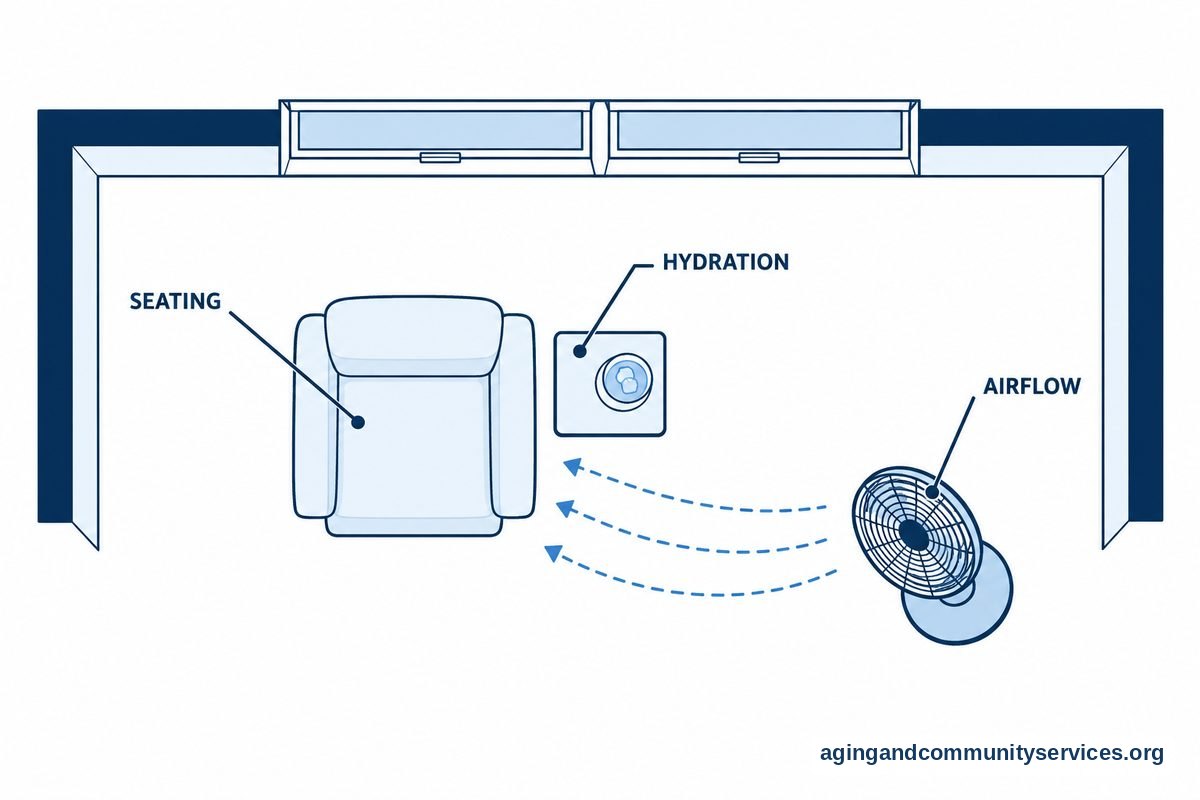
Start with the rooms used most. Close blinds during the hottest part of the day, use fans safely, and spend time in the coolest room. If the home does not have reliable cooling, ask local aging services about cooling centers, transportation, or utility help.
- Drink fluids regularly unless a doctor has given different instructions
- Keep light meals and easy drinks within reach
- Wear loose, lightweight clothing indoors
- Plan errands for cooler parts of the day
- Use a thermometer to check indoor temperature
- Arrange a daily call or visit during hot spells
Fans can help with comfort, but they may not be enough in very hot indoor air. If a home stays hot for many hours, consider going to a cooler place such as a library, senior center, community room, or trusted relative’s home.
Drinks are part of planning, too. Families looking for simple ideas can review summer drinks for seniors and ask a doctor if there are fluid limits or diet needs to follow.
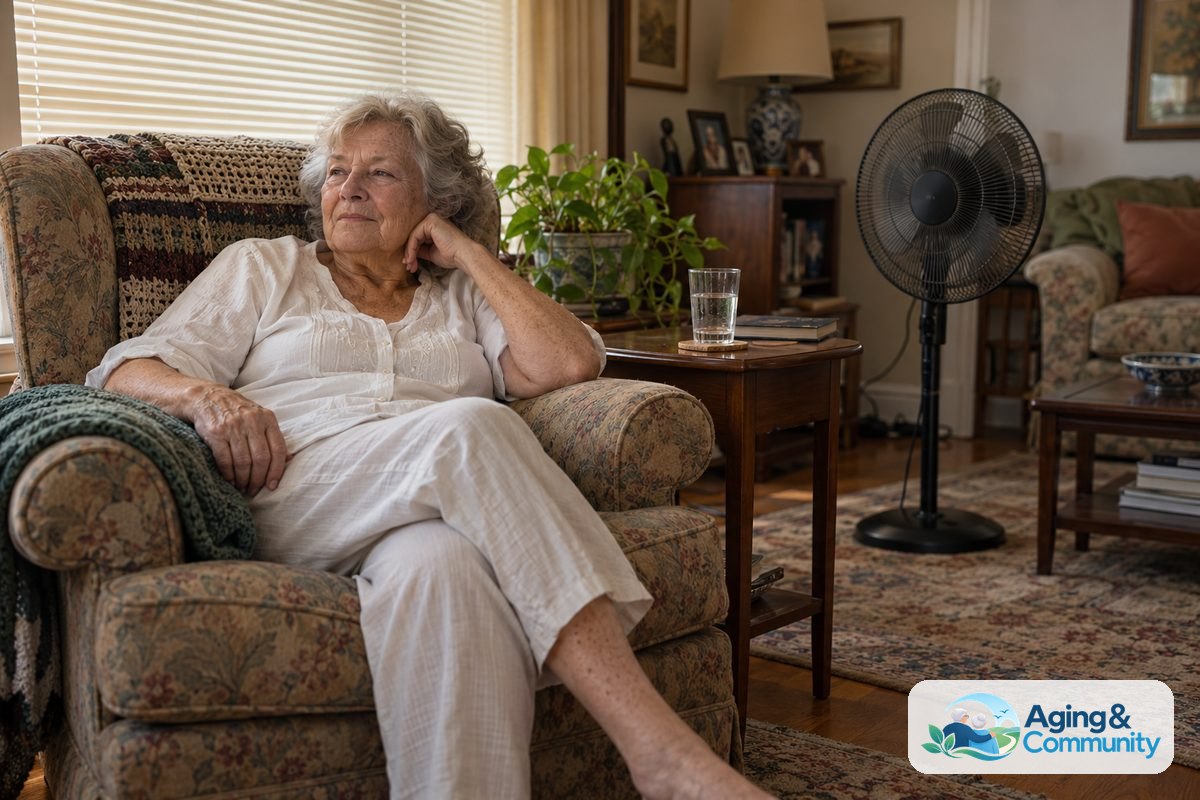
Simple Home Changes for Cold and Hot Weather
Heating assistance and hot weather precautions work better when the home is set up for daily comfort. Small changes can reduce wasted energy and make it easier to move through the day.
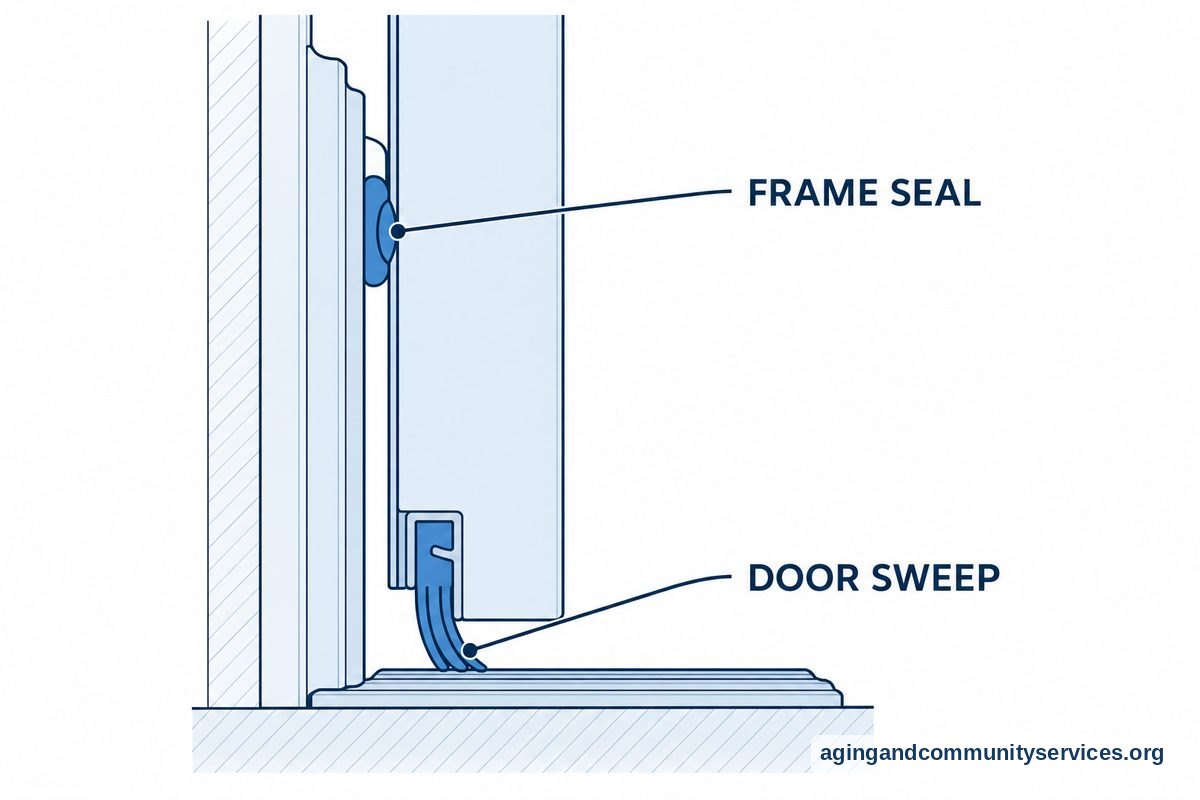
For cold weather, check for drafts around doors and windows. Keep furniture away from vents or radiators. Make sure heating equipment has clear space around it, and do not use an oven to heat a room.
For warm weather, focus on shade, airflow, and easier routines. Keep curtains closed when sun hits the windows. Move a favorite chair, phone charger, water, and medicines to the coolest safe room.
| Home Area | Cold Weather Step | Hot Weather Step |
|---|---|---|
| Living room | Keep vents clear and use warm layers | Close sunny curtains and use safe airflow |
| Bedroom | Add bedding that is easy to remove | Use light bedding and keep water nearby |
| Kitchen | Use small meals if standing is tiring | Choose no-cook meals during hot hours |
| Entryway | Reduce drafts and keep paths clear | Place shoes and keys where trips are less likely |
Comfort items can help when used safely. A warm robe, grippy slippers, and layered clothing may reduce the need to turn the thermostat up as much. If that is useful, compare warm fleece robe slippers with attention to fit, traction, and ease of washing.
It is also smart to review general home safety for seniors. Clear cords, remove clutter, and keep a phone nearby in the rooms used most often.
What You Can Do Next
Start with the most urgent need. If there is a shutoff notice, an empty fuel tank, unsafe heating equipment, or a home that stays too hot, call local help right away. If the situation is not urgent, use the next few days to make a clear plan.
- Call the utility company and ask about hardship programs, payment plans, and energy audits.
- Contact local aging services or community action and ask about heating assistance, cooling help, and weatherization.
- Gather bills, income records, identification, and proof of address in one folder.
- Ask a trusted person to review any repair estimate or service contract before signing.
- Set up a hot weather check-in plan with family, neighbors, or a local program.
- Ask a doctor or pharmacist whether medicines or health conditions call for special heat precautions.
Do not feel you have to solve everything in one call. Each step can make the next step easier. A written list, a folder of papers, and one reliable local contact can reduce confusion.
Frequently Asked Questions
What is heat assistance for seniors?
Heat assistance for seniors usually means help with home heating bills, fuel, heating system repairs, or weatherization. Some people also use the phrase to mean help staying safe during hot weather, such as cooling centers, fans, or utility support.
What heat precautions for seniors are most helpful?
Helpful precautions include checking indoor temperature, drinking fluids as allowed by a doctor, staying in the coolest safe room, limiting errands during hot parts of the day, and arranging regular check-ins. People with health concerns or several medicines should ask a doctor or pharmacist for personal advice.
How does heat affect seniors?
Heat can be harder on the body with age because thirst, temperature control, movement, and health conditions may change. Some medicines may also affect how the body handles heat or fluids. Ask a medical professional what to watch for based on the person’s health history.
Why is heat bad for elderly people in some situations?
Heat is not always bad, but long periods of high indoor or outdoor heat can add strain, especially when a person has limited cooling, lives alone, or has certain health conditions. Planning ahead can lower the risk of heat-related illness, according to national aging guidance.
Where can I find heating assistance for elderly relatives?
Start with the utility company, local community action agency, county social services office, and area agency on aging. Ask about heating programs, emergency fuel aid, payment plans, weatherization, and referrals to local nonprofits.
What are simple hot weather safety tips for older adults?
Keep the home shaded, use safe airflow, drink fluids if allowed, wear light clothing, avoid heavy chores during hot hours, and spend time in a cooler place if the home stays too warm. A daily check-in plan can also make hot days easier to manage.