

When you look at a standard hospital bed size vs twin bed, the two may seem identical at first glance. However, a hospital bed is typically five inches longer than a regular twin mattress to allow room for movement and positioning. A standard twin bed works well for everyday rest, while a hospital bed offers specialized adjustments for people who need extra support at home.
Setting up a bedroom for an aging parent or loved one requires careful planning. You want the space to feel comfortable, dignified, and easy to navigate. Choosing the right mattress dimensions affects everything from walkway clearance to how easily someone can get up in the morning.
Understanding the key differences helps families make a confident choice that supports daily routines and preserves independence. The right setup makes caregiving tasks smoother while keeping the bedroom feeling like a peaceful personal retreat.

Hospital Bed Size vs Twin Bed Comparison
While both beds take up a similar amount of floor space, their design features serve very different purposes. The table below outlines how these two options compare across key practical categories.
| Feature | Standard Hospital Bed | Standard Twin Bed |
|---|---|---|
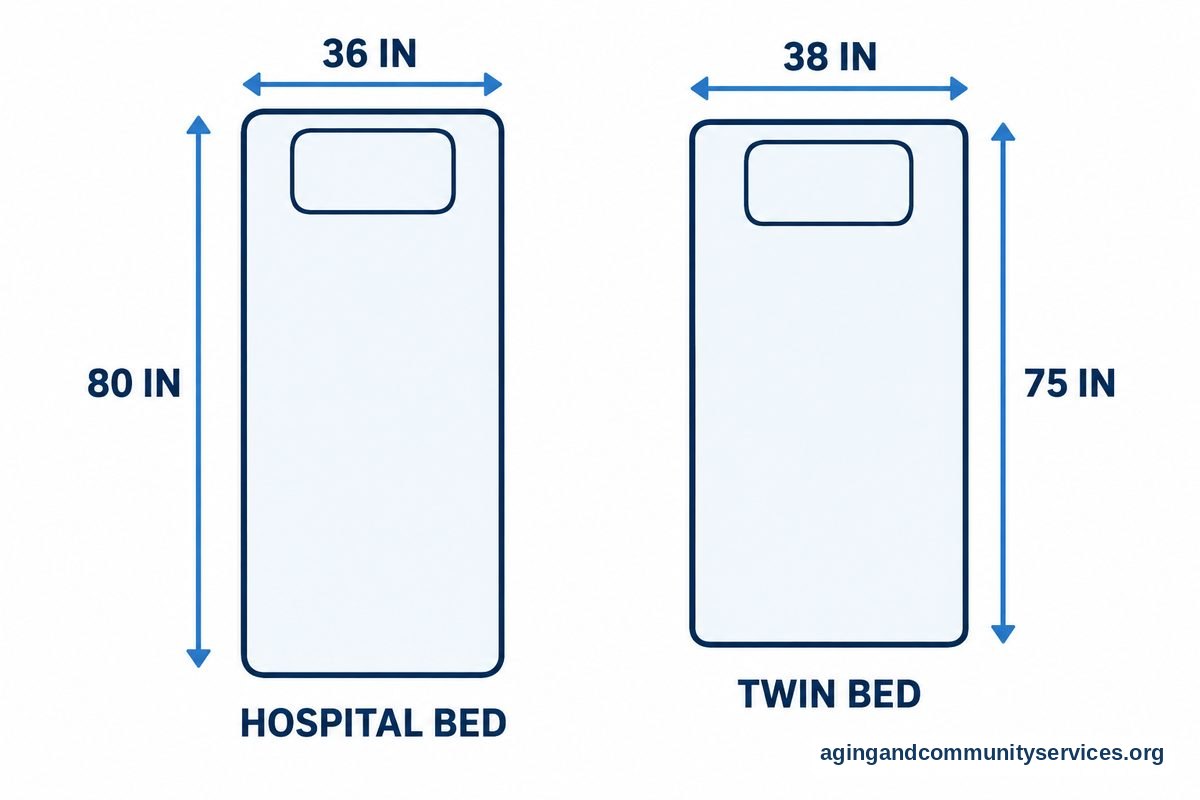
| Mattress Dimensions | 36 inches wide by 80 inches long | 38 inches wide by 75 inches long |
| Sheet Size Needed | Twin XL (extra long) or specialty fitted sheets | Standard twin sheets |
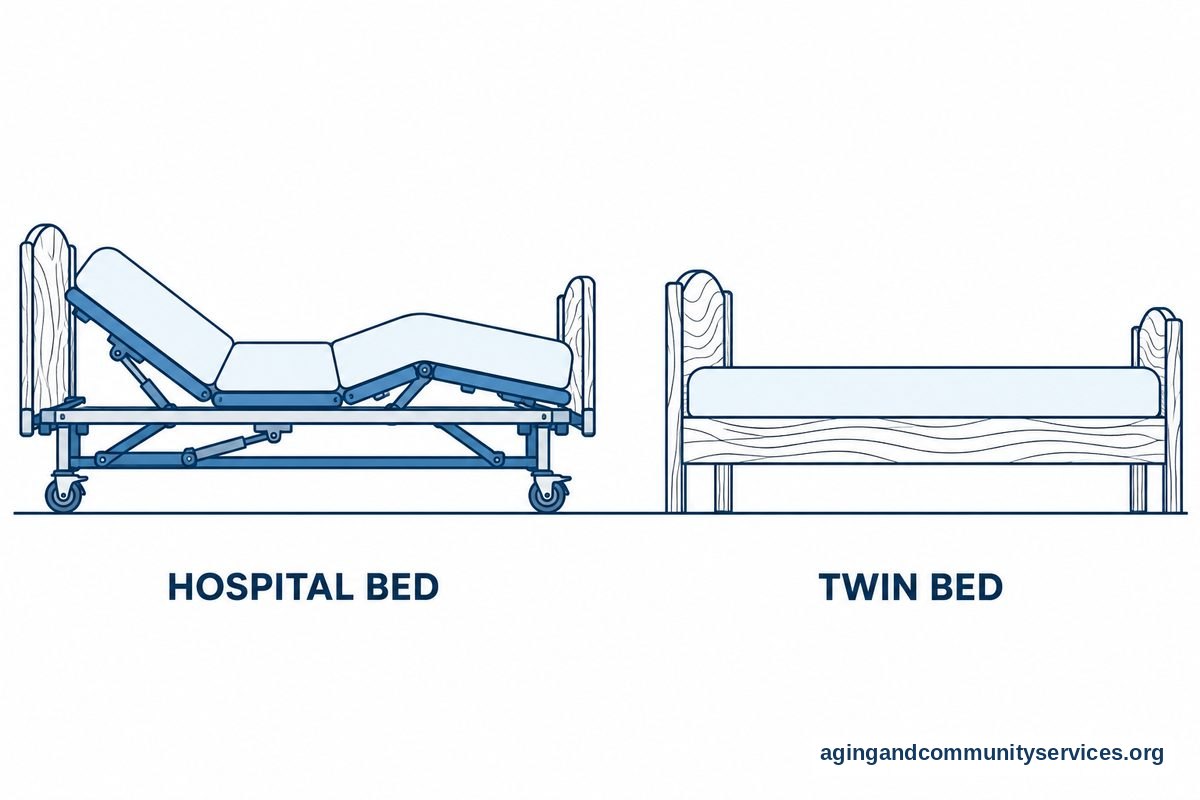
| Height Adjustability | Whole bed raises and lowers mechanically | Fixed frame height |
| Head and Foot Elevation | Electric or manual adjustments | Flat unless used with an adjustable base |
| Safety Rails | Built-in or attachable assist rails | Requires aftermarket rail attachments |
| Mobility and Wheels | Heavy-duty locking casters standard | Stationary feet or simple glide wheels |
| Weight Capacity | Usually 350 to 500 pounds | Usually 250 to 400 pounds |
Standard Hospital Beds
A standard hospital bed is designed specifically to assist with care and daily mobility. It measures 36 inches wide by 80 inches long, making it slightly narrower and longer than traditional home mattresses. This size matches the dimensions of a Twin XL mattress, which is the same length as a standard queen or king mattress.
These dimensions allow the bed frame to tilt, elevate the head, and raise the knees without bunching up the mattress or pushing the person off the end. The extra five inches of length provide vital clearance so taller individuals can stretch out comfortably while keeping their feet supported.
Who It Suits
When deciding which option suits your hospital bed vs adjustable bed needs, a hospital bed suits older adults who spend extended periods in bed or need assistance shifting positions throughout the day. The ability to raise the head helps with eating, reading, and breathing comfortably. Raising the foot of the bed can support healthy leg circulation and reduce swelling.
This option also benefits family caregivers. The entire frame can be raised to waist height, which protects the caregiver from back strain during linen changes or personal care. When resting or sleeping, the bed lowers close to the floor to make standing up safer. You can learn more about these practical differences by reviewing our guide on a hospital bed vs regular bed.
Limits to Keep in Mind
Hospital beds are heavy pieces of medical equipment with metal frames and visible motors. Even with modern wood-grain finishes, they look different from traditional residential furniture. Because the mattress is only 36 inches wide, it can feel narrow for individuals who like to roll from side to side.
You will also need to buy Twin XL sheets rather than standard twin linens. Standard twin fitted sheets are too short and will pop off the corners when the head or foot section moves upward. Many families also research how to choose a hospital bed for home to ensure their room layout accommodates the extra frame length.

Standard Twin Beds
A standard twin bed measures 38 inches wide by 75 inches long. It has been a staple in American homes for generations, offering a compact sleeping surface that fits easily into small guest rooms and secondary bedrooms. Because it is two inches wider than a hospital mattress, it offers a bit more elbow room for side sleepers.
Standard twin frames come in countless styles, from simple wooden platforms to upholstered headboards. This allows the bedroom to maintain a warm, familiar feel that blends seamlessly with the rest of the household decor.
Who It Suits
A standard twin bed suits people who are fully mobile, can stand up without mechanical help, and sleep comfortably on a flat surface. It works well for individuals who want a cozy, familiar bed that does not dominate the bedroom space.
It is also an affordable and accessible choice. Bedding, decorative quilts, and replacement mattresses are readily available in department stores and online shops. Families can choose from soft pillow-top mattresses to firm memory foam options depending on personal comfort preferences.
Limits to Keep in Mind
A standard twin bed cannot change height or elevate sections of the body. For someone with joint stiffness or balance concerns, sitting up from a completely flat position can take significant effort. Caregivers must bend over the bed to assist, which can lead to back pain over time.
At 75 inches long, a standard twin can also feel cramped for anyone taller than five feet ten inches. If a person spends a lot of time in bed, the inability to change positions can lead to skin pressure points. In these situations, families often look into specialized care options or explore a hospital bed vs hospice bed to meet evolving health requirements.

How to Decide
Choosing between these two bed styles comes down to mobility, comfort needs, and the level of assistance required each day. Here are practical situations to help guide your choice:
- Choose a hospital bed if your loved one needs help sitting up, eating meals in bed, or repositioning during the night.
- Choose a standard twin bed if your loved one moves independently, gets in and out of bed easily, and prefers traditional home furniture.
- Choose a hospital bed if a family member or visiting aide provides daily personal care and needs the bed raised to avoid back strain.
- Choose a standard twin bed if room space is very tight and the extra five inches of hospital bed frame would block a doorway or closet.
- Choose a hospital bed if your loved one is taller than five feet ten inches and needs extra foot room while resting.
- Choose a standard twin bed if you already have twin bedding and the individual sleeps comfortably on a flat surface without sliding.
Safe movement in the bedroom is essential for maintaining daily wellness. You can read helpful resources from the National Institute on Aging: Falls and Falls Prevention to learn simple ways to create secure pathways around furniture. For additional local support and home safety consultations, the Eldercare Locator (1-800-677-1116) connects families directly to community services.
Always consult with a primary care doctor, physical therapist, or occupational therapist before making a final decision. These professionals can evaluate physical strength and transfer skills to recommend the safest equipment for your specific situation.
Frequently Asked Questions
Can you put standard twin sheets on a hospital bed?
Standard twin sheets do not fit properly on a hospital mattress. A hospital bed mattress is 80 inches long, while standard twin sheets are made for 75-inch mattresses. Standard fitted sheets will pull loose or snap off the corners, especially when the head of the bed is raised. You should look for Twin XL fitted sheets or specialized hospital bed linens that have deep elastic corners.
Why is a hospital bed longer than a twin bed?
The extra length accommodates the articulation of the bed frame. When the head or knee section rises, the mattress flexes and shifts along the frame. If the bed were only 75 inches long, a person’s feet might press against the footboard or hang off the edge. The 80-inch length provides adequate room for comfortable movement and accommodates taller adults.
Does health insurance help pay for hospital beds?
In many cases, insurance plans provide coverage for hospital beds when a physician determines they are medically necessary. The doctor must provide written documentation showing that the individual requires frequent body repositioning, head elevation, or specific safety features. You can review details on coverage rules in our guide on does medicare cover hospital bed rentals.
Can a standard twin headboard attach to a hospital bed frame?
Most standard residential headboards do not attach directly to a hospital bed. Hospital beds have specialized steel frames with moving sections and integrated motor tracks. Using custom brackets may allow some universal headboards to fit, but you must ensure they do not interfere with the bed movement or the locking wheels. Many modern hospital beds come with their own matching headboards designed specifically for the frame.
How wide is the pathway needed around a hospital bed?
You should plan for at least three feet of clear walking space on at least one side of the bed. If a caregiver assists with transfers or personal care, having three feet of open space on both sides is ideal. This clear pathway allows room for walkers, wheelchairs, or portable lifts to move freely without bumping into dressers or walls.