How many seniors live alone in the United States? A practical answer is that roughly one in four people age 65 and older lives by themselves, which equals many millions of households across the country.
That number matters because living alone is common, not unusual. For many people, it is a normal part of later life, shaped by health, family, housing, income, location, and personal choice.

How Many People Age 65 and Older Live Alone?
Federal household surveys are the usual source for this question. They show that about one quarter of people age 65 and older live alone. In plain terms, if you know four people in this age group, one of them may live in a one-person household.
The share is not the same for every group. Women are more likely than men to live alone in later life. People in their late seventies, eighties, and beyond are also more likely to live alone than people in their late sixties.
Here is a simple way to read the statistics on seniors living alone:
| Question | Plain-English Answer |
|---|---|
| How common is living alone? | About one in four people age 65 and older lives alone. |
| Does living alone mean someone is unsafe? | No. Many people live alone safely with the right support, routines, and home setup. |
| Who is more likely to live alone? | Women, people at older ages, and people whose spouse or partner has died are more likely to live alone. |
| What should families look at? | Daily routines, home safety, transportation, meals, social contact, and backup plans. |
These figures are helpful, but they do not tell the whole story. A person who lives alone may still have close family, helpful neighbors, faith groups, transportation, and regular visits. Another person may share a home but still need more support.
Why So Many People Live Alone Later in Life
There is no single reason so many elderly live alone. Some people choose it because they value privacy, routine, and control over their home. Others live alone after a spouse, partner, sibling, or housemate is no longer in the home.
Housing patterns also play a role. Many people want to stay in a familiar home or neighborhood. The National Institute on Aging explains that aging in place often takes planning around the home, transportation, help with tasks, and support from family or community services.
Family life has changed too. Adult children may live in another city or state. Friends may move, stop driving, or have their own needs. These changes can make a one-person household more common, even when family ties are strong.
For a fuller look at day-to-day life, a guide to elderly living alone can help families think beyond the headline number and focus on what life at home is actually like.
What Elderly Living Alone Statistics Can and Cannot Tell You
Elderly living alone statistics are useful for seeing the size of the issue. They help show that living alone is common across the country. They can also guide planning for housing, transportation, meals, and local support.
But statistics cannot tell whether one person is doing well at home. They do not show whether the person has a good neighbor, a reliable ride, a working phone, or someone who checks in after storms or power outages.
It helps to separate the number from the person. A national statistic may tell you how common living alone is. A home visit, phone call, or calm conversation tells you what support may be useful for one person.
Families can use statistics as a starting point, not a final answer. The better question may be: What does this person need to keep daily life manageable, safe, and connected?
Common Needs for People Who Live Alone
Living alone does not automatically mean someone needs help. Many people handle meals, bills, transportation, home care, and social plans on their own. Still, certain areas are worth reviewing from time to time.
Useful areas to check include:
- Food and meals: Is there enough easy-to-prepare food in the home?
- Transportation: Can the person get to errands, social events, and appointments?
- Home setup: Are walkways clear, lights easy to reach, and often-used items placed safely?
- Communication: Is there a charged phone nearby during the day and night?
- Backup help: Is there someone to call if a ride falls through or a repair is needed?
- Social contact: Are there regular visits, calls, classes, faith gatherings, or neighbor check-ins?
Falls are one area where the home setup matters. The National Institute on Aging says simple changes, exercise, vision care, and medicine reviews may lower the risk of falls. A doctor, physical therapist, or occupational therapist can give advice that fits the person and the home.
If you are weighing whether a person can stay at home, a guide on living alone safely can help you sort through daily skills, support, and warning signs without making rushed choices.

Signs That More Support May Be Helpful
The goal is not to take over. The goal is to notice small changes early and add support in a respectful way. A little help with one task can make home life feel easier.
Look for patterns rather than one bad day. Everyone forgets an item, misses a call, or has a messy room sometimes. Repeated changes are more useful to notice.
Support may be worth discussing when you see:
- Unopened mail, unpaid bills, or missed appointments happening more often.
- Less food in the house, spoiled food, or skipped meals.
- More trouble keeping up with laundry, trash, cleaning, or home repairs.
- New dents on the car, confusion with routes, or worry about driving.
- Fewer calls, visits, hobbies, or community activities.
- More slips, near-falls, or worry about steps, rugs, or bathrooms.
These signs do not prove there is a medical problem. They are simply reasons to talk, listen, and consider practical support. If changes seem tied to balance, memory, mood, medicines, or daily function, it is wise to speak with a doctor or an occupational therapist.
Many families find it useful to review the challenges of living alone before making a plan. This can turn a tense conversation into a list of specific tasks to solve.

What the Reader Can Do Next
If you are asking about seniors living alone statistics because of someone you care about, start with a calm conversation. Ask what is working well first. Then ask what feels harder than it used to.
A practical first week might look like this:
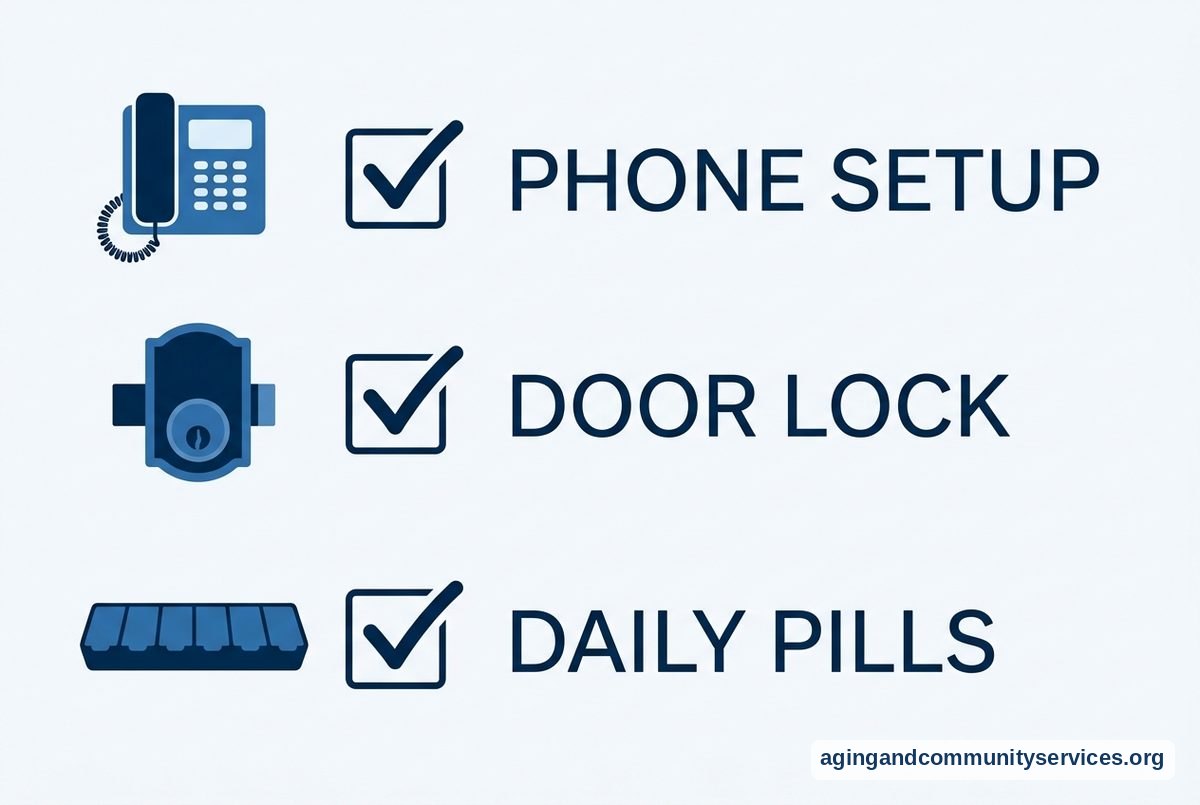
- Walk through the home together. Look at lighting, rugs, stairs, bathroom access, smoke alarms, door locks, and easy paths through each room.
- Make a contact list. Include family, neighbors, building staff, pharmacy, doctors, and local services. Keep one copy by the phone.
- Set a check-in rhythm. This could be a daily text, a few calls a week, or a regular visit. Let the person help choose the plan.
- Review errands and rides. List who can help with groceries, appointments, social plans, and urgent needs.
- Plan for home tasks. Decide who handles repairs, yard work, bills, mail, trash, and seasonal chores.
- Ask about preferences. Some people want help with transportation but not meals. Others want company but not advice.
For home changes, a guide to home safety for living alone can help you focus on simple, concrete steps. If the home has security concerns, home protection tips may also be useful.
Local help can make a big difference, especially when family is far away. The Eldercare Locator can connect families with local aging services in their area. It can be a starting point for transportation, meals, caregiver support, and other community programs.
Try to keep the person at the center of each choice. Living alone is not only a housing fact. It is also about dignity, routine, comfort, and connection.
Frequently Asked Questions
How Many Older Adults Live Alone?
About one in four people age 65 and older lives alone. That share changes by age, sex, marital status, health, income, and location. The number is large because the population age 65 and older is large.
How Many Elderly Live Alone?
A simple answer is that many millions of people age 65 and older live in one-person households. The most useful rule of thumb is about one in four. For an individual family, the more important question is whether the person has enough support for daily life.
What Are Common Elderly Living Alone Statistics?
The most common statistics look at the share of people age 65 and older who live alone, differences between women and men, and differences by age group. These numbers show patterns, but they do not measure the quality of a person’s support system.
What Are Useful Seniors Living Alone Statistics for Families?
Families often benefit from knowing that living alone is common, especially at older ages. It can also help to track personal details, such as missed meals, transportation needs, home safety concerns, and social contact. Those details guide better choices than national numbers alone.
Where Can I Find Statistics on Seniors Living Alone?
Federal household surveys are the main source for national living-alone figures. Local agencies on aging may also know what is common in your area. For practical help, community programs can be as important as national statistics.
Does Living Alone Mean Someone Should Move?
Not always. Many people live alone safely with planning, support, and home adjustments. A move may be worth discussing if daily tasks, transportation, safety, or social connection become hard to manage, but the decision should include the person’s needs and preferences.