

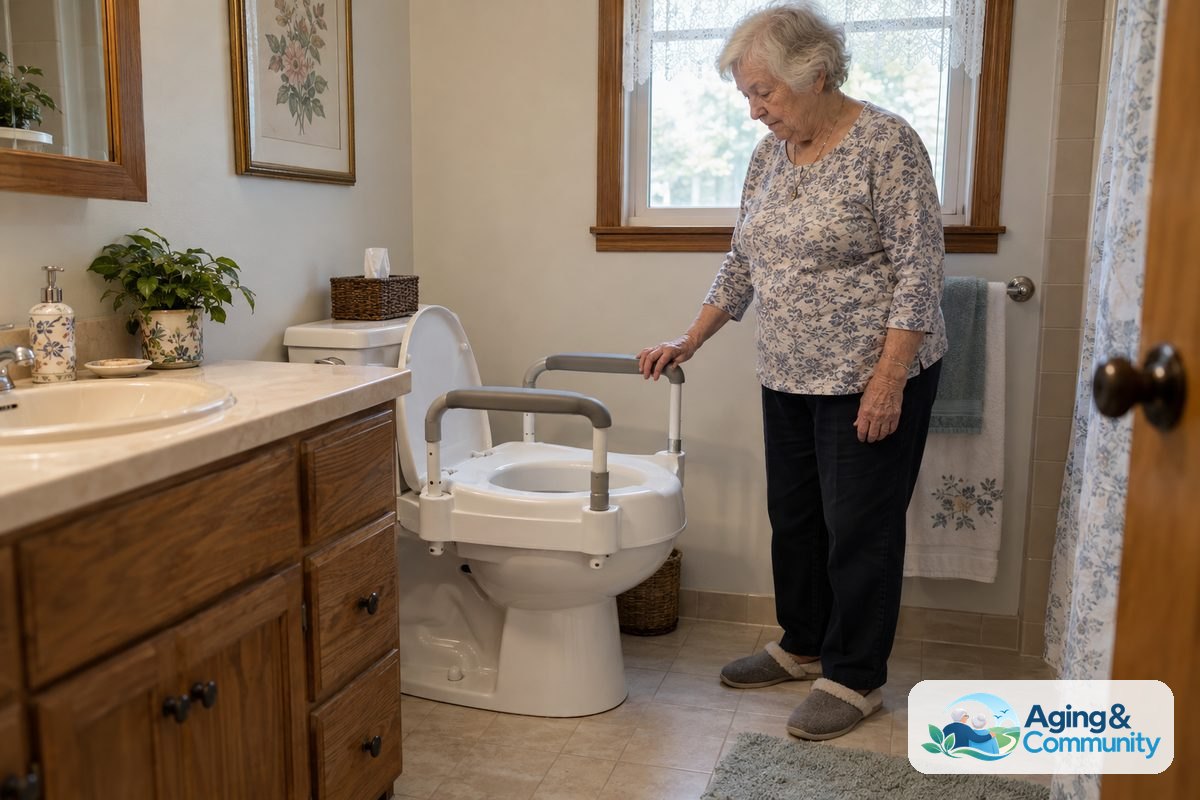
Learning how to choose a raised toilet seat comes down to checking your toilet bowl shape, finding the right added height, and deciding if you need support arms. A well chosen seat reduces strain on your knees and hips each time you sit down or stand up. Taking a few simple measurements before you shop ensures a secure and comfortable fit for your home.
Measure Your Toilet Bowl Shape and Size
Before looking at seat styles, you need to know what kind of toilet you have in your bathroom. Most residential toilets in the United States come in two standard shapes: round or elongated. A round bowl is shorter and more compact, while an elongated bowl is oval and extends further out into the room.
To find your bowl shape, take a standard tape measure and measure from the center of the two seat bolts at the back of the bowl to the very front edge of the porcelain rim.
- Round bowls: Measure approximately 16.5 inches from the mounting holes to the front edge.
- Elongated bowls: Measure approximately 18.5 inches from the mounting holes to the front edge.
Matching the shape of your toilet is essential. If you put an elongated riser on a round bowl, it will overhang and may shift when you sit down. If you put a round riser on an elongated bowl, you lose valuable seating space at the front.

Determine the Right Height for Your Needs
Raised seats typically add between two and six inches of height to your existing commode. Finding the right height makes sitting down smooth and standing back up far less tiring on your joints. A physical therapist or occupational therapist can offer personalized guidance on the exact height that suits your body mechanics.
A good rule of thumb is to measure the distance from the floor to the crease behind your knee while you are wearing your normal indoor shoes. When you sit down, your hips and knees should sit at roughly a 90 degree angle, with your feet resting flat on the floor.
Next, measure the current height of your toilet from the floor to the top of the porcelain rim. The difference between your knee crease measurement and the height of your toilet rim gives you the target riser height. For example, if your knee crease is 19 inches high and your toilet rim is 15 inches high, a four inch seat riser will create an ideal seating position.
If you prefer a permanent solution without an added attachment, you might consider tall toilets for seniors that build this comfortable height directly into the porcelain base.
Compare the Main Mounting and Attachment Styles
Not all seats attach to the porcelain in the same way. You can choose from three main mounting designs based on how permanent you want the seat to be and how often you plan to clean beneath it.
| Attachment Style | How It Works | Best For |
|---|---|---|
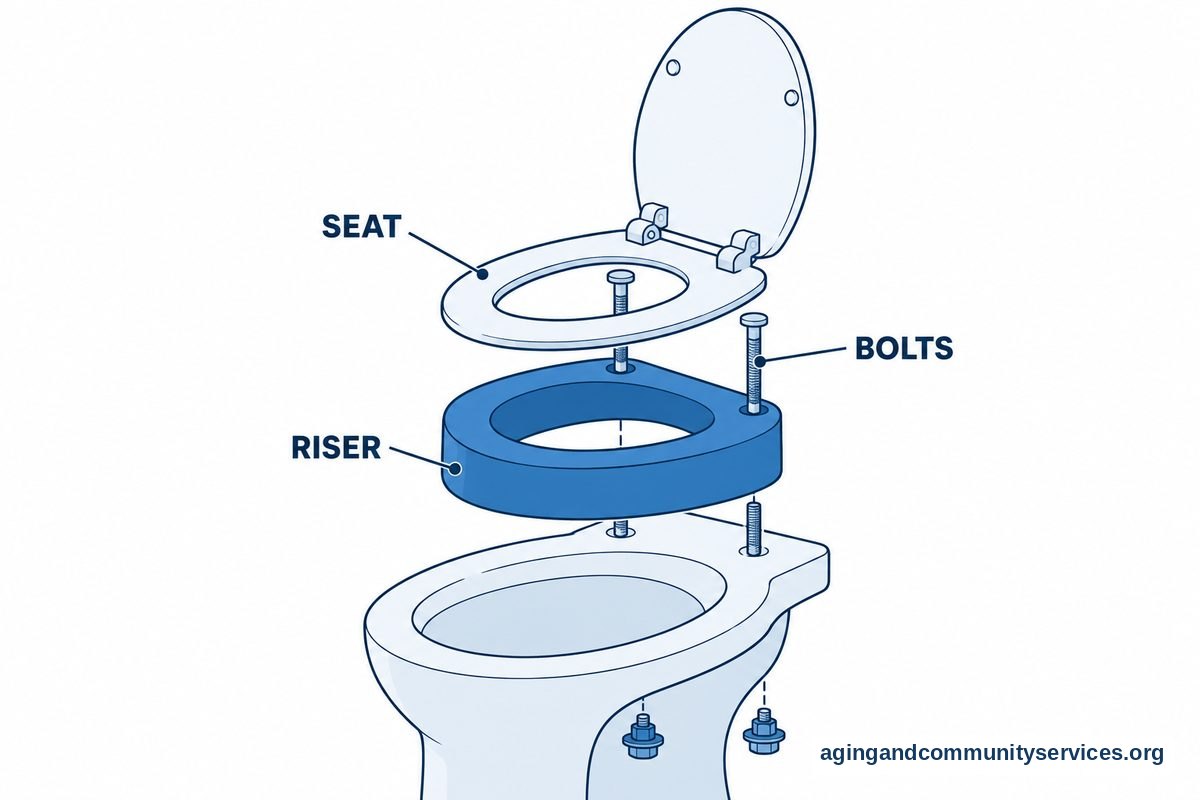
| Under the Seat Riser | Bolts permanently between the bowl and your original lid using long screws. | Homes where you want the bathroom to look unchanged and keep your original lid. |
| Clamp-On or Lock-In | Rests on the bare rim and secures with a front or side turning knob. | Quick tool-free setup and solid stability without removing hardware. |
| Slip-On (Portable) | Rests directly on top of the bowl rim using friction and rubber pads. | Travel or temporary recovery periods where you need fast removal. |
Under the seat risers are popular because they allow you to keep your regular toilet seat and lid attached. Guests can lower the standard lid, and the bathroom keeps its familiar look. Clamp-on models, on the other hand, replace your lid entirely but can be tightened firmly against the porcelain with an adjustable dial, making them very sturdy.
Decide If You Need Integrated Armrests
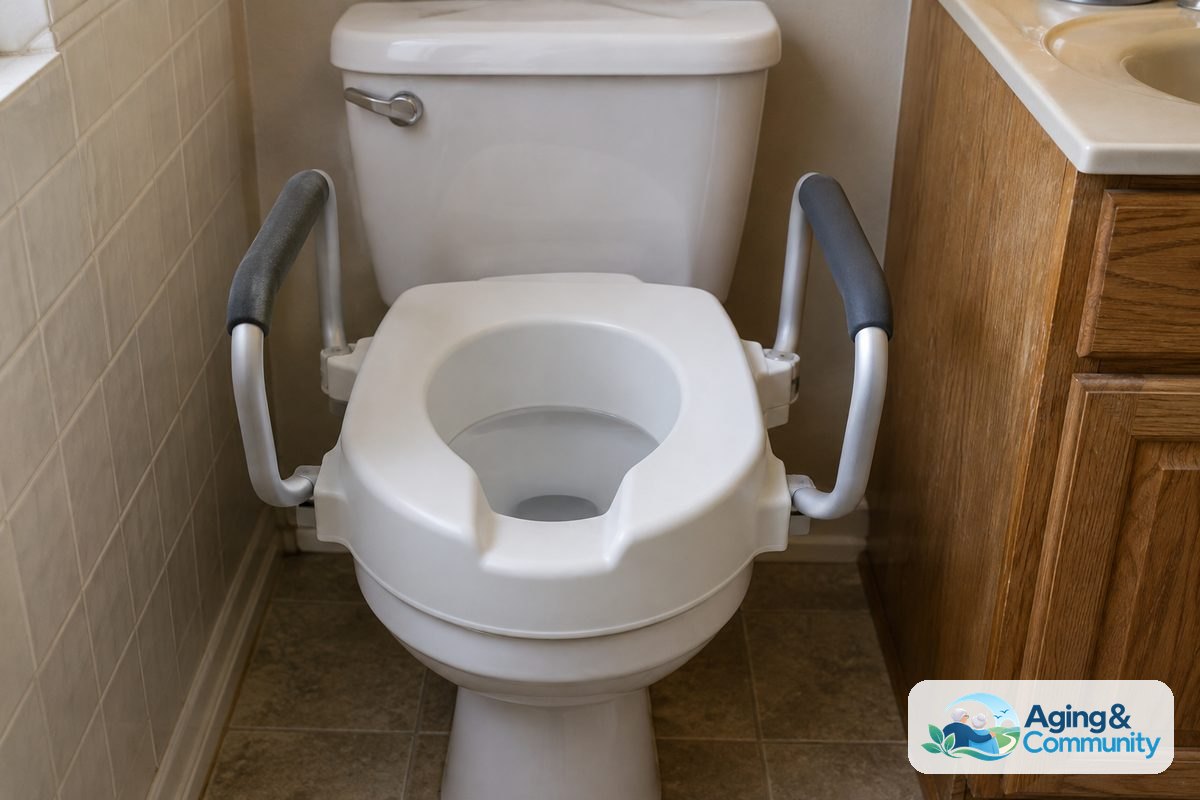
Many elevated seats come with built-in padded armrests. These handles give your upper body a firm place to push down when rising, which reduces the effort required from your legs and lower back.
Consider your bathroom layout before choosing a seat with handles. Padded arms widen the footprint of the toilet. Make sure there is enough clearance between the toilet and nearby walls, vanity counters, or towel bars so your arms have room to move freely.
If your bathroom has tight clearances, or if you prefer arms that attach directly to the floor or wall, you can explore standalone toilet safety rails for elderly family members instead. Separate rails allow you to keep a wider or narrower hand position according to what feels most stable to you.
Check Padding, Weight Capacity, and Cleaning Needs
Beyond size and shape, small design details have a big impact on your day-to-day comfort and bathroom hygiene. Taking these factors into account helps ensure you pick a model you enjoy using every day.
- Weight capacity: Most standard seats support up to 250 or 300 pounds. Bariatric models use heavy duty reinforced plastic or aluminum frames and support 400 to 600 pounds. Always verify the manufacturer rating before buying.
- Cushioning: Standard plastic seats are firm, durable, and simple to wipe clean. If you experience skin sensitivity, pressure sores, or joint pain, a padded foam model provides a softer surface, though the vinyl cover requires gentle cleaning to avoid tears.
- Hygiene cutouts: Look for a contoured design with open spaces in the front and back. These cutouts allow you to clean yourself thoroughly while remaining seated.
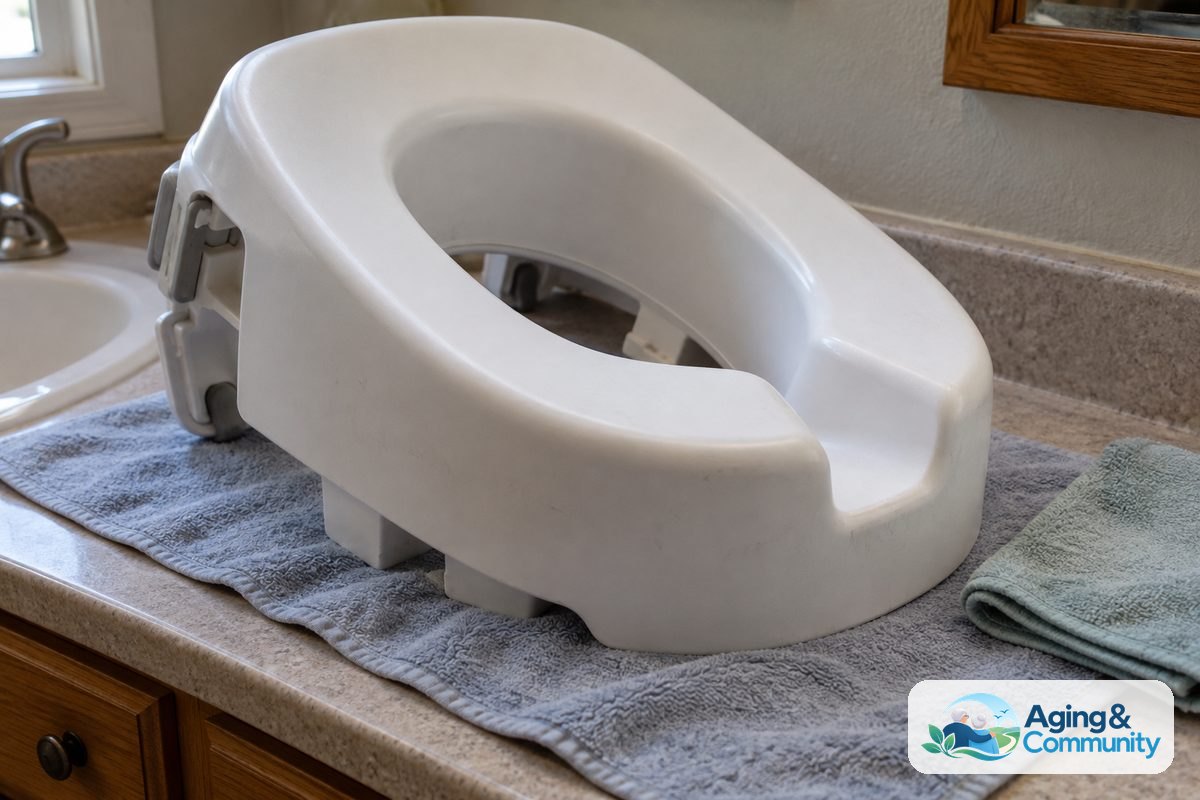
- Ease of removal: Bathrooms require frequent cleaning. Look for models with smooth, seamless plastic that does not trap moisture and can be removed quickly for washing.
Look at Alternative Options for Daily Support
An elevated seat is an excellent choice for many homes, but it is not the only option available for personal care. Reviewing a comparison of a raised toilet seat vs commode can help you decide if a multi-use bedside frame might better serve your current mobility level. A bedside commode can be placed right next to a bed at night and moved over the standard toilet during the day.
Adding sturdy wall supports around the room creates an even safer environment. You can review guidelines on the proper grab bar height for toilet installations so you have secure handholds right where you need them most. The National Institute on Aging offers helpful resources on falls and falls prevention that explain how simple home modifications support personal safety.
What to Do Next
Taking a few methodical steps right now will make your purchase simple and stress free.
- Grab your tape measure: Write down the distance from your toilet seat bolts to the front rim. Note whether your bowl is round or elongated.
- Check your seating height: Measure the distance from the floor to the back of your knee while wearing shoes, then measure the height of your current toilet rim. Subtract the rim height from your knee height to find the number of inches you need to add.
- Measure the surrounding space: Check the distance from the center of the toilet to the nearest side wall or bathroom cabinet to ensure handles will fit without obstruction.
- Talk with an expert: Ask an occupational therapist or physical therapist to review your measurements and recommend the best attachment style for your mobility level.
- Look into community assistance: If you need guidance on local home modification programs, you can reach out through the Eldercare Locator to connect with community services in your area.
Frequently Asked Questions
How much height does a raised toilet seat usually add?
Most models add between two and six inches of height. A four inch riser is the most common choice, but your ideal measurement depends entirely on your height and the current height of your toilet bowl.
Can I use my regular toilet seat with a riser?
Yes, if you choose an under the seat riser (sometimes called an elevated toilet seat spacer). These units bolt directly underneath your existing seat and lid, allowing you to use your regular seat as usual. Clamp-on and slip-on designs replace your existing seat.
Are raised toilet seats safe for older adults?
When installed and sized correctly according to the manufacturer instructions, these seats provide a firm and stable surface. Choosing a model that bolts or clamps securely prevents shifting. Checking the tightness of the hardware periodically ensures it stays secure.
Can a raised toilet seat be installed without tools?
Many clamp-on and slip-on models require no tools at all. They use hand-tightened dials, knobs, or tension brackets to secure the unit to the porcelain rim. Under the seat models generally require a standard screwdriver and wrench to install the longer mounting bolts.
How do you keep a raised toilet seat clean?
Clean the unit regularly using warm water and a mild household cleaner or disinfectant wipe. Avoid harsh bleach mixtures or abrasive scouring powders, as these can scratch the plastic surface and create small crevices where dirt can collect.