

Learning how to choose recliner sofa furniture comes down to finding the right balance of physical support, living room space, and simple controls. A good reclining couch provides steady comfort for resting while making it easy and safe to stand up. Taking time to evaluate your room layout, personal body measurements, and daily habits ensures you pick a piece that serves your household well for a long time.

Measure Your Living Space and Walking Paths
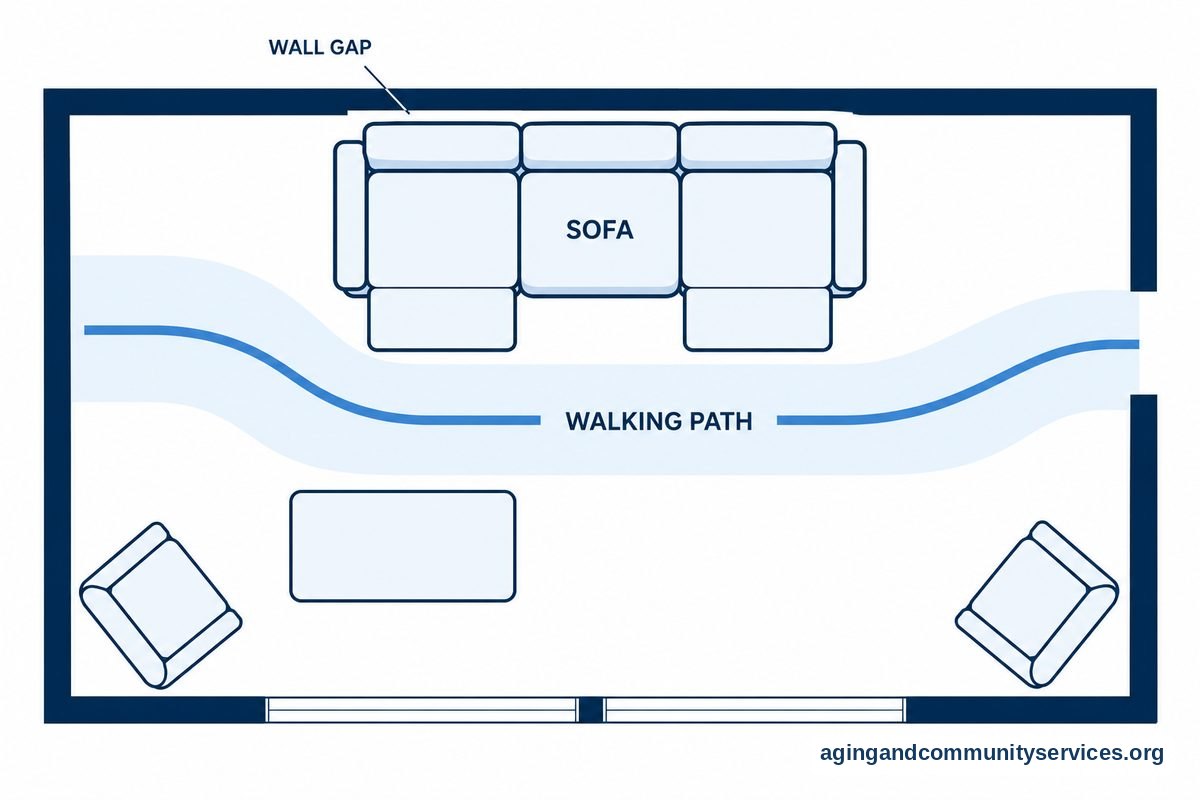
Before looking at colors or cushion styles, grab a tape measure. Reclining sofas require much more floor area than traditional stationary couches because the back tilts back and the footrest extends outward. Knowing your exact room dimensions keeps pathways clear and comfortable to navigate.
A crowded room can become a tripping hazard, which is an important safety detail. The National Institute on Aging offers helpful guidance on falls and falls prevention that highlights keeping walkways clear of furniture edges and cords. Measure the distance between your sofa, coffee tables, and doorways so everyone can move around with ease.
- Full Recline Depth: Measure the space needed when the headrest is fully tilted back and the footrest is all the way up.
- Wall Clearance: Standard recliners need up to twelve inches of space behind the couch, while wall hugger models need only a few inches.
- Walkway Clearance: Leave at least three feet of open floor space in front of the extended footrest so people can walk past without squeezing through.
- Doorway Width: Check the width of your front door, hallways, and interior doors to make sure the delivery team can bring the sofa inside.
Select the Right Reclining Mechanism
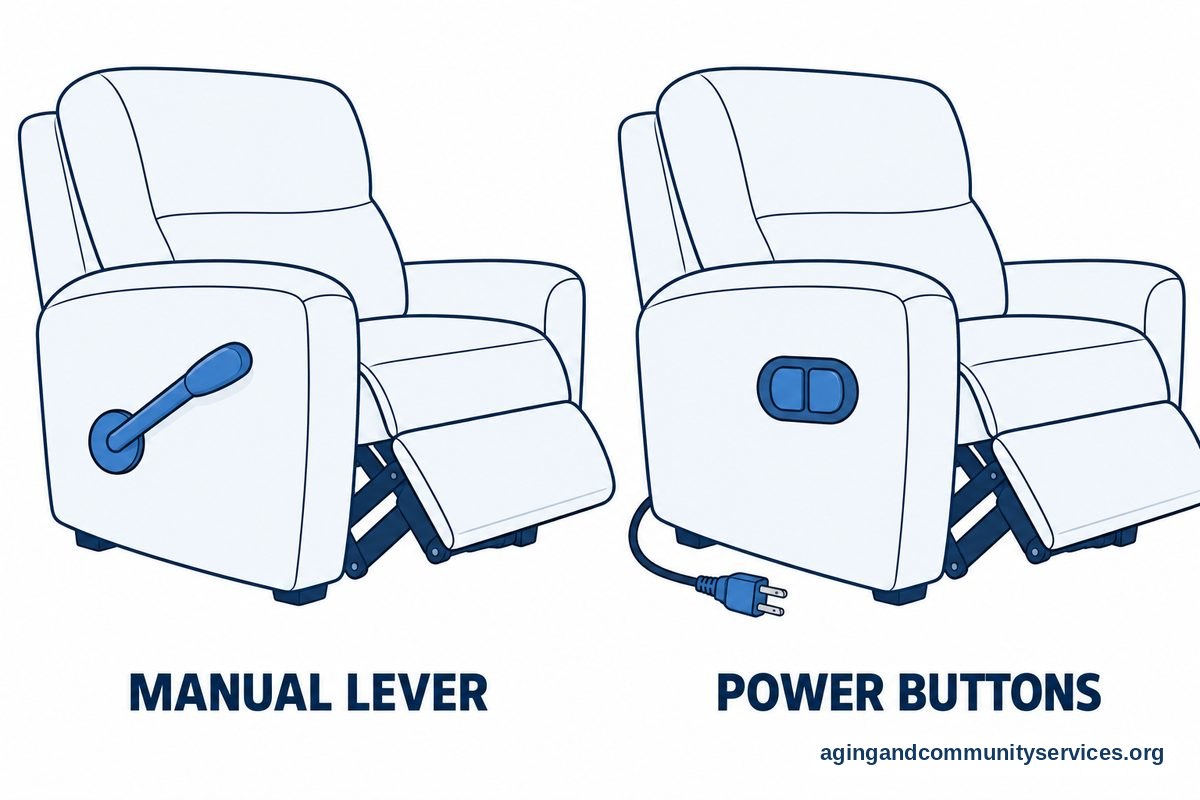
Reclining sofas operate in two primary ways: manual handles or electric power buttons. The right choice depends on your hand strength, mobility, and access to electrical wall outlets.
Manual recliners use a lever, pull tab, or simple body pressure to push the seat back. These models do not require power cords, meaning you can place them anywhere in the middle of a room. However, closing a manual footrest often requires significant leg strength, which can be difficult for tired knees or tender hips.
Power reclining sofas use electric motors controlled by push buttons, a wired remote, or a toggle switch. These allow you to stop the backrest and footrest at any angle you find relaxing. If standing up from a deep couch is a daily challenge, you might also consider how to choose a lift chair or look into lift chairs for elderly family members who need a gentle boost to their feet.
Choose Upholstery for Comfort, Grip, and Cleaning
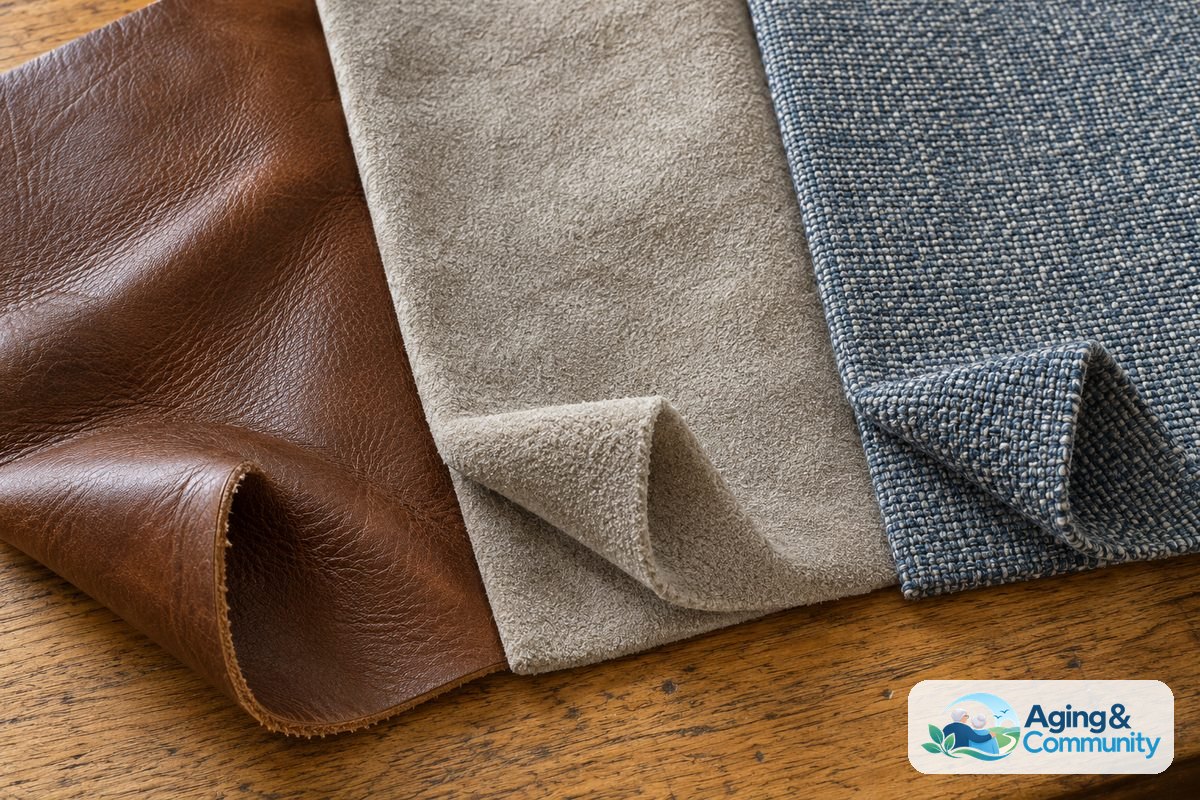
The fabric covering your sofa affects how stable you feel when sitting down and how simple it is to wipe away everyday spills. You want a material that feels welcoming against your skin while remaining easy to care for over time.
Genuine leather is durable and cleans easily with a damp cloth, but it can feel chilly in the winter and sticky in the warm summer months. Smooth leather can also be somewhat slick, which makes it harder to maintain good posture if you tend to slide forward. Textured fabrics and performance microfibers offer better physical traction, helping you stay upright and stable while sitting.
Performance fabrics are specially treated to resist liquid stains and odors, making them wonderful for busy living rooms. If you prefer cloth, look for tightly woven materials that will not stretch out or snag easily over years of daily relaxation.
Match Cushion Support and Seat Dimensions to Your Body
A couch that is too deep or too soft can make it surprisingly difficult to stand up. When cushions sink down several inches, your hips drop below your knees, putting unnecessary strain on your back and joints as you push yourself upright. Proper ergonomics make all the difference in everyday comfort.
Look for medium-firm or high-density foam cushions. These materials provide steady support under your thighs and lower back while keeping their shape. If you need specialized seating ideas designed for joint comfort, reviewing options for recliners for seniors can help you see which seat heights and cushion depths promote good alignment.
| Measurement | Ideal Fit Guideline | Why It Matters |
|---|---|---|
| Seat Height | Knees bent at a ninety-degree angle | Allows your flat feet to push firmly against the floor when rising. |
| Seat Depth | Two to three fingers of space behind knees | Keeps the edge of the cushion from pressing against blood vessels. |
| Armrest Height | Elbows rest naturally without hunched shoulders | Provides stable leverage for hands and wrists when standing up. |
Look for Thoughtful Safety and Convenience Features
Modern reclining sofas come with many useful features designed to make relaxing at home safe and effortless. When you plan to remain in your familiar home as you grow older, small details can have a large impact on your daily convenience. Reading about aging in place can help you understand how simple home modifications support lasting independence.
Consider these practical design features when shopping:
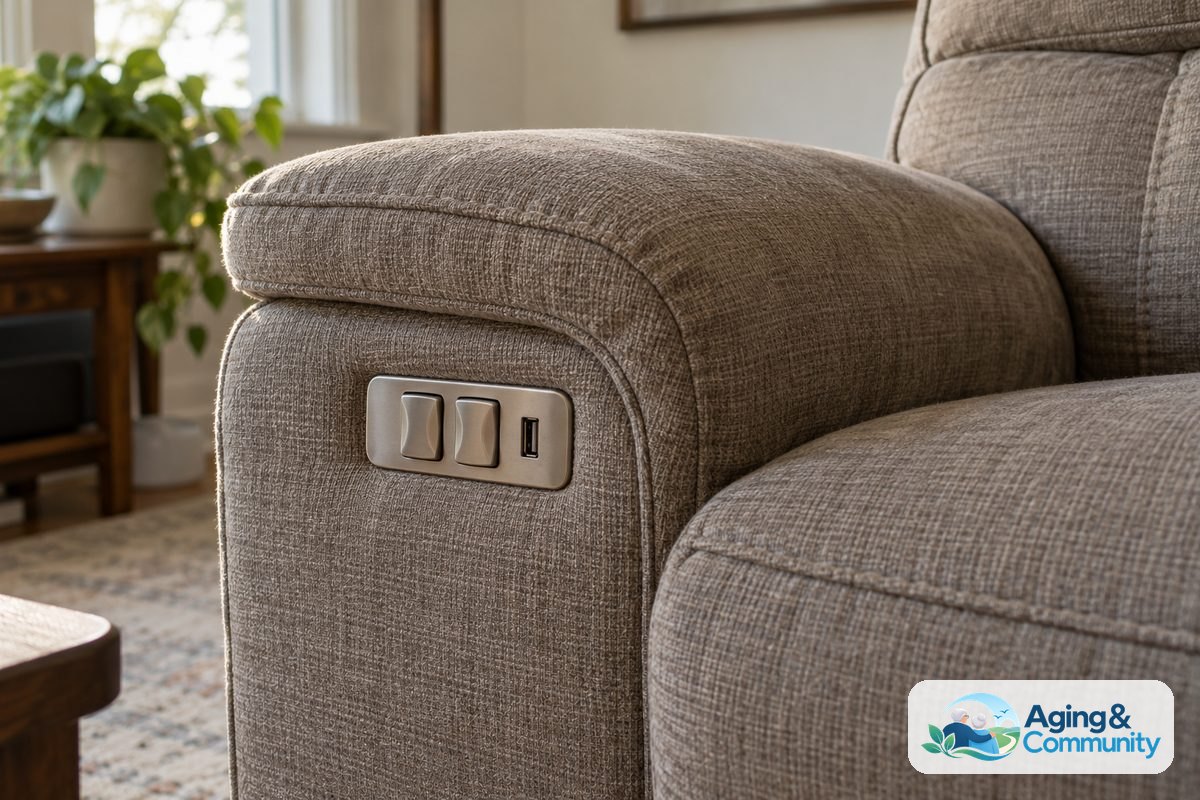
- Easy-to-Reach Controls: Buttons should sit high on the outer arm or on a tethered remote so you do not have to lean sideways to find them.
- Heavy Armrests: Wide, sturdy wooden-framed arms give you solid places to lean your body weight when getting in and out of the seat.
- Built-in USB Ports: Keeping your phone or tablet charged right by your side prevents awkward stretching toward distant wall outlets.
- Battery Backup: For power recliners, an emergency battery pack allows the footrest to return to a seated position during a sudden power outage.
- Independent Controls: Dual-motor options let you raise your legs while keeping your back upright, which is ideal for reading or watching television.
What You Can Do Next
Taking a few organized steps today can help you narrow down your choices without feeling rushed or overwhelmed by retail showroom displays.
Start by measuring your favorite sitting spot in your current home. Note the exact seat height from the floor to the top of the cushion, as well as the depth from the front edge to the backrest. Use these numbers as your baseline when comparing new models.
Next, visit a local furniture showroom in person whenever possible. Sit on the recliner sofa for at least ten to fifteen minutes. Practice operating the footrest, adjusting the back, and standing up several times to make sure your arms and legs feel comfortable with the movement. If you need tailored advice on seating posture due to joint aches, speaking with a physical therapist or occupational therapist can give you great clarity on the right firmness and height for your body.
Frequently Asked Questions
How to choose a recliner sofa that fits smaller rooms?
To fit a smaller living area, look for a wall hugger or zero wall clearance recliner sofa. These models are built on a track that glides forward as the back tilts back, requiring as little as two to four inches of space away from the wall. You can also compare them against single recliner chairs for elderly households if a full three-seat sofa takes up too much floor space.
Is a power recliner sofa better than a manual one?
Power recliners are often much easier to manage for older adults because they work with the press of a simple button rather than physical arm or leg strength. They also let you stop the footrest at any position you prefer. Manual recliners do not need electrical cords, but locking the footrest back into place can require significant leg power.
What fabric is easiest to keep clean on a reclining couch?
Performance microfiber and treated polyester blends are generally the easiest materials to keep clean. They resist liquid stains, withstand daily friction, and can be cleaned using mild soap and warm water. Top-grain leather is also simple to wipe clean, though it requires occasional conditioning to keep the material supple and soft.
How wide should doorways be for a reclining sofa delivery?
Most standard reclining sofas require a doorway clearance of at least thirty-two to thirty-six inches. Many manufacturers design reclining couches with removable seat backs, which allows each section to pass through narrower doors more easily. Always ask the retailer for the unassembled delivery dimensions before scheduling your drop-off.