

Watching a demonstration can make all the difference when you are learning how to use a quad cane video instructions help you see the right rhythm in action. A quad cane provides four sturdy points of contact with the floor, offering more balance than a standard stick. With a few simple steps, you can move smoothly and build confidence as you walk around your home or neighborhood.

Steps to Walk Safely with a Quad Cane
- Adjust the cane to the correct height. Stand tall with your everyday walking shoes on, let your arm rest at your side, and set the handle so it lines up with the crease of your wrist.
- Hold the cane on your stronger side. Place the handle in the hand opposite your weaker or injured leg so your body weight stays balanced across both sides.
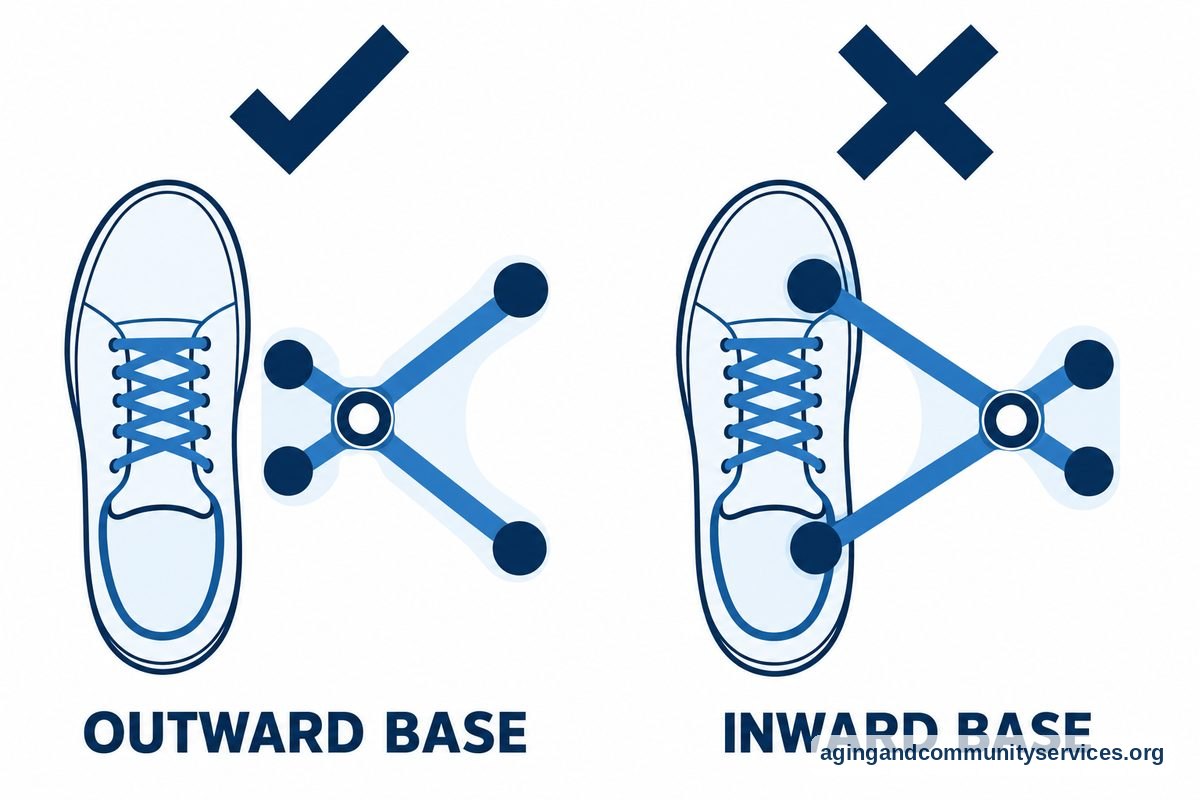
- Turn the flat side toward your body. Ensure the two legs of the base that stick out further point away from your feet so you do not trip over the frame.
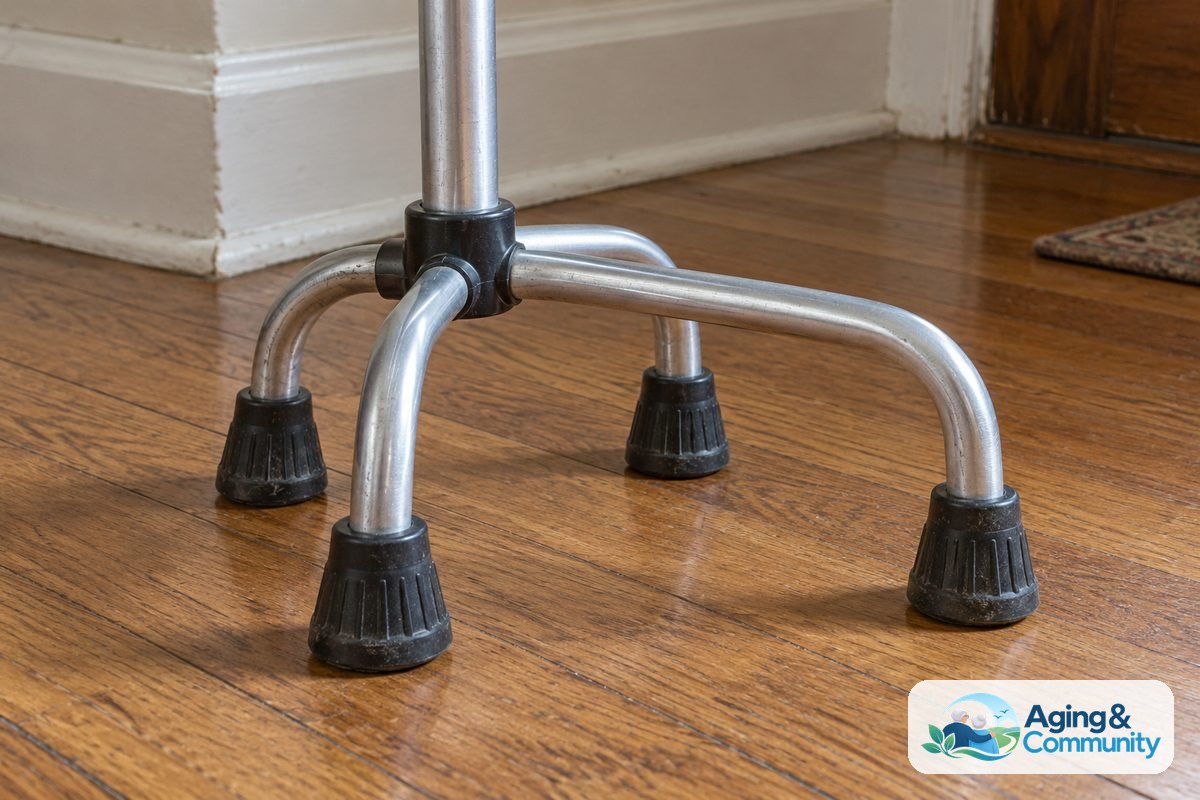
- Move the quad cane forward first. Place the cane about one small step ahead of you, making sure all four rubber tips touch the floor at the exact same moment.
- Step forward with your weaker leg. Move your weaker foot forward to meet the cane, gently pressing down on the handle to support your weight.
- Follow through with your stronger leg. Step your stronger foot past your weaker foot onto stable ground while keeping a firm, relaxed grip on the handle.
Learning the rhythm takes a little practice. You can read our detailed breakdown on how to use quad cane devices for more everyday walking scenarios.
Common Mistakes to Avoid
- Placing the cane on the weak side. Holding the cane on your injured side causes you to lean awkwardly and can throw off your natural balance.
- Facing the base the wrong way. Quad canes have an asymmetrical base, and turning the wider side toward your feet creates a serious tripping hazard.
- Rocking onto two tips. All four rubber feet must land flat on the ground at the same time to give you solid support.
- Setting the handle too high or too low. A handle that is too high strains your shoulder, while one that is too low causes you to hunch forward.
- Taking steps that are too large. Reaching too far forward with either the cane or your feet reduces your stability and makes walking tiring.
When to Get Professional Advice
If you feel unsteady, dizzy, or unsure about your fit, ask a professional for guidance. A physical therapist or occupational therapist can watch you walk in person, adjust the device to your exact height, and show you personalized safety techniques. You can also reach out to your primary care doctor if you experience new joint pain or sudden weakness in your legs.
When you speak with your therapist or doctor, describe when you feel most unstable. Tell them if you struggle during transitions, such as standing up from a low armchair or stepping over door thresholds. If you need help finding local mobility clinics or physical therapy programs, the Eldercare Locator connects older adults with support services right in their community.
Adjusting and Sizing Your Quad Cane
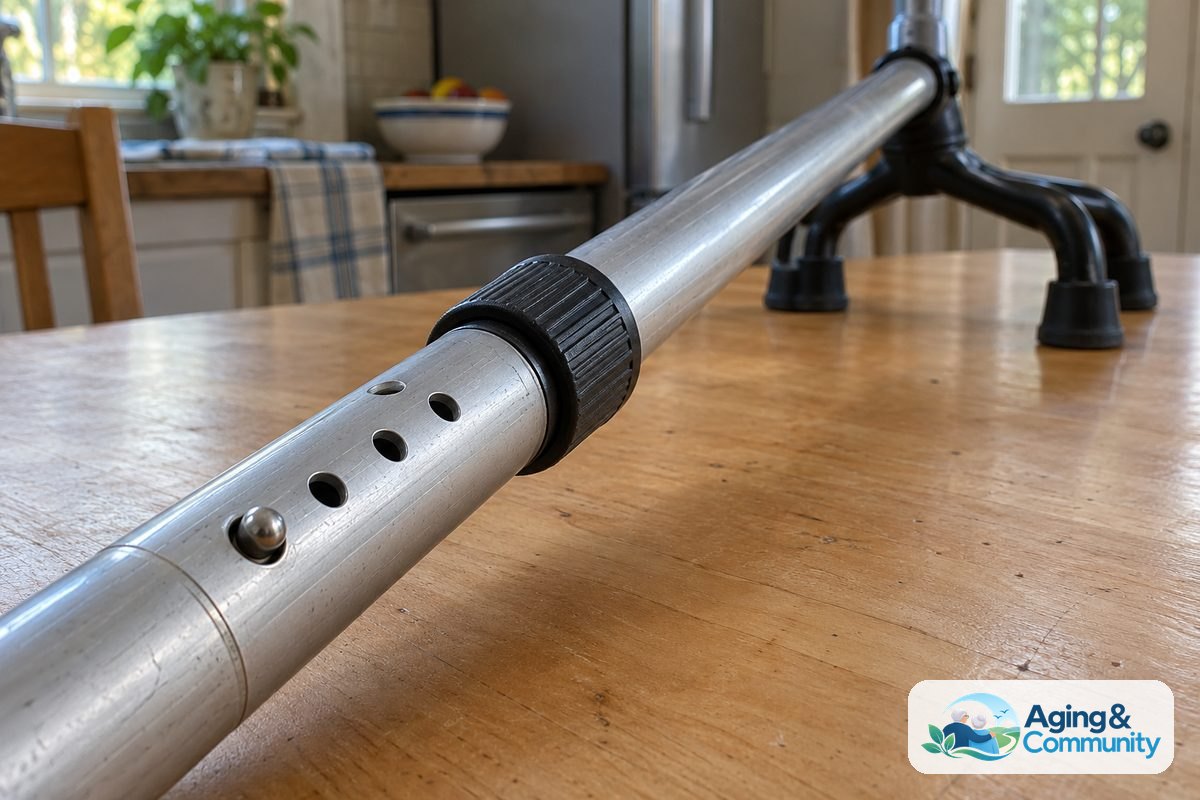
Proper fit is essential for comfort and good posture. Most metal quad canes use a push-button mechanism on the main shaft that allows you to raise or lower the handle by one-inch increments.
| User Height Range | Typical Cane Height Setting | Elbow Bend Angle |
|---|---|---|
| 5 feet 0 inches to 5 feet 4 inches | 28 inches to 31 inches | 15 to 20 degrees |
| 5 feet 5 inches to 5 feet 9 inches | 31 inches to 34 inches | 15 to 20 degrees |
| 5 feet 10 inches to 6 feet 2 inches | 34 inches to 37 inches | 15 to 20 degrees |
To confirm the fit, stand straight and place your hand on the grip. Your elbow should have a slight, comfortable bend of roughly 15 to 20 degrees. If your arm is completely straight or bent at a sharp right angle, adjust the height pin until your shoulder feels relaxed. Exploring different quad canes for elderly users can help you find models with small or large bases to suit your height and daily walking space.
Handling Weakness on One Side
Many people use a four-point cane after a medical event such as a joint replacement or a stroke. When one side of your body has noticeably less strength or coordination, maintaining proper form becomes even more important.
Always keep the cane in the hand on your strong side. If your left side is recovering, hold the cane in your right hand. For a thorough walkthrough of this technique, review our guide on how to use a quad cane with left sided weakness to help you master turning, pivoting, and sitting down safely.
Navigating Stairs and Uneven Surfaces
Stairs require special attention because quad cane bases are often wider than standard stair treads. If you must use steps, hold onto a sturdy handrail with one hand whenever possible.
Remember the simple rule: up with the good, down with the bad. When going up, lead with your stronger leg, then bring up your weaker leg and the cane. When going down, lower the cane and your weaker leg first, then bring your strong leg down to the same step. Learn more about step mechanics in our guide on how to use cane on stairs safely.
Taking steps to review home safety resources from the National Institute on Aging: Falls and Falls Prevention page can lower the risk of accidents around the house. Simple updates like removing throw rugs and adding bright lighting make using your cane much easier.
Choosing the Right Base Size
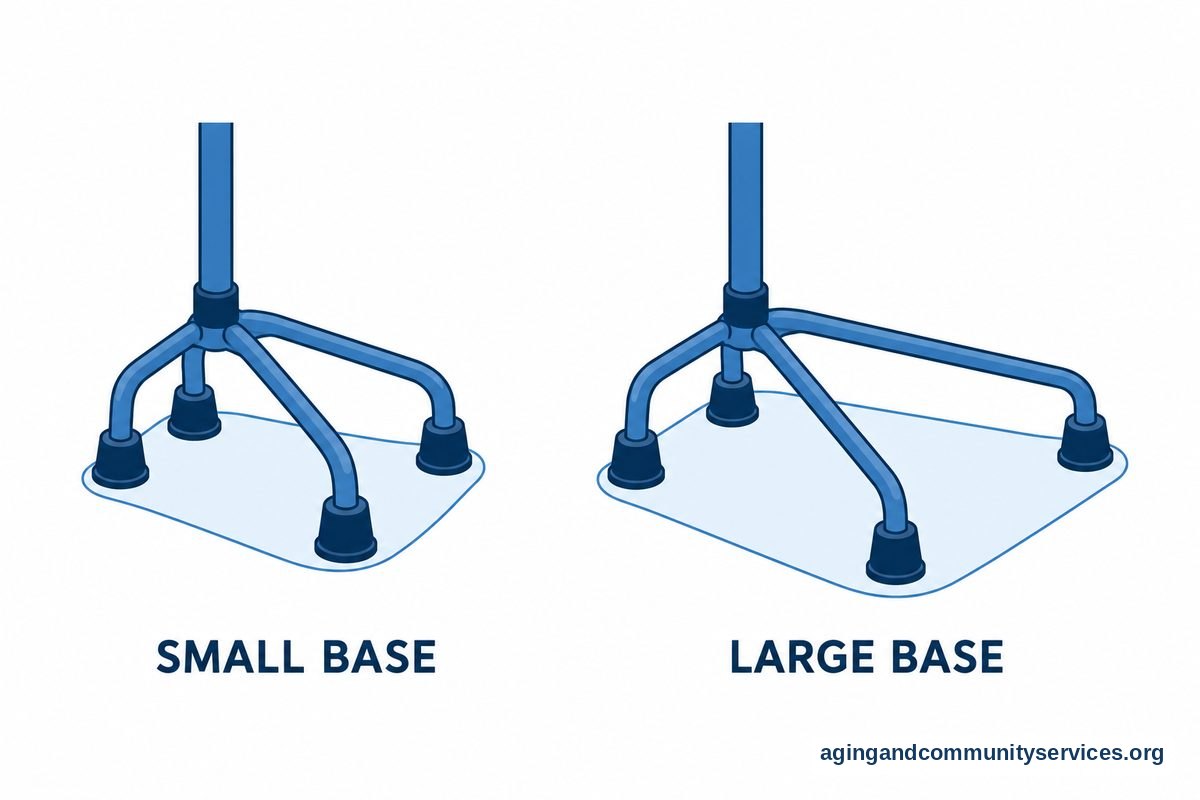
Quad canes come in two standard varieties: small base and large base. Choosing the right one depends on where you walk and how much stability you require.
A small base cane fits easily on narrow stairs and navigates tight corners in smaller homes. A large base cane offers a wider footprint and greater balance support, but it is slightly heavier to lift. If you are debating between different mobility tools, our comparison of a quad cane vs single point cane can help you decide which option matches your daily routine.
Frequently Asked Questions
How do I know which side the flat edge of the cane should face?
The flat edge of the base should always face toward your body. The legs that flare outward must point away from you. This design gives you maximum support without clipping your ankles or feet as you walk.
Can I use a quad cane on stairs?
You can use a quad cane on stairs if the base fits completely on the step tread without hanging over the edge. If the step is too shallow, turn the cane sideways so all four feet rest securely, or use the handrail for primary support.
What is the difference between a small base and large base quad cane?
A small base quad cane has feet spaced closely together, making it lighter and easier to use in crowded rooms. A large base cane covers more floor area, providing greater support for people who need extra help holding their balance.
How should I sit down while using a quad cane?
Back up until you feel the chair seat against the back of your legs. Move the cane slightly to the side, reach back with one or both hands for the chair armrests, and lower yourself down slowly and smoothly.
When should I replace the rubber tips on my quad cane?
Inspect the rubber tips at the bottom of each leg once a month. If the tread appears smooth, cracked, or worn through to the metal post, replace the tips immediately to maintain good traction on smooth floors.