Learning how to use a quad cane with left sided weakness can help you walk with steady balance and renewed confidence. The most important rule is to hold the cane in your right hand, which is your stronger side. By moving the cane and your left leg together, you create a wide, stable base that protects your balance.

Steps to Walk With a Quad Cane on Your Left Side
Before you take your first step, stand tall and let your shoulders relax. Make sure you understand the general rules of how to use quad cane equipment so you feel comfortable from the start.
- Position the cane in your right hand: Hold the grip firmly on your stronger side so the cane can share the work of your weaker left leg.
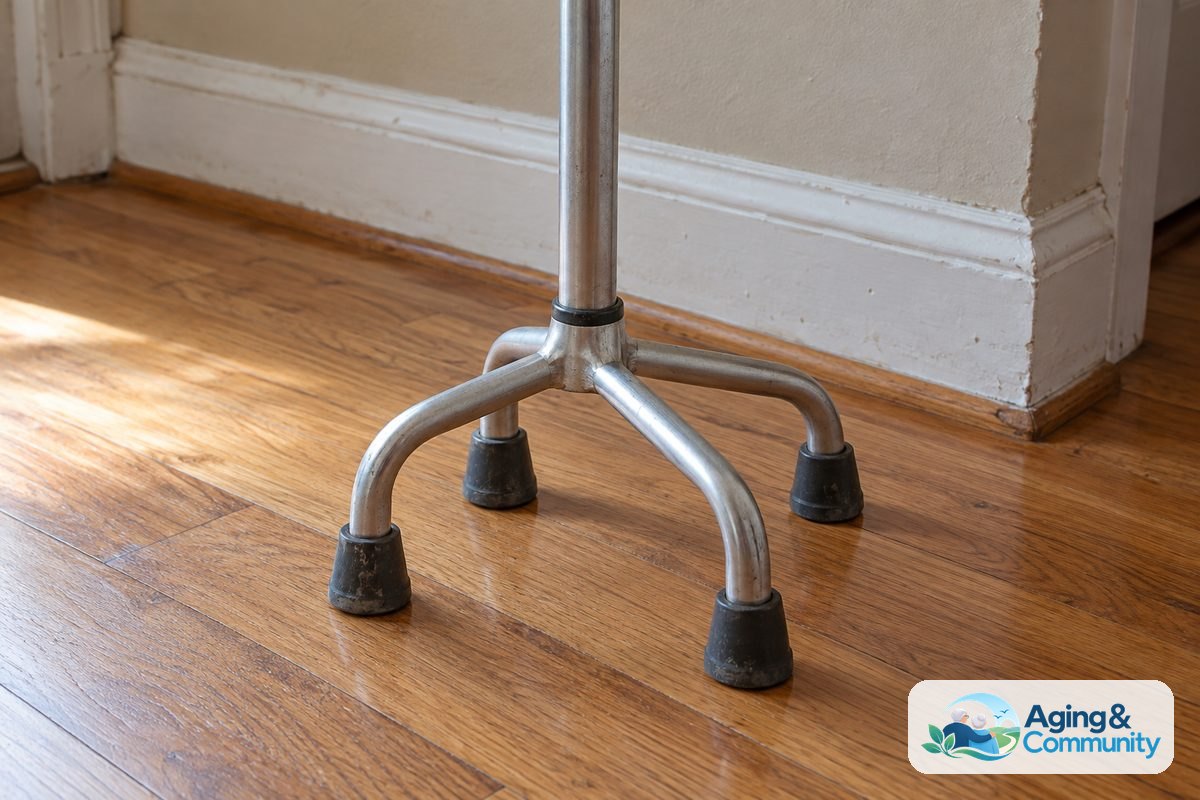
- Check the base orientation: Look down to ensure the flat side of the four-point base faces toward your body, while the flared legs point away so you do not trip over them.
- Move the cane forward: Place the cane about one small step ahead of you, making sure all four rubber tips touch the floor at the same exact time.
- Step forward with your left foot: Move your weaker left foot forward so it meets the cane, letting your right hand push down into the handle to carry some of your body weight.
- Step past with your right foot: Push down through the cane and your left leg as your stronger right foot steps forward onto solid ground.
- Pause and reset: Bring your balance back to center before you begin the next step, keeping your eyes forward rather than staring straight down at your feet.
If you are still choosing the right mobility tool, looking into sturdy quad canes for elderly users can help you find one with the proper base size and comfortable grip for your daily routine.
Common Mistakes to Avoid
Using a four-legged cane takes a little time to feel natural. Watch out for these frequent mistakes to keep your walking pattern smooth and steady:
- Holding the cane on the weak side: Holding the cane in your left hand forces your weaker side to carry double the effort and throws off your natural center of gravity.
- Rocking the base onto two tips: Tipping the cane forward so only two points touch the floor reduces your support and can cause the cane to slip.
- Placing the cane too far ahead: Reaching out too far strains your arm and pulls your upper body out of alignment, which makes you lose your balance.
- Facing the flared legs inward: If the wider side of the base points toward your shoes, your foot can easily catch on the metal legs while you step.
- Looking down at your shoes: Keeping your head down rounds your back and limits your view of household tripping hazards or changes in flooring.
When to Call for Professional Advice
Getting your cane fitted by a professional makes a big difference in how comfortable it feels. Talk with a physical therapist, an occupational therapist, or your primary care doctor if you feel unsteady, experience joint pain, or find yourself leaning heavily to one side.
When you contact your therapist or doctor, tell them:
- Where you feel pain or unusual fatigue when you walk.
- Whether the cane handle feels too high, too low, or rough on your hands.
- Any recent close calls or stumbles you have had inside your home.
- What types of flooring or surfaces give you the most trouble.
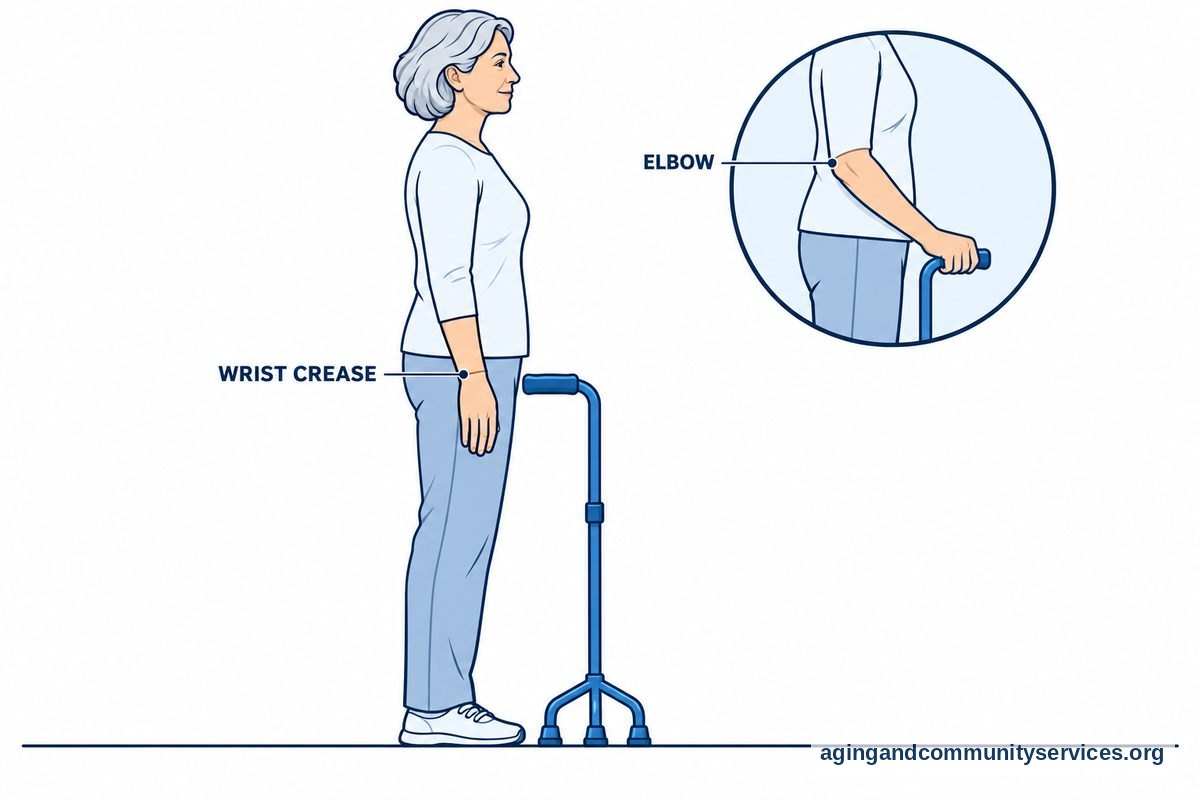
A physical therapist can watch your gait in person, adjust the cane height to the exact crease of your wrist, and show you personalized exercises to build strength on your weaker side. If you need help finding local balance therapy or mobility clinics, the Eldercare Locator connects older adults with support services right in their community.
Proper Height Adjustment for Left Sided Weakness
A cane that is set to the wrong height will cause shoulder strain and poor posture. To set the height correctly, put on your everyday walking shoes and stand up straight with your arms resting loosely at your sides.
The top of the cane handle should line up evenly with the small crease on the inside of your wrist. When you place your right hand on the grip, your right elbow should bend at a slight, comfortable angle of about fifteen to twenty degrees. If your arm is completely straight, the cane is too short. If your shoulder bunches up toward your ear, the cane is too tall.
When deciding between different walking aids, understanding a quad cane vs single point cane can help you decide if the wider base offers the right balance of support and mobility for your living space.
Navigating Stairs and Curbs Safely
Stairs require extra focus when you have weakness on one side of your body. Whenever stairs have a sturdy handrail, hold the handrail with one hand and carry your cane in the other hand. If you must use the cane on the stairs without a handrail, move slowly and follow a simple memory rule: up with the good, down with the bad.
Reviewing a detailed guide on how to use cane on stairs will give you clear steps for both narrow steps and wide outdoor curbs. Here is how the sequence works when you have left sided weakness:
| Direction | First Step | Second Step | Third Step |
|---|---|---|---|
| Going Up | Step up with your strong right foot | Bring your weak left foot up to the step | Bring your quad cane up to the step |
| Going Down | Lower your quad cane to the step below | Step down with your weak left foot | Step down with your strong right foot |
Make sure all four rubber tips of the cane sit firmly on the flat surface of the step before you put any weight on it. If the step is too narrow to fit all four feet of your quad cane, turn the cane sideways so the base sits fully flat without hanging over the edge.
Setting Up Your Home for Easier Walking
Making small adjustments around your living space can help you walk more smoothly with a mobility aid. The National Institute on Aging offers valuable guidance on falls and falls prevention that highlights simple changes you can make around the house.
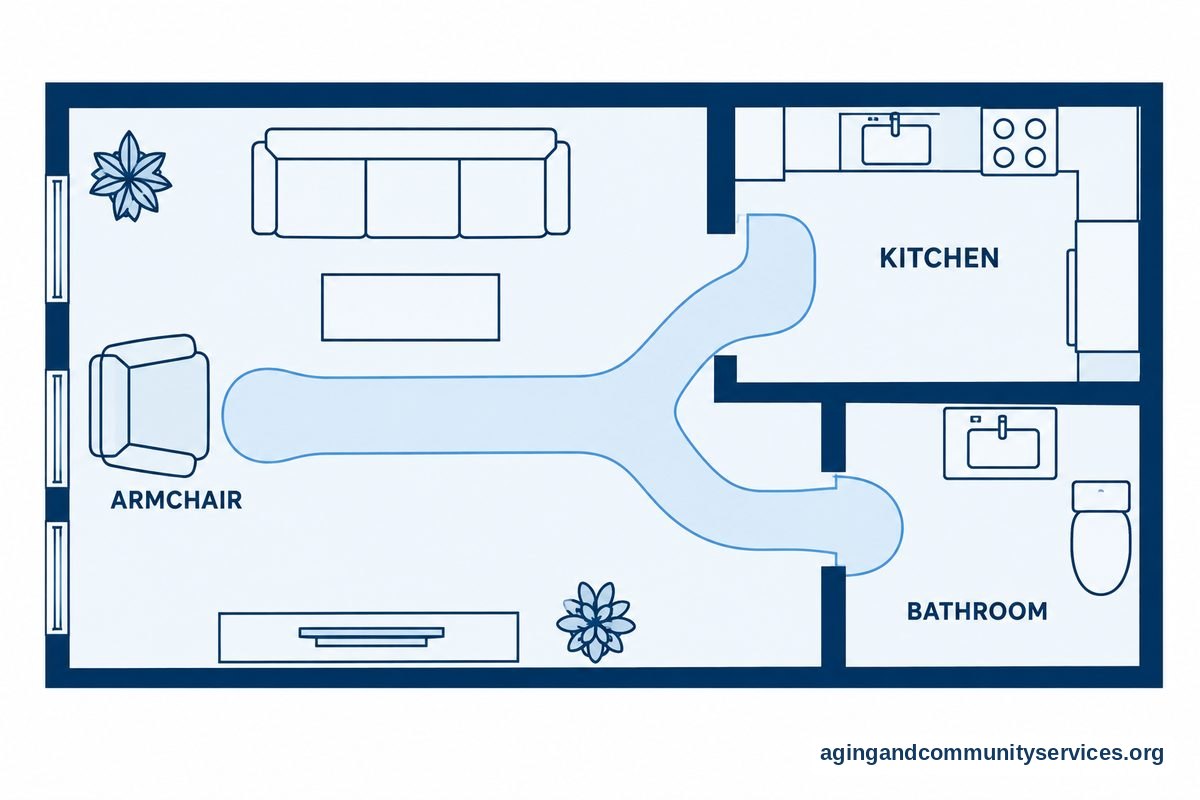
Clear wide walking paths between your favorite chair, the kitchen, and the bathroom. Pick up loose throw rugs, tuck electrical cords along the baseboards, and place nightlights in dark hallways. The National Institute on Aging notes in their resources on aging in place that maintaining clear walkways helps people stay comfortable and self-reliant at home.
Frequently Asked Questions
Why do I hold the cane in my right hand if my left side is weak?
Holding the cane in your right hand mirrors your body natural walking rhythm. When your left leg steps forward, your right arm swings forward at the same time. Placing the cane on the right side lets it bear weight alongside your left leg, creating a wide support base that protects your balance.
What is the difference between a large base and small base quad cane?
A large base quad cane has wider legs that offer maximum stability, but it is heavier and takes up more room on the floor. A small base quad cane is lighter, easier to maneuver in narrow hallways, and fits onto standard stair treads more easily while still offering more support than a single tip cane.
Can I use my quad cane on thick carpet?
Yes, you can use a quad cane on carpet, but you need to take extra care. Thick pile carpets can cause the four rubber tips to sit unevenly. Press down firmly to make sure all four points press through the carpet pile to contact the floor before you step forward.
How do I stand up from a chair using a quad cane?
Do not pull yourself up by the cane handle, because the cane can tip over. Instead, place the cane next to your right side, slide forward toward the edge of your seat, and push up from the chair armrests using both hands. Once you are standing and fully balanced, place your right hand on the cane handle.
How do I know when the rubber tips need replacement?
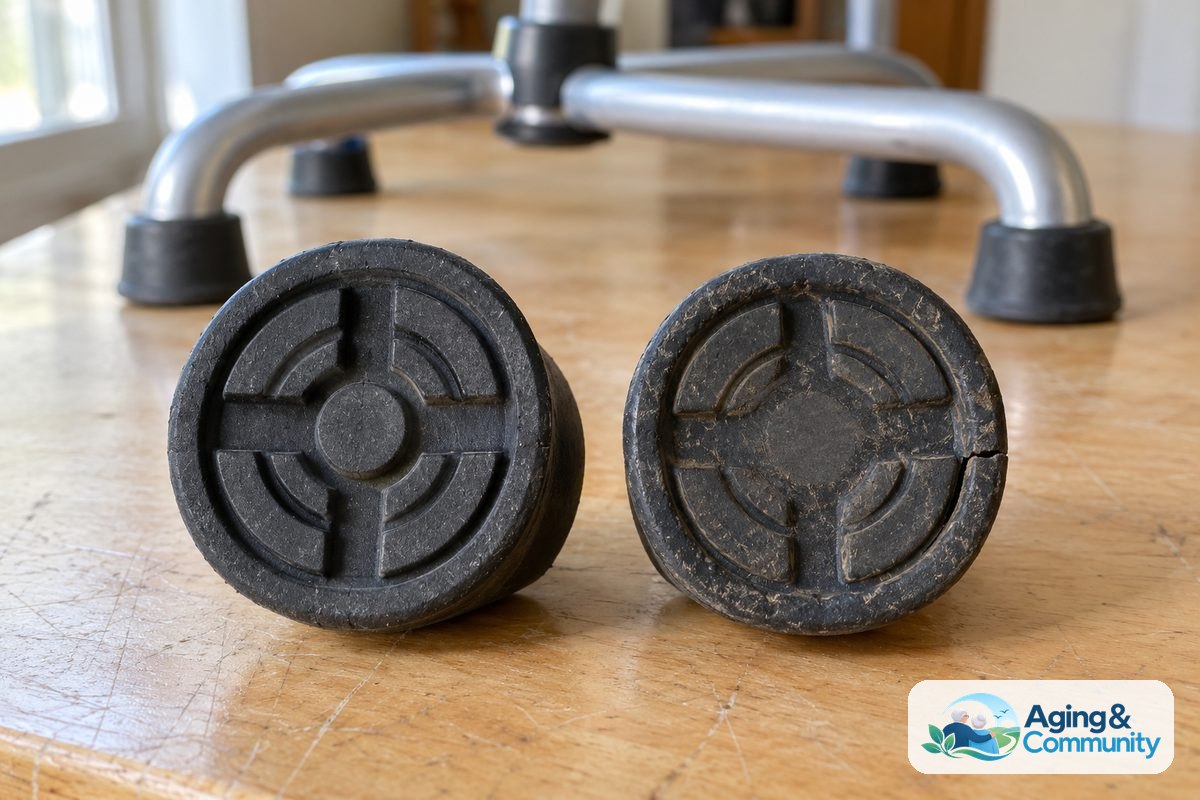
Check the bottom of the four rubber tips once a month. If the tread on the bottom is worn smooth, cracked, or thin enough that you can feel the metal cane shaft through the rubber, replace the tips immediately. Fresh rubber tips provide the friction you need to keep the cane from slipping on smooth floors.