

Learning how to use a toilet safety frame can make your daily bathroom routine much easier and far more stable. A safety frame provides two sturdy handrails on either side of the commode to support your body weight. By using both hands for balance, you can sit down and stand up with greater confidence every day.
Many people find that simple bathroom updates help them stay comfortable in their own homes. The National Institute on Aging offers helpful guidance on aging in place that highlights practical home modifications. Adding supportive handholds around the bathroom is one of the most practical changes you can make.

Steps for Using a Toilet Safety Frame
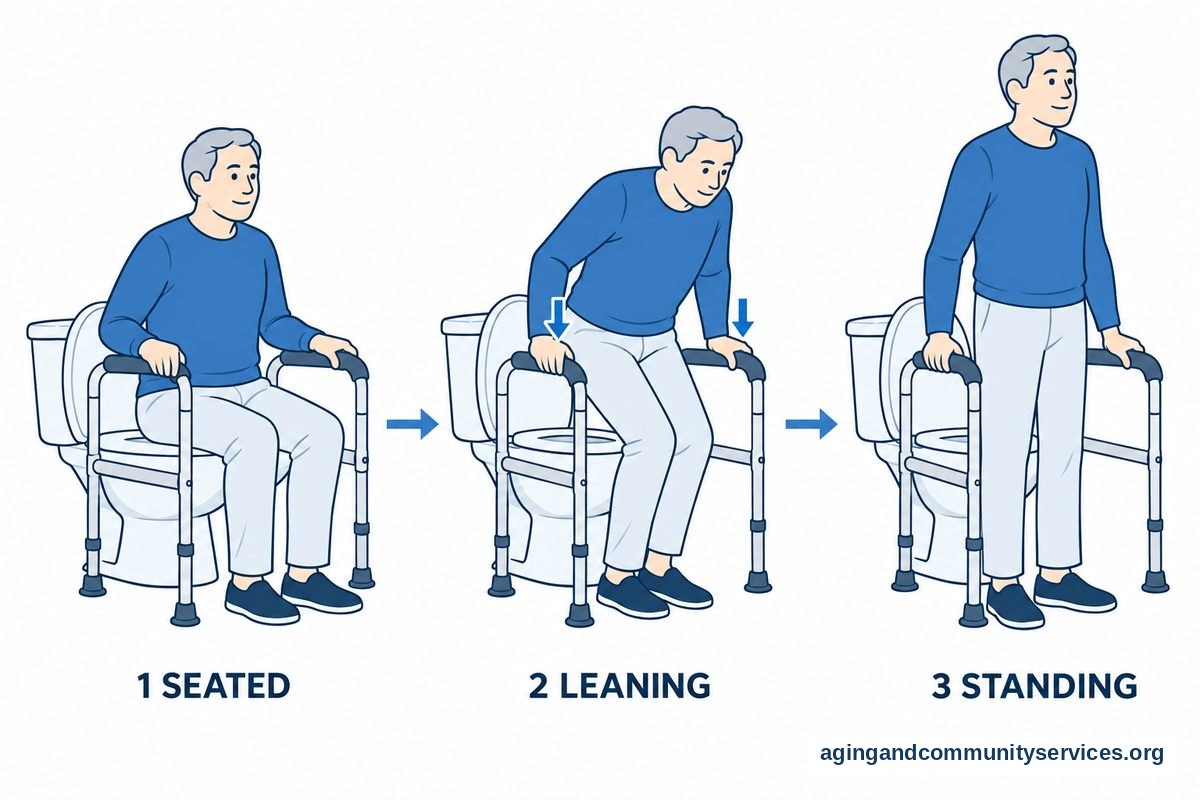
- Back up until your legs touch the bowl. Walk toward the toilet using your usual walking aid, turn around slowly, and step backward until you feel the front edge of the seat against the back of your thighs.
- Reach back with both hands. Release your walker or cane and reach back to grasp both armrests of the frame firmly before you begin to sit.
- Lower yourself slowly onto the seat. Bend your knees, keep your feet flat on the floor about hip-width apart, and use your arm strength to ease your body down smoothly.
- Keep your hands in place during use. Rest your hands comfortably on the arm pads or near your lap while seated, keeping your body centered between the rails.
- Prepare to stand by sliding forward. When you are ready to get up, shift your hips slightly forward on the seat and tuck your feet back just a little under your knees.
- Push straight down to rise. Place both hands firmly on the armrests, lean your chest forward over your toes, and push straight downward through your palms to stand upright.
- Find your balance before walking. Stand tall, pause for a moment to ensure you feel steady, and then reach for your walker or cane before taking a step away.
Common Mistakes to Avoid
- Pulling on the frame instead of pushing down. Toilet safety frames are built to handle downward force, so pulling sideways or forward on the rails can cause the unit to tip or loosen.
- Pushing down on only one side. Placing all your weight on a single armrest can tilt the frame or make you lose your balance, so always press down evenly with both hands.
- Reaching for the frame too early. Never reach backward for the safety rails while you are still turning around, because twisting your body can lead to a slip.
- Holding a walking aid while sitting down. Trying to keep one hand on a walker while reaching for a rail with the other splits your focus and reduces your physical support.
- Skipping regular maintenance checks. Bolts and brackets can loosen over time with daily use, so failing to inspect the hardware regularly can lead to sudden wobbling.
When to Call for Help or Get Professional Advice
If you feel dizzy, unsteady, or short of breath when standing up from the toilet, it is wise to speak with a healthcare professional. A primary care doctor, physical therapist, or occupational therapist can evaluate your balance and suggest the right equipment for your space. They can also teach you personalized techniques for transferring safely on and off the seat, such as how to use a walker properly.
When you contact a therapist, tell them about any joint pain, stiffness, or lightheadedness you experience in the bathroom. Let them know what type of equipment you currently have in place and describe how the seat height feels on your knees. If you are not sure where to find local support, you can reach out to the Eldercare Locator to connect with community resources in your neighborhood.
Choosing the Right Setup for Your Bathroom
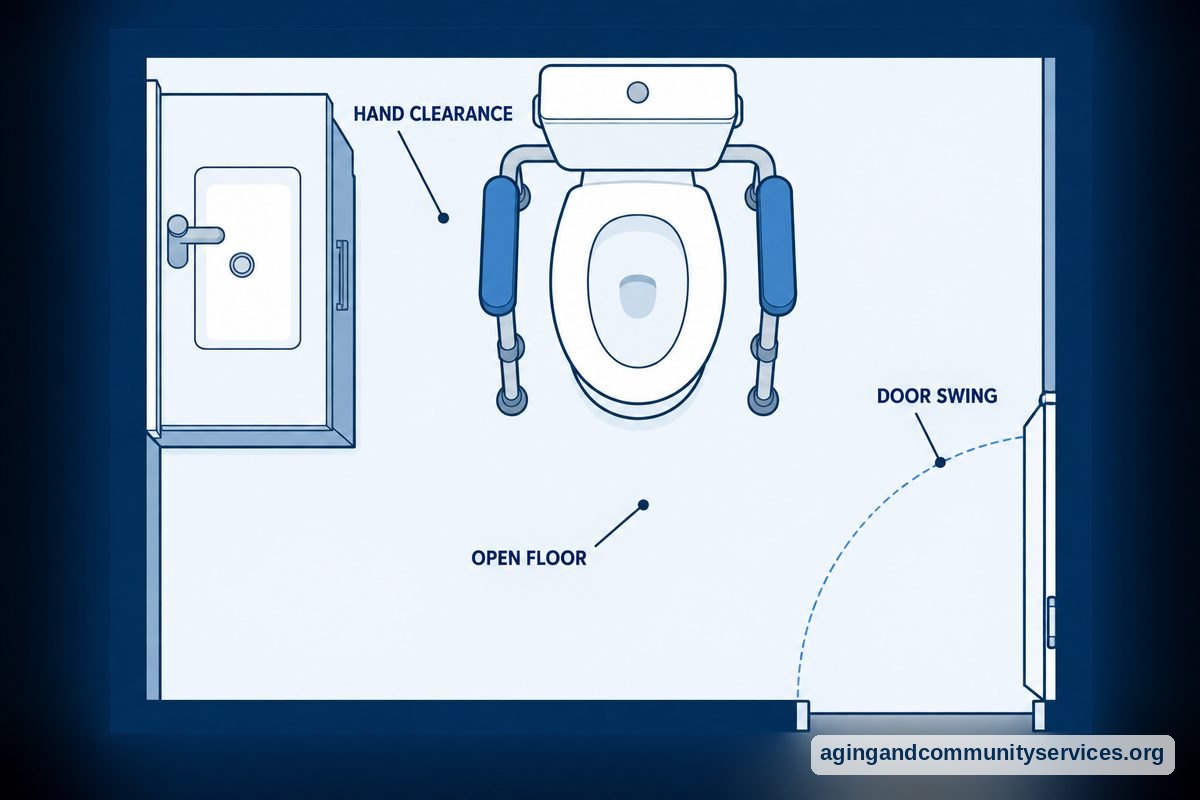
Every bathroom layout is slightly different, and selecting the right support structure depends on your physical needs and the size of your space. Standard frames bolt directly to the toilet bowl using the existing seat bolts. Other styles are freestanding units that wrap around the outside of the commode without requiring any tools for attachment.
If you are exploring different models, learning more about toilet safety rails for elderly family members can help you compare weight capacities and armrest widths. Some individuals need wide arms for easier transfers, while others need a compact design that fits neatly between a vanity and a side wall. Taking careful measurements of your bathroom before buying ensures a secure fit.
Combining Safety Frames with Other Helpful Aids
A safety frame is often just one part of a supportive bathroom plan. For many older adults, standard toilet seats are too low to the ground, which puts extra strain on weak knees and hips. Learning how to choose a raised toilet seat can help you find an option that reduces how far you need to bend.
You might also consider whether a raised toilet seat vs commode is the better choice for your recovery or long-term mobility. Wall bars are another wonderful addition, and checking the proper grab bar height for toilet installations will give you another solid point of contact. Reviewing the resources from the National Institute on Aging regarding falls and falls prevention can provide further ideas for keeping household walkways secure and clear of hazards.
Proper Adjustment and Routine Care
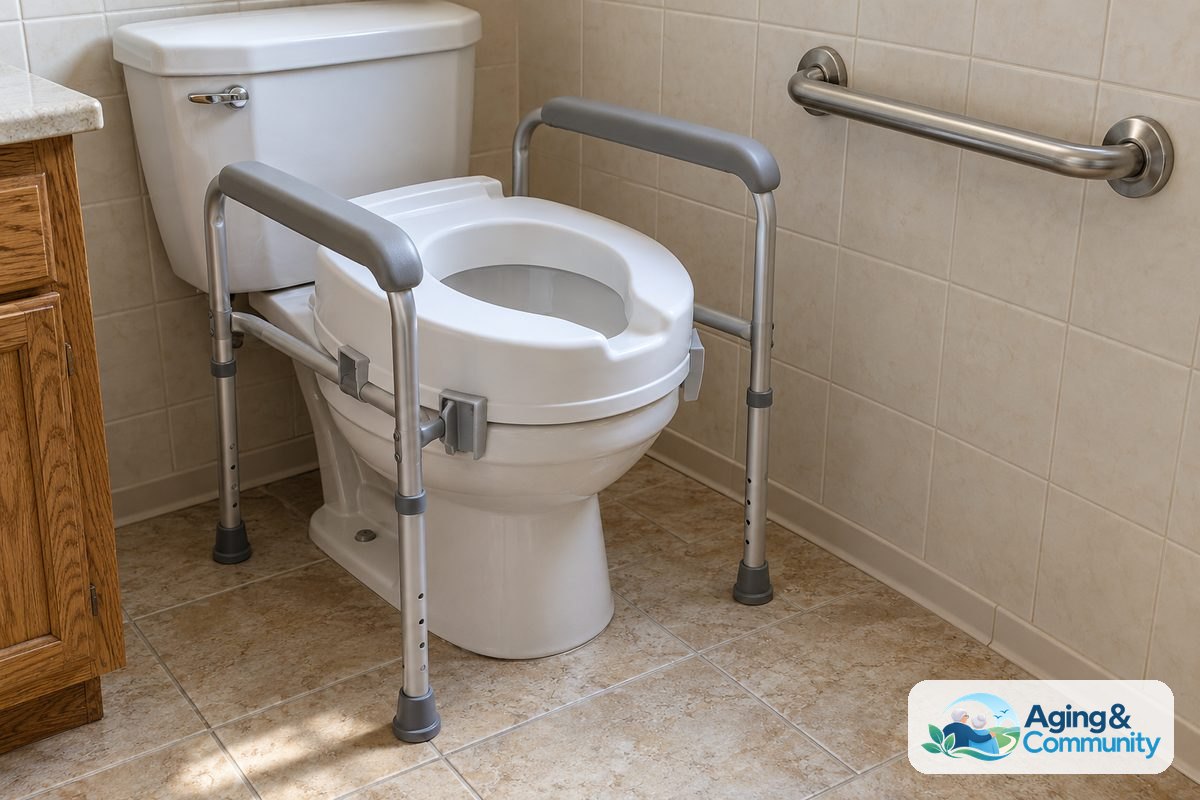
To get the best support from your safety frame, the armrests must be set at the correct height for your body. When you stand next to the toilet, the handgrips should align roughly with the crease of your wrists. This allows your elbows to have a slight, comfortable bend when your hands rest on top of the rails.
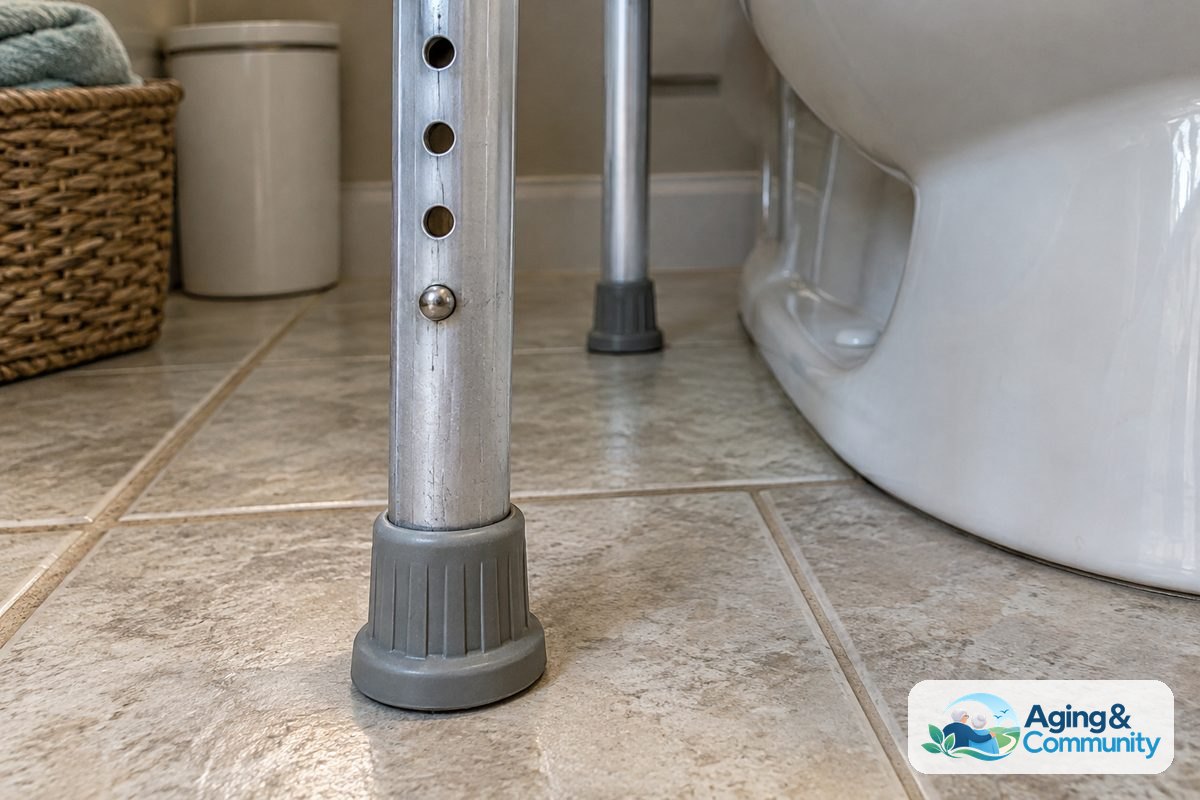
Most safety frames feature push-button adjustment pins on the legs, making it simple to raise or lower the frame. Make sure that each leg clicks completely into place at an identical height so the unit remains level. Wipe down the handrails and frame weekly with a mild household cleaner, and inspect the rubber feet at the bottom to ensure they are clean, dry, and gripping the floor firmly.
Frequently Asked Questions
How much weight can a toilet safety frame support?
Most standard safety frames support between 250 and 300 pounds. Heavy-duty or bariatric models can support 400 to 500 pounds or more. Always check the manufacturer packaging or manual to verify the specific weight capacity before use.
Can a toilet safety frame be used with an elongated bowl?
Yes, most models are designed to fit both round and elongated toilet bowls. The mounting plate attaches underneath the toilet seat hinges, which are spaced the same distance apart on almost all residential commodes. Adjustable brackets allow the side arms to slide forward or backward to accommodate longer bowls.
Do toilet safety frames damage the porcelain?
When installed correctly, a safety frame will not crack or scratch the porcelain. The mounting bracket sits flat between the toilet bowl and the seat hinges, while the rubber feet protect the bathroom floor. Avoid over-tightening the hinge bolts, which could stress the ceramic material.
Can I use a safety frame if my toilet is close to a wall?
Many safety frames have width-adjustable arms that can be set narrower on one side to clear a nearby wall or cabinet. Freestanding frames can also be shifted slightly if room is limited. However, you should always leave enough space for your hand and forearm to rest comfortably on the grip without rubbing against the wall.
Are freestanding frames as stable as bolt-on frames?
Bolt-on frames are generally more rigid because they are physically secured to the commode. Freestanding units rely on wide base legs and non-slip rubber tips for stability. While freestanding frames are sturdy when pushing straight down, they require extra care to avoid rocking or tilting during use.