

Learning how to use a walker with wheels starts with standing upright inside the frame and pushing it forward just one small step ahead of you. You then step your weaker leg forward into the center of the frame, followed by your stronger leg, while keeping your weight balanced on both handgrips. Practicing this steady rhythm helps older adults move comfortably through daily routines.

How to Use a Rolling Walker Step by Step
- Check your posture and setup. Stand up tall inside the frame with your shoulders relaxed and your arms hanging down naturally at your sides. The handgrips should reach the crease of your wrists so your elbows bend at a slight twenty-degree angle when your hands rest on the grips.
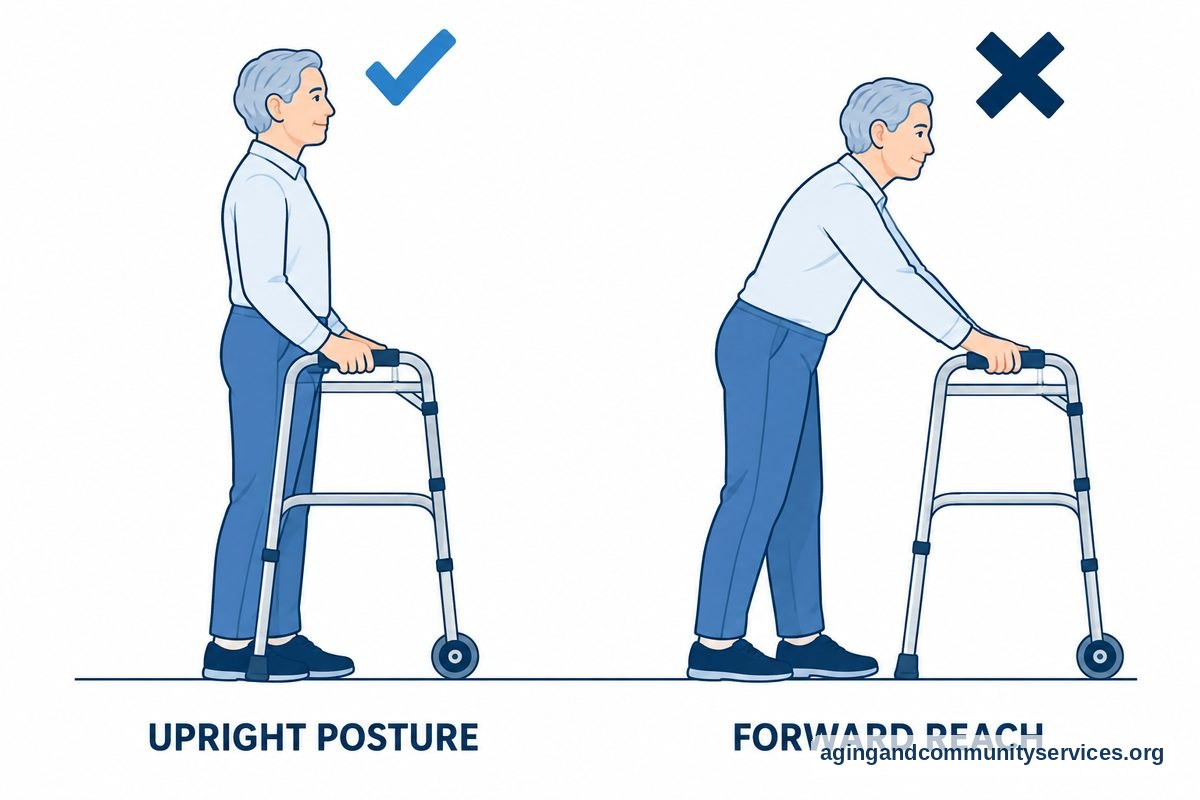
- Push the frame forward one step. Roll the equipment smoothly forward about an arm's length, making sure all four legs remain level with the ground. Do not push the frame too far ahead of your body, because reaching out can cause you to lean and lose your balance.
- Step forward with your weaker leg. Move your weaker or injured foot forward into the middle area of the frame. Place your foot down flat on the floor rather than up on your toes, keeping an even grip on both handles for support. If you are recovering from surgery, review these tips on how to use walker after hip replacement for extra movement precautions.
- Step forward with your stronger leg. Push down lightly through your palms as you bring your stronger foot forward to meet your other foot. Take your time so you do not step past the front crossbar of the equipment.
- Repeat the sequence with steady breaths. Continue moving with the same rhythm by rolling the frame forward, stepping with the weaker side, and following with the stronger side. Keep your head lifted so you can see where you are going instead of looking straight down at your shoes.
Common Mistakes to Avoid
- Pushing the frame too far ahead: Reaching out like you are pushing a grocery cart forces your back to curve and shifts your center of gravity away from your base of support. Keep the rear posts close to your sides so you walk inside the frame rather than chasing after it.
- Looking down at your feet: Staring directly at your shoes makes it harder to notice trip hazards like throw rugs or pets in your path. Look straight ahead toward where you want to go while using your peripheral vision to track the floor.
- Setting the handgrips at the wrong height: Handles that sit too high cause shoulder tension, while handles that sit too low cause back strain. Adjust the push pins so the grips line up evenly with the inside of your wrists when standing straight.
- Carrying items with your fingers: Holding a mug, telephone, or mail while walking prevents you from keeping a firm grip on the handles. Attach a small pouch or basket to the front bar so both palms remain completely free for balance.
- Lifting a wheeled device off the floor: Trying to pick up a rolling frame wastes energy and interrupts your walking tempo. Let the front wheels roll smoothly across the floor while the rear tips glide along the surface.
When to Get Professional Advice
Getting your equipment fitted by a professional is one of the best ways to feel secure on your feet. A physical therapist or occupational therapist can evaluate your strength, adjust the handle height to your body, and teach you how to turn safely in tight hallways. They can also observe your walking rhythm to make sure you are not leaning toward one side.
You should reach out to your primary care doctor or therapist if you notice any changes in your mobility. Let them know if you experience sudden dizziness, joint discomfort, shortness of breath, or numbness in your feet while moving. If you need assistance finding mobility clinics or local home support, the Eldercare Locator connects individuals and caregivers with community resources across the country.
Family caregivers who help loved ones stand and walk may also want to learn how to use gait belt techniques for added security during transfers. The National Institute on Aging: Falls and Falls Prevention resources point out that regular activity and home safety reviews can lower the risk of balance troubles as we age.
How to Use a Walker With 2 Wheels
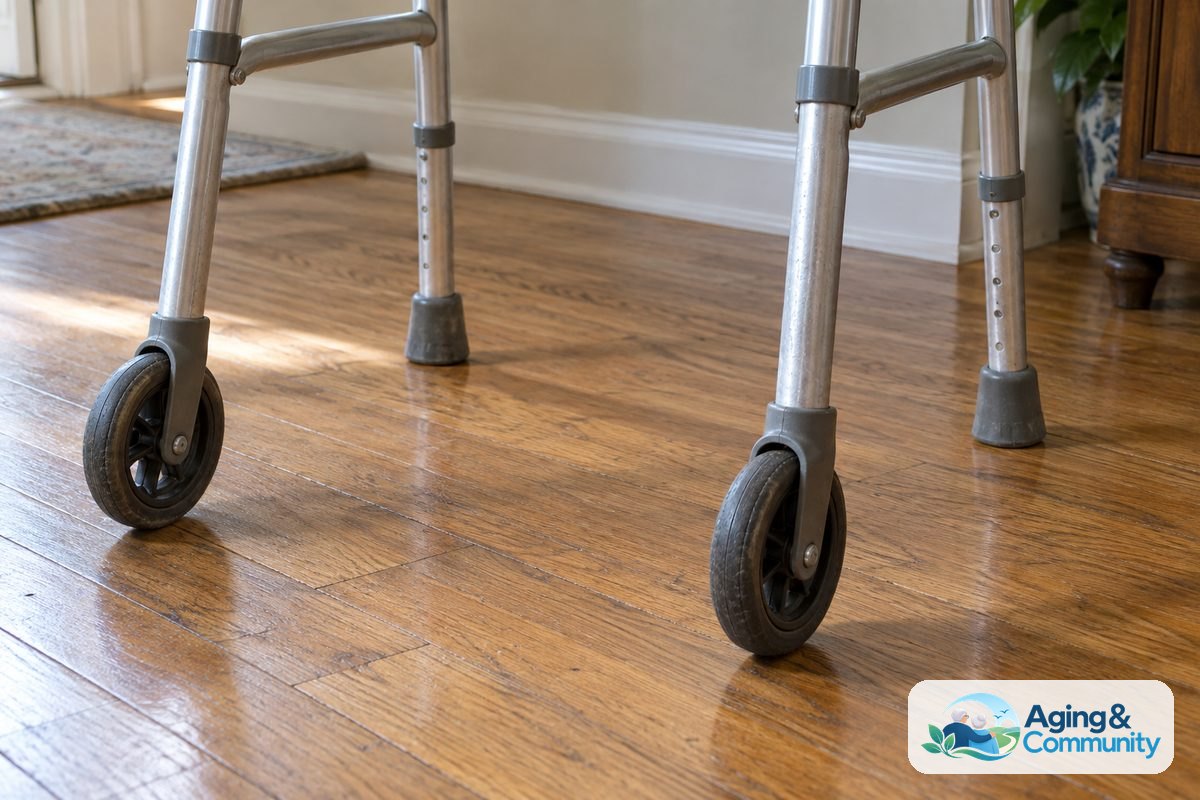
A two-wheeled model, also known as a front-wheeled walker, has rolling casters on the front two legs and rubber caps or glide skis on the rear two legs. This design provides steady support because the rear tips act as natural brakes whenever you press down on the handles. It works very well for people who need firm support but lack the arm strength to pick up a standard folding frame with every step.
To navigate safely with two wheels, place your palms lightly on the grips and slide the device forward. The rubber tips in the back will drag along the floor with mild friction, giving you control over your pace. Step forward into the center of the frame, keep your tummy muscles engaged, and let the rear posts stay near your hips. When turning, take small steps in an arc rather than twisting your knees or shoulders.
Sitting down and standing up require special care with a two-wheeled model. Never pull up on the frame to stand, because the wheels can roll toward you and tip over. Instead, back up until the backs of your legs touch the edge of the chair. Reach your palms back to the chair armrests, bend your knees, and lower your hips gently onto the seat cushion.
How to Use a Walker With 4 Wheels
A four-wheeled model, commonly called a rollator, features wheels on all four legs, hand brakes, and a built-in seat. Understanding the difference between a rollator vs rolling walker helps you choose the right balance between stability and speed. Four wheels roll freely in any direction, so this device requires good hand strength to operate the hand brakes reliably.
To walk with a four-wheel model, hold the grips with your fingers gently resting over the brake levers. Push the rollator forward smoothly while walking right between the rear wheels, keeping in mind how different rollator designs are explained. Do not let the unit run away from you down ramps or smooth hallways. Squeeze both brake levers lightly to control your speed whenever you feel the unit moving faster than your natural walking pace.
If you need to rest on the built-in seat, you must lock the brakes first. Push the brake levers down until you hear or feel them click into the locked park position. Turn your body around carefully, place both palms on the handgrips or armrests, and lower yourself onto the padded bench. For deeper guidance on using brakes and seats, review our practical guide on how to use rollator equipment.

Tips for Home Safety and Daily Movement
Staying active inside your house allows you to maintain personal independence and comfort. Research highlighted by the National Institute on Aging: Aging in Place initiative notes that simple home modifications make daily activities safer for older adults. You can clear your path by removing throw rugs, tucking electrical cords against the wall, and widening spaces between your furniture.
When crossing thresholds or moving from hard floors to carpeting, slow your pace. Approach the divider head-on rather than at an angle so both wheels cross the bump at the same moment. Lift your feet slightly higher as you step over door sills, keeping a firm grip on the hand pieces throughout the change in flooring.

Frequently Asked Questions
How do you adjust the correct handle height on a rolling walker?
Stand up straight with your everyday walking shoes on and let your arms drop naturally to your sides. Have a family member or helper adjust the leg extensions until the top of the handgrips matches the level of your wrist joint. When you place your palms on the grips to walk, your elbows should bend comfortably at a small fifteen to twenty-degree angle.
How to use a walker with front wheels on outdoor sidewalks?
When walking outdoors with a front-wheeled model, keep your eyes on the pavement three to four feet in front of you. Watch for raised concrete joints, tree roots, small pebbles, and wet leaves that could catch the front wheels. Push the frame slowly over surface cracks, and avoid walking across loose gravel or thick grass where the rear rubber glides can get stuck.
How do you manage steps or curbs with a rolling frame?
Navigating full staircases with any wheeled frame is not safe to do alone, and you should always look for a ramp or elevator instead. For a single low curb, roll the front wheels onto the raised sidewalk first. Step up with your stronger leg, press down on the handles to raise the back posts, and bring your weaker leg up to meet your body on top of the curb.
Can you lean your full weight on a four-wheel walker?
Four-wheel models are designed for balance guidance and mild support, not for bearing your complete body weight. Leaning heavily on a four-wheel frame can cause it to roll out from under you, even if you are squeezing the brake levers. People who require significant weight relief for an injured leg usually do better with a two-wheeled frame or crutches recommended by a physical therapist.
How should you turn around safely while using a wheeled walking aid?
Avoid pivoting on one foot or twisting your torso while the frame remains stationary, as this can upset your balance. Turn your entire body by making a wide circle and taking several small, deliberate steps. Keep the device directly in front of your chest as you turn so your center of gravity stays centered within the frame.