

Learning how to use a wheelchair transfer board can make daily seat changes much smoother and safer for older adults and their caregivers. A transfer board acts as a firm, smooth bridge between two seated surfaces, such as a bed and a chair. By sliding across the board in short movements, a person can move across gaps without needing to stand up fully.

How to Use a Wheelchair Transfer Board Step by Step
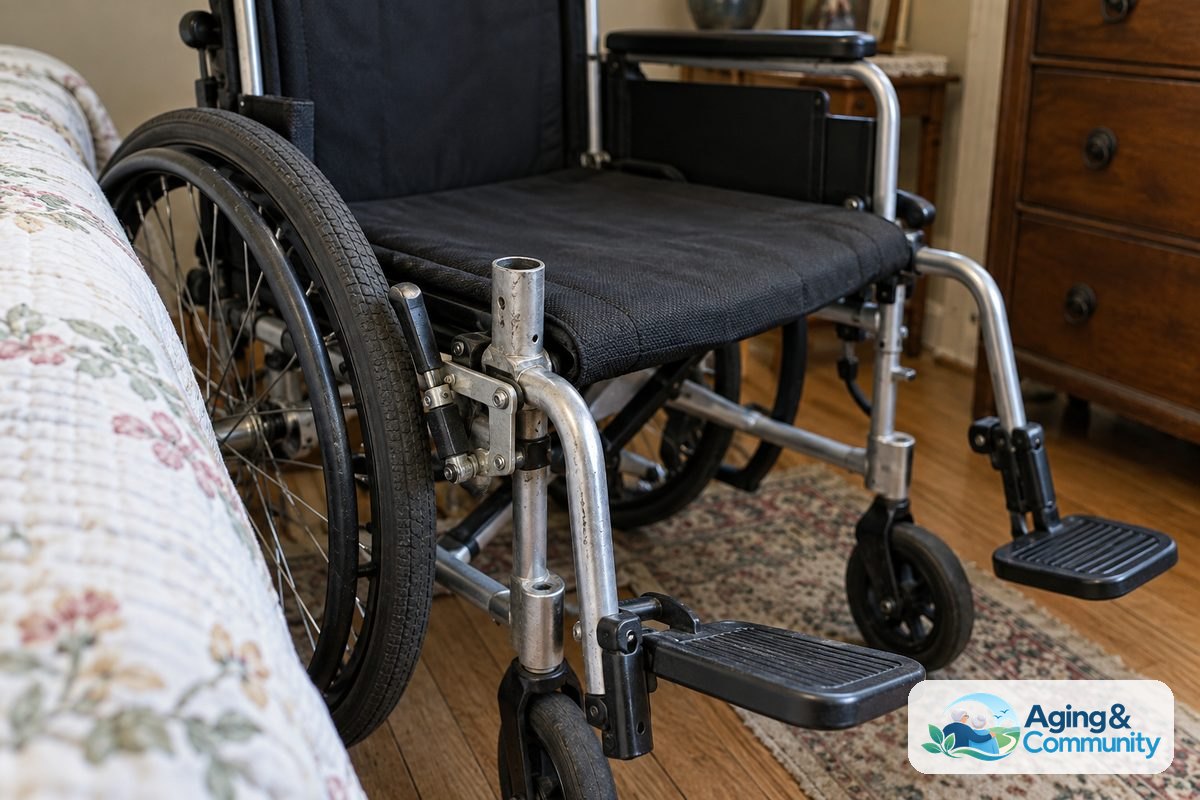
- Position the wheelchair correctly. Park the wheelchair as close as possible to the surface you are moving to or from, angling it at roughly thirty to forty-five degrees.
- Lock all the wheels firmly. Push the wheel locks forward on both sides of the wheelchair and ensure the bed or target chair cannot shift during the move.
- Clear the transfer path. Swing away or remove the wheelchair footrests, and take off the armrest on the side closest to the bed or target seat.
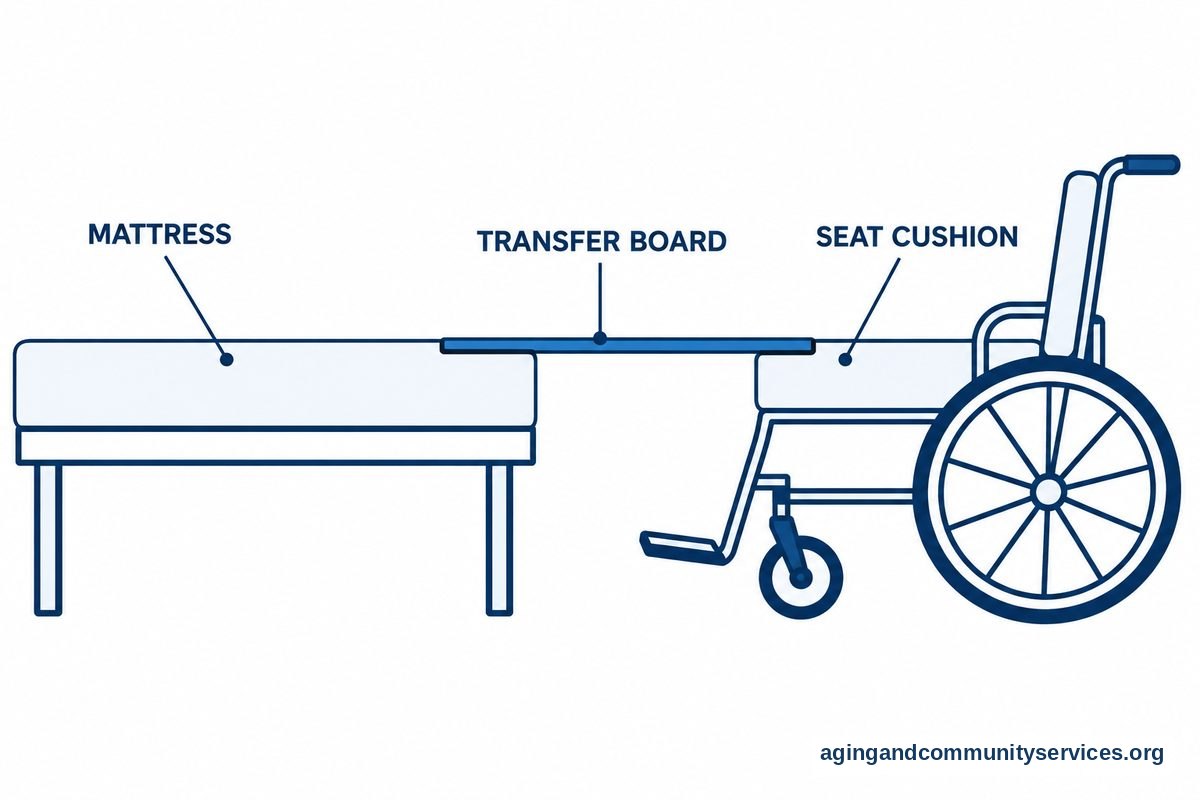
- Lean away and place the board. Have the person lean their upper body slightly away from the target surface so you can slip one end of the board securely under their upper thigh and buttock.
- Rest the other end on the target seat. Ensure the opposite end of the board rests flat and stable on the receiving surface, bridging the open space evenly.
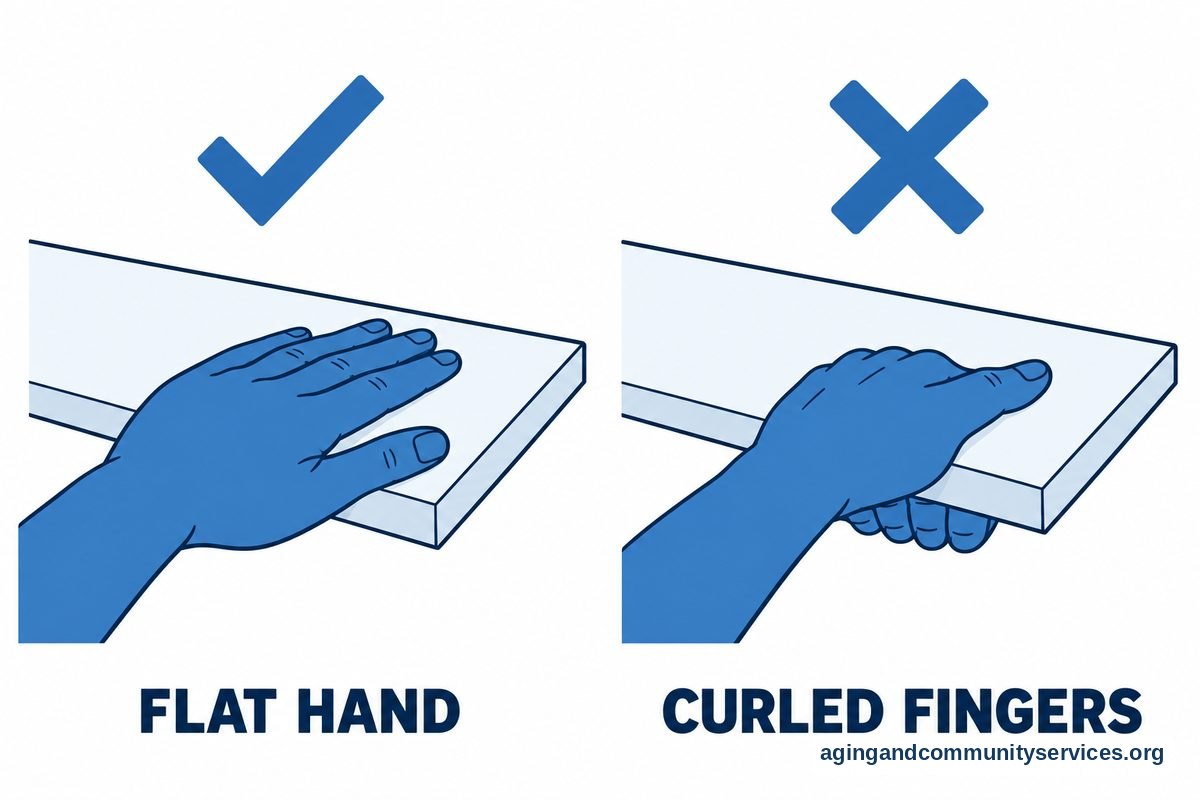
- Slide across in small scooting motions. Using their hands flat on the board or seat, the person gently scoots across the wood or plastic surface rather than trying to make one long slide.
- Remove the board gently once seated. After the person is fully centered on the new seat, have them lean slightly to the side again to slide the board out from underneath.
Common Mistakes to Avoid
- Leaving the wheelchair unlocked: Forgetting to set the wheel brakes allows the chair to roll backward, which creates a dangerous gap mid move.
- Placing bare hands under the board edge: Curling fingers under the edges of the board can lead to painful pinching when body weight presses down on the wood or plastic.
- Trying to slide bare skin directly on the wood: Bare legs can stick to polished surfaces, so wearing smooth pants or placing a small cloth pad on the board makes the slide much easier.
- Making the gap between seats too wide: Spanning a wide open space with only the tips of the board touching the cushions reduces stability and can cause the board to slip.
- Rushing the transfer in one big push: Attempting to leap across the entire board at once increases strain on shoulders and wrists, whereas several small scoots keep things steady.
When to Call for Professional Advice
Every person has unique physical strengths, joint flexibility, and balance levels. If you feel uncertain about whether a board is right for your home, reach out to an occupational therapist or physical therapist. You can also contact the Eldercare Locator to find community living and mobility resources in your local area.
When you speak with a therapist, describe the layout of your home clearly. Mention the height of your bed, the type of wheelchair you use, and whether the caregiver experiences any back or shoulder fatigue. A professional can evaluate movement patterns and teach personalized techniques that lower the risk of accidents during transitions, in line with guidance from the National Institute on Aging: Falls and Falls Prevention program.
How to Use Transfer Board from Bed to Wheelchair
Moving from a bed into a wheelchair is one of the most common daily routines. To start, adjust the bed height if you have an adjustable frame. It is always easiest to slide slightly downhill or across an entirely level surface rather than fighting gravity uphill. Position the wheelchair alongside the bed near the hip area, angling the chair slightly toward the head of the bed.
Once the wheelchair brakes are locked and the nearest armrest is lifted out of the way, have the person sit upright on the edge of the mattress. Help them place their feet flat on the floor so their legs provide natural stability. When you study how to use a transfer board in the bedroom, having both feet supported on the ground keeps the torso balanced as the person leans to the side.
Carefully insert the tapered end of the board beneath the thigh. Make sure about one third of the board is under the person, one third rests firmly on the wheelchair seat cushion, and the middle third spans the gap. If you need extra support to steady the person while they slide, learning how to use gait belt techniques around their waist gives you a secure handle without pulling on their arms or clothing.
Choosing the Right Board for Your Home Routine
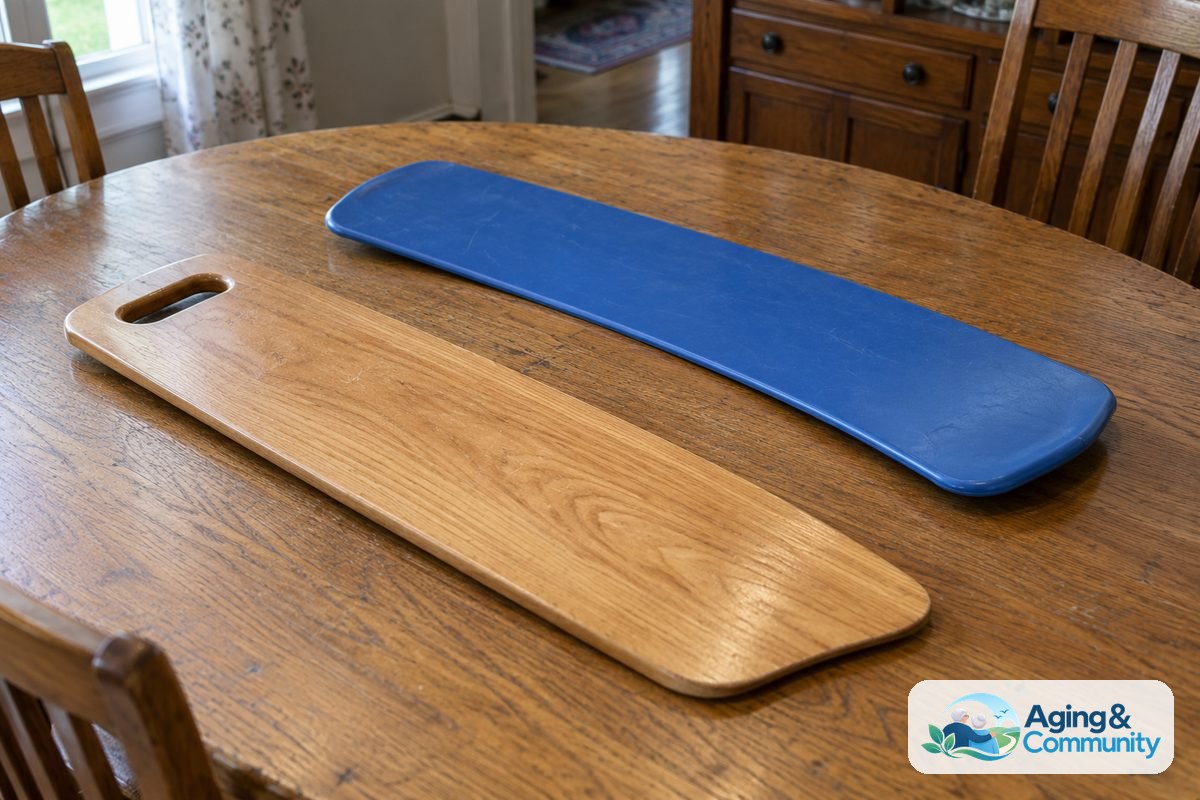
Transfer boards come in several materials, lengths, and shapes. Most traditional designs are made of sealed, polished hardwood, while newer models feature smooth composite plastics. If you are comparing a transfer board vs sliding board, you will find both names often describe the same helpful tool, though some sliding models include a rotating disc that glides along an internal track to assist people with limited arm strength.
The right board length depends on the spaces between your furniture. A shorter board works well in tight bathrooms where seats are close together, while a longer board provides the extra reach needed between wide car door openings and wheelchair frames. Exploring dedicated transfer boards for seniors can help you choose the right weight capacity and surface finish for your daily needs, supporting your long term goals for aging in place comfortably.
Frequently Asked Questions
How do you place a transfer board under someone safely?
To position the board without pinching, ask the person to lean their upper body toward the side opposite the board. As their weight shifts off the near hip, gently slide the tapered edge of the board about a third of the way under the upper thigh and buttock, keeping your own fingers clear of the bottom edges.
Can one person complete a transfer board move alone?
Yes, many individuals who have good sitting balance and adequate upper body strength use transfer boards completely on their own. However, an occupational therapist or physical therapist should always evaluate and practice the technique with the person first before they try moving without a caregiver nearby.
What should you wear during a board transfer?
Clothing made of smooth fabrics like cotton blends or satin pajamas slides across polished wood and plastic boards with very little friction. Avoid rough denim with heavy pocket rivets, and make sure bare legs are covered or protected with a small transfer sheet to avoid skin irritation.
What is the difference between a transfer board and a slide sheet?
A transfer board is a rigid piece of wood or hard composite designed to span an open gap between two separate surfaces. A slide sheet is a piece of slick, flexible fabric used primarily on a mattress to reposition someone in bed without lifting their full body weight.