

Learning how to use cane after knee replacement begins with holding the cane in the hand opposite your new joint. As you walk, you move the cane forward together with your operated leg so it can support your body weight. This simple rhythm protects your healing knee, provides steady balance, and helps you rebuild a normal walking pattern.
Many people transition from a walker to a cane during the recovery period. Taking time to learn the proper setup and rhythm makes moving around the house much easier. With steady practice and clear steps, you can feel confident each time you take a walk.

How to Use a Cane After Knee Replacement Step by Step
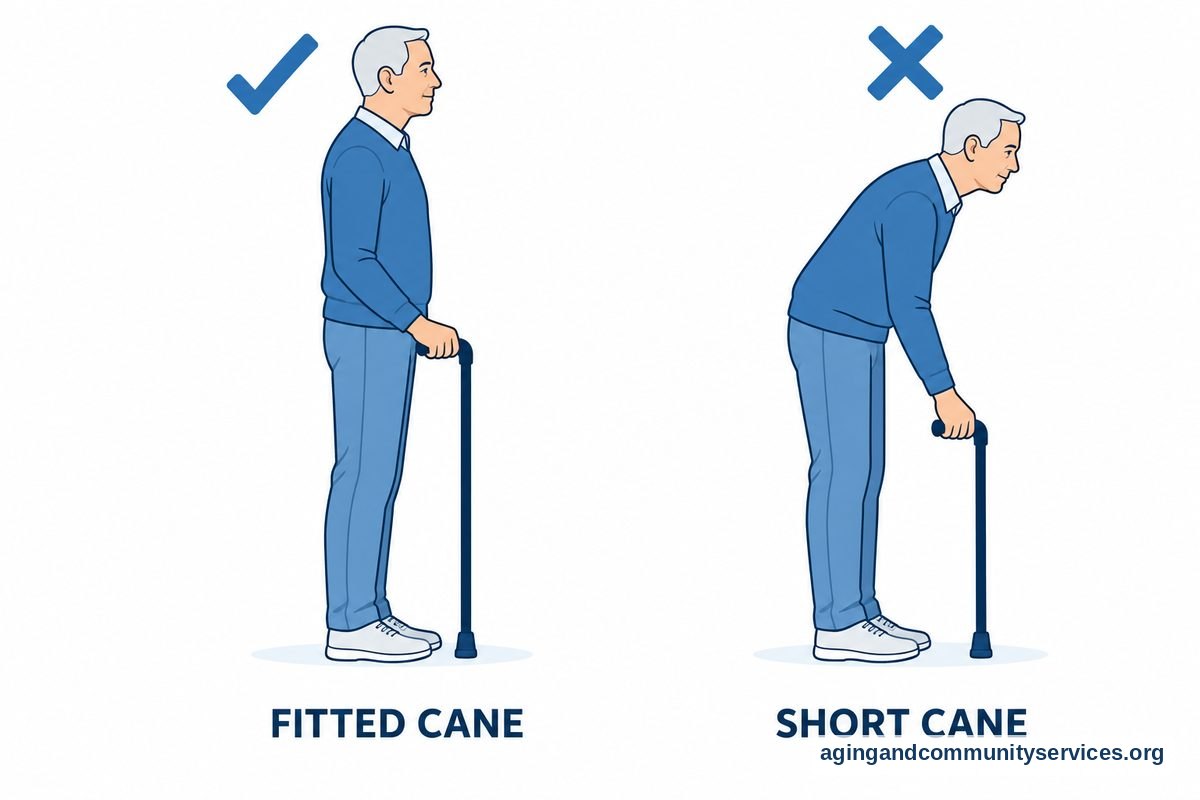
Before you begin walking, make sure your cane sits at the proper height. Stand up straight with your everyday walking shoes on and let your arms relax at your sides. The top handle of the cane should reach the small crease on the inside of your wrist, allowing your elbow to bend comfortably at about a twenty-degree angle. If you need help finding the right fit, review guidance on how to choose a cane before you start moving.
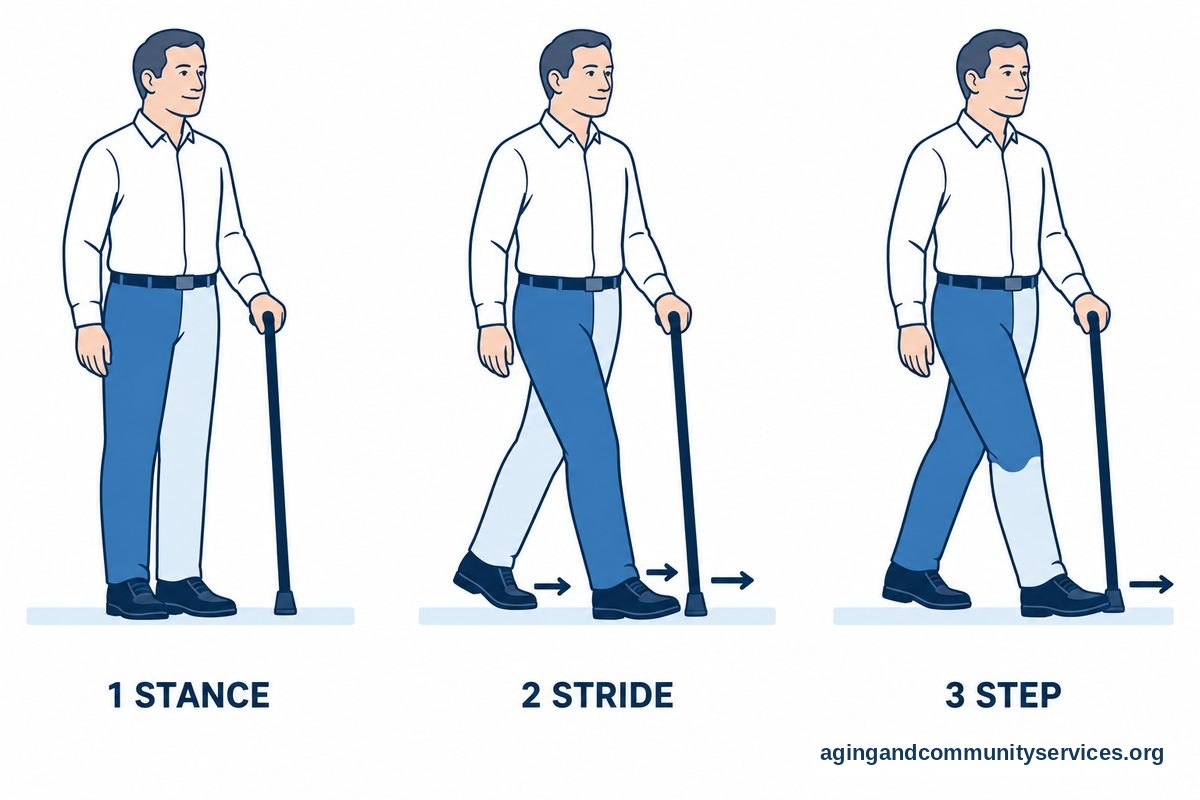
- Hold the cane on your stronger side: Place the cane in the hand opposite your operated leg. Holding the cane on your uninjured side allows you to lean your weight naturally toward the cane instead of your new knee.
- Position the cane slightly outward: Place the rubber tip flat on the floor, about two inches in front of your foot and two inches to the outside. This gives you a wide, stable base without tripping your feet.
- Move the cane and operated leg together: Step forward with your operated leg while advancing the cane the same distance at the exact same time. The cane and your surgical leg should touch the ground together.
- Shift weight evenly through your arm: As your surgical foot touches the ground, push down gently through your hand on the cane handle. This shares your body weight between the cane and your healing leg, easing pressure on the new joint.
- Step through with your stronger leg: Finish the stride by stepping forward with your unoperated leg, placing it slightly ahead of your surgical foot. Keep your eyes up and look forward rather than staring straight down at your feet.
- Repeat the smooth rhythm: Continue forward by moving the cane and surgical leg together, followed by your stronger leg. Focus on smooth, even strides rather than rushing your steps.
Common Mistakes to Avoid
Walking with a cane feels new at first, and it is easy to pick up habits that throw off your balance. Here are a few frequent errors to watch for during your daily routine:
- Holding the cane on the operated side: Putting the cane in the hand on your surgical side causes you to limp sideways. Always keep it in the hand on your unaffected side to mimic your natural arm swing.
- Placing the cane too far ahead: Reaching far forward with the cane stretches your body out of alignment. Keep the tip close to the normal stride length of your feet to stay balanced.
- Using a cane set at the wrong height: A cane that is too tall forces your shoulder toward your ear. A cane that is too short makes you stoop forward, which can lead to back strain.
- Leaning too heavily to one side: Your cane is meant to assist your balance and share weight, not carry your entire body. Keep your torso upright and your shoulders level as you move.
- Carrying loose items in your hands: Holding grocery bags or drinks while walking with a cane splits your attention and changes your center of gravity. Use a small shoulder bag, apron pocket, or backpack instead.
When to Call Your Care Team for Guidance
Recovery takes time, and every person heals at their own pace. You should always speak with your orthopedic surgeon, physical therapist, or primary care doctor if walking becomes unusually painful or difficult. If you notice sudden swelling, new redness around the incision, or a sharp increase in pain that rest does not relieve, contact your surgical team immediately.
You should also reach out to your physical therapist if you feel unsteady, if the cane tip slips on the floor, or if you feel like you are limping heavily. When you call, describe exactly what you are feeling. Tell them how far you are walking, whether your knee feels unstable, and what type of cane handle you are using. If you or a family member need help finding local mobility resources, you can connect with the Eldercare Locator to locate supportive community services in your area.
How to Use a Cane for Knee Pain and Long-Term Joint Relief
Knowing how to use a cane for knee pain helps even after surgical healing is complete, or if you have arthritis in your other knee. Using an assistive device reduces the direct load placed across the joint surfaces with every step you take. This helps ease aching after a busy day on your feet and lets you stay active for longer periods.
When using a cane for general joint discomfort, the basic movement pattern remains identical to post-surgery walking. Keep the cane on the side that feels good, move it in unison with the aching knee, and push down gently through your palm. Practicing this motion during short walks around your neighborhood helps you maintain independence while keeping joint strain to a minimum.
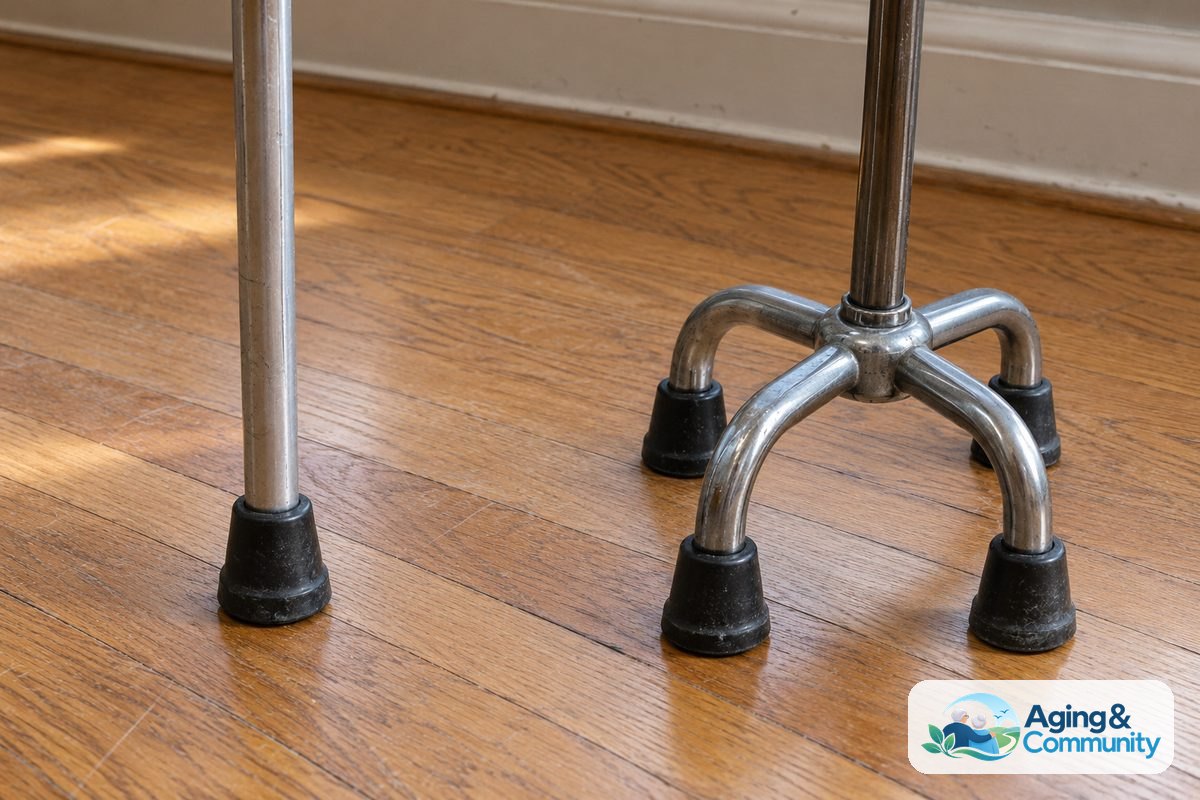
Some people who experience joint weakness prefer extra stability. In those situations, exploring the differences between a quad cane vs straight cane can help you decide which base style matches your balance needs. If your physical therapist recommends a broader four-point base, learning how to use quad cane equipment safely will help you navigate flat surfaces with added security.
Navigating Stairs and Uneven Surfaces
Stairs can feel intimidating during recovery, but following a simple memory phrase makes them straightforward. Many physical therapists teach the rule: up with the good, down with the bad. This reminder keeps your strongest muscles doing the hardest work on the steps.
When walking up stairs, step up first with your unoperated leg. Next, bring your surgical leg and the cane up to the same step together. If a handrail is available, hold the handrail with one hand and hold your cane in the other hand. For complete step-by-step safety tips on steps, review our guide on how to use cane on stairs before attempting full flights.
When walking down stairs, the pattern reverses. Move the cane and your surgical leg down to the lower step first, then step down with your stronger leg. Always take one step at a time, placing both feet securely on the step before moving to the next one. Clear loose throw rugs and keep hallways well lit, as resources from the National Institute on Aging: Falls and Falls Prevention emphasize the value of removing household tripping hazards for older adults.
Frequently Asked Questions
How to use a cane after knee surgery compared to a walker?
A walker provides two-handed support and surrounds your body, which is helpful immediately after surgery when weight-bearing is limited. A cane provides single-sided support and requires more personal balance. You make the switch only when your surgeon or physical therapist confirms your leg muscles are strong enough to support your body weight without leaning forward.
How to use a cane with a bad knee during daily errands?
To use a cane with a bad knee while running errands, keep the cane in the hand opposite the painful joint and walk at an easy, steady pace. Park close to entrances, wear supportive walking shoes with rubber soles, and avoid carrying packages in your cane hand. Take brief sitting breaks on benches if you feel muscle fatigue in your legs or hips.
Which side do you hold a cane on after knee surgery?
Always hold the cane in the hand on your unoperated side. For example, if you had surgery on your right knee, hold the cane in your left hand. This setup allows the cane to support your weight on the left while your right leg moves forward, preserving your natural balance and gait.
How long will I need to use a cane after knee replacement?
The time varies for each person based on muscle strength, balance, and general health before surgery. Many people use a cane for two to six weeks after moving away from a walker. Your physical therapist will test your walking pattern and let you know when it is safe to walk without any device.
Can using a cane incorrectly damage my new knee?
Using a cane incorrectly will not break the joint implant, but it can lead to bad walking habits, hip discomfort, back pain, or an awkward limp. Walking with your cane on the correct side and at the right height protects your healing muscles and helps your joint move smoothly.
What type of cane tip is best for indoor and outdoor walking?
A wide, flexible rubber tip provides the best grip on hard floors, pavement, and tile. Check the bottom of the rubber tip every few weeks to make sure the tread is not worn smooth. Replace the tip immediately if the rubber shows deep cracks or uneven wear.
